
Uncategorized
Still Anonymous: White House hunt for op-ed author fades


WASHINGTON — Remember Anonymous?

One month ago Friday, an unidentified Trump administration official set off a White House firestorm by claiming in a New York Times opinion piece to be part of a secret “resistance” force out to undermine parts of President Donald Trump’s agenda.
The article triggered cries of “treason” from Trump and a demand that the powers of the federal government be brought to bear to root out the disloyal officials.
And then … not much happened.
The investigation, which existed more in name than practice, stalled. A move to clean house never occurred. The author’s identity is still a mystery.
Still, publication of the piece, along with a new Bob Woodward book painting a picture of a president whose impulses were being thwarted by his own staff, has had some lasting aftershocks.
The president, already besieged by leaks, has closed ranks around the Oval Office, growing far more suspicious of staff and trusting fewer West Wing personnel. That’s according to four White House officials and Republicans close to the White House who were not authorized to speak publicly about private conversations.
The Sept. 5 publication of the op-ed rocked Washington. The author, described only as a senior administration official, wrote that “Many Trump appointees have vowed to do what we can to preserve our democratic institutions while thwarting Mr. Trump’s more misguided impulses until he is out of office.”
The writer went on: “It may be cold comfort in this chaotic era, but Americans should know that there are adults in the room. We fully recognize what is happening. And we are trying to do what’s right even when Donald Trump won’t.”
The piece landed the same week as Woodward’s “Fear” and emphasized the new book’s themes: that Trump appeared unfit for office and some of his closest aides viewed themselves as a bulwark between his worst decisions and the American public.
Trump was incensed about the op-ed, calling around to confidants to vent about the author, solicit guesses as to his or her identity, seethe that it appeared in the newspaper he loves to hate, and complain that a “deep state” within the administration was conspiring against him. At a rally that week in Montana, he called the author “an anonymous, gutless coward.”
“You look at this horrible thing that took place. Is it subversion, is it treason?” Trump bellowed. “It really is terrible.”
The Beltway guessing game seeped into the White House, as current and former staffers traded calls and texts trying to figure out who could have written the piece, some even asking reporters for clues. Trump ordered aides to unmask the writer, cited “national security” concerns to justify a possible Justice Department investigation and issued an extraordinary demand that the newspaper reveal the author.
Trump’s anger triggered an extraordinary parade of senior officials, Cabinet members and even the
Some Trump advisers, like attorney Rudy Giuliani, suggested that it would be “appropriate” for Trump to ask for a formal investigation into the identity of the op-ed author. And Kentucky Sen. Rand Paul, a key ally of Trump’s, called for the president to order those suspected of being the author to undergo lie-detector tests.
But then, mirroring the very thesis of the op-ed, Trump’s requests to the government largely went ignored.
It was never expected that the Justice Department would move to open an investigation. A White House official later said Trump’s call for the investigation was an expression of his frustration with the op-ed, rather than an order for federal prosecutors.
White House chief of staff John Kelly, communications director Bill Shine and press secretary Sarah Huckabee Sanders convened a series of closed-door meetings and ordered a cursory leak search, including enforcing a pre-existing ban on personal phones, according to three White House officials not authorized to speak publicly about internal meetings. But as the op-ed was wiped from the headlines by other news events, most notably the contentious confirmation hearings for Supreme Court nominee Brett Kavanaugh, the probe was quietly pushed aside.
The White House did not respond to a request for comment.
Though the president continued to vent about the leaks, aides never conducted an exhaustive search, according to two of the officials. And many administration officials recognized that there was a long list of officials who plausibly could have been the author.
The West Wing and, for the most part, Trump himself moved on, focusing on the upcoming midterm elections and the push to get Kavanaugh on the bench.
But Trump has confided to allies that he still is frustrated by frequent leaks and feels that there are few aides around him whom he can fully trust, according to the three White House officials and Republicans close to the White House.
Beyond a network of outside advisers Trump has known for decades, the officials said, those on the inside the president continues to trust include family: daughter Ivanka Trump and her husband, Jared Kushner, both senior advisers.
___
Follow Lemire on Twitter at http://twitter.com/@JonLemire and Lucey at http://twitter.com/@catherine_lucey
Jonathan Lemire And Catherine Lucey, The Associated Press



The cost of the bureaucracy increased by $6 billion last year, according to newly released numbers in Public Accounts disclosures. The Canadian Taxpayers Federation is calling on Prime Minister Mark Carney to immediately shrink the bureaucracy.
“The Public Accounts show the cost of the federal bureaucracy is out of control,” said Franco Terrazzano, CTF Federal Director. “Tinkering around the edges won’t cut it, Carney needs to take urgent action to shrink the bloated federal bureaucracy.”
The federal bureaucracy cost taxpayers $71.4 billion in 2024-25, according to the Public Accounts. The cost of the federal bureaucracy increased by $6 billion, or more than nine per cent, over the last year.
The federal bureaucracy cost taxpayers $39.6 billion in 2015-16, according to the Public Accounts. That means the cost of the federal bureaucracy increased 80 per cent over the last 10 years. The government added 99,000 extra bureaucrats between 2015-16 and 2024-25.
Half of Canadians say federal services have gotten worse since 2016, despite the massive increase in the federal bureaucracy, according to a Leger poll.
Not only has the size of the bureaucracy increased, the cost of consultants, contractors and outsourcing has increased as well. The government spent $23.1 billion on “professional and special services” last year, according to the Public Accounts. That’s an 11 per cent increase over the previous year. The government’s spending on professional and special services more than doubled since 2015-16.
“Taxpayers should not be paying way more for in-house government bureaucrats and way more for outside help,” Terrazzano said. “Mere promises to find minor savings in the federal bureaucracy won’t fix Canada’s finances.
“Taxpayers need Carney to take urgent action and significantly cut the number of bureaucrats now.”
Table: Cost of bureaucracy and professional and special services, Public Accounts
| Year | Bureaucracy | Professional and special services |
|
$71,369,677,000 |
$23,145,218,000 |
|
|
$65,326,643,000 |
$20,771,477,000 |
|
|
$56,467,851,000 |
$18,591,373,000 |
|
|
$60,676,243,000 |
$17,511,078,000 |
|
|
$52,984,272,000 |
$14,720,455,000 |
|
|
$46,349,166,000 |
$13,334,341,000 |
|
|
$46,131,628,000 |
$12,940,395,000 |
|
|
$45,262,821,000 |
$12,950,619,000 |
|
|
$38,909,594,000 |
$11,910,257,000 |
|
|
$39,616,656,000 |
$11,082,974,000 |

From the Daily Caller News Foundation
By Jason Hopkins
The Trump administration is creating a first-of-its-kind task force aimed at ushering in a new “Golden Age” of beautiful infrastructure across the U.S.
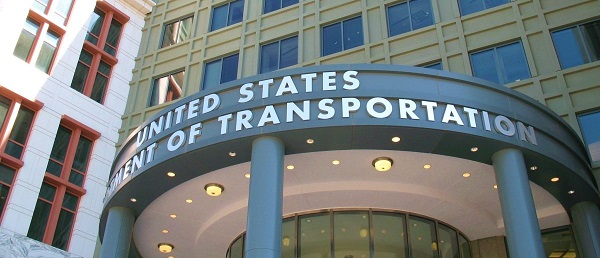
The Department of Transportation (DOT) will announce the establishment of the Beautifying Transportation Infrastructure Council (BTIC) on Thursday, the Daily Caller News Foundation exclusively learned. The BTIC seeks to advise Transportation Secretary Sean Duffy on design and policy ideas for key infrastructure projects, including highways, bridges and transit hubs.
“What happened to our country’s proud tradition of building great, big, beautiful things?” Duffy said in a statement shared with the DCNF. “It’s time the design for America’s latest infrastructure projects reflects our nation’s strength, pride, and promise.”
“We’re engaging the best and brightest minds in architectural design and engineering to make beautiful structures that move you and bring about a new Golden Age of Transportation,” Duffy continued.
Mini scoop – here is the DOT’s rollout of its Beautifying Transportation Infrastructure Council, which will be tasked with making our buildings beautiful again. pic.twitter.com/
9iV2xSxdJM — Jason Hopkins (@jasonhopkinsdc) October 23, 2025
The DOT is encouraging nominations of the country’s best architects, urban planners, artists and others to serve on the council, according to the department. While ensuring that efficiency and safety remain a top priority, the BTIC will provide guidance on projects that “enhance” public areas and develop aesthetic performance metrics.
The new council aligns with an executive order signed by President Donald Trump in August 2025 regarding infrastructure. The “Making Federal Architecture Beautiful Again” order calls for federal public buildings in the country to “respect regional architectural heritage” and aims to prevent federal construction projects from using modernist and brutalist architecture styles, instead returning to a classical style.
“The Founders, in line with great societies before them, attached great importance to Federal civic architecture,” Trump’s order stated. “They wanted America’s public buildings to inspire the American people and encourage civic virtue.”
“President George Washington and Secretary of State Thomas Jefferson consciously modeled the most important buildings in Washington, D.C., on the classical architecture of ancient Athens and Rome,” the order continued. “Because of their proven ability to meet these requirements, classical and traditional architecture are preferred modes of architectural design.”
The DOT invested millions in major infrastructure projects since Trump’s return to the White House. Duffy announced in August a $43 million transformation initiative of the New York Penn Station in New York City and in September unveiledmajor progress in the rehabilitation and modernization of Washington Union Station in Washington, D.C.
The BTIC will comprise up to 11 members who will serve two-year terms, with the chance to be reappointed, according to the DOT. The task force will meet biannually. The deadline for nominations will end Nov. 21.

The Recall Trap: 21 Alberta MLA’s face recall petitions
Tyler Robinson shows no remorse in first court appearance for Kirk assassination

US Notes 2.5 million illegals out and counting

‘There Will Be Very Serious Retaliation’: Two American Servicemen, Interpreter Killed In Syrian Attack
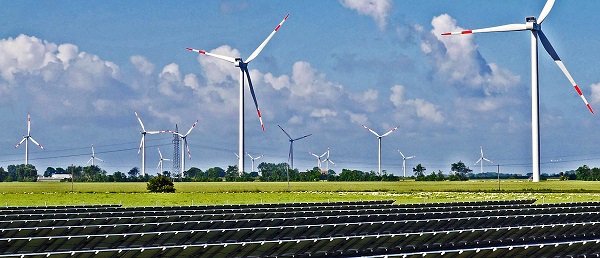
Inflation Reduction Act, Green New Deal Causing America’s Energy Crisis

Terror in Australia: 12 killed after gunmen open fire on Hanukkah celebration
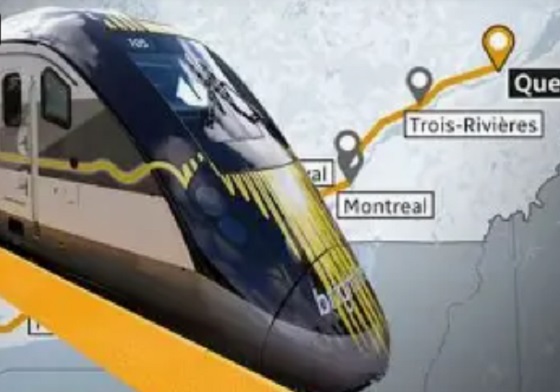
High-speed rail between Toronto and Quebec City a costly boondoggle for Canadian taxpayers
-
 Business1 day ago
Canada Hits the Brakes on Population
-
 Crime14 hours ago
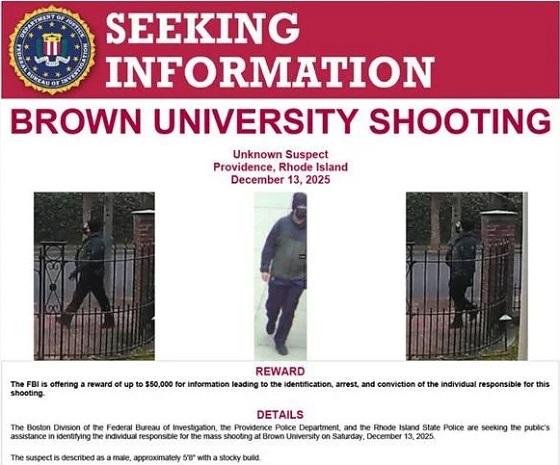
Brown University shooter dead of apparent self-inflicted gunshot wound
-
 International2 days ago
Bondi Beach Shows Why Self-Defense Is a Vital Right
-
 Crime2 days ago
Bondi Beach Survivor Says Cops Prevented Her From Fighting Back Against Terrorists
-
 Crime2 days ago
The Uncomfortable Demographics of Islamist Bloodshed—and Why “Islamophobia” Deflection Increases the Threat
-
 Agriculture1 day ago
Why is Canada paying for dairy ‘losses’ during a boom?
-
 International2 days ago
House Rejects Bipartisan Attempt To Block Trump From Using Military Force Against Venezuela
-
 Frontier Centre for Public Policy1 day ago
Canada Lets Child-Porn Offenders Off Easy While Targeting Bible Believers