
Bruce Dowbiggin
Sometimes An Ingrate Nation Pt. 2: The Great One Makes His Choice


@PaulChampLaw So, Wayne Gretzky flew on an FBI jet in April 2025 with Kash Patel to watch the Capitals? We all make choices…

Canadians always liked to see themselves as a reflective people. Not hurried into extremes. Slow to anger, quick to act on danger. Humble guys like Wayne Gretzky or Bobby Orr.
If there’s one thing that pissed them off it was anyone sucking up to Americans. Unless… they make it BIG in the U.S.. There was a big exemption for Canadians like Gretzky or Orr or Mike Myers who went south to make a fortune. For them the standards didn’t apply. They were heroes of the nation.
Until Donald Trump. Any Canadian hero not calling him Cheeto or Orange Man Bad or Hitler can expect to receive the mark of Cain from the Left huddling in the Great White North. Anyone excoriating POTUS 45/ 47 , however, is given a lifetime hall pass. No exceptions.

As Gretzky has learned again. Sunday a new photo emerged of the greatest offensive star in NHL history playing golf with the president at his Jupiter, Florida, golf course— the one where Ryan Wesley Routh tried to assassinate Trump. This led to the same predictable rending of garments and clutching of pearls that greeted Gretzky’s earlier declaration of loyalty to The Worst Human Being Ever®. Traitor is now the mildest description of 99 chez nous.
Give the Gretzkys credit, they didn’t disguise their decision. After Trump’s stunning (to some) win last November, Janet Gretzky cooed, “Congratulations Mr. President Donald J Trump ♥️🤍💙🇺🇸 You did it, You deserved it, you earned every bit of it. The world is a better place to have you as our Leader. Proud to be an American. Thank you for being such a great friend. May God keep watching over you ♥️🙏🏻♥️ Love our family to yours !”

The incensed Canadian left swung into action. “University of Alberta professor Robert Summers @RJSCity: “He’s been a pretty unlikable guy for a long time, this just further solidifies it. @ktownkeith: “Gretzky is disgusting and pathetic. I will celebrate when Ovechkin breaks his record. Also FYI, Mario was the best hockey player ever, not Whine Gretzky.” “People should burn all their old hockey jersey and cards of this guy. A shame”. And those were the nice ones.
The bile harkened to Orr supporting Trump in 2020. In our column at the time we noted the furious aftermath from Canadian hockey worshippers. Canadian sports media called Trump a “monster”, a “racist” and “a totalitarian”. You could heat most of the GTA with the steam emitted by their indignation at Orr having the temerity to speak out politically.

Orr has taken a low profile since, as even some in his hometown of Parry Sound wants nothing to do with him. “Poor Parry Sound,” tweeted Mary Lou George on Oct. 31, 2020. “What a disgrace #BobbyOrr has turned out to be. Guess he believes bragging about assaulting women really is just locker room talk since he wants Trump on his team. Sad.”
As with everything in the current McCoys vs Hartfields feud between the countries the venom launched at Gretzky’s decision to support Trump is underscored by the quaint notion that Canada is anything like it was when Gretzky’s 1988 wedding was a national celebration in Canada.
As the polling from the 2025 Canadian federal election showed young people are fed up with their Boomer parents’ nostalgia for the nation that smuggled the American diplomats out of Iran in 1979. They want economic opportunities and the ability to buy homes. What successive Liberal governments have given them is trans insanity, cities overrun by Hamas protesters and national debt backloaded on their shoulders.
To say nothing of Chinese infiltration of the economy and trade. No wonder they keep trying to change the words to O Canada all the time.
The decisions by Gretzky and Orr, among many expats, is partially due to Trump’s contrarian stance. But it also reflects a distance from the land where they grew up. Mike Myers and Elbows Up played on this sentimental loyalty to help Mark Carney succeed Justin Trudeau. But as more and more financial and talent stacks head south for opportunity (see Nutrien’s decision to ship Saskatchewan potash via the U.S., ignoring B.C.) it’s becoming clear that a reckoning is coming.
Trump’s brusque brushoff of Canada as no better than a 51st state was like an intervention with a friend or family member who’s gotten lost. It was a chance for self examination as we said in this 2018 column, Sometimes An Ingrate Nation.
Instead they bought the fake line that Trump would “invade” the country. Canadians lamented their treatment of “loyal old friend Canada”. But since the Iran heroics what has Canada done to help the U.S.? America has guarded Canada militarily. It has protected the trade lanes where Canadian goods are shipped. It has accepted hundreds of thousands of health patients unable to receive timely treatment in Canada’s single payer system.
It has encouraged Canada an automobile industry. It has allowed Canada’s film and TV industry subsidies. It has (so far) tolerated Canada’s dairy cartels. And it has welcomed Canadians by the millions to holiday or invest in America.
Now list the selfless deeds Canada has performed for America since Ken Taylor squirrelled the diplomats out of Tehran. Um… give us time. We sent Orr and Gretzky to the U.S. to jumpstart hockey. And all the SCTV folks. Canada also became the home for every foaming leftist in America seeking to escape Trump. Beyond that? Diddly squat.
So instead of the prolonged lamentations of the women and men and others of Canada, perhaps Elbows Up should listen to VPOTUS J.D. Vance. “And with all due respect to my Canadian friends, whose politics focus obsessively on the United States: your stagnating living standards have nothing to do with Donald Trump or whatever bogeyman the CBC tells you to blame. The fault lies with your leadership, elected by you.”
Bruce Dowbiggin @dowbboy is the editor of Not The Public Broadcaster A two-time winner of the Gemini Award as Canada’s top television sports broadcaster, his new book Deal With It: The Trades That Stunned The NHL And Changed hockey is now available on Amazon. Inexact Science: The Six Most Compelling Draft Years In NHL History, his previous book with his son Evan, was voted the seventh-best professional hockey book of all time by bookauthority.org . His 2004 book Money Players was voted sixth best on the same list, and is available via brucedowbigginbooks.ca.

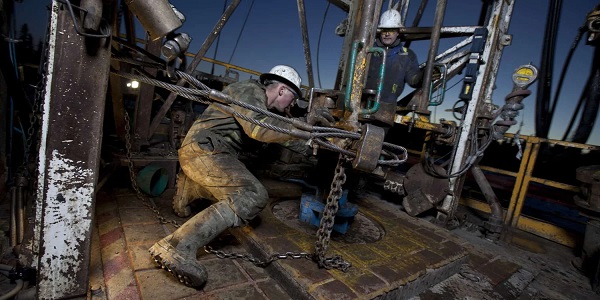
Ottawa and Alberta have reached a memorandum of understanding that paves the way for, among other things,. a new oil pipeline in return for higher carbon taxes.. How’s it doing? B.C. and Quebec both reject the idea. The Liberals former Climate minister resigned his cabinet post.
The most amazing feature of the Mark Carney/Danielle Smith MOU is that both politicians feverishly hope that the deal fails. Carney can tell Quebec that he tried to reason with Smith, and Smith can say she tried to meet the federalists halfway. Failure suits their larger purposes. Carney to fold Canada into Euro climate insanity and Smith into a strong motive for separation.
We’ll have more in. our next column. In the meantime, another Alberta initiative on healthcare has stirred up the hornets of single payer.
To paraphrase Winston Churchill, “Canada’s health system is the worst in the world. Except for all the other systems.” If there is anything left that Canadians agree upon it’s that their provincial healthcare plan is a disaster that needs a boatload of new money and the same old class rhetoric about two-tier healthcare.
Both prescriptions have been tried multiple times since Tommy Douglas made single-payer healthcare a reality. As a result today’s delivery systems are constantly strained to breaking and the money poured in to support it evaporates in red tape and vested interests.
But suggest that Canada adopt the method of somewhere else and you get back stares. Who does it better? How can we copy that? Crickets. Then ask governments to cut back and create efficiencies. No one wants to tell the unions they are the first to move. As a result, operating rooms sit empty for lack of trained nurses and rationed doctors. The system is all dressed with nowhere to go.

There are many earnest people trying their best to fit the square peg in the round hole. But so far it has produced a Frankenstein quilt of private clinics in other provinces handling overflows and American hospitals taking tens of thousands of overflows or critical cases. Ontarians travelling to Quebec for knee surgery. Albertans heading to eastern B.C. for hips and shoulders. Nova Scotians going to Boston for back surgery.
To say nothing of the legions of Canadians on waiting lists for terminal cancer or heart problems who, in despair of dying before seeing a specialist in 18-24 months, voyage to Lithuania, India or Mexico to save their lives. Everyone knows a story of a family member or friend surgery shopping. Every Canadian health authority sympathizes. But little solves the problem.
Which has led to predictable grumbling. @Tablesalt13 if the Liberals hadn’t surged immigration over the last 4-5 years and if all of the money spent on refugees and foreign aid was redirected to health care how much shorter would Canada’s medical waitlists be?

And if any small progress is made the radical armies opposed to two-tiered healthcare raise a stink in the media, stopping that progress in its tracks. Suggesting public/ private healthcare systems is a quick trip to a Toronto Star editorial and losing your next election.
Into the impasse Alberta has introduced Bill 11 to create a parallel private–public surgery system that allows surgeons to perform non-urgent procedures privately under set conditions, moving ahead with the premier’s announcement last week. The government says the approach will shorten wait times and help recruit doctors, while critics argue it risks two-tier care.
The legislation marks a major shift in healthcare reform in Alberta and faces (shock) strong opposition from the NDP which is pairing these reforms with the province’s use of the notwithstanding clause in banning radical trans surgery and medication for minors in the province.
There are examples of two-tiered healthcare elsewhere in the West. France, Ireland, Denmark, Switzerland and Germany, among others, use a dual-tracked system mixing public and private coverages. Reports FHI, “In the most successful European healthcare systems, e.g., Germany and Switzerland, the federal government handles the PEC risk, via national pools and government subsidies, sparing the burden on individual insurers.” While not perfect it hasn’t produced class warfare.
The Americans, meanwhile learned to their chagrin with ObamaCare (the Affordable Care Act, that government healthcare is not the answer. The U.S. heath system replaces government accounting with health insurance rationers as the immoveable force. Many Americans were outside this traditional system, paying out-of-pocket. Under the Obama plan everyone would be forced into a plan, like it or not.
The AFI continues, “ACA has a flawed design. Its architects meant to appeal to the public, promising what the old system could not fully deliver – guaranteed access to affordable health cover and coverage for pre-existing conditions (PECs). But they were wrong about being able to keep your doctor or your old policy if you wanted.
Previously individual policies had to exclude PEC coverage to be financially viable. Yet employer group policies often covered it after a waiting period, but the extra costs were spread over their fellow workers – a real burden on medium and small-sized companies. Under Obamacare, the very high PEC costs are still spread too narrowly – on each of the very few insurers who have agreed to stay as exchange insurers.”
In other words getting a universal system that helps the needy while not degrading treatment is illusory. Alberta is willing to admit that fact. Like agreement on pipelines it will face nothing but headwinds from the diehards (pun intended) who still believe Michael Moore’s fairy tales about a free system in Canada. And will do nothing to bind Canada’s warring factions.
Bruce Dowbiggin @dowbboy is the editor of Not The Public Broadcaster A two-time winner of the Gemini Award as Canada’s top television sports broadcaster, his new book Deal With It: The Trades That Stunned The NHL And Changed hockey is now available on Amazon. Inexact Science: The Six Most Compelling Draft Years In NHL History, his previous book with his son Evan, was voted the seventh-best professional hockey book of all time by bookauthority.org . His 2004 book Money Players was voted sixth best on the same list, and is available via brucedowbigginbooks.ca.

The week after Grey Cup is always a good time to look in for our first serious analysis at how Canada’s NHL teams are doing. So let’s take a quick… WHOA… what’s happening here?
If the playoffs were to begin next week (we wish) then it would be a cold breakfast for teams in Elbows Up. Just two clubs—Winnipeg and Montreal— would even qualify for the postseason. And the Jets have just found out their star goalie Connor Hellybuyck is unlikely to play much before mid-January.
The two putative Canadian hopes for a first Stanley cup since 1993— Toronto and Edmonton— are sucking on vapour trails. After being raked 5-2 by Montreal, the Leafs have just a 24.9 percent chance of making the playoffs. Conor McDavid’s Oilers have a better percentage but their same old goaltending woes and a ticking clock on McDavid’s back.
Granted that, going into the weekend, no team in the East was more than four points out of the wild-card spot while all but three teams were within three points of a playoff spot in the West. But the Canadian teams are stuck behind some premium teams and need lotsa’ luck so they end up like Max Verstappen not Lance Stroll.
Maybe a Canadian men’s Olympic gold medal can reduce the sting of no Cup, no future for another season. But it won’t save the jobs of coaches in Calgary, Toronto and Vancouver unlikely to survive also-ran status. Let’s take a close look at the not-so-magnificent seven starting west to east.
Vancouver: The Nucks have a sterling 4 percent chance of making the postseason as of this writing. In the powerful Western Conference that’s still an insult to a franchise that hasn’t recovered from the hasty 2013 firing of GM Mike Gillis—who won… let us us see… two Presidents Trophies and six Western Conference titles in a row. Since then? Uh, bagel.
It’s nice that Elias Petterson has come back from the morgue this season. But it will come down to goalie Thatcher Demko staying healthy and whether ownership wants to go full tank or just a quarter-tank for a draft pick. Hard to see Adam Foote surviving as coach.
Calgary: Speaking of tanking, everyone in Calgary wants the Flames to do a teardown for the top picks in the 2026 Draft. Everyone, except, for the Flames absentee owner Murray Edwards and his robo-spokesman Don Maloney. They want the five percent chance at a playoff spot and a mid-round first draft pick. The Flames missed the chance to restructure in 2023 when Johnny Gaudreau and Matthew Tkachuk departed. But again, denialism in the management suite tried to make it an even trade with Florida, sign huge new contracts and keep pushing. Bad decision.
Only question here is when does the purge begin and what can they get to help Dustin Wolf— signed for seven more years— in net?
Edmonton: We’ve written at length here and here about the McDavid saga. He and the management team halved the baby with a short-term deal to pretend he’s staying in the Chuck. Their healthy chance of making the playoffs (75.5 percent) says one thing. Their play in the putrid Pacific— they’re given up six-goals-plus five times in just 24 games— says another. But as long as McDavid and Leon Draisaitl stay healthy they might still finesse a ticket to a their third straight Finals ride.
But if they get near the trading deadline and the postseason is a mirage the noise to trade McDavid will be deafening. And the offers staggering for a capped-out team.
Winnipeg: Last year was supposed to be the Jets big year. Okay, that didn’t work out so well. The Jets kept their core together for another chance at finally making a serious playoff run. So it will all come down, as it has in the past, to the health and playoff juju of Hellybuyck. Their ticket out of the Central Division lies in beating powerful Colorado and Dallas and, if that happens, staying healthy.
The Jets would probably just as well their stars didn’t go get beat up in the Olympics, but that’s unlikely. There’s always been a karma about Winnipeg breaking the Canada Cup jinx. Still a long shot.

EAST
Toronto: So you’re saying Mitch Marner wasn’t the problem with the highly rated Maple Leafs never getting as far as the Conference Finals? They’re 3-5-2 in their last ten, their captain is still a sulky figure— only now his output doesn’t make it worthwhile. And the Toronto media is trying to do the players’ will to get coach Craig Berube fired for them. The same problems remain from years previous: dubious goaltending and a shallow talent pool on defence.
The biggest problem for the Leafs is their closing window for success. They’re old, have few tradeable assets in the system and have traded top picks away for short-term gains that never appeared. Expect fireworks after the Olympics if this crate doesn’t get moving. New MLSE boss Keith Pelley has no ties to the current administration and will sweep clean.
Ottawa: The Sens have managed to survive the loss of captain Brad Tkachuck to a broken finger. How? Ottawa have gotten goals from 17 different players which means they have balance. And so far they are above average 5-on-5. All good. They’ve also taken advantage of the mediocrity of the Leafs and other Eastern teams to stay afloat.
Their Achilles heel? Between the pipes. Both goalies have a save percentage under .875 and that ain’t going to cut it come spring. As always finances will limit their trades and manoeuvrability.

Montreal: The Habs were the fashionable pick before the season as the Canadian team most likely to get to the Cup they last won in 1993. Defenceman Laine Hutson is all that he promised last year. The dynamic top line of Cole Caufield, Nick Suzuki and Juraj Slafkovsky have cast back to the days of the Flying Frenchmen. Managing expectations in Montreal’s rabid hockey culture— where a misplaced apostrophe can cause chaos—means never taking anything for granted.
Now if only goaltender Jacob Dobes can keep up his play long enough for Sam Montembault to regain his form the Habs could be a thing in the spring. At this rate they might be the only thing.
Bruce Dowbiggin @dowbboy is the editor of Not The Public Broadcaster A two-time winner of the Gemini Award as Canada’s top television sports broadcaster, his new book Deal With It: The Trades That Stunned The NHL And Changed hockey is now available on Amazon. Inexact Science: The Six Most Compelling Draft Years In NHL History, his previous book with his son Evan, was voted the seventh-best professional hockey book of all time by bookauthority.org . His 2004 book Money Players was voted sixth best on the same list, and is available via brucedowbigginbooks.ca.


From Underdog to Top Broodmare
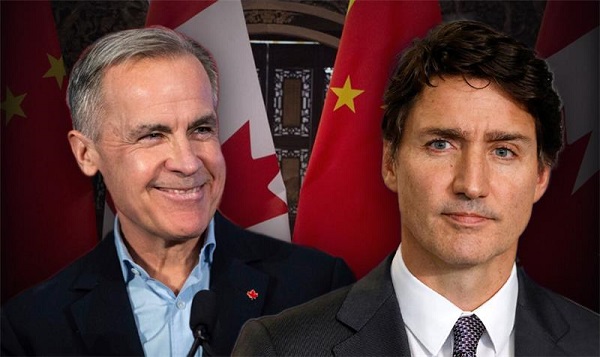
Beijing’s blueprint for breaking Canada-U.S. unity

Alberta introducing dual practice health care model to increase options and shorten wait times while promising protection for publicly funded services

More than 200 children will receive dangerous puberty blockers for new UK study
US Supreme Court may end ‘emergency’ tariffs, but that won’t stop the President
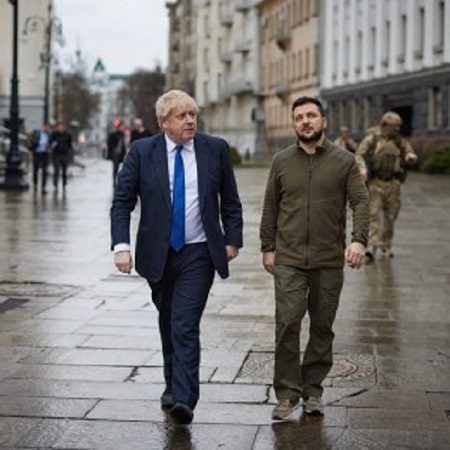
Boris Johnson Urges Ukraine to Continue War
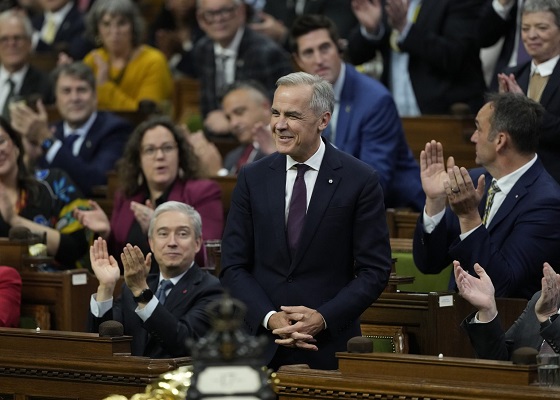
Is affirming existing, approved projects truly the best we can do in Canada?
-
 Addictions2 days ago
The Death We Manage, the Life We Forget
-
 Alberta1 day ago
Net Zero goal is a fundamental flaw in the Ottawa-Alberta MOU
-
 Daily Caller2 days ago
John Kerry Lurches Back Onto Global Stage For One Final Gasp
-
 Food1 day ago
Canada Still Serves Up Food Dyes The FDA Has Banned
-
 National1 day ago
Eco-radical Canadian Cabinet minister resigns after oil deal approved
-
 Addictions1 day ago
Manitoba Is Doubling Down On A Failed Drug Policy
-
 COVID-1921 hours ago
The dangers of mRNA vaccines explained by Dr. John Campbell
-
 COVID-191 day ago
FDA says COVID shots ‘killed’ at least 10 children, promises new vaccine safeguards