
Economy
Scrap the second carbon tax: Taxpayers Federation



Author: Franco Terrazzano

The Canadian Taxpayers Federation is calling on the federal government to scrap its second carbon tax following the release of government documents showing it will cost the Canadian economy $9 billion by 2030.
“This is another government report that shows carbon taxes are a big drag on the economy that Canadians can’t afford,” said Franco Terrazzano, CTF Federal Director. “The second carbon tax alone will cost average families hundreds and even thousands of dollars.”
The second carbon tax is embedded within federal fuel regulations, which took effect July 1, 2023.
The regulations require producers to reduce the carbon content of their fuels. If they can’t meet the requirements, they must purchase credits, increasing costs that are passed onto Canadians purchasing gasoline or diesel.
According to government documents, in 2030, the second carbon tax “will result in an overall GDP decrease of up to $9 billion.”
The documents were tabled by Environment and Climate Change Canada in the House of Commons in response to an order paper question filed by Conservative MP John Barlow (Foothills).
Previous analysis from Environment and Climate Change Canada shows the first carbon tax (including industrial) will cost the Canadian economy $30 billion by 2030.
The Parliamentary Budget Officer estimated the second carbon tax will cost the average household between $384 and $1,157 in 2030 depending on the province.
“Canada’s own emissions are not large enough to materially impact climate change,” according to the PBO report.
The PBO also estimated the second carbon tax will increase the price of gasoline by up to 17 cents per litre and the price of diesel up to 16 cents per litre by 2030.
“Prime Minister Justin Trudeau can make life more affordable and help our economy by scrapping his carbon taxes,” Terrazzano said.


From the Fraser Institute
By Steven Globerman, Joel Emes and Austin Thompson
According to our new study, in 2023 (the latest year of comparable data), typical homes on the market were unaffordable for families earning the local median income in every major Canadian city
The dream of homeownership is alive, but not well. Nearly nine in ten young Canadians (aged 18-29) aspire to own a home—but share a similar worry about the current state of housing in Canada.
Of course, those worries are justified. According to our new study, in 2023 (the latest year of comparable data), typical homes on the market were unaffordable for families earning the local median income in every major Canadian city. It’s not just Vancouver and Toronto—housing affordability has eroded nationwide.
Aspiring homeowners face two distinct challenges—saving enough for a downpayment and keeping up with mortgage payments. Both have become harder in recent years.
For example, in 2014, across 36 of Canada’s largest cities, a 20 per cent downpayment for a typical home—detached house, townhouse, condo—cost the equivalent of 14.1 months (on average) of after-tax income for families earning the median income. By 2023, that figure had grown to 22.0 months—a 56 per cent increase. During the same period for those same families, a mortgage payment for a typical home increased (as a share of after-tax incomes) from 29.9 per cent to 56.6 per cent.
No major city has been spared. Between 2014 and 2023, the price of a typical home rose faster than the growth of median after-tax family income in 32 out of 36 of Canada’s largest cities. And in all 36 cities, the monthly mortgage payment on a typical home grew (again, as a share of median after-tax family income), reflecting rising house prices and higher mortgage rates.
While the housing affordability crisis is national in scope, the challenge differs between cities.
In 2023, a median-income-earning family in Fredericton, the most affordable large city for homeownership in Canada, had save the equivalent of 10.6 months of after-tax income ($56,240) for a 20 per cent downpayment on a typical home—and the monthly mortgage payment ($1,445) required 27.2 per cent of that family’s after-tax income. Meanwhile, a median-income-earning family in Vancouver, Canada’s least affordable city, had to spend the equivalent of 43.7 months of after-tax income ($235,520) for a 20 per cent downpayment on a typical home with a monthly mortgage ($6,052) that required 112.3 per cent of its after-tax income—a financial impossibility unless the family could rely on support from family or friends.
The financial barriers to homeownership are clearly greater in Vancouver. But, crucially, neither city is truly “affordable.” In Fredericton and Vancouver, as in every other major Canadian city, buying a typical home with the median income produces a debt burden beyond what’s advisable. Recent house price declines in cities such as Vancouver and Toronto have provided some relief, but homeownership remains far beyond the reach of many families—and a sharp slowdown in homebuilding threatens to limit further gains in affordability.
For families priced out of homeownership, renting doesn’t offer much relief, as rent affordability has also declined in nearly every city. In 2014, rental rates for the median-priced rental unit required 19.8 per cent of median after-tax family income, on average across major cities. By 2023, that figure had risen to 23.5 per cent. And in the least affordable cities for renters, Toronto and Vancouver, a median-priced rental required more than 30 per cent of median after-tax family income. That’s a heavy burden for Canada’s renters who typically earn less than homeowners. It’s also an added financial barrier to homeownership— many Canadian families rent for years before buying their first home, and higher rents make it harder to save for a downpayment.
In light of these realities, Canadians should ask—why have house prices and rental rates outpaced income growth?
Poor public policy has played a key role. Local regulations, lengthy municipal approval processes, and costly taxes and fees all combine to hinder housing development. And the federal government allowed a historic surge in immigration that greatly outpaced new home construction. It’s simple supply and demand—when more people chase a limited (and restricted) supply of homes, prices rise. Meanwhile, after-tax incomes aren’t keeping pace, as government policies that discourage investment and economic growth also discourage wage growth.
Canadians still want to own homes, but a decade of deteriorating affordability has made that a distant prospect for many families. Reversing the trend will require accelerated homebuilding, better-paced immigration and policies that grow wages while limiting tax bills for Canadians—changes governments routinely promise but rarely deliver.

Steven Globerman
Senior Fellow and Addington Chair in Measurement, Fraser Institute

Joel Emes
Senior Economist, Fraser Institute

Austin Thompson
Senior Policy Analyst, Fraser Institute
Banks
To increase competition in Canadian banking, mandate and mindset of bank regulators must change

From the Fraser Institute
By Lawrence L. Schembri and Andrew Spence
Canada’s weak productivity performance is directly related to the lack of competition across many concentrated industries. The high cost of financial services is a key contributor to our lagging living standards because services, such as payments, are essential input to the rest of our economy.
It’s well known that Canada’s banks are expensive and the services that they provide are outdated, especially compared to the banking systems of the United Kingdom and Australia that have better balanced the objectives of stability, competition and efficiency.
Canada’s banks are increasingly being called out by senior federal officials for not embracing new technology that would lower costs and improve productivity and living standards. Peter Rutledge, the Superintendent of Financial Institutions and senior officials at the Bank of Canada, notably Senior Deputy Governor Carolyn Rogers and Deputy Governor Nicolas Vincent, have called for measures to increase competition in the banking system to promote innovation, efficiency and lower prices for financial services.
The recent federal budget proposed several new measures to increase competition in the Canadian banking sector, which are long overdue. As a marker of how uncompetitive the market for financial services has become, the budget proposed direct interventions to reduce and even eliminate some bank service fees. In addition, the budget outlined a requirement to improve price and fee transparency for many transactions so consumers can make informed choices.
In an effort to reduce barriers to new entrants and to growth by smaller banks, the budget also proposed to ease the requirement that small banks include more public ownership in their capital structure.
At long last, the federal government signalled a commitment to (finally) introduce open banking by enacting the long-delayed Consumer Driven Banking Act. Open banking gives consumers full control over who they want to provide them with their financial services needs efficiently and safely. Consumers can then move beyond banks, utilizing technology to access cheaper and more efficient alternative financial service providers.
Open banking has been up and running in many countries around the world to great success. Canada lags far behind the U.K., Australia and Brazil where the presence of open banking has introduced lower prices, better service quality and faster transactions. It has also brought financing to small and medium-sized business who are often shut out of bank lending.
Realizing open banking and its gains requires a new payment mechanism called real time rail. This payment system delivers low-cost and immediate access to nonbank as well as bank financial service providers. Real time rail has been in the works in Canada for over a decade, but progress has been glacial and lags far behind the world’s leaders.
Despite the budget’s welcome backing for open banking, Canada should address the legislative mandates of its most important regulators, requiring them to weigh equally the twin objectives of financial system stability as well as competition and efficiency.
To better balance these objectives, Canada needs to reform its institutional framework to enhance the resilience of the overall banking system so it can absorb an individual bank failure at acceptable cost. This would encourage bank regulators to move away from a rigid “fear of failure” cultural mindset that suppresses competition and efficiency and has held back innovation and progress.
Canada should also reduce the compliance burden imposed on banks by the many and varied regulators to reduce barriers to entry and expansion by domestic and foreign banks. These agencies, including the Office of the Superintendent of Financial Institutions, Financial Consumer Agency of Canada, Financial Transactions and Reports Analysis Centre of Canada, the Canada Deposit Insurance Corporation plus several others, act in largely uncoordinated manner and their duplicative effort greatly increases compliance and reporting costs. While Canada’s large banks are able, because of their market power, to pass those costs through to their customers via higher prices and fees, they also benefit because the heavy compliance burden represents a significant barrier to entry that shelters them from competition.
More fundamental reforms are needed, beyond the measures included in the federal budget, to strengthen the institutional framework and change the regulatory mindset. Such reforms would meaningfully increase competition, efficiency and innovation in the Canadian banking system, simultaneously improving the quality and lowering the cost of financial services, and thus raising productivity and the living standards of Canadians.

Lawrence L. Schembri
Senior Fellow, Fraser Institute

Andrew Spence

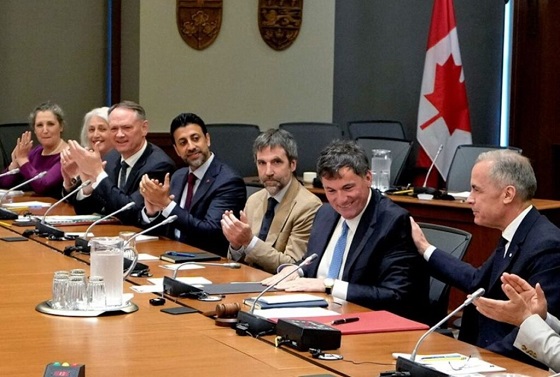
Carney’s Toronto cabinet meetings cost $530,000

Health Canada report finds euthanasia now accounts for over 5% of deaths nationwide

A Democracy That Can’t Take A Joke Won’t Tolerate Dissent

Integration Or Indignation: Whose Strategy Worked Best Against Trump?
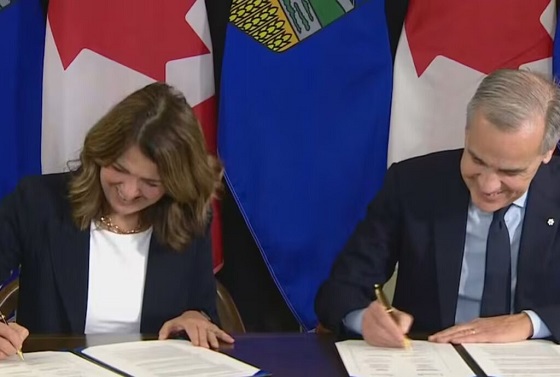
What the Data Shows About the New Canada-Alberta Pipeline Opportunity

While Trump has southern border secure, hundreds of thousands of illegal immigrants still flooding in from Canada

Alberta Sports Hall of Fame Announces Class of 2026 Inductees
-
 Censorship Industrial Complex2 days ago
US Condemns EU Censorship Pressure, Defends X
-
 Dan McTeague2 days ago
Will this deal actually build a pipeline in Canada?
-
Banks2 days ago
To increase competition in Canadian banking, mandate and mindset of bank regulators must change
-
 Bruce Dowbiggin1 day ago
Wayne Gretzky’s Terrible, Awful Week.. And Soccer/ Football.
-
 Business2 days ago
Loblaws Owes Canadians Up to $500 Million in “Secret” Bread Cash
-
 Opinion2 days ago
The day the ‘King of rock ‘n’ roll saved the Arizona memorial
-
 Focal Points1 day ago
Common Vaccines Linked to 38-50% Increased Risk of Dementia and Alzheimer’s
-
 espionage1 day ago
Western Campuses Help Build China’s Digital Dragnet With U.S. Tax Funds, Study Warns