
Uncategorized
Saudi team after Post writer included soldiers, royal guards


ISTANBUL — Saudi royal guards, intelligence officers, soldiers and an autopsy expert were part of a 15-member team from the kingdom that targeted missing writer Jamal Khashoggi, Turkish media said Thursday. The Washington Post contributor vanished last week while visiting the Saudi Consulate in Istanbul.

The reported details, coupled with more-direct comments from Turkish President Recep Tayyip Erdogan, appear aimed at gradually pressuring Saudi Arabia to reveal what happened to Khashoggi, while also balancing Ankara’s need to maintain the kingdom’s investments in Turkey and relations on other issues.
In Washington, President Donald Trump expressed reservations over withholding American arm sales over the writer, even as prominent American lawmakers increasingly criticize Saudi Arabia — America’s longtime security ally in the region.
Turkish officials say they fear Saudi Arabia killed and dismembered Khashoggi, without offering evidence explaining why they believe that. Khashoggi contributed columns to the Post, including some critical of Crown Prince Mohammed bin Salman.
Saudi Arabia, before going silent in recent days, called the allegation it abducted or harmed Khashoggi “baseless.” However, it too has offered no evidence to support its claim the writer simply walked out of its consulate and vanished despite his fiancée waiting outside for him.
Information continues to trickle out through Turkish media about the 15-man Saudi team previously described as an “assassination squad.” These leaks, largely matching across Turkey’s state-run media and private Erdogan-linked outlets, likely come from the country’s security services as another means to pressure the kingdom over Khashoggi’s Oct. 2 disappearance.
The first plane of nine Saudis arrived from Riyadh around 3:30 a.m. that day, and included an individual described as a forensics official, according to the Sabah newspaper. One Turkish official, speaking on condition of anonymity to The Associated Press to discuss an ongoing police investigation, previously described that official as an “autopsy expert.”
The other six flew in on commercial flights, according to a list obtained by Sabah, which also published their names and faces. Local media described the Saudis being military and intelligence officers, as well as several “royal guards.”
Around the time Khashoggi entered the consulate, a second private plane from Riyadh took off for Istanbul. About two hours after he entered the consulate, video released by state media in Turkey shows several vehicles with diplomatic license plates, leave the consulate and drive some 2
The Hurriyet newspaper and other media alleged that the consulate’s 28 local staff were given the day off because a “diplomats’ meeting” would be held there. The reports did not cite a source and there was no official confirmation.
By 7 p.m., six of the Saudis left by the newly arrived private plane, flying onto Cairo and remaining overnight until heading back to Riyadh, according to Sabah and other media reports. By 11 p.m., another seven left by the other private plane, heading to Dubai, United Arab Emirates, similarly remaining there overnight and then flying on to Riyadh the next day, according to reports. Two others flew out commercially, Sabah said.
While the reports provide nothing definitive, they darken the picture surrounding Khashoggi’s disappearance.
Erdogan was quoted by Turkish media on Thursday as telling journalists flying with him back home from a visit to Hungary that “we cannot remain silent to such an incident.”
“How is it possible for a consulate, an embassy not to have security camera systems? Is it possible for the Saudi Arabian consulate where the incident occurred not to have camera systems?” Erdogan asked. “If a bird flew, if a mosquito appeared, these systems would catch them and (I believe) they (the Saudis) would have the most advanced of systems.”
Meanwhile, Trump told reporters in the Oval Office that he has a call in to Khashoggi’s fiancee, Hatice Cengiz, who has appealed to the president and first lady Melania Trump for help.
Trump said he had spoken with the Saudis about what he called a “bad situation,” but he did not disclose details of his conversations. He also said the U.S. was working “very closely” with Turkey, “and I think we’ll get to the bottom of it.”
White House press secretary Sarah Huckabee Sanders said national security adviser John Bolton and presidential senior adviser Jared Kushner spoke on Tuesday to Crown Prince Mohammed about Khashoggi.
Secretary of State Mike Pompeo then had a follow-up call with the crown prince to reiterate the U.S. request for information and a thorough, transparent investigation.
In an interview later Wednesday with “Fox News @ Night,” Trump said he wanted to find out what happened to Khashoggi but appeared reluctant to consider blocking arms sales, citing economic reasons.
“I think that would be hurting us,” Trump said. “We have jobs, we have a lot of things happening in this country. We have a country that’s doing probably better economically than it’s ever done before.”
“Part of that is what we’re doing with our
On his first international trip as president, Trump visited Saudi Arabia and announced $110 billion in proposed arms sales. The administration also relies on Saudi support for its Middle East agenda to counter Iranian influence, fight extremism and support an expected peace plan between Israel and the Palestinians.
Khashoggi had gone to the consulate on Tuesday last week to get paperwork he needed for his upcoming marriage. His Turkish fiancee waited outside.
The Post reported Wednesday evening that U.S. intelligence intercepts outlined a Saudi plan to detain Khashoggi. The Post, citing anonymous U.S. officials familiar with the intelligence, said Prince Mohammed ordered an operation to lure Khashoggi from his home in Virginia, where he lived most recently, to Saudi Arabia and then detain him.
___
Fraser reported from Ankara, Turkey, and Gambrell reported from Dubai, United Arab Emirates.
Ayse Wieting, Suzan Fraser And Jon Gambrell, The Associated Press

Uncategorized
Mortgaging Canada’s energy future — the hidden costs of the Carney-Smith pipeline deal


Much of the commentary on the Carney-Smith pipeline Memorandum of Understanding (MOU) has focused on the question of whether or not the proposed pipeline will ever get built.
That’s an important topic, and one that deserves to be examined — whether, as John Robson, of the indispensable Climate Discussion Nexus, predicted, “opposition from the government of British Columbia and aboriginal groups, and the skittishness of the oil industry about investing in a major project in Canada, will kill [the pipeline] dead.”
But I’m going to ask a different question: Would it even be worth building this pipeline on the terms Ottawa is forcing on Alberta? If you squint, the MOU might look like a victory on paper. Ottawa suspends the oil and gas emissions cap, proposes an exemption from the West Coast tanker ban, and lays the groundwork for the construction of one (though only one) million barrels per day pipeline to tidewater.
But in return, Alberta must agree to jack its industrial carbon tax up from $95 to $130 per tonne at a minimum, while committing to tens of billions in carbon capture, utilization, and storage (CCUS) spending, including the $16.5 billion Pathways Alliance megaproject.
Here’s the part none of the project’s boosters seem to want to mention: those concessions will make the production of Canadian hydrocarbon energy significantly more expensive.
As economist Jack Mintz has explained, the industrial carbon tax hike alone adds more than $5 USD per barrel of Canadian crude to marginal production costs — the costs that matter when companies decide whether to invest in new production. Layer on the CCUS requirements and you get another $1.20–$3 per barrel for mining projects and $3.60–$4.80 for steam-assisted operations.
While roughly 62% of the capital cost of carbon capture is to be covered by taxpayers — another problem with the agreement, I might add — the remainder is covered by the industry, and thus, eventually, consumers.
Total damage: somewhere between $6.40 and $10 US per barrel. Perhaps more.
“Ultimately,” the Fraser Institute explains, “this will widen the competitiveness gap between Alberta and many other jurisdictions, such as the United States,” that don’t hamstring their energy producers in this way. Producers in Texas and Oklahoma, not to mention Saudi Arabia, Venezuela, or Russia, aren’t paying a dime in equivalent carbon taxes or mandatory CCUS bills. They’re not so masochistic.
American refiners won’t pay a “low-carbon premium” for Canadian crude. They’ll just buy cheaper oil or ramp up their own production.
In short, a shiny new pipe is worthless if the extra cost makes barrels of our oil so expensive that no one will want them.
And that doesn’t even touch on the problem for the domestic market, where the higher production cost will be passed onto Canadian consumers in the form of higher gas and diesel prices, home heating costs, and an elevated cost of everyday goods, like groceries.
Either way, Canadians lose.
So, concludes Mintz, “The big problem for a new oil pipeline isn’t getting BC or First Nation acceptance. Rather, it’s smothering the industry’s competitiveness by layering on carbon pricing and decarbonization costs that most competing countries don’t charge.” Meanwhile, lurking underneath this whole discussion is the MOU’s ultimate Achilles’ heel: net-zero.
The MOU proudly declares that “Canada and Alberta remain committed to achieving Net-Zero greenhouse gas emissions by 2050.” As Vaclav Smil documented in a recent study of Net-Zero, global fossil-fuel use has risen 55% since the 1997 Kyoto agreement, despite trillions spent on subsidies and regulations. Fossil fuels still supply 82% of the world’s energy.
With these numbers in mind, the idea that Canada can unilaterally decarbonize its largest export industry in 25 years is delusional.
This deal doesn’t secure Canada’s energy future. It mortgages it. We are trading market access for self-inflicted costs that will shrink production, scare off capital, and cut into the profitability of any potential pipeline. Affordable energy, good jobs, and national prosperity shouldn’t require surrendering to net-zero fantasy.If Ottawa were serious about making Canada an energy superpower, it would scrap the anti-resource laws outright, kill the carbon taxes, and let our world-class oil and gas compete on merit. Instead, we’ve been handed a backroom MOU which, for the cost of one pipeline — if that! — guarantees higher costs today and smothers the industry that is the backbone of the Canadian economy.
This MOU isn’t salvation. It’s a prescription for Canadian decline.

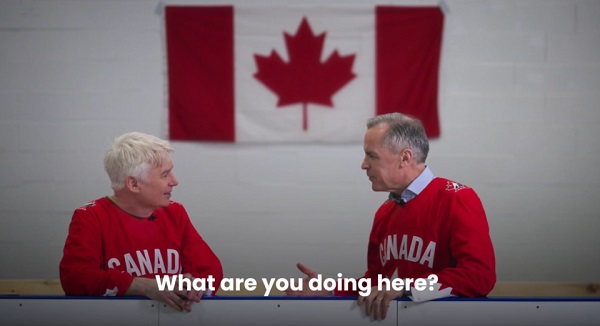

The cost of the bureaucracy increased by $6 billion last year, according to newly released numbers in Public Accounts disclosures. The Canadian Taxpayers Federation is calling on Prime Minister Mark Carney to immediately shrink the bureaucracy.
“The Public Accounts show the cost of the federal bureaucracy is out of control,” said Franco Terrazzano, CTF Federal Director. “Tinkering around the edges won’t cut it, Carney needs to take urgent action to shrink the bloated federal bureaucracy.”
The federal bureaucracy cost taxpayers $71.4 billion in 2024-25, according to the Public Accounts. The cost of the federal bureaucracy increased by $6 billion, or more than nine per cent, over the last year.
The federal bureaucracy cost taxpayers $39.6 billion in 2015-16, according to the Public Accounts. That means the cost of the federal bureaucracy increased 80 per cent over the last 10 years. The government added 99,000 extra bureaucrats between 2015-16 and 2024-25.
Half of Canadians say federal services have gotten worse since 2016, despite the massive increase in the federal bureaucracy, according to a Leger poll.
Not only has the size of the bureaucracy increased, the cost of consultants, contractors and outsourcing has increased as well. The government spent $23.1 billion on “professional and special services” last year, according to the Public Accounts. That’s an 11 per cent increase over the previous year. The government’s spending on professional and special services more than doubled since 2015-16.
“Taxpayers should not be paying way more for in-house government bureaucrats and way more for outside help,” Terrazzano said. “Mere promises to find minor savings in the federal bureaucracy won’t fix Canada’s finances.
“Taxpayers need Carney to take urgent action and significantly cut the number of bureaucrats now.”
Table: Cost of bureaucracy and professional and special services, Public Accounts
| Year | Bureaucracy | Professional and special services |
|
$71,369,677,000 |
$23,145,218,000 |
|
|
$65,326,643,000 |
$20,771,477,000 |
|
|
$56,467,851,000 |
$18,591,373,000 |
|
|
$60,676,243,000 |
$17,511,078,000 |
|
|
$52,984,272,000 |
$14,720,455,000 |
|
|
$46,349,166,000 |
$13,334,341,000 |
|
|
$46,131,628,000 |
$12,940,395,000 |
|
|
$45,262,821,000 |
$12,950,619,000 |
|
|
$38,909,594,000 |
$11,910,257,000 |
|
|
$39,616,656,000 |
$11,082,974,000 |

There’s No Bias at CBC News, You Say? Well, OK…
Religion on trial: what could happen if Canada passes its new hate speech legislation
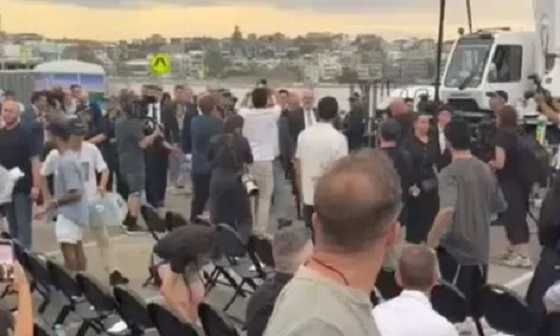
Australian PM booed at Bondi vigil as crowd screams “shame!”
The “Disruptor-in-Chief” places Canada in the crosshairs
Mortgaging Canada’s energy future — the hidden costs of the Carney-Smith pipeline deal
Canada’s EV gamble is starting to backfire

UK Police Pilot AI System to Track “Suspicious” Driver Journeys
-
 Censorship Industrial Complex14 hours ago
US Under Secretary of State Slams UK and EU Over Online Speech Regulation, Announces Release of Files on Past Censorship Efforts
-
 Alberta2 days ago
Alberta project would be “the biggest carbon capture and storage project in the world”
-
 Energy2 days ago
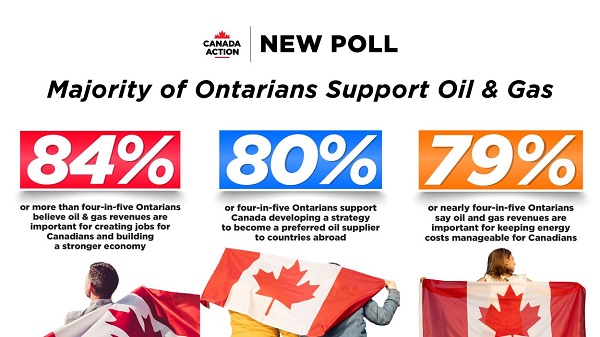
New Poll Shows Ontarians See Oil & Gas as Key to Jobs, Economy, and Trade
-
 Business17 hours ago
“Magnitude cannot be overstated”: Minnesota aid scam may reach $9 billion
-
 Business2 days ago
Residents in economically free states reap the rewards
-
 Bruce Dowbiggin2 days ago
Be Careful What You Wish For In 2026: Mark Carney With A Majority
-
 Business2 days ago
Socialism vs. Capitalism
-
 Energy1 day ago
Canada’s debate on energy levelled up in 2025