
Uncategorized
Samsung folding phone is different – but also almost $2,000


SAN FRANCISCO — Samsung unveiled a highly anticipated smartphone with a foldable screen in an attempt to break the innovation funk that has beset the smartphone market.

But it’s far from clear that consumers will embrace a device that retails for almost $2,000, or that it will provide the creative catalyst the smartphone market needs.
The Galaxy Fold, announced Wednesday in San Francisco, will sell for $1,980 when it is released April 26.
Consumers willing to pay that hefty price will get a device that can unfold like a wallet. It can work like a traditional smartphone with a 4.6 inch screen or morph into something more like a mini-tablet with a 7.3 inch screen.
When fully unfolded, the device will be able to simultaneously run three different apps on the screen. The Galaxy Fold will also boast six cameras: three in the back, two on the inside and one on the front.
After spending nearly five years developing the technology underlying its foldable-screen phone, Samsung is clearly hoping for a big payoff.
“Get ready for the dawn of a new era,” declared DJ Koh, who oversees Samsung’s smartphone division. The new phone, he said, “answers skeptics who said everything has already been done.”
If Samsung is right, the Galaxy Fold will spur more people to upgrade their phones. Overall smartphones sales peaked in 2017 ; Samsung saw its smartphone sales fall 8
But most analysts see a limited market for foldable-screen phones, at least in the early going. Phones like the Galaxy Fold “are likely to sell to a very limited market of technology aficionados who like big screens and have big wallets,” said IDC analyst Ramon Llamas.
Samsung also released new Galaxy S10 phones that boast fancy cameras, sleek screens covering the entire front of the devices and at least 128 gigabytes of storage — important features to consumers shopping for phones.
The new phones are able take wider-angle shots than previous models and can charge other devices, including wireless headphones and smartwatches. A fourth S10 model, due out this spring, will have faster wireless speeds through the emerging 5G cellular network.
But those improvements aren’t a big leap from the smartphones released during the past few years by Samsung, Apple and other top manufacturers.
“These phones are all variations on a theme we have already seen,” Llamas said. “It’s the same song with a slightly different verse.”
With the pace of smartphone innovation seemingly locked in baby steps, consumers are holding on to their existing devices for longer periods than they have in the past. Compounding that reluctance to upgrade is smartphone sticker shock, which the Galaxy Fold seems unlikely to alleviate. Prices for some existing phones models have soared above $1,000 .
Samsung is offering a slightly smaller S10 model for $750 in an attempt to make smartphones more affordable, but the higher-end models sell for $900 and $1,000.
Two of Samsung’s new models, the S10 and the S10 Plus, are largely incremental upgrades of last year’s S9 and S9 Plus, although they are designed differently. They are about the same size as last year’s models, but will have more display space, as Samsung found additional ways to eliminate waste around the edges. As a byproduct, the top right of the display has a circle or oval cut out for the front-facing cameras.
The lowest-priced “essentials” model, the S10e, has most of the same features, but is 5
All three S10 models will come out March 8, with pre-orders starting Thursday.
Samsung trumpeted its 10th anniversary lineup ahead of a major mobile device conference in Barcelona next week. Huawei, which is threatening to overtake Apple as the world’s second biggest seller of smartphones, has promised to use the Spain showcase to preview its own device with a foldable screen and the ability to connect to 5G networks as they become operational during the next few years.
___
Jesdanun reported from New York.
Michael Liedtke And Anick Jesdanun, The Associated Press




The cost of the bureaucracy increased by $6 billion last year, according to newly released numbers in Public Accounts disclosures. The Canadian Taxpayers Federation is calling on Prime Minister Mark Carney to immediately shrink the bureaucracy.
“The Public Accounts show the cost of the federal bureaucracy is out of control,” said Franco Terrazzano, CTF Federal Director. “Tinkering around the edges won’t cut it, Carney needs to take urgent action to shrink the bloated federal bureaucracy.”
The federal bureaucracy cost taxpayers $71.4 billion in 2024-25, according to the Public Accounts. The cost of the federal bureaucracy increased by $6 billion, or more than nine per cent, over the last year.
The federal bureaucracy cost taxpayers $39.6 billion in 2015-16, according to the Public Accounts. That means the cost of the federal bureaucracy increased 80 per cent over the last 10 years. The government added 99,000 extra bureaucrats between 2015-16 and 2024-25.
Half of Canadians say federal services have gotten worse since 2016, despite the massive increase in the federal bureaucracy, according to a Leger poll.
Not only has the size of the bureaucracy increased, the cost of consultants, contractors and outsourcing has increased as well. The government spent $23.1 billion on “professional and special services” last year, according to the Public Accounts. That’s an 11 per cent increase over the previous year. The government’s spending on professional and special services more than doubled since 2015-16.
“Taxpayers should not be paying way more for in-house government bureaucrats and way more for outside help,” Terrazzano said. “Mere promises to find minor savings in the federal bureaucracy won’t fix Canada’s finances.
“Taxpayers need Carney to take urgent action and significantly cut the number of bureaucrats now.”
Table: Cost of bureaucracy and professional and special services, Public Accounts
| Year | Bureaucracy | Professional and special services |
|
$71,369,677,000 |
$23,145,218,000 |
|
|
$65,326,643,000 |
$20,771,477,000 |
|
|
$56,467,851,000 |
$18,591,373,000 |
|
|
$60,676,243,000 |
$17,511,078,000 |
|
|
$52,984,272,000 |
$14,720,455,000 |
|
|
$46,349,166,000 |
$13,334,341,000 |
|
|
$46,131,628,000 |
$12,940,395,000 |
|
|
$45,262,821,000 |
$12,950,619,000 |
|
|
$38,909,594,000 |
$11,910,257,000 |
|
|
$39,616,656,000 |
$11,082,974,000 |


From the Daily Caller News Foundation
By Jason Hopkins
The Trump administration is creating a first-of-its-kind task force aimed at ushering in a new “Golden Age” of beautiful infrastructure across the U.S.
The Department of Transportation (DOT) will announce the establishment of the Beautifying Transportation Infrastructure Council (BTIC) on Thursday, the Daily Caller News Foundation exclusively learned. The BTIC seeks to advise Transportation Secretary Sean Duffy on design and policy ideas for key infrastructure projects, including highways, bridges and transit hubs.
“What happened to our country’s proud tradition of building great, big, beautiful things?” Duffy said in a statement shared with the DCNF. “It’s time the design for America’s latest infrastructure projects reflects our nation’s strength, pride, and promise.”
“We’re engaging the best and brightest minds in architectural design and engineering to make beautiful structures that move you and bring about a new Golden Age of Transportation,” Duffy continued.
Mini scoop – here is the DOT’s rollout of its Beautifying Transportation Infrastructure Council, which will be tasked with making our buildings beautiful again. pic.twitter.com/
9iV2xSxdJM — Jason Hopkins (@jasonhopkinsdc) October 23, 2025
The DOT is encouraging nominations of the country’s best architects, urban planners, artists and others to serve on the council, according to the department. While ensuring that efficiency and safety remain a top priority, the BTIC will provide guidance on projects that “enhance” public areas and develop aesthetic performance metrics.
The new council aligns with an executive order signed by President Donald Trump in August 2025 regarding infrastructure. The “Making Federal Architecture Beautiful Again” order calls for federal public buildings in the country to “respect regional architectural heritage” and aims to prevent federal construction projects from using modernist and brutalist architecture styles, instead returning to a classical style.
“The Founders, in line with great societies before them, attached great importance to Federal civic architecture,” Trump’s order stated. “They wanted America’s public buildings to inspire the American people and encourage civic virtue.”
“President George Washington and Secretary of State Thomas Jefferson consciously modeled the most important buildings in Washington, D.C., on the classical architecture of ancient Athens and Rome,” the order continued. “Because of their proven ability to meet these requirements, classical and traditional architecture are preferred modes of architectural design.”
The DOT invested millions in major infrastructure projects since Trump’s return to the White House. Duffy announced in August a $43 million transformation initiative of the New York Penn Station in New York City and in September unveiledmajor progress in the rehabilitation and modernization of Washington Union Station in Washington, D.C.
The BTIC will comprise up to 11 members who will serve two-year terms, with the chance to be reappointed, according to the DOT. The task force will meet biannually. The deadline for nominations will end Nov. 21.

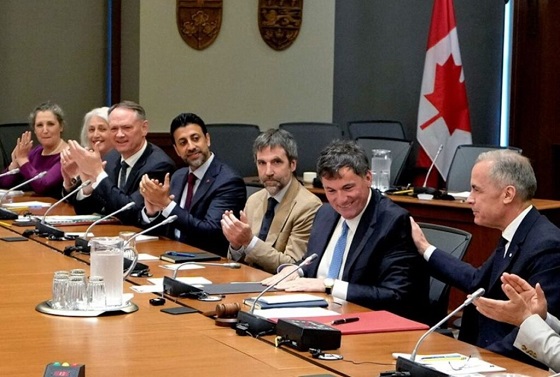
Carney’s Toronto cabinet meetings cost $530,000

While Trump has southern border secure, hundreds of thousands of illegal immigrants still flooding in from Canada

Alberta will use provincial laws to stop Canadian gov’t from trying to confiscate legal firearms

Integration Or Indignation: Whose Strategy Worked Best Against Trump?

What the Data Shows About the New Canada-Alberta Pipeline Opportunity

The Trickster Politics of the Tanker Ban are Hiding a Much Bigger Reckoning for B.C.
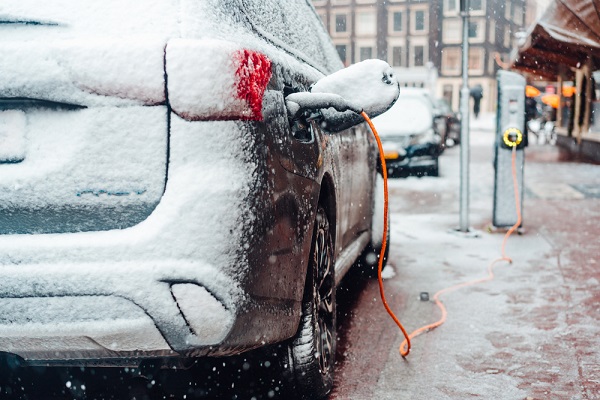
Canada’s EV Mandate Is Running On Empty
-
 Great Reset2 days ago
Surgery Denied. Death Approved.
-
 Business2 days ago
The Climate-Risk Industrial Complex and the Manufactured Insurance Crisis
-
 Health2 days ago
The Data That Doesn’t Exist
-
 Crime1 day ago
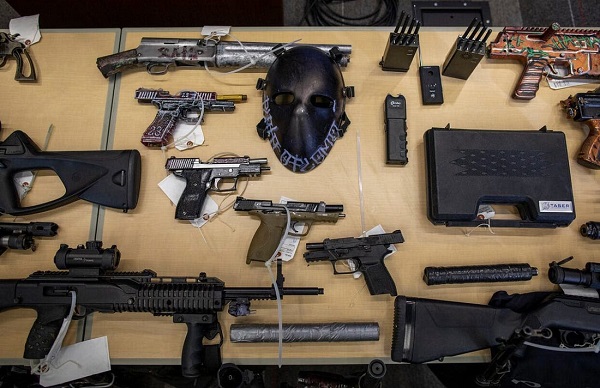
Inside the Fortified Sinaloa-Linked Compound Canada Still Can’t Seize After 12 Years of Legal War
-
 Censorship Industrial Complex20 hours ago
Liberals gain support for ‘hate speech’ bill targeting Bible passages against homosexuality
-
 Automotive8 hours ago
The $50 Billion Question: EVs Never Delivered What Ottawa Promised
-
 Great Reset20 hours ago
Proposed ban on euthanasia for mental illness sparks passionate debate in Canada’s Parliament
-
Health20 hours ago
US podcaster Glenn Beck extends a lifeline to a Saskatchewan woman waiting for MAiD