
Daily Caller
RFK’s Calls To Ban One Of Big Pharma’s Most Powerful Tools Rattle Drugmakers Despite Uncertain Political Prospects



From the Daily Caller News Foundation
By Adam Pack
“The primary purpose of pharmaceutical advertising is not to influence consumers, but rather the television networks and news itself”
President-elect Donald Trump’s nomination of Robert F. Kennedy Jr. to helm the Department of Health and Human Services(HHS) is reportedly rattling drugmakers in light of Kennedy’s prior calls to ban pharmaceutical advertising.

If confirmed by the Senate to serve as HHS secretary, Kennedy could marshal the country’s public health agencies to implement his Make America Healthy Again (MAHA) priorities, leading one pharmaceutical industry observer to claim that Kennedy is likely to attempt a ban on direct-to-consumer (DTC) drug advertising. However, any attempt from Kennedy to crack down on pharmaceutical advertising would almost certainly be challenged by drugmakers on First Amendment grounds and may lack the support of Trump and Republican lawmakers who have so far refrained from commenting on Kennedy’s proposal.
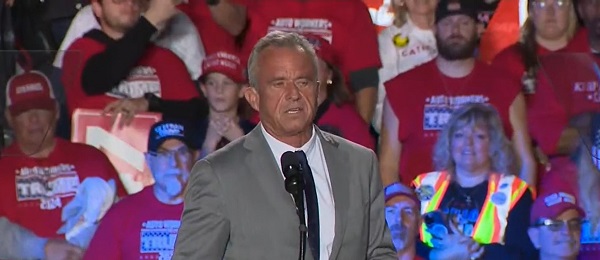
“One of the things I’m going to advise Donald Trump to do in order to correct the chronic disease epidemic is to ban pharmaceutical advertising on TV,” Kennedy said to thunderous applause during a Tucker Carlson Live Tour event in Glendale, Arizona, on Oct. 31. “There’s only two countries in the world that allow pharmaceutical advertising on the airwaves. One of them is New Zealand and the other is us and we have the highest disease rate, and we buy more drugs and they’re more expensive than anywhere in the world.”
Spending on DTC pharmaceutical advertising in the United States ballooned to more than $7 billion in 2023, with ad buys on weight loss and diabetes drugs surpassing $1 billion for the first time, according to analysis from MediaRadar.
‘Threat To The Public Good’
“Whilst we have a relatively benign view of RFK’s impact on the Pharma industry, one thing that does worry us is the potential for the U.S. government to ban DTC advertising of drugs,” United Kingdom-based research firm Intron Health wrote in a report excerpted by FiercePharma, a pharmaceutical industry-focused news outlet. “We see this as the biggest imminent threat from RFK and the new Trump administration.”
Kennedy could wield considerable influence over the second Trump administration’s approach to pharmaceutical advertising since the Food and Drug Administration (FDA) — the chief regulator of the pharmaceutical industry’s advertisements — is housed within HHS.
The Biden FDA issued new guidelines on DTC advertising that went into effect on May 20, requiring advertising to state drugs’ side effects and medication risks in a “clear, conspicuous, and neutral manner.” Kennedy called for a review of these guidelines in an op-ed in The Wall Street Journal published on Sept. 5.
During his run for president and as a Trump campaign surrogate, Kennedy claimed that media outlets who receive substantial ad revenue from pharmaceutical companies cannot report on Big Pharma with objectivity.
“The primary purpose of pharmaceutical advertising is not to influence consumers, but rather the television networks and news itself,” according to a statement on Kennedy’s website. “It gives Big Pharma the power to dictate what goes on the news — and what doesn’t — because the networks won’t bite the hand that feeds them.”
“Every other country in the world recognizes that pharma ads represent a threat to the public good,” Kennedy’s website also claims.
Kennedy’s concern that mainstream media has been co-opted by the pharmaceutical industry to buy news outlets’ silence on scrutinizing drugmakers in exchange for ad revenue has been embraced by influential voices in the MAHA movement and other Trump allies.
“The news ad spending from pharma is a public relations lobbying tactic, essentially to buy off the news,” Calley Means, a Kennedy advisor and MAHA advocate, told Tucker Carlson during an interview on Feb 2. “The news is not investigating pharma.”
“No advertising for pharma,” Elon Musk wrote on X on Nov. 19 in response to a post alleging a correlation between the growth of pharmaceutical advertising and rising media bias.
Dr. Jay Bhattacharya, Trump’s nominee to lead the National Institutes of Health, has also argued that media organizations that rake in pharmaceutical advertising revenue should face increased scrutiny when reporting on public health matters. Bhattacharya was notably blacklisted by Twitter before Musk bought the platform over his criticism of the medical establishment’s lockdown approach to the COVID-19 pandemic.
“Another argument against direct-to-consumer advertising by drug companies: Because of DTC ads, drug companies like Pfizer hold a vice grip on the editorial policies of conventional American media, which can ill afford to lose the advertising money,” Bhattacharya wrote on X on May 30, 2023.
Dr. Marty Mackary, Trump’s pick to lead the FDA, has not commented on Kennedy’s proposal nor allegations that the mainstream media has been corrupted by the pharmaceutical industry.
Ban Denies ‘Opportunity To Be Informed’
Although a ban on pharmaceutical advertising would put the U.S. more in line with the rest of the world, an attempted prohibition of the practice by the incoming Trump administration would likely infringe upon the First Amendment’s protection of “commercial speech,” according to Dr. Jeffrey Singer, a general surgeon and senior fellow at the libertarian-leaning Cato Institute.
“His calls to ban pharmaceutical advertising violate the First Amendment right to freely share and exchange information, including scientific information, and infringe on the individual right to self-medicate,” Singer wrote in a statement following Trump’s nomination of Kennedy to serve as HHS secretary.
Banning pharmaceutical advertising would also make Americans less informed about the availability of drugs and their side effects and widen the information gap between medical practitioners and patients, an apparent contradiction to Kennedy’s pledge to fight for Americans’ ability to question the medical establishment and do their own research, Singer told the Daily Caller News Foundation in an interview.
“On the one hand, RFK Jr. says — and I agree with him — that people need to be empowered. They need to do their own due diligence. We should be doing our own investigations,” Singer told the DCNF. “Well, how are you going to do that if you are barred from hearing what the pharmaceutical companies have to say about their medication, and its risks and benefits and side effects, which the FDA requires them to mention?”
“If you want an empowered population of adults to be able to do their own due diligence, you can’t block them from the information that a pharmaceutical [ad] is going to give them — especially when they’re [pharmaceutical companies] allowed to give it to healthcare practitioners,” Singer added. “Denying us the information actually denies us the opportunity to be informed.”
Uncertain Political Prospects
Kennedy’s call to ban pharmaceutical advertising is likely to face skepticism from Republican lawmakers who have traditionally preferred a deregulatory approach to the pharmaceutical industry. The current legislative effort to ban DTC pharmaceutical advertising in Congress has no support from Republican lawmakers.
“Sometimes when I hear his [Kennedy’s] agenda discussed, people are like ‘sounds great — he’s never going to do it’. There’s zero chance he’s going to be able to undo these conflicts of interests and the power of Big Ag and these Republican lawmakers who have a lot of big donors in these industries,” Megyn Kelly told Casey Means, during a Nov. 20 interview on her show about whether Kennedy’s MAHA priorities have enough support to be achieved during the next four years.
The pharmaceutical industry notably has roughly 1800 registered lobbyists in the United States, and industry PACs have doled out more than $15 million to candidates this year.
Trump tried to further regulate pharmaceutical advertising during his first administration by requiring DTC ads on television to include the list price for nearly all drugs covered by Medicare and Medicaid. Three large drugmakers filed suit in response and a federal judge struck down the regulation before it went into effect, ruling that HHS overstepped its authority to compel drugmakers to include their list prices in advertising.
Trump’s transition team did not respond to the DCNF’s inquiry about whether the president-elect supports Kennedy’s advocacy to crack down on pharmaceutical advertising.
The Pharmaceutical Research and Manufacturers of America, a trade association that lobbies on behalf of the pharmaceutical industry, declined to comment on Kennedy’s calls to ban pharmaceutical advertising.
A Kennedy spokesperson did not respond to the DCNF’s request for comment.

Daily Caller
Trump Orders Review Of Why U.S. Childhood Vaccination Schedule Has More Shots Than Peer Countries
From the Daily Caller News Foundation
By Emily Kopp
President Donald Trump will direct his top health officials to conduct a systematic review of the childhood vaccinations schedule by reviewing those of other high-income countries and update domestic recommendations if the schedules abroad appear superior, according to a memorandum obtained by the Daily Caller News Foundation.
“In January 2025, the United States recommended vaccinating all children for 18 diseases, including COVID-19, making our country a high outlier in the number of vaccinations recommended for all children,” the memo will state. “Study is warranted to ensure that Americans are receiving the best, scientifically-supported medical advice in the world.”
Trump directs the secretary of the Health and Human Services (HHS) and the director of the Centers for Disease Control and Prevention to adopt best practices from other countries if deemed more medically sound. The memo cites the contrast between the U.S., which recommends vaccination for 18 diseases, and Denmark, which recommends vaccinations for 10 diseases; Japan, which recommends vaccinations for 14 diseases; and Germany, which recommends vaccinations for 15 diseases.
Dear Readers:
As a nonprofit, we are dependent on the generosity of our readers.
Please consider making a small donation of any amount here.
Thank you!
HHS Secretary Robert F. Kennedy Jr. has long been a critic of the U.S. childhood vaccination schedule.
The Trump Administration ended the blanket recommendation for all children to get annual COVID-19 vaccine boosters in perpetuity. Food and Drug Administration (FDA) Commissioner Marty Makary and Chief Medical Officer Vinay Prasad announced in May that the agency would not approve new COVID booster shots for children and healthy non-elderly adults without clinical trials demonstrating the benefit. On Friday, Prasad told his staff at the Center for Biologics Evaluation and Research that a review by career staff traced the deaths of 10 children to the COVID vaccine, announced new changes to vaccine regulation, and asked for “introspection.”
Trump’s memo follows a two-day meeting of vaccine advisors to the Centers for Disease Control and Prevention in which the committee adopted changes to U.S. policy on Hepatitis B vaccination that bring the country’s policy in alignment with 24 peer nations.

Total vaccines in January 2025 before the change in COVID policy. Credit: ACIP
The meeting included a presentation by FDA Center for Drug Evaluation and Research Director Tracy Beth Høeg showing the discordance between the childhood vaccination schedule in the U.S. and those of other developed nations.
“Why are we so different from other developed nations, and is it ethically and scientifically justified?” Høeg asked. “We owe our children science-based recommendations here in the United States.”

From the Daily Caller News Foundation
During the latest marathon cabinet meeting on Dec. 2, Energy Secretary Chris Wright made news when he told President Donald Trump that “The biggest determinant of the price of energy is politicians, political leaders, and polices — that’s what drives energy prices.”
He’s right about that, and it is why the back-and-forth struggle over federal energy and climate policy plays such a key role in America’s economy and society. Just 10 months into this second Trump presidency, the administration’s policies are already having a profound impact, both at home and abroad.
While the rapid expansion of AI datacenters over the past year is currently being blamed by many for driving up electric costs, power bills were skyrocketing long before that big tech boom began, driven in large part by the policies of the Obama and Biden administration designed to regulate and subsidize an energy transition into reality. As I’ve pointed out here in the past, driving up the costs of all forms of energy to encourage conservation is a central objective of the climate alarm-driven transition, and that part of the green agenda has been highly effective.
Dear Readers:
As a nonprofit, we are dependent on the generosity of our readers.
Please consider making a small donation of any amount here.
Thank you!
President Trump, Wright, and other key appointees like Interior Secretary Doug Burgum and EPA Administrator Lee Zeldin have moved aggressively throughout 2025 to repeal much of that onerous regulatory agenda. The GOP congressional majorities succeeded in phasing out Biden’s costly green energy subsidies as part of the One Big Beautiful Bill Act, which Trump signed into law on July 4. As the federal regulatory structure eases and subsidy costs diminish, it is reasonable to expect a gradual easing of electricity and other energy prices.
This year’s fading out of public fear over climate change and its attendant fright narrative spells bad news for the climate alarm movement. The resulting cracks in the green facade have manifested rapidly in recent weeks.
Climate-focused conflict groups that rely on public fears to drive donations have fallen on hard times. According to a report in the New York Times, the Sierra Club has lost 60 percent of the membership it reported in 2019 and the group’s management team has fallen into infighting over elements of the group’s agenda. Greenpeace is struggling just to stay afloat after losing a huge court judgment for defaming pipeline company Energy Transfer during its efforts to stop the building of the Dakota Access Pipeline.
350.org, an advocacy group founded by Bill McKibben, shut down its U.S. operations in November amid funding woes that had forced planned 25 percent budget cuts for 2025 and 2026. Employees at EDF voted to form their own union after the group went through several rounds of budget cuts and layoffs in recent months.
The fading of climate fears in turn caused the ESG management and investing fad to also fall out of favor, leading to a flood of companies backtracking on green investments and climate commitments. The Net Zero Banking Alliance disbanded after most of America’s big banks – Goldman Sachs, J.P. Morgan Chase, Citigroup, Wells Fargo and others – chose to drop out of its membership.
The EV industry is also struggling. As the Trump White House moves to repeal Biden-era auto mileage requirements, Ford Motor Company is preparing to shut down production of its vaunted F-150 Lightning electric pickup, and Stellantis cancelled plans to roll out a full-size EV truck of its own. Overall EV sales in the U.S. collapsed in October and November following the repeal of the $7,500 per car IRA subsidy effective Sept 30.
The administration’s policy actions have already ended any new leasing for costly and unneeded offshore wind projects in federal waters and have forced the suspension or abandonment of several projects that were already moving ahead. Capital has continued to flow into the solar industry, but even that industry’s ability to expand seems likely to fade once the federal subsidies are fully repealed at the end of 2027.
Truly, public policy matters where energy is concerned. It drives corporate strategies, capital investments, resource development and movement, and ultimately influences the cost of energy in all its forms and products. The speed at which Trump and his key appointees have driven this principle home since Jan. 20 has been truly stunning.
David Blackmon is an energy writer and consultant based in Texas. He spent 40 years in the oil and gas business, where he specialized in public policy and communications.

Carney’s Toronto cabinet meetings cost $530,000

Integration Or Indignation: Whose Strategy Worked Best Against Trump?

Health Canada report finds euthanasia now accounts for over 5% of deaths nationwide

A Democracy That Can’t Take A Joke Won’t Tolerate Dissent
What the Data Shows About the New Canada-Alberta Pipeline Opportunity

The Trickster Politics of the Tanker Ban are Hiding a Much Bigger Reckoning for B.C.

While Trump has southern border secure, hundreds of thousands of illegal immigrants still flooding in from Canada
-
 Censorship Industrial Complex2 days ago
US Condemns EU Censorship Pressure, Defends X
-
 Banks2 days ago
To increase competition in Canadian banking, mandate and mindset of bank regulators must change
-
 Dan McTeague2 days ago
Will this deal actually build a pipeline in Canada?
-
 Opinion2 days ago
The day the ‘King of rock ‘n’ roll saved the Arizona memorial
-
 Focal Points2 days ago
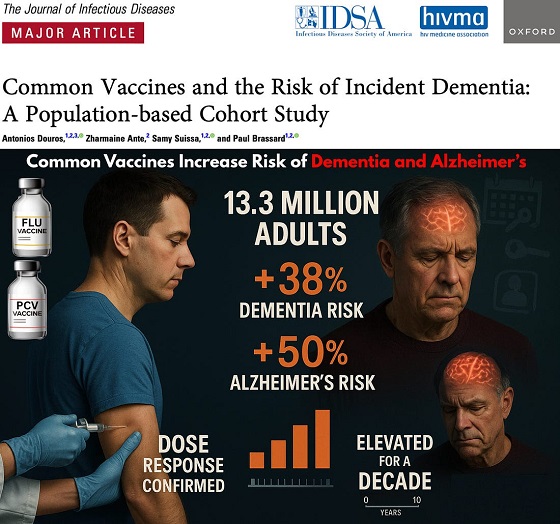
Common Vaccines Linked to 38-50% Increased Risk of Dementia and Alzheimer’s
-
 espionage1 day ago
Western Campuses Help Build China’s Digital Dragnet With U.S. Tax Funds, Study Warns
-
 Bruce Dowbiggin1 day ago
Wayne Gretzky’s Terrible, Awful Week.. And Soccer/ Football.
-
 Business1 day ago
The EU Insists Its X Fine Isn’t About Censorship. Here’s Why It Is.