
Community
RCMP clarify police response to anti-racism demonstration in Red Deer


From Alberta RCMP
Alberta RCMP Statement: Police response to anti-racism demonstration
The Alberta RCMP would like to acknowledge online discussions that have taken place over the past weeks regarding a recent event in Red Deer. Our intent is to clarify our role at this event and to explain how a comment made by one of our officers was taken out of context.

On September 20, an anti-racism demonstration in Red Deer resulted in three assaults taking place.
The first assault occurred while organizers were arriving to set-up for the event. The RCMP were not yet on site at this time but were contacted, and upon arrival spoke to the victim.
The second assault took place during the event. The RCMP did not witness this assault but once police officers became aware of what had happened, they separated the parties, provided assistance to the victim, and identified the suspect. A video of the assault was then posted online with comments that police stood by and did nothing, which is incorrect. To clarify, once again, the police did not witness the incident but once we became aware of it, we took immediate action and an investigation was initiated.
While investigating the second assault, police became aware of a third assault. This incident remains under investigation.
When the September 20 Red Deer demonstration was posted on Twitter, video footage of comments made by S/Sgt. Chris Smiley were highlighted. We must be clear that the comments made by S/Sgt. Chris Smiley were widely misattributed to the Red Deer demonstration. S/Sgt. Smiley’s comments were made on September 10 in relation to events that took place in Ponoka. At both the Red Deer and Ponoka events, RCMP officers were focussed on ensuring the demonstrations could occur in a peaceful manner and addressing issues that interfered with this basic right.
It’s important to reiterate that all Albertans have the right to peaceful assembly and demonstration. The Alberta RCMP is a neutral party and we have a duty to ensure all Albertans’ rights are upheld. In the event of an unlawful act that threatens the physical safety of the demonstrators and the general public, the RCMP will take measured steps to ensure that those who unlawfully interfere with or threaten the safety of any person or property will be held accountable in accordance with the laws of Canada.
If you have a complaint about unlawful behaviour, we ask that you please contact your local detachment. If you wish to remain anonymous, you can contact Crime Stoppers at 1-800-222-8477 (TIPS), online at www.P3Tips.com or by using the “P3 Tips” app available through Apple App Store or Google Play Store.
The Alberta RCMP is proud to be Alberta’s Provincial Police Service and we are proud of our employees who devote their lives to Albertans each and every day. We have worked hard to build trusting, safe relationships with the communities that make Alberta strong. We are committed to being transparent and accountable.


From the Fraser Institute
By Jake Fuss and Grady Munro
There would have been 1.5 million more Canadians who donated to charity in 2023—and $755.5 million more in donations—had Canadians given to the same extent they did 10 years prior
According to recent polling, approximately one in five Canadians have skipped paying a bill over the past year so they can buy groceries. As families are increasingly hard-pressed to make ends meet, this undoubtedly means more and more people must seek out food banks, shelters and other charitable organizations to meet their basic necessities.
And each year, Canadians across the country donate their time and money to charities to help those in need—particularly around the holiday season. Yet at a time when the relatively high cost of living means these organizations need more resources, new data published by the Fraser Institute shows that the level of charitable giving in Canada is actually falling.
Specifically, over the last 10 years (2013 to 2023, the latest year of available data) the share of tax-filers who reported donating to charity fell from 21.9 per cent to 16.8 per cent. And while fewer Canadians are donating to charity, they’re also donating a smaller share of their income—during the same 10-year period, the share of aggregate income donated to charity fell from 0.55 per cent to 0.52 per cent.
To put this decline into perspective, consider this: there would have been 1.5 million more Canadians who donated to charity in 2023—and $755.5 million more in donations—had Canadians given to the same extent they did 10 years prior. Simply put, this long-standing decline in charitable giving in Canada ultimately limits the resources available for charities to help those in need.
On the bright side, despite the worrying long-term trends, the share of aggregate income donated to charity recently increased from 0.50 per cent in 2022 to 0.52 per cent in 2023. While this may seem like a marginal improvement, 0.02 per cent of aggregate income for all Canadians in 2023 was $255.7 million.
The provinces also reflect the national trends. From 2013 to 2023, every province saw a decline in the share of tax-filers donating to charity. These declines ranged from 15.4 per cent in Quebec to 31.4 per cent in Prince Edward Island.
Similarly, almost every province recorded a drop in the share of aggregate income donated to charity, with the largest being the 24.7 per cent decline seen in P.E.I. The only province to buck this trend was Alberta, which saw a 3.9 per cent increase in the share of aggregate income donated over the decade.
Just as Canada as a whole saw a recent improvement in the share of aggregate income donated, so too did many of the provinces. Indeed, seven provinces (except Manitoba, Nova Scotia and Newfoundland and Labrador) saw an increase in the share of aggregate income donated to charity from 2022 to 2023, with the largest increases occurring in Saskatchewan (7.9 per cent) and Alberta (6.7 per cent).
Canadians also volunteer their time to help those in need, yet the latest data show that volunteerism is also on the wane. According to Statistics Canada, the share of Canadians who volunteered (both formally and informally) fell by 8 per cent from 2018 to 2023. And the total numbers of hours volunteered (again, both formal and informal) fell by 18 per cent over that same period.
With many Canadians struggling to make ends meet, food banks, shelters and other charitable organizations play a critical role in providing basic necessities to those in need. Yet charitable giving—which provides resources for these charities—has long been on the decline. Hopefully, we’ll see this trend turn around swiftly.


|

|
|

|
|
|


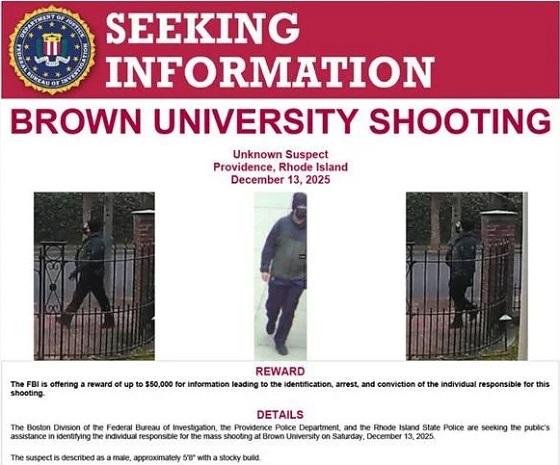
Brown University shooter dead of apparent self-inflicted gunshot wound

Alberta’s new diagnostic policy appears to meet standard for Canada Health Act compliance

Canada Hits the Brakes on Population

Ford’s EV Fiasco Fallout Hits Hard

Why is Canada paying for dairy ‘losses’ during a boom?

Bondi Beach Survivor Says Cops Prevented Her From Fighting Back Against Terrorists
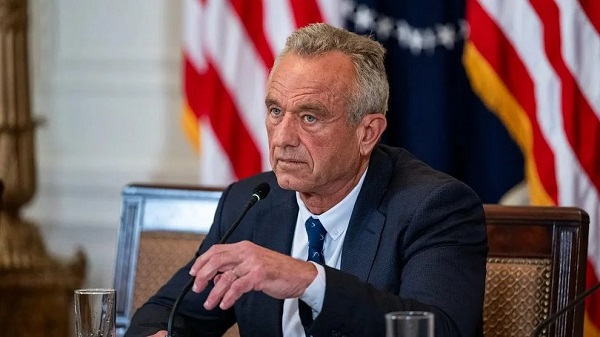
RFK Jr reversing Biden-era policies on gender transition care for minors
-
 Artificial Intelligence2 days ago
UK Police Pilot AI System to Track “Suspicious” Driver Journeys
-
 Business2 days ago
Judge Declares Mistrial in Landmark New York PRC Foreign-Agent Case
-
 International1 day ago
Georgia county admits illegally certifying 315k ballots in 2020 presidential election
-
 Digital ID2 days ago
Canadian government launches trial version of digital ID for certain licenses, permits
-
 Alberta23 hours ago
A Christmas wish list for health-care reform
-
 International2 days ago
World-leading biochemist debunks evolutionary theory
-
 Business16 hours ago
Some Of The Wackiest Things Featured In Rand Paul’s New Report Alleging $1,639,135,969,608 In Gov’t Waste
-
 Business2 days ago
The “Disruptor-in-Chief” places Canada in the crosshairs