Energy
Putin’s uranium export restrictions are a gift for Canada
From Resource Works
“The World Nuclear Association says Canada could now play a major role in meeting future world demand, as several key nations eye nuclear energy to meet growing demand for electrical power and for power production that does not use fossil fuels.”
Good to see Russian President Vladimir Putin proposing restrictions on Russian exports of uranium in retaliation for Western sanctions on Russian oil, gas, and LNG.
“Please take a look at some of the types of goods that we supply to the world market,” he told Prime Minister Mikhail Mishustin. “Maybe we should think about certain restrictions — uranium, titanium, nickel.”
Russia is the world’s sixth-largest uranium producer and has about 44% of global uranium enrichment capacity.
Canada, once the world’s largest uranium producer, is now the world’s second-largest producer of uranium, behind Kazakhstan. Canada accounts for roughly 13% of total global output, and Putin’s comment quickly increased the value of shares of our uranium producers.
The World Nuclear Association says Canada could now play a major role in meeting future world demand, as several key nations eye nuclear energy to meet growing demand for electrical power and for power production that does not use fossil fuels.
The Cigar Lake mine in Saskatchewan is one of the world’s richest in uranium. The McClean Lake mill, which processes it, is operated by a subsidiary of France’s Orano and sells 40% of its production to the French electric utility company, EDF.
Australia’s Paladin Energy moved in June to buy Canadian uranium explorer Fission Uranium for $1.14 billion. That purchase is now undergoing a national security review ordered by Ottawa.
Canada’s 34 “critical metals” and minerals have been taking up more of Ottawa’s interest, with the feds pushing their Critical Minerals Strategy and making it harder for foreign firms to acquire Canada’s biggest mining companies.
Now, Saskatchewan has vowed to compete with China in processing and production of rare earths and to become the prime North American source for metals used to make magnets for electric vehicles and wind turbines.
All this comes as one outlook says the global mining industry will require US$2.1 trillion in new investments by 2050 to meet the raw material demands of a net-zero-emissions world. The report says critical energy-transition metals, including aluminum, copper, and lithium, could face supply deficits this decade—some as early as this year.
In Canada, a new report from consultants EY says “capital is king” and is the top risk facing the mining industry this year, as tough financing and economic conditions make it more difficult to deliver the metals needed for the energy transition.
“We need about $1 trillion in investment to produce enough metals for the energy transition,” says Theo Yameogo, EY Americas and Canada mining and metals leader. “We haven’t seen that coming in. Now it’s the #1 (risk) because people are really worried. We’ve seen some M&A, but we haven’t seen direct investment in the mining sector.”
This points to the need for Canadian governments to simplify and speed up regulatory processes for new mines. It can take 12 to 15 years before a proposed mine can get through all the red tape from assorted governments and get into its first production. Jonathan Wilkinson, federal minister of energy and natural resources, announced in March that Canada would soon launch an Action Plan to speed up the mine-permitting process. But we still don’t see it.
Dan McTeague
Will this deal actually build a pipeline in Canada?
By Dan McTeague
Will Carney’s new pipeline deal actually help get a pipeline built in Canada? As we said before, the devil is in the details.
While the establishment and mainstream media cheer on the new pipeline agreement, there are specific details you need to be aware of.
Dan McTeague explains in his latest video.
Alberta
Premier Smith: Canadians support agreement between Alberta and Ottawa and the major economic opportunities it could unlock for the benefit of all
From Energy Now
By Premier Danielle Smith
Get the Latest Canadian Focused Energy News Delivered to You! It’s FREE: Quick Sign-Up Here
If Canada wants to lead global energy security efforts, build out sovereign AI infrastructure, increase funding to social programs and national defence and expand trade to new markets, we must unleash the full potential of our vast natural resources and embrace our role as a global energy superpower.
The Alberta-Ottawa Energy agreement is the first step in accomplishing all of these critical objectives.
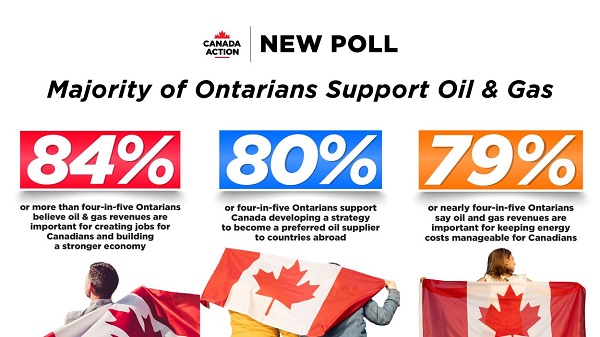
Recent polling shows that a majority of Canadians are supportive of this agreement and the major economic opportunities it could unlock for the benefit of all Canadians.
As a nation we must embrace two important realities: First, global demand for oil is increasing and second, Canada needs to generate more revenue to address its fiscal challenges.
Nations around the world — including Korea, Japan, India, Taiwan and China in Asia as well as various European nations — continue to ask for Canadian energy. We are perfectly positioned to meet those needs and lead global energy security efforts.
Our heavy oil is not only abundant, it’s responsibly developed, geopolitically stable and backed by decades of proven supply.
If we want to pay down our debt, increase funding to social programs and meet our NATO defence spending commitments, then we need to generate more revenue. And the best way to do so is to leverage our vast natural resources.
At today’s prices, Alberta’s proven oil and gas reserves represent trillions in value.
It’s not just a number; it’s a generational opportunity for Alberta and Canada to secure prosperity and invest in the future of our communities. But to unlock the full potential of this resource, we need the infrastructure to match our ambition.
There is one nation-building project that stands above all others in its ability to deliver economic benefits to Canada — a new bitumen pipeline to Asian markets.
The energy agreement signed on Nov. 27 includes a clear path to the construction of a one-million-plus barrel-per-day bitumen pipeline, with Indigenous co-ownership, that can ensure our province and country are no longer dependent on just one customer to buy our most valuable resource.
Indigenous co-ownership also provide millions in revenue to communities along the route of the project to the northwest coast, contributing toward long-lasting prosperity for their people.
The agreement also recognizes that we can increase oil and gas production while reducing our emissions.
The removal of the oil and gas emissions cap will allow our energy producers to grow and thrive again and the suspension of the federal net-zero power regulations in Alberta will open to doors to major AI data-centre investment.
It also means that Alberta will be a world leader in the development and implementation of emissions-reduction infrastructure — particularly in carbon capture utilization and storage.
The agreement will see Alberta work together with our federal partners and the Pathways companies to commence and complete the world’s largest carbon capture, utilization and storage infrastructure project.
This would make Alberta heavy oil the lowest intensity barrel on the market and displace millions of barrels of heavier-emitting fuels around the globe.
We’re sending a clear message to investors across the world: Alberta and Canada are leaders, not just in oil and gas, but in the innovation and technologies that are cutting per barrel emissions even as we ramp up production.
Where we are going — and where we intend to go with more frequency — is east, west, north and south, across oceans and around the globe. We have the energy other countries need, and will continue to need, for decades to come.
However, this agreement is just the first step in this journey. There is much hard work ahead of us. Trust must be built and earned in this partnership as we move through the next steps of this process.
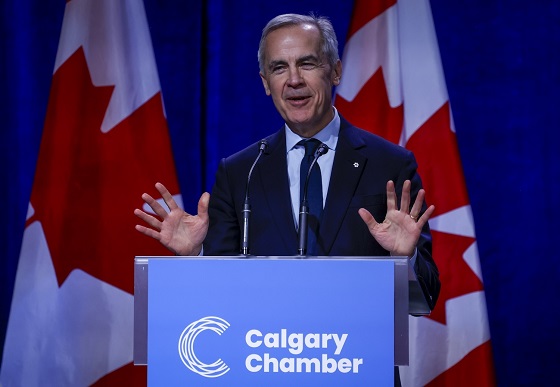
But it’s very encouraging that Prime Minister Mark Carney has made it clear he is willing to work with Alberta’s government to accomplish our shared goal of making Canada an energy superpower.
That is something we have not seen from a Canadian prime minister in more than a decade.
Together, in good faith, Alberta and Ottawa have taken the first step towards making Canada a global energy superpower for benefit of all Canadians.
Danielle Smith is the Premier of Alberta
-
Business1 day agoWhy Does Canada “Lead” the World in Funding Racist Indoctrination?
-
Alberta2 days agoPremier Smith: Canadians support agreement between Alberta and Ottawa and the major economic opportunities it could unlock for the benefit of all
-
Automotive2 days agoTrump Deals Biden’s EV Dreams A Death Blow
-
Focal Points1 day agoThe West Needs Bogeymen (Especially Russia)
-
Opinion2 days agoCountry music star Paul Brandt asks Parliament to toughen laws against child porn
-
Automotive2 days agoCanada’s EV Mandate Is Running On Empty
-
Media1 day agoThey know they are lying, we know they are lying and they know we know but the lies continue
-
Censorship Industrial Complex22 hours agoUS Condemns EU Censorship Pressure, Defends X