
Uncategorized
Turkish police search Saudi consul’s home in Khashoggi case


ISTANBUL — Turkish crime-scene investigators entered the residence of the Saudi consul general in Istanbul on Wednesday to search for evidence in the disappearance of Saudi writer Jamal Khashoggi, just as a pro-government newspaper published a gruesome recounting of his alleged slaying.

Saudi Arabia’s green national flag flapped overhead as forensics teams walked into the residence, only 2
The new search and newspaper report put further pressure on Saudi Arabia to explain what happened to Khashoggi after a visit by U.S. Secretary Mike Pompeo to both the kingdom and Turkey. Flying back home, Pompeo remained positive about an ongoing Saudi probe into Khashoggi’s disappearance, but stressed answers need to come soon.
“Sooner’s better than later for everyone,” Pompeo said.
The residence search came after a report by the newspaper Yeni Safak citing what it described as an audio recording of Khashoggi’s slaying. It described the 60-year-old Washington Post columnist as having his fingers cut off and being decapitated after entering the consulate.
The newspaper said Saudi Consul General Mohammed al-Otaibi could be heard on the tape, telling those allegedly torturing Khashoggi: “Do this outside; you’re going to get me in trouble.”
The newspaper said one of the Saudis replied: “Shut up if you want to live when you return to (Saudi) Arabia.”
Security services in Turkey have used pro-government media to leak details of Khashoggi’s case, adding to the pressure on the kingdom.
Saudi officials have not responded to repeated requests for comment from The Associated Press in recent days. Al-Otaibi left Turkey on Tuesday afternoon, Turkish state media reported.
On Wednesday, Pompeo held separate meetings with President Recep Tayyip Erdogan and Foreign Minister Mevlut Cavusoglu, each for about 40 minutes in Ankara, Turkey’s capital.
The three posed for photos, but said nothing together in front of reporters.
On a plane back home, Pompeo said Erdogan “made clear that the Saudis had
“If a country engages in activity that is unlawful it’s unacceptable,” Pompeo said. “No one is going to defend activity of that nature. We just need to simply say what happened.”
Pompeo met with Saudi King Salman and his son, the 33-year-old Crown Prince Mohammed bin Salman, on Tuesday. Before leaving Riyadh, Pompeo told reporters that the Saudi leaders “made no exceptions on who they would hold accountable.”
“They made a commitment to hold anyone connected to any wrongdoing that may be found accountable for that, whether they are a senior officer or official,” Pompeo said.
No major decisions are made outside of the ultraconservative kingdom’s ruling Al Saud family. Khashoggi had fled the country last year amid the rise of Prince Mohammed, whom he wrote critically about in the Post.
On Tuesday, a high-level Turkish official told the AP that police found “certain evidence” of Khashoggi’s slaying at the consulate, without elaborating. The official spoke on condition of anonymity because the investigation was ongoing.
President Donald Trump’s previous warnings over the case drew an angry response Sunday from Saudi Arabia and its state-linked media, including a suggestion that Riyadh could wield its oil production as a weapon. The U.S. president has been after King Salman and OPEC to boost production to drive down high oil prices, caused in part by the coming re-imposition of oil sanctions on Iran.
Prominent U.S. newspapers have reported, citing anonymous sources, that Saudi officials may soon acknowledge Khashoggi’s slaying at the consulate but blame it on a botched intelligence operation. That could, like Trump’s softening comments, seek to give the kingdom a way out of the global firestorm of criticism over Khashoggi’s fate.
___
Fraser reported from Ankara, Turkey, and Gambrell reported from Dubai, United Arab Emirates. Associated Press writer Matthew Lee in Washington contributed to this report.
Suzan Fraser, Fay Abuelgasim And Jon Gambrell, The Associated Press

Uncategorized
Mortgaging Canada’s energy future — the hidden costs of the Carney-Smith pipeline deal


Much of the commentary on the Carney-Smith pipeline Memorandum of Understanding (MOU) has focused on the question of whether or not the proposed pipeline will ever get built.
That’s an important topic, and one that deserves to be examined — whether, as John Robson, of the indispensable Climate Discussion Nexus, predicted, “opposition from the government of British Columbia and aboriginal groups, and the skittishness of the oil industry about investing in a major project in Canada, will kill [the pipeline] dead.”
But I’m going to ask a different question: Would it even be worth building this pipeline on the terms Ottawa is forcing on Alberta? If you squint, the MOU might look like a victory on paper. Ottawa suspends the oil and gas emissions cap, proposes an exemption from the West Coast tanker ban, and lays the groundwork for the construction of one (though only one) million barrels per day pipeline to tidewater.
But in return, Alberta must agree to jack its industrial carbon tax up from $95 to $130 per tonne at a minimum, while committing to tens of billions in carbon capture, utilization, and storage (CCUS) spending, including the $16.5 billion Pathways Alliance megaproject.
Here’s the part none of the project’s boosters seem to want to mention: those concessions will make the production of Canadian hydrocarbon energy significantly more expensive.
As economist Jack Mintz has explained, the industrial carbon tax hike alone adds more than $5 USD per barrel of Canadian crude to marginal production costs — the costs that matter when companies decide whether to invest in new production. Layer on the CCUS requirements and you get another $1.20–$3 per barrel for mining projects and $3.60–$4.80 for steam-assisted operations.
While roughly 62% of the capital cost of carbon capture is to be covered by taxpayers — another problem with the agreement, I might add — the remainder is covered by the industry, and thus, eventually, consumers.
Total damage: somewhere between $6.40 and $10 US per barrel. Perhaps more.
“Ultimately,” the Fraser Institute explains, “this will widen the competitiveness gap between Alberta and many other jurisdictions, such as the United States,” that don’t hamstring their energy producers in this way. Producers in Texas and Oklahoma, not to mention Saudi Arabia, Venezuela, or Russia, aren’t paying a dime in equivalent carbon taxes or mandatory CCUS bills. They’re not so masochistic.
American refiners won’t pay a “low-carbon premium” for Canadian crude. They’ll just buy cheaper oil or ramp up their own production.
In short, a shiny new pipe is worthless if the extra cost makes barrels of our oil so expensive that no one will want them.
And that doesn’t even touch on the problem for the domestic market, where the higher production cost will be passed onto Canadian consumers in the form of higher gas and diesel prices, home heating costs, and an elevated cost of everyday goods, like groceries.
Either way, Canadians lose.
So, concludes Mintz, “The big problem for a new oil pipeline isn’t getting BC or First Nation acceptance. Rather, it’s smothering the industry’s competitiveness by layering on carbon pricing and decarbonization costs that most competing countries don’t charge.” Meanwhile, lurking underneath this whole discussion is the MOU’s ultimate Achilles’ heel: net-zero.
The MOU proudly declares that “Canada and Alberta remain committed to achieving Net-Zero greenhouse gas emissions by 2050.” As Vaclav Smil documented in a recent study of Net-Zero, global fossil-fuel use has risen 55% since the 1997 Kyoto agreement, despite trillions spent on subsidies and regulations. Fossil fuels still supply 82% of the world’s energy.
With these numbers in mind, the idea that Canada can unilaterally decarbonize its largest export industry in 25 years is delusional.
This deal doesn’t secure Canada’s energy future. It mortgages it. We are trading market access for self-inflicted costs that will shrink production, scare off capital, and cut into the profitability of any potential pipeline. Affordable energy, good jobs, and national prosperity shouldn’t require surrendering to net-zero fantasy.If Ottawa were serious about making Canada an energy superpower, it would scrap the anti-resource laws outright, kill the carbon taxes, and let our world-class oil and gas compete on merit. Instead, we’ve been handed a backroom MOU which, for the cost of one pipeline — if that! — guarantees higher costs today and smothers the industry that is the backbone of the Canadian economy.
This MOU isn’t salvation. It’s a prescription for Canadian decline.


The cost of the bureaucracy increased by $6 billion last year, according to newly released numbers in Public Accounts disclosures. The Canadian Taxpayers Federation is calling on Prime Minister Mark Carney to immediately shrink the bureaucracy.
“The Public Accounts show the cost of the federal bureaucracy is out of control,” said Franco Terrazzano, CTF Federal Director. “Tinkering around the edges won’t cut it, Carney needs to take urgent action to shrink the bloated federal bureaucracy.”
The federal bureaucracy cost taxpayers $71.4 billion in 2024-25, according to the Public Accounts. The cost of the federal bureaucracy increased by $6 billion, or more than nine per cent, over the last year.
The federal bureaucracy cost taxpayers $39.6 billion in 2015-16, according to the Public Accounts. That means the cost of the federal bureaucracy increased 80 per cent over the last 10 years. The government added 99,000 extra bureaucrats between 2015-16 and 2024-25.
Half of Canadians say federal services have gotten worse since 2016, despite the massive increase in the federal bureaucracy, according to a Leger poll.
Not only has the size of the bureaucracy increased, the cost of consultants, contractors and outsourcing has increased as well. The government spent $23.1 billion on “professional and special services” last year, according to the Public Accounts. That’s an 11 per cent increase over the previous year. The government’s spending on professional and special services more than doubled since 2015-16.
“Taxpayers should not be paying way more for in-house government bureaucrats and way more for outside help,” Terrazzano said. “Mere promises to find minor savings in the federal bureaucracy won’t fix Canada’s finances.
“Taxpayers need Carney to take urgent action and significantly cut the number of bureaucrats now.”
Table: Cost of bureaucracy and professional and special services, Public Accounts
| Year | Bureaucracy | Professional and special services |
|
$71,369,677,000 |
$23,145,218,000 |
|
|
$65,326,643,000 |
$20,771,477,000 |
|
|
$56,467,851,000 |
$18,591,373,000 |
|
|
$60,676,243,000 |
$17,511,078,000 |
|
|
$52,984,272,000 |
$14,720,455,000 |
|
|
$46,349,166,000 |
$13,334,341,000 |
|
|
$46,131,628,000 |
$12,940,395,000 |
|
|
$45,262,821,000 |
$12,950,619,000 |
|
|
$38,909,594,000 |
$11,910,257,000 |
|
|
$39,616,656,000 |
$11,082,974,000 |


Dark clouds loom over Canada’s economy in 2026

The U.S. Just Removed a Dictator and Canada is Collateral Damage

The Real Reason Canada’s Health Care System Is Failing

Vacant Somali Daycares In Viral Videos Are Also Linked To $300 Million ‘Feeding Our Future’ Fraud

Federal funds FROZEN after massive fraud uncovered: Trump cuts off Minnesota child care money

Coffee, Nicotine, and the Politics of Acceptable Addiction

Trying to Defend Maduro’s Legitimacy
-
 Frontier Centre for Public Policy1 day ago
Is Canada still worth the sacrifice for immigrants?
-
 Energy1 day ago
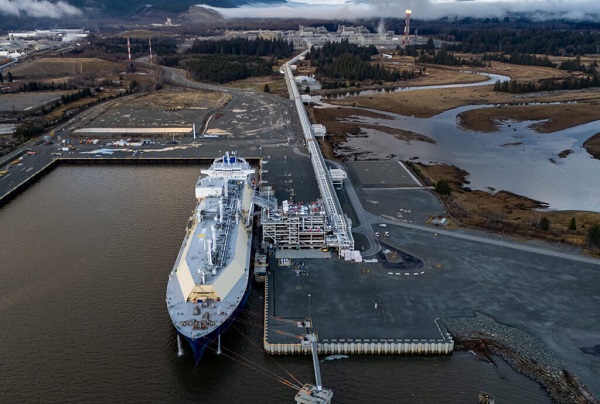
The global math: Why exporting Canadian energy is a climate win
-
 Business5 hours ago
Canada’s Illusion of Stability May Crumble in 2026 Amid Increasingly Dangerous Geopolitics
-
 Daily Caller1 day ago
Minnesota Governor resigns from re-election campaign as massive government frauds revealed
-
 Business1 day ago
Policy uncertainty continues to damage Canada’s mining potential
-
 International1 day ago
Maduro, wife plead not guilty in first court appearance
-
 Business4 hours ago
President Trump And The Doomsday Glacier… a blow to the planet, or to funding for climate alarmism?
-
 Courageous Discourse1 day ago
Largest rollback of routine childhood vaccination in U.S. history