
Poilievre plans to use money set aside in the Liberal’s Housing Accelerator Fund which he says has been ineffective.
Housing
Poilievre will cut sales tax on new homes under $1 Million saving tens of thousands



From a Conservative Party of Canada news release
In a video released Monday, Conservative Leader Pierre Poilievre has announced a plan to lower the cost of a new home’s worth under $1 million dollars.

Poilievre says a conservative government will axe the sales tax on new homes sold for less than $1 million.
That would cut the cost of an $800,000 home by $40,000 or a $500,000 home by $25,000.
Accordingly Poilievre says this will lead to the building of an extra 30,000 new homes every year.
The news could get even better as the PM hopeful says he’ll push provinces to drop their sales tax as well.

From Resource Works
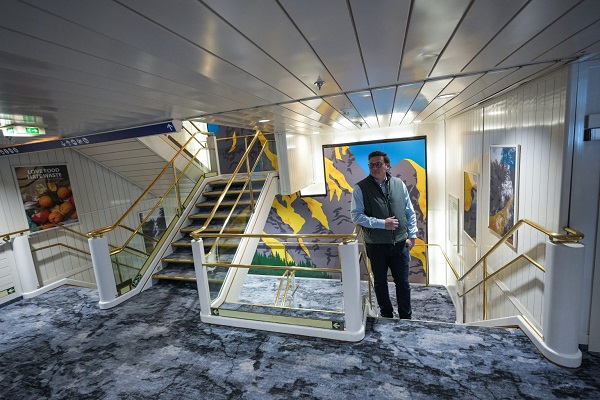
Innovative housing solution minimizes community impact while supporting the massive labour force needed for the Woodfibre LNG project.
The Woodfibre LNG project — a national leader in Indigenous partnerships and a cornerstone of global energy security — relies on a large construction workforce that drives economic prosperity across the region. For many of these workers, “home” is a ship.
Refitted from a cruise liner into a dedicated accommodation vessel, or “floatel,” this innovative solution houses up to 600 workers near Squamish, B.C., while keeping pressure off local housing and minimizing the project’s community footprint.
These exclusive images, captured a year ago, offer a rare retrospective look inside the original floatel. MV Isabelle X. With a second accommodation ship, the MV Saga X, recently arrived, this photo essay gives a timely, ground-level view of life aboard: individual cabins, a full-service dining hall, recreation spaces and custom laundry facilities. It’s a glimpse into the offshore dormitory that anchors daily life for the crew bringing this vital energy project to completion.

An arcade room is seen on a “floatel” that Woodfibre LNG plans to use to house 600 construction workers at a liquefied natural gas export facility being built near Squamish, during a media tour in Vancouver, on Thursday, May 9, 2024. The ship arrived in B.C. waters in January after a 40-day journey from Estonia, where it had sheltered Ukrainian refugees, but the District of Squamish council voted three to four against a one-year permit for its use last week.

A dining area is seen on a “floatel” that Woodfibre LNG plans to use to house 600 construction workers at a liquefied natural gas export facility being built near Squamish, during a media tour in Vancouver, on Thursday, May 9, 2024. The ship arrived in B.C. waters in January after a 40-day journey from Estonia, where it had sheltered Ukrainian refugees, but the District of Squamish council voted three to four against a one-year permit for its use last week.

A cabin is seen on a “floatel” that Woodfibre LNG plans to use to house 600 construction workers at a liquefied natural gas export facility being built near Squamish, during a media tour in Vancouver, on Thursday, May 9, 2024. The ship arrived in B.C. waters in January after a 40-day journey from Estonia, where it had sheltered Ukrainian refugees, but the District of Squamish council voted three to four against a one-year permit for its use last week.

Bridgemans Services Group president Brian Grange stands at the stern on a renovated cruise ship known as a “floatel” that Woodfibre LNG plans to use to house 600 construction workers at a liquefied natural gas export facility being built near Squamish, during a media tour in Vancouver, on Thursday, May 9, 2024. The ship arrived in B.C. waters in January after a 40-day journey from Estonia, where it had sheltered Ukrainian refugees, but the District of Squamish council voted three to four against a one-year permit for its use last week.

A custom built heat pump unit that allows the ship to avoid using diesel while docked and at anchor is seen on a “floatel” that Woodfibre LNG plans to use to house 600 construction workers at a liquefied natural gas export facility being built near Squamish, during a media tour in Vancouver, on Thursday, May 9, 2024. The ship arrived in B.C. waters in January after a 40-day journey from Estonia, where it had sheltered Ukrainian refugees, but the District of Squamish council voted three to four against a one-year permit for its use last week.

The main entry and exit area for workers is seen on a “floatel” that Woodfibre LNG plans to use to house 600 construction workers at a liquefied natural gas export facility being built near Squamish, during a media tour in Vancouver, on Thursday, May 9, 2024. The ship arrived in B.C. waters in January after a 40-day journey from Estonia, where it had sheltered Ukrainian refugees, but the District of Squamish council voted three to four against a one-year permit for its use last week.

A renovated cruise ship known as a “floatel” that Woodfibre LNG plans to use to house 600 construction workers at a liquefied natural gas export facility being built near Squamish, is seen at anchor in the harbour in Vancouver, on Thursday, May 9, 2024. The ship arrived in B.C. waters in January after a 40-day journey from Estonia, where it had sheltered Ukrainian refugees, but the District of Squamish council voted three to four against a one-year permit for its use last week.

A tugboat and water taxi are seen docked at a renovated cruise ship known as a “floatel” that Woodfibre LNG plans to use to house 600 construction workers at a liquefied natural gas export facility being built near Squamish, at anchor in the harbour in Vancouver, on Thursday, May 9, 2024. The ship arrived in B.C. waters in January after a 40-day journey from Estonia, where it had sheltered Ukrainian refugees, but the District of Squamish council voted three to four against a one-year permit for its use last week.
All photos credited to THE CANADIAN PRESS/Darryl Dyck
Resource Works News
From the Fraser Institute
By Jake Fuss and Austin Thompson
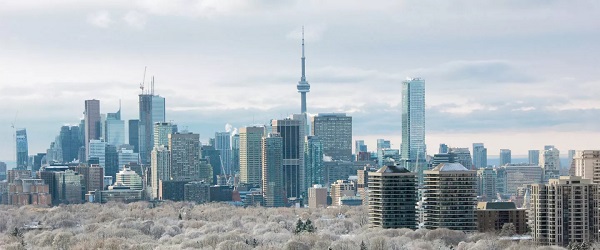
House prices in Toronto are declining. But the city’s affordability crisis is far from over—and government policies will likely make it worse.
While most Torontonians know there’s a crisis, the numbers make it clear. According to our new study, in 2023 (the latest year of available data), a family earning the city’s median after-tax income ($60,510) had to save $216,240 (the equivalent of 42.9 months of its after-tax income) for a 20 per cent downpayment on a typical home of any type (single-detached, semi-detached, condominium). But even if that family could somehow clear this monumental hurdle, it then had to dedicate 110.2 per cent of its after-tax income for monthly mortgage payments ($5,557)—a financial impossibility, unless the family can share housing costs (e.g. live-in tenants) or rely on financial support from elsewhere.
At this point, some long-time Toronto residents might recall their own difficult home purchase and think, “Hasn’t it always been this bad?” But just a decade ago, the hurdles weren’t nearly as high.
For example, in 2014 in Toronto, a 20 per cent downpayment cost 26.4 months of median after-tax family income—not 42.9 months. And the monthly mortgage payment on a typical home purchase required 56.0 per cent of median after-tax family income—not 110.2 per cent. So yes, typical homes have been broadly unaffordable for median-income-earning Toronto families for years, but it’s way worse now.
For Torontonians priced out of homeownership, renting has not offered much relief. In 2023, Toronto had the least affordable rents in Canada. The monthly cost of the median rental unit was $1,750, equal to 34.7 per cent of the median after-tax family income. That’s up from $1,110 (or 27.7 per cent of after-tax income) in 2014.
Fast-forward to today, and Torontonians should view reports of “crashing” home prices in the proper context. Typical home prices peaked at $1.27 million in the first quarter of 2022. By the second quarter of 2025, they had fallen to $1.00 million. That’s a marked decline, but prices remain well above pre-pandemic levels and far beyond the reach of most typical families.
And while the fall in house prices hasn’t been enough to restore affordability, it has caused a steep contraction in homebuilding as builders take a more cautious approach to development at a time when the city still needs more new homes to improve affordability.
This unhealthy dynamic, where price declines weigh heavily on housing construction, is made worse by government policy. Despite hundreds of millions of taxpayer dollars spent on housing initiatives by the federal government, the Ford government and Toronto City Hall, key provincial and municipal policies continue to impose needless costs and restrictions on new housing.
For example, Toronto homebuilders must endure costly wait times of more than two years for municipal approvals—more than three times longer than in Vancouver and seven times longer than in Edmonton. New high-rise developments in Toronto face municipal charges of $134,900 per unit compared to $38,100 in Ottawa and $6,900 in Edmonton. Meanwhile, the Ford government has backed away from several critical recommendations from its own Housing Task Force, which would make it easier to build more and denser housing, such as allowing fourplexes provincewide without special approval.
Of course, federal immigration policy, particularly over the last five years, has increased demand for new homes in Toronto and across the country. But even so, if not for lengthy approval processes, sky-high fees and restrictive land-use policies, many more new homes would be built in Toronto today despite declining prices. Homes only get built when buyers can cover the cost of construction plus a reasonable return on investment for developers. But when governments drive up costs, increase uncertainty and claim a significant share of the final sale price through fees and charges, projects that might otherwise proceed can become financially unviable. The result is less new housing, fewer options for buyers and a slower path to improved affordability.
To help improve housing affordability, Toronto needs a steady flow of new homebuilding. Torontonians should demand faster approvals, lower fees and more sensible rules on what types of homes can be built.

Jake Fuss
Director, Fiscal Studies, Fraser Institute

Austin Thompson
Senior Policy Analyst, Fraser Institute


Alberta5 days ago
Net Zero goal is a fundamental flaw in the Ottawa-Alberta MOU

Alberta7 days ago
Alberta can’t fix its deficits with oil money: Lennie Kaplan

Business7 days ago
Canadians love Nordic-style social programs as long as someone else pays for them

International7 days ago
Trump vows to pause migration after D.C. shooting

Daily Caller7 days ago
‘No Critical Thinking’: Parents Sound Alarm As Tech Begins To ‘Replace The Teacher’

National6 days ago
Alleged Liberal vote-buying scandal lays bare election vulnerabilities Canada refuses to fix

National6 days ago
Eco-radical Canadian Cabinet minister resigns after oil deal approved
-
 Business2 days ago
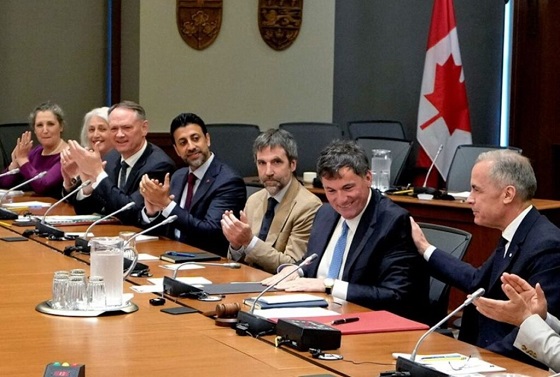
Carney’s Toronto cabinet meetings cost $530,000
-
 Artificial Intelligence2 days ago
AI is accelerating the porn crisis as kids create, consume explicit deepfake images of classmates
-
 Bruce Dowbiggin1 day ago
Integration Or Indignation: Whose Strategy Worked Best Against Trump?
-
 Health2 days ago
23,000+ Canadians died waiting for health care in one year as Liberals pushed euthanasia
-
 MAiD2 days ago
101-year-old woman chooses assisted suicide — press treats her death as a social good
-
 Health2 days ago
News RFK Jr.’s vaccine committee to vote on ending Hepatitis B shot recommendation for newborns
-
 COVID-1921 hours ago
Canadian legislator introduces bill to establish ‘Freedom Convoy Recognition Day’ as a holiday
-
 espionage1 day ago
Digital messages reportedly allege Chinese police targeted dissident who died suspiciously near Vancouver