
Uncategorized
Pfizer documents challenge Health Canada COVID-19 vaccine narrative



From the Frontier Centre for Public Policy
By Ray McGinnis

Dr. Theresa Tam and senior federal health officials walked onto a stage this fall, socially distanced. Each wore masks, addressing an empty room.
Have they been living in a bubble?
The New York Times reported on February 21, 2023, that wearing masks did nothing to protect people from the COVID-19 virus.
Reporting on a rigorous and extensive study, Oxford epidemiologist Tom Jefferson said, “There is just no evidence that they [masks] make any difference. Full stop.” Jefferson said that even if one were to don an N-95 mask that it “makes no difference – none of it.” The microscopic hole in an N-95 mask was 35 microns. The much smaller droplet from the C-19 virus was 0.15 microns and could easily float through the N-19 mask hole. And why would a mask only be needed to protect us in public when we are not eating or drinking?
Health Canada continues to encourage the public to get COVID-19 boosters this fall. The agency asserts: “It’s considered safe to get both your COVID booster and a flu shot at the same appointment.” They are also “reviewing updated booster shots for children six months and up.”
However, release of the Pfizer Documents reveals people would be wise to avoid getting anymore boosters.
During its brief clinical trials, and in the first 12 weeks of the mRNA vaccine rollout, Pfizer compiled over 55,000 documents that related to clinical trials and other research the company conducted. The company hoped these documents would be sealed from public view for 75 years. The U.S. Food and Drug Administration supported keeping the data secret.
Nevertheless, a US court disagreed. The documents began being released in 2022. Steve K. Bannon hosted whistleblower Dr. Naomi Wolf on his War Room podcast. Together, they issued a call for medical and scientific experts to examine the documents. Project manager, Amy Kelly divided 3,500 highly trained specialists into teams. And they went through the material with a fine-toothed comb Their findings are published in the War Room/DailyClout Pfizer Documents Analysis Reports.
The teams learned that Pfizer had many reports of serious adverse events after the initial 12-week rollout – 158,000 – that they had to hire an additional 2,400 full-time staff to manage the caseload.
A Pfizer Safety Branch Report concluded that by February 28, 2021, 1,223 people had died because of the vaccine.
Pfizer did not disclose all of its vaccine ingredients. In fact, a news story reports: “Health Canada Confirms Undisclosed Presence of DNA Sequence in Pfizer Shot.” The Epoch Times explains that the Simian Virus 40 DNA sequence is in some of the the Pfizer mRNA vaccine, citing scientists who warn that it can be carcinogenic.
It seems that Pfizer kept sloppy records of the clinical trials. Pfizer Documents Investigation Team 5 reported: “a great deal of data… [is] missing from Pfizer’s analysis of adverse events that were reported after the Pfizer mRNA vaccine was approved by the US Food and Drug Administration…. The outcomes of almost one-quarter (22%) are not known.” They added, “Pfizer’s 3.7% fatality rate for the adverse event cases with known outcomes doesn’t include patients that Pfizer said had not recovered at the time of the report (30 April 2021).”
Team 1 reported that from December 1, 2020, “Pfizer was aware that the vaccine…had limited efficacy.” They reported that:“1,625 serious cases of vaccine ineffectiveness….” This included 136 people dying of COVID-19 related pneumonia after getting the Pfizer shot.
Team 3 examined what Pfizer did to ensure the safety of their vaccine. Did the vaccine stay in the arm, or did it travel to other places?
It was known that the engineered nanomaterials in the vaccine can cross or bypass the blood-brain barrier. What were the implications for the central nervous system? Team 3 discovered that: “This evaluation was never done in the Pfizer safety and efficacy trials… it is impossible to know whether the vaccine is safe in this arena. Pfizer did not prove the safety of the nano-lipid delivery system for the brain:” They just didn’t look under that rock.
In March 2022, the Journal of Pediatrics reported that the Seattle Children’s Hospital at the University of Washington had 35 cases of myocarditis in children within one week of receiving the second dose of the Pfizer vaccine. Team 1 reported that it was clear to both Pfizer and the FDA that by June 2021 there was a “serious problem of myocarditis in adolescents following mRNA vaccination….” Nonetheless, the FDA went ahead and issued the Emergency Use Authorization to include teenagers, and they did not mention the risks.
The Pfizer Documents also reveal that by February 28, 2021, they knew that serious stroke adverse events were occurring after vaccination. Pfizer observed 275 patients who had a stroke post-vaccine….“Strokes are life-altering events. Even Pfizer categorized all the reported stroke as serious.” Nonetheless, even after Pfizer examined the stroke adverse events, they offered an upbeat assessment: “This cumulative case review does not raise new safety issues.”
And what did Health Canada say?
Journalist Rodney Palmer reported to the National Citizens Inquiry that the Government of Canada reported that by “March 3, 2023, [there were] a total of 427 reports with an outcome of death…reported following vaccination.”
Unfortunately, Canadians are still living in a bubble with little understanding of the adverse effects of the COVID-19 vaccines and boosters.
Ray McGinnis is a senior fellow at the Frontier Centre for Public Policy, and author of Unanswered Questions and Writing the Sacred.

Uncategorized
Mortgaging Canada’s energy future — the hidden costs of the Carney-Smith pipeline deal


Much of the commentary on the Carney-Smith pipeline Memorandum of Understanding (MOU) has focused on the question of whether or not the proposed pipeline will ever get built.
That’s an important topic, and one that deserves to be examined — whether, as John Robson, of the indispensable Climate Discussion Nexus, predicted, “opposition from the government of British Columbia and aboriginal groups, and the skittishness of the oil industry about investing in a major project in Canada, will kill [the pipeline] dead.”
But I’m going to ask a different question: Would it even be worth building this pipeline on the terms Ottawa is forcing on Alberta? If you squint, the MOU might look like a victory on paper. Ottawa suspends the oil and gas emissions cap, proposes an exemption from the West Coast tanker ban, and lays the groundwork for the construction of one (though only one) million barrels per day pipeline to tidewater.
But in return, Alberta must agree to jack its industrial carbon tax up from $95 to $130 per tonne at a minimum, while committing to tens of billions in carbon capture, utilization, and storage (CCUS) spending, including the $16.5 billion Pathways Alliance megaproject.
Here’s the part none of the project’s boosters seem to want to mention: those concessions will make the production of Canadian hydrocarbon energy significantly more expensive.
As economist Jack Mintz has explained, the industrial carbon tax hike alone adds more than $5 USD per barrel of Canadian crude to marginal production costs — the costs that matter when companies decide whether to invest in new production. Layer on the CCUS requirements and you get another $1.20–$3 per barrel for mining projects and $3.60–$4.80 for steam-assisted operations.
While roughly 62% of the capital cost of carbon capture is to be covered by taxpayers — another problem with the agreement, I might add — the remainder is covered by the industry, and thus, eventually, consumers.
Total damage: somewhere between $6.40 and $10 US per barrel. Perhaps more.
“Ultimately,” the Fraser Institute explains, “this will widen the competitiveness gap between Alberta and many other jurisdictions, such as the United States,” that don’t hamstring their energy producers in this way. Producers in Texas and Oklahoma, not to mention Saudi Arabia, Venezuela, or Russia, aren’t paying a dime in equivalent carbon taxes or mandatory CCUS bills. They’re not so masochistic.
American refiners won’t pay a “low-carbon premium” for Canadian crude. They’ll just buy cheaper oil or ramp up their own production.
In short, a shiny new pipe is worthless if the extra cost makes barrels of our oil so expensive that no one will want them.
And that doesn’t even touch on the problem for the domestic market, where the higher production cost will be passed onto Canadian consumers in the form of higher gas and diesel prices, home heating costs, and an elevated cost of everyday goods, like groceries.
Either way, Canadians lose.
So, concludes Mintz, “The big problem for a new oil pipeline isn’t getting BC or First Nation acceptance. Rather, it’s smothering the industry’s competitiveness by layering on carbon pricing and decarbonization costs that most competing countries don’t charge.” Meanwhile, lurking underneath this whole discussion is the MOU’s ultimate Achilles’ heel: net-zero.
The MOU proudly declares that “Canada and Alberta remain committed to achieving Net-Zero greenhouse gas emissions by 2050.” As Vaclav Smil documented in a recent study of Net-Zero, global fossil-fuel use has risen 55% since the 1997 Kyoto agreement, despite trillions spent on subsidies and regulations. Fossil fuels still supply 82% of the world’s energy.
With these numbers in mind, the idea that Canada can unilaterally decarbonize its largest export industry in 25 years is delusional.
This deal doesn’t secure Canada’s energy future. It mortgages it. We are trading market access for self-inflicted costs that will shrink production, scare off capital, and cut into the profitability of any potential pipeline. Affordable energy, good jobs, and national prosperity shouldn’t require surrendering to net-zero fantasy.If Ottawa were serious about making Canada an energy superpower, it would scrap the anti-resource laws outright, kill the carbon taxes, and let our world-class oil and gas compete on merit. Instead, we’ve been handed a backroom MOU which, for the cost of one pipeline — if that! — guarantees higher costs today and smothers the industry that is the backbone of the Canadian economy.
This MOU isn’t salvation. It’s a prescription for Canadian decline.
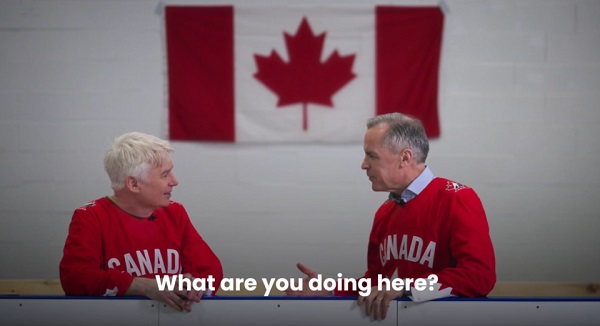

The cost of the bureaucracy increased by $6 billion last year, according to newly released numbers in Public Accounts disclosures. The Canadian Taxpayers Federation is calling on Prime Minister Mark Carney to immediately shrink the bureaucracy.
“The Public Accounts show the cost of the federal bureaucracy is out of control,” said Franco Terrazzano, CTF Federal Director. “Tinkering around the edges won’t cut it, Carney needs to take urgent action to shrink the bloated federal bureaucracy.”
The federal bureaucracy cost taxpayers $71.4 billion in 2024-25, according to the Public Accounts. The cost of the federal bureaucracy increased by $6 billion, or more than nine per cent, over the last year.
The federal bureaucracy cost taxpayers $39.6 billion in 2015-16, according to the Public Accounts. That means the cost of the federal bureaucracy increased 80 per cent over the last 10 years. The government added 99,000 extra bureaucrats between 2015-16 and 2024-25.
Half of Canadians say federal services have gotten worse since 2016, despite the massive increase in the federal bureaucracy, according to a Leger poll.
Not only has the size of the bureaucracy increased, the cost of consultants, contractors and outsourcing has increased as well. The government spent $23.1 billion on “professional and special services” last year, according to the Public Accounts. That’s an 11 per cent increase over the previous year. The government’s spending on professional and special services more than doubled since 2015-16.
“Taxpayers should not be paying way more for in-house government bureaucrats and way more for outside help,” Terrazzano said. “Mere promises to find minor savings in the federal bureaucracy won’t fix Canada’s finances.
“Taxpayers need Carney to take urgent action and significantly cut the number of bureaucrats now.”
Table: Cost of bureaucracy and professional and special services, Public Accounts
| Year | Bureaucracy | Professional and special services |
|
$71,369,677,000 |
$23,145,218,000 |
|
|
$65,326,643,000 |
$20,771,477,000 |
|
|
$56,467,851,000 |
$18,591,373,000 |
|
|
$60,676,243,000 |
$17,511,078,000 |
|
|
$52,984,272,000 |
$14,720,455,000 |
|
|
$46,349,166,000 |
$13,334,341,000 |
|
|
$46,131,628,000 |
$12,940,395,000 |
|
|
$45,262,821,000 |
$12,950,619,000 |
|
|
$38,909,594,000 |
$11,910,257,000 |
|
|
$39,616,656,000 |
$11,082,974,000 |

Ottawa-Alberta agreement may produce oligopoly in the oilsands

‘The electric story is over’
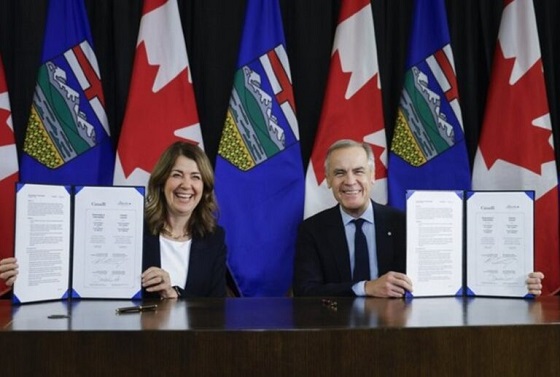
The Top News Stories That Shaped Canadian Energy in 2025 and Will Continue to Shape Canadian Energy in 2026

Some Of The Wackiest Things Featured In Rand Paul’s New Report Alleging $1,639,135,969,608 In Gov’t Waste

Western Canada’s supply chain for Santa Claus

$2.6 million raised for man who wrestled shotgun from Bondi Beach terrorist

Remembering Afghanistan and the sacrifices of our military families
-
 Business2 days ago
Land use will be British Columbia’s biggest issue in 2026
-
 Business19 hours ago
DOOR TO DOOR: Feds descend on Minneapolis day cares tied to massive fraud
-
 Bruce Dowbiggin19 hours ago
In Contentious Canada Reality Is Still Six Degrees Of Hockey
-
 Business18 hours ago
Canada needs serious tax cuts in 2026
-
 Energy2 days ago
Why Japan wants Western Canadian LNG
-
 Business8 hours ago
Ottawa Is Still Dodging The China Interference Threat
-
 Business7 hours ago
Minneapolis day care filmed empty suddenly fills with kids
-
 Business2 days ago
Mainstream media missing in action as YouTuber blows lid off massive taxpayer fraud