
National
Over 20 Liberal MPs reportedly sign document calling on Trudeau to step down

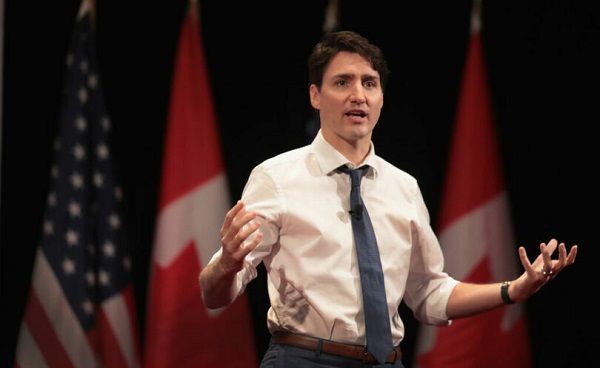

From LifeSiteNews

A growing number of Liberal MPs are working to oust Justin Trudeau following two disastrous by-election results in ‘safe’ ridings in Toronto and Montreal and a growing mountain of scandals.
A number of Liberal Members of Parliament are reportedly mounting new efforts to oust Prime Minister Justin Trudeau amid his plummeting popularity.
According to information obtained by CBC News, around 20 Liberal MPs have signed a document to call on Trudeau to be removed as leader of the Liberal Party, following two disastrous by-election results in “safe” ridings in Toronto and Montreal.
“Pressure is building on the prime minister and his office as a growing number of anxious Liberal MPs are co-ordinating efforts to force Justin Trudeau to step down as Liberal Party leader,” the report stated.
According to the reported sources, the document is not merely a letter, but rather a “vehicle to secure commitment” for a change in leadership in the floundering Liberal Party.
While the exact number of signatories is not known, MPs reportedly told CBC News that a minimum of 20 have given their support for the move. One MP reportedly disclosed that the names have “spilled onto a second page” as more and more MPs wish to sign on.
The document is reportedly being tightly guarded, with no copies or photos being circulated.
In addition to the clandestine document, others have begun to publicly decry Trudeau’s leadership and call for his resignation. Earlier this week, Liberal MP Sean Casey of Charlottetown, Prince Edward Island, told CBC News that Trudeau’s time as leader has ended, making him the second MP this week to make such a declaration.
“My job has always been to project the voice of the people I represent in Ottawa, to be Charlottetown’s representative in Ottawa, and not the reverse,” he said. “And the message that I’ve been getting loud and clear and more and more strongly as time goes by is that it’s time for him to go. And I agree.”
Casey’s statement echoes Montreal Liberal MP Anthony Housefather who told CTV News that it is time for the Liberal Party to discuss who will lead them into the 2025 election.
“I support whoever is leader in my party at all times,” he said. “But that doesn’t mean there shouldn’t be a robust caucus discussion about who the best person to lead us in the next election is, and that discussion should happen in caucus. It shouldn’t happen in the media.”
Calls for Trudeau’s resignation come on top of the numerous Liberal MPs, including former cabinet ministers, who have vacated their seats or who have announced that they will not be running for re-election.
In addition to calls from the political class for Trudeau’s resignation, or at the very least their distancing themselves from his leadership, Canadian citizens have also had enough of the prime minister’s tyrannical rule over the country. Trudeau’s trampling of basic freedoms, reckless spending, and endless lies have finally woken up Canadians to the state of the nation.
Polls continue to uncover the upset of Canadians toward the current government, whether it be the 70 percent found who believe the country is “broken,” or the majority of citizens who report being worse off financially since Trudeau took office.
Additional polls show that the scandal-plagued government has sent the Liberals into a nosedive with no end in sight, with a September poll showing that the Conservatives under Pierre Poilievre would win a landslide majority government were an election held today.

Alberta
Premier Smith: Canadians support agreement between Alberta and Ottawa and the major economic opportunities it could unlock for the benefit of all
From Energy Now
By Premier Danielle Smith
Get the Latest Canadian Focused Energy News Delivered to You! It’s FREE: Quick Sign-Up Here
If Canada wants to lead global energy security efforts, build out sovereign AI infrastructure, increase funding to social programs and national defence and expand trade to new markets, we must unleash the full potential of our vast natural resources and embrace our role as a global energy superpower.
The Alberta-Ottawa Energy agreement is the first step in accomplishing all of these critical objectives.
Recent polling shows that a majority of Canadians are supportive of this agreement and the major economic opportunities it could unlock for the benefit of all Canadians.
As a nation we must embrace two important realities: First, global demand for oil is increasing and second, Canada needs to generate more revenue to address its fiscal challenges.
Nations around the world — including Korea, Japan, India, Taiwan and China in Asia as well as various European nations — continue to ask for Canadian energy. We are perfectly positioned to meet those needs and lead global energy security efforts.
Our heavy oil is not only abundant, it’s responsibly developed, geopolitically stable and backed by decades of proven supply.
If we want to pay down our debt, increase funding to social programs and meet our NATO defence spending commitments, then we need to generate more revenue. And the best way to do so is to leverage our vast natural resources.
At today’s prices, Alberta’s proven oil and gas reserves represent trillions in value.
It’s not just a number; it’s a generational opportunity for Alberta and Canada to secure prosperity and invest in the future of our communities. But to unlock the full potential of this resource, we need the infrastructure to match our ambition.
There is one nation-building project that stands above all others in its ability to deliver economic benefits to Canada — a new bitumen pipeline to Asian markets.
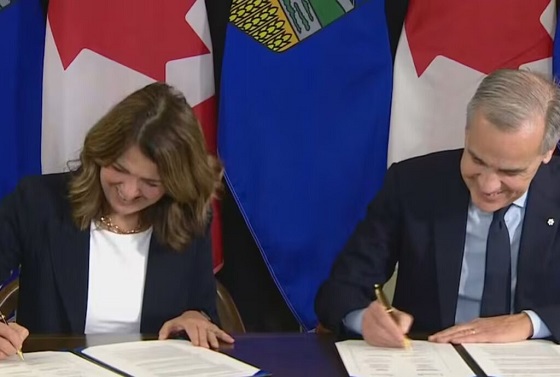
The energy agreement signed on Nov. 27 includes a clear path to the construction of a one-million-plus barrel-per-day bitumen pipeline, with Indigenous co-ownership, that can ensure our province and country are no longer dependent on just one customer to buy our most valuable resource.
Indigenous co-ownership also provide millions in revenue to communities along the route of the project to the northwest coast, contributing toward long-lasting prosperity for their people.
The agreement also recognizes that we can increase oil and gas production while reducing our emissions.
The removal of the oil and gas emissions cap will allow our energy producers to grow and thrive again and the suspension of the federal net-zero power regulations in Alberta will open to doors to major AI data-centre investment.
It also means that Alberta will be a world leader in the development and implementation of emissions-reduction infrastructure — particularly in carbon capture utilization and storage.
The agreement will see Alberta work together with our federal partners and the Pathways companies to commence and complete the world’s largest carbon capture, utilization and storage infrastructure project.
This would make Alberta heavy oil the lowest intensity barrel on the market and displace millions of barrels of heavier-emitting fuels around the globe.
We’re sending a clear message to investors across the world: Alberta and Canada are leaders, not just in oil and gas, but in the innovation and technologies that are cutting per barrel emissions even as we ramp up production.
Where we are going — and where we intend to go with more frequency — is east, west, north and south, across oceans and around the globe. We have the energy other countries need, and will continue to need, for decades to come.
However, this agreement is just the first step in this journey. There is much hard work ahead of us. Trust must be built and earned in this partnership as we move through the next steps of this process.
But it’s very encouraging that Prime Minister Mark Carney has made it clear he is willing to work with Alberta’s government to accomplish our shared goal of making Canada an energy superpower.
That is something we have not seen from a Canadian prime minister in more than a decade.
Together, in good faith, Alberta and Ottawa have taken the first step towards making Canada a global energy superpower for benefit of all Canadians.
Danielle Smith is the Premier of Alberta


Speech Crimes on Campus
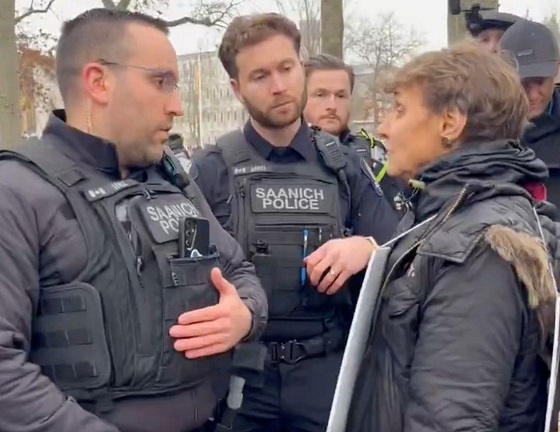
Frances Widdowson, a former colleague professor at Mount Royal University, was arrested this past week on the University of Victoria campus. Her offence? Walking, conversing, and asking questions on a university campus. She was not carrying a megaphone, making threats, organizing a protest, or waving foreign flags. She was planning quietly to discuss, with whoever wished it, a widespread claim that has curiously evaded forensic scrutiny in Canada for five years: that the remains of 215 Indigenous children lie beneath the grounds of the former Kamloops Residential School.
UVic Campus security did not treat her as a scholar. Nor even as a citizen. They treated her as a contaminating source.
The director of security, a woman more reminiscent of a diversity consultant than a peace officer, almost shaking, presented Widdowson with papers and told her to vacate “the property.” When Widdowson questioned the order, citing her Charter rights and the university’s public nature, she was told to leave. She refused, and she was arrested. No force, no defiance, only a refusal to concede that inquiry is trespass.
Widdowson is no provocateur in the modern sense. She is not a shock-jock in a cardigan. She is a once-tenured academic with a long record of challenging orthodoxies in Indigenous policy, identity politics, and campus culture.
In 2008, she co-authored Disrobing the Aboriginal Industry, a book that deconstructed the bureaucratic machinery that profits from preserving Indigenous dependency. The book was methodical, sourced, and daring enough to be labelled heretical in some quarters, but simultaneously boringly Marxist materialistic.
Her arguments have made people uncomfortable for a long time. When I assigned her book to my political science students in the Department of Policy Studies, where Frances also taught, I was summoned by the department head’s office. Someone in my class complained about the book, though I ignored what was said, and the technocratic colleague, as chair of the department, had prepared a host of arguments to chastise me for assigning the book.
Widdowson was good enough to be hired as a colleague of that department, but they were all afraid of her ideas, and perhaps her manner. I have often wondered if the folks in the Mount Royal hiring committee had bothered to read her book. Hey, they had a female Marxist applying for a teaching job. Knowing how they operate makes me think they made giant assumptions about Frances.
My bureaucratic colleague relented. I got the impression that the department head was putting on a show, going through motions he didn’t want to engage in, but which he had to perform for administrative purposes. He had to act on the complaint, though the complaint had no substance. He tried to tell me that the ideas in the book might offend some students, and then went on with the typical dribble about being caring, but agreed that protecting feelings was not the objective of an education, nor the job of a professor.
Haultain’s Substack is a reader-supported publication.
To receive new posts and support our work, please consider becoming a free or paid subscriber.
Try it out.
I went to my campus office after the conversation with the department head, typed up a memo detailing our discussion, and emailed it to him to ensure there was a record of my viewpoint. The email got no response. He never mentioned it again, and to this day, 15 or 16 years later, we still haven’t spoken about it.
Some academic arguments are meant to shake things up. That is the purpose of scholarship: to stir the sediment of consensus. To challenge conventional views. Marxist or no, scholars are supposed to push the envelope. Expand the boundaries of our understanding. But in today’s academic culture, discomfort is treated as injury and dissent as violence. So, Widdowson was treated as a threat merely by walking and speaking.
Was the university within its legal rights to remove her? Possibly. Universities can invoke property rights, ironically in Cowichan territory, and provincial legislation sometimes grants them a curious status: publicly funded yet selectively private. But the question is not merely legal. It is cultural and constitutional.
The University of Victoria is a publicly funded institution, governed under provincial authority and subsidized by taxpayers. Its grounds, though some claim they are on unceded Indigenous territory, are functionally administered by the Crown. The university is not a monastery. While it is not a temple to be kept free of doubt, it is not a temple to be torched either. It is a civic institution. An institution of higher learning. When it uses its resources to shield ideology and expel dissenters, it forfeits its academic character.
Consider the contrast. On this same campus, as on many others across the country, protests have called for the destruction of Israel and the extermination of Jews. Banners are waved, slogans chanted, and genocidal euphemisms like “from the river to the sea” are uttered without hesitation. These demonstrations, some of which praise Hamas or glorify martyrdom, proceed unimpeded. Security stands down. The administration issues boilerplate statements about inclusion and respect.
But when a female academic arrives to ask whether the number “215” refers to actual remains or mere radar anomalies, she is marched off by police. The imbalance is not accidental. It is a product of institutional capture.
Contemporary universities have adopted a new moral vocabulary. Terms like “safety,” “inclusion,” and “harm” are now treated as constitutional categories. But their terms are undefined, fluid, shaped by ideology rather than principle. “Safety” no longer refers to bodily security, but has become an emotional preference. “Inclusion” does not mean openness to different ideas and people, but a validation of specific identities. “Harm” is not an act, but a feeling.
Under this logic, Widdowson’s presence becomes a form of injury. Her questions are recast as wounds. And because feelings have been elevated to rights, her removal becomes a public good.
This ideology has structure. It is not random. It rests on a model of revolutionary politics in which dissent must not be part of the conversation. A differing opinion is an obstacle to be cleared. The new inclusivity has become a form of exclusion. It uses the language of welcome to police belief, and the rhetoric of tolerance to enforce conformity.
Charter rights were once the guardrails of public life. They are not supposed to vanish down the rabbit holes when one steps onto that university lawn. The right to free expression, to peaceful assembly, and to enter public space are not conditional on popularity. They are not subject to the feelings of a security director or the preferences of a DEI office.
Widdowson is testing this principle. She did not resist arrest, nor did she make a spectacle of herself. She acted as a citizen asserting a constitutional right. The courts may eventually rule on whether her rights were infringed. But the deeper issue is already visible.
If our public institutions can exile peaceful critics while accommodating radical political agitators who cheer for foreign terror movements, we are not in a neutral society. We are in an elite-managed consensus.
This consensus is enforced by policy. It does not need debate. The consensus managers already know what is true and treat challenges as threats. In this environment, universities are no longer places where young minds wrestle with the pangs of uncertainty. They are enforcing temples of doctrine. Their priests wear lanyards. Their rituals involve land acknowledgments. Their blasphemies include asking inconvenient questions about graves that no one has bothered to exhume.
Frances Widdowson may not be universally admired. No one is. Her conclusions are sharp. Her manner is uncompromising. But that is precisely why her treatment should alarm us. The test of a free society is not how it treats the agreeable, but how it tolerates the disagreeable, to paraphrase Bernard Crick.
When universities lose the confidence to host dissent, they cease to be universities in any meaningful sense. They become echo chambers with fancy libraries. They educate students in the same way a treadmill provides runners with travel: motion without movement.
We are at a moment of reckoning for universities and for Canadian liberal democracy. When citizens cannot openly raise questions without fear of removal, the Charter becomes ornamental. If the test of allowable speech is whether it affirms prevailing narrative and myths, then neither truth nor inquiry has a place among us.
Widdowson’s arrest is not an isolated event. It is a signal that tells us who is welcome in the public square and who is not. It tells us that the basic right to question popular opinions is now conditional. And it affirms for us what we already know: that the guardians of inclusion are, in practice, the agents of exclusion.
No democracy can afford such arbiters. Certainly not one that still calls itself liberal.
Haultain’s Substack is a reader-supported publication.
To receive new posts and support our work, please consider becoming a free or paid subscriber.
Try it out.


Net Zero goal is a fundamental flaw in the Ottawa-Alberta MOU

Eco-radical Canadian Cabinet minister resigns after oil deal approved

Learning the Truth about “Children’s Graves” and Residential Schools is More Important than Ever

Canadians will soon be versed in massive West Coast LPG mega-project
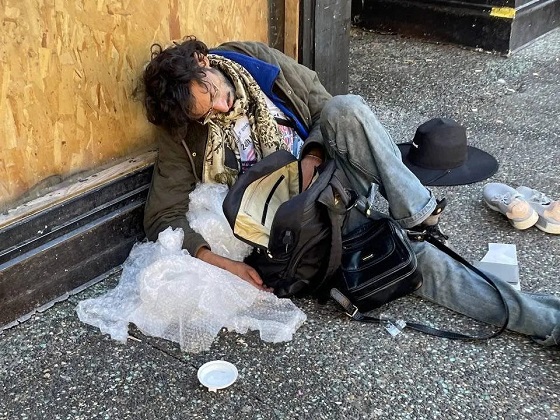
Manitoba Is Doubling Down On A Failed Drug Policy

Canada Still Serves Up Food Dyes The FDA Has Banned
The dangers of mRNA vaccines explained by Dr. John Campbell
-
Economy1 day ago
What the Data Shows About the New Canada-Alberta Pipeline Opportunity
-
 illegal immigration1 day ago
While Trump has southern border secure, hundreds of thousands of illegal immigrants still flooding in from Canada
-
 Censorship Industrial Complex1 day ago
Canadian bishops condemn Liberal ‘hate speech’ proposal that could criminalize quoting Scripture
-
 Business2 days ago
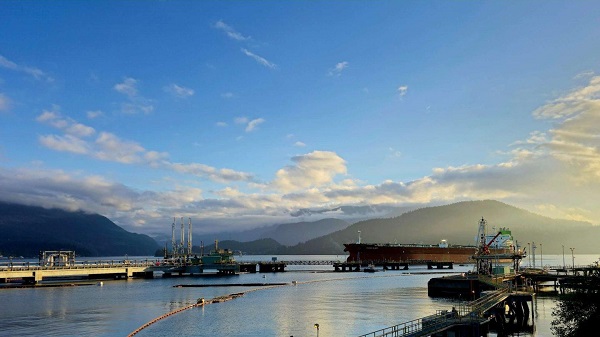
Oil tanker traffic surges but spills stay at zero after Trans Mountain Expansion
-
 COVID-192 days ago
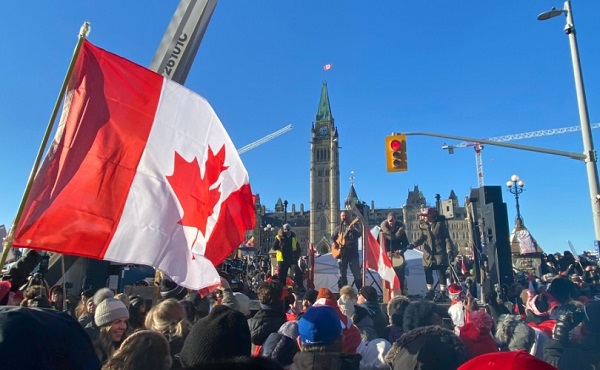
Canadian legislator introduces bill to establish ‘Freedom Convoy Recognition Day’ as a holiday
-
 Energy2 days ago
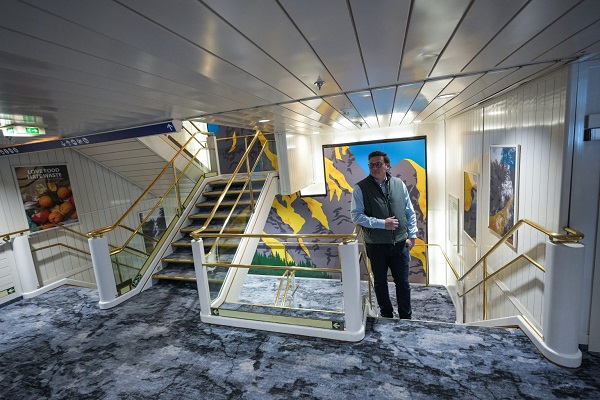
A look inside the ‘floatel’ housing B.C.’s LNG workforce
-
 Aristotle Foundation7 hours ago
The extreme ideology behind B.C.’s radical reconciliation agenda
-
 Energy1 day ago
The Trickster Politics of the Tanker Ban are Hiding a Much Bigger Reckoning for B.C.