Senior research psychologist and Google critic Dr. Robert Epstein told popular podcast host Joe Rogan on Wednesday that a “free and fair election” is an “illusion” now, warning about the rise of the “technological elite.”
In June 2019, Epstein addressed Congress over his concerns that Google not only poses a “serious threat to democracy and human autonomy,” but also advising how the lawmakers could “end Google’s worldwide monopoly on search.” Appearing on the “Joe Rogan Experience,” Epstein explained his belief that there hasn’t been a “free and fair election” nationally since 2012, because tech has been used to manipulate public opinion.
“We are finding overwhelming evidence that they are very deliberately and systematically messing with us and our elections, especially. I personally believe that as of 2012 the free and fair election, at least at the national level, has not existed,” Epstein said. “It’s just been manipulated since 2012. I say this in part because I met one of the people on Google’s tech team — on Obama’s Tech Team, I should say — which was being run by Eric Schmidt, head of Google at the time.”
“I talked to him at great length about what the tech team was doing. They had full access to all of Google’s shenanigans, all those manipulations and one member of that team, asked by a reporter, how many of the four points by which Obama won, how many of those points did he get from the tech team? And the guy said … two of the points came from us. Now Obama won by 5 million votes, roughly, and two out of four points came from the tech team — that’s two and a half million votes,” Epstein said.
Epstein, along with several others at the American Institute for Behavioral Research and Technology (AIBRT), released a study that claimed tech companies have the ability to influence decisions of undecided voters through search suggestions on search engines. The Google whistleblower told the Daily Caller News Foundation that search engine operators controlling search suggestions could have “the power to shift a large number of votes without people’s awareness.”
Epstein continued to call out the 2016 election between former President Donald Trump and former Democratic presidential candidate Hillary Clinton, stating that if Google’s interference had been taken out, the popular vote “would have been tied.”
WATCH:
“By 2016 I had calculated that Google could shift — and it would be toward Hillary Clinton of course, whom I supported at the time — that Google could shift between 2.6 and 10.4 million votes to Hillary Clinton in that election with no one knowing. She won the popular vote by 2.8 million votes,” Epstein said. “If you take Google out of that election the popular vote would have been tied. Couple days after that election everyone — all the leaders in Google get up on stage … and they’re talking to all of Google’s 100,000 employees and one by one they’re going up to the mic and saying, ‘We are never going to let that happen again.’”
The Google whistleblower added that between President Joe Biden and Trump, if Google had been taken “out of the equation,” Trump would have won “11 out of 13 swing states instead of five.”
“So going forward from roughly 2012 I think the free and fair election has been an illusion, an illusion. And this is something — it’s very weird and kind of ironic, but this is something that Dwight D. Eisenhower warned about in that last speech of his farewell speech he warned about the rise of the military-industrial complex, everyone’s heard about that,” Epstein continued.
“But he also warned about the rise of a technological elite that could someday control public policy without anyone knowing. And the technological elite are now in control. That’s what we have. That’s where I get back to my ranting and my pain because I realize no one is paying attention! Eisenhower said we have to be alert or this will happen,” Epstein said.
Todayville is a digital media and technology company. We profile unique stories and events in our community. Register and promote your community event for free.
President Donald Trump signed an executive order moving marijuana from a Schedule I to a Schedule III controlled substance, despite many Republican lawmakers urging him not to.
“I want to emphasize that the order I am about to sign is not the legalization [of] marijuana in any way, shape, or form – and in no way sanctions its use as a recreational drug,” Trump said. “It’s never safe to use powerful controlled substances in recreational manners, especially in this case.”
“Young Americans are especially at risk, so unless a drug is recommended by a doctor for medical reasons, just don’t do it,” he added. “At the same time, the facts compel the federal government to recognize that marijuana can be legitimate in terms of medical applications when carefully administered.”
Under the Controlled Substances Act, Schedule I drugs are defined as having a high potential for abuse and no accepted medical use. Schedule III drugs – such as anabolic steroids, ketamine, and testosterone – are defined as having a moderate potential for abuse and accepted medical uses.
Although marijuana is still illegal at the federal level, 24 states and the District of Columbia have fully legalized marijuana within their borders, while 13 other states allow for medical marijuana.
Advocates for easing marijuana restrictions argue it will accelerate scientific research on the drug and allow the commercial marijuana industry to boom. Now that marijuana is no longer a Schedule I drug, businesses will claim an estimated $2.3 billion in tax breaks.
Chair of The Marijuana Policy Project Betty Aldworth said the reclassification “marks a symbolic victory and a recalibration of decades of federal misclassification.”
“Cannabis regulation is not a fringe experiment – it is a $38 billion economic engine operating under state-legal frameworks in nearly half of the country that has delivered overall positive social, educational, medical, and economic benefits, including correlation with reductions in youth use in states where it’s legal,” Aldworth said.
Opponents of the reclassification, including 22 Republican senators who sent Trump a warning letter Wednesday, point out the negative health impact of marijuana use and its effects on occupational and road safety.
“The only winners from rescheduling will be bad actors such as Communist China, while Americans will be left paying the bill. Marijuana continues to fit the definition of a Schedule I drug due to its high potential for abuse and its lack of an FDA-approved use,” the lawmakers wrote. “We cannot reindustrialize America if we encourage marijuana use.”
Marijuana usage is linked to mental disorders like depression, suicidal ideation, and psychotic episodes; impairs driving and athletic performance; and can cause permanent IQ loss when used at a young age, according to the Substance Abuse and Mental Health Administration.
Additionally, research shows that “people who use marijuana are more likely to have relationship problems, worse educational outcomes, lower career achievement, and reduced life satisfaction,” SAMHA says.
Canadians are told dairy farmers need protection. The newest numbers tell a different story
Every once in a while, someone inside a tightly protected system decides to say the quiet part out loud. That is what Joel Fox, a dairy farmer from the Trenton, Ont., area, did recently in the Ontario Farmer newspaper.
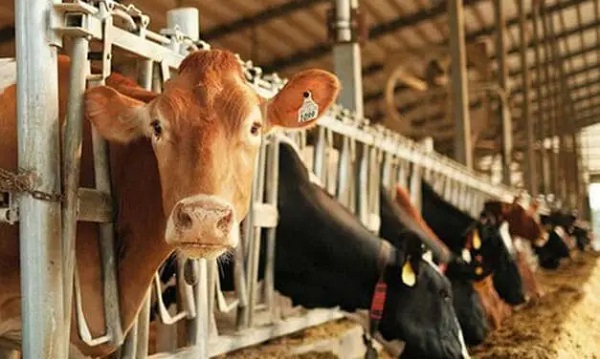
In a candid open letter, Fox questioned why established dairy farmers like himself continue to receive increasingly large government payouts, even though the sector is not shrinking but expanding. For readers less familiar with the system, supply management is the federal framework that controls dairy production through quotas and sets minimum prices to stabilize farmer income.
His piece, titled “We continue to privatize gains, socialize losses,” did not come from an economist or a critic of supply management. It came from someone who benefits from it. Yet his message was unmistakable: the numbers no longer add up.
Fox’s letter marks something we have not seen in years, a rare moment of internal dissent from a system that usually speaks with one voice. It is the first meaningful crack since the viral milk-dumping video by Ontario dairy farmer Jerry Huigen, who filmed himself being forced to dump thousands of litres of perfectly good milk because of quota rules. Huigen’s video exposed contradictions inside supply management, but the system quickly closed ranks until now. Fox has reopened a conversation that has been dormant for far too long.
In his letter, Fox admitted he would cash his latest $14,000 Dairy Direct Payment Program cheque, despite believing the program wastes taxpayer money. The Dairy Direct Payment Program was created to offset supposed losses from trade agreements like the Comprehensive Economic and Trade Agreement (CETA), the Comprehensive and Progressive Agreement for Trans-Pacific Partnership (CPTPP) and the Canada–United States–Mexico Agreement (CUSMA).
During those negotiations, Ottawa promised compensation because the agreements opened a small share of Canada’s dairy market, roughly three to five per cent, to additional foreign imports. The expectation was that this would shrink the domestic market. But those “losses” were only projections based on modelling and assumptions about future erosion in market share. They were predictions, not actual declines in production or demand. In reality, domestic dairy demand has strengthened.
Which raises the obvious question: why are we compensating dairy farmers for producing less when they are, in fact, producing more?
This month, dairy farmers received another one per cent quota increase, on top of several increases totalling four to five per cent in recent years. Quota only goes up when more milk is needed.
If trade deals had actually harmed the sector, quota would be going down, not up. Instead, Canada’s population has grown by nearly six million since 2015, processors have expanded and consumption has held steady. The market is clearly expanding.
Understanding what quota is makes the contradiction clearer. Quota is a government-created financial asset worth $24,000 to $27,000 per kilogram of butterfat. A mid-sized dairy farm may hold about $2.5 million in quota. Over the past few years, cumulative quota increases of five per cent or more have automatically added $120,000 to $135,000 to the value of a typical farm’s quota, entirely free.
Larger farms see even greater windfalls. Across the entire dairy system, these increases represent hundreds of millions of dollars in newly created quota value, likely exceeding $500 million in added wealth, generated not through innovation or productivity but by a regulatory decision.
That wealth is not just theoretical. Farm Credit Canada, a federal Crown corporation, accepts quota as collateral. When quota increases, so does a farmer’s borrowing power. Taxpayers indirectly backstop the loans tied to this government-manufactured asset. The upside flows privately; the risk sits with the public.
Yet despite rising production, rising quota values, rising equity and rising borrowing capacity, Ottawa continues issuing billions in compensation. Between 2019 and 2028, nearly $3 billion will flow to dairy farmers through the Dairy Direct Payment Program. Payments are based on quota holdings, meaning the largest farms receive the largest cheques. New farmers, young farmers and those without quota receive nothing. Established farms collect compensation while their asset values grow.
The rationale for these payments has collapsed. The domestic market did not shrink. Quota did not contract. Production did not fall. The compensation continues only because political promises are easier to maintain than to revisit.
What makes Fox’s letter important is that it comes from someone who gains from the system. When insiders publicly admit the compensation makes no economic sense, policymakers can no longer hide behind familiar scripts. Fox ends his letter with blunt honesty: “These privatized gains and socialized losses may not be good for Canadian taxpayers … but they sure are good for me.”
Canada is not being asked to abandon its dairy sector. It is being asked to face reality. If farmers are producing more, taxpayers should not be compensating them for imaginary declines. If quota values keep rising, Ottawa should not be writing billion-dollar cheques for hypothetical losses.
Fox’s letter is not a complaint; it is an opportunity. If insiders are calling for honesty, policymakers should finally be willing to do the same.
Dr. Sylvain Charlebois is a Canadian professor and researcher in food distribution and policy. He is senior director of the Agri-Food Analytics Lab at Dalhousie University and co-host of The Food Professor Podcast. He is frequently cited in the media for his insights on food prices, agricultural trends, and the global food supply chain.
Troy Media empowers Canadian community news outlets by providing independent, insightful analysis and commentary. Our mission is to support local media in helping Canadians stay informed and engaged by delivering reliable content that strengthens community connections and deepens understanding across the country.