
Fraser Institute
No evidence of ‘mass graves’ or ‘genocide’ in residential schools


From the Fraser Institute

” substantial pushback gradually developed among a group of retired judges, lawyers, professors, journalists and others who have had careers in researching and evaluating evidence. It’s no accident that most are retired, because that gives them some protection against attempts to silence them as “deniers.” “
The following is a summary of the 2023 book Grave Error: How the Media Misled Us (and the Truth About Residential Schools) by C.P. Champion and Tom Flanagan.
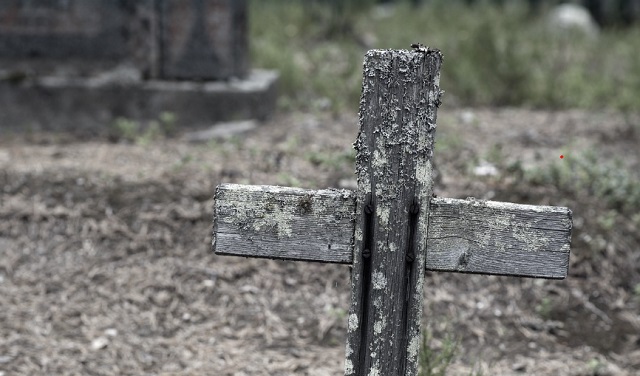
On May 27, 2021, Rosanne Casimir, Chief of the Tk’emlúps te Secwepemc (Kamloops Indian Band), announced that ground-penetrating radar (GPR) had located the remains of 215 “missing children” in an apple orchard on the site of a former residential school.
Politicians and media seized on the announcement, and stories of “mass unmarked graves” and “burials of missing children” ricocheted around Canada and indeed much of the world. Prime Minister Justin Trudeau set the tone of the public response by ordering Canadian flags to be flown at half-mast on all federal buildings to honour the “215 children whose lives were taken at the Kamloops residential school,” thus elevating the possible burials to the status of victims of foul play and making Canada sound like a charnel house of murdered children.
According to Canadian newspaper editors, the discovery of the so-called unmarked graves was the “news story of the year.” And the World Press Photo of the Year award went to a “haunting image of red dresses hung on crosses along a roadside, with a rainbow in the background, commemorating children who died at a residential school created to assimilate Indigenous children in Canada.”
These events created a narrative about the genocidal nature of residential schools, which were established in the 19th and 20th centuries by churches and the government to educate Indigenous children and assimilate them into Canadian society. That narrative went unchallenged at first. Yet substantial pushback gradually developed among a group of retired judges, lawyers, professors, journalists and others who have had careers in researching and evaluating evidence. It’s no accident that most are retired, because that gives them some protection against attempts to silence them as “deniers.” In the words of Janis Joplin, “Freedom’s just another word for nothin’ left to lose.” I published a book, which has been an Amazon Canada bestseller, proving Canadians’ desire for accurate information on this topic.
The book is a collection of some of the best pushback essays published in response to the Kamloops mythology. They analyze and critique the false narrative of unmarked graves, missing children, forced attendance and genocidal conditions at residential schools. The book’s title, Grave Error, summarizes the authors’ view of the Kamloops narrative. It is wrong, and not just wrong, but egregiously wrong. It deserves our sardonic title. And our book shows in detail just why and where the narrative is wrong.
Several of these authors, as well as others who have helped research and edit these publications, had for many years been writing for major metropolitan dailies, national magazines, academic journals, university presses and commercial publishers. However, they quickly learned that the corporate, legacy or mainstream media—in addition to religious leaders and politicians—have little desire to stand up to the narrative flow of a moral panic. They thus wrote about residential schools mainly in specialized journals such as The Dorchester Review, online daily media such as True North and the Western Standard, and online journals such as Unherd and History Reclaimed whose raison d’être is to challenge conventional wisdom.
For example, the first essay—“In Kamloops, Not One Body Has Been Found,” by Montreal historian Jacques Rouillard—has done more than any other single publication to punch holes in the false narrative of unmarked graves and missing children. Other essays punch more holes. Academic provocateur Frances Widdowson shows how the legend of murdered children and unmarked graves was spread by defrocked United Church minister Kevin Annett before it popped up at Kamloops. Retired professor Hymie Rubenstein and collaborators examine the “evidence” of unmarked graves, such as the results of the GPR, and find there’s nothing—repeat, nothing—there. Journalist Jonathan Kay explains how the media got the story completely wrong, generating the worst fake news in Canadian history. Retired professor Ian Gentles examines health conditions in the schools and shows that children were better off there than at home on reserves. My contribution criticizes the prolific but weak body of research purporting to show that attendance at residential schools created a historical trauma that’s responsible for the social pathologies in Indigenous communities. Retired professor Rodney Clifton recounts from personal experience how benign conditions could be in residential schools. And other essays explore other fallacies.
Our book demonstrates that all the major elements of the Kamloops narrative are either false or highly exaggerated. No unmarked graves have been discovered at Kamloops or elsewhere—not one. As of August 2023, there had been 20 announcements of soil “anomalies” discovered by GPR near residential schools across Canada; but most have not even been excavated, so what, if anything, lies beneath the surface remains unknown. Where excavations have taken place, no burials related to residential schools have been found.
In other words, there are no “missing children.” The fate of some children may have been forgotten with the passage of generations—forgotten by their own families, that is. But “forgotten” is not the same as “missing.” The myth of missing students arose from a failure of the Truth and Reconciliation Commission’s researchers to cross-reference the vast number of historical documents about residential schools and the children who attended them. The documentation exists, but the commissioners did not avail themselves of it.
Media stories about Indian residential schools are almost always accompanied by the frightening claim that 150,000 students were “forced to attend” these schools, but that claim is misleading at best. Children were not legally required to attend residential school unless no reserve day school was available; and even then, the law was only sporadically enforced. For students who did attend residential schools, an application form signed by a parent or other guardian was required. The simple truth is that many Indian parents saw residential schools as the best option available for their children.
Prior to 1990, residential schools enjoyed largely favourable media coverage, with many positive testimonials from former students. Indeed, alumni of residential schools comprised most of the emerging First Nations elite. But then Manitoba regional Chief Phil Fontaine appeared on a popular CBC television show hosted by Barbara Frum and claimed he had suffered sexual abuse at a residential school. He did not give details nor specify whether the alleged abusers were missionary priests, lay staff members or other students. Nonetheless, things went south quickly after Fontaine’s appearance, as claims of abuse multiplied and lawyers started to bring them to court.
To avoid clogging the justice system with lawsuits, the Liberal government of Paul Martin negotiated a settlement in 2005, which was accepted shortly afterwards by the Conservative government of Stephen Harper. Ultimately about $5 billion in compensation was paid to about 80,000 claimants, and in 2008 Prime Minister Harper publicly apologized for the existence of residential schools.
Harper might have thought that the payments and his apology would be the end of the story, but instead it became the beginning of a new chapter. The Truth and Reconciliation Commission (TRC) that he appointed took off in its own direction after the initial set of commissioners resigned and were replaced on short notice. The TRC held emotional public hearings around the country where “survivors” told their stories without fact-checking or cross-examination. The TRC concluded in 2015 that the residential schools amounted to “cultural genocide.”
Cultural genocide is a metaphor, an emotive term for assimilation or integration of an ethnic minority into an encompassing society. The next step, in turned out, was to start speaking with increasing boldness of a literal physical genocide involving real deaths. The claims about missing children, unmarked burials and “mass graves” reinforced a genocide scenario.
Perhaps sensing the weakness of their evidence-free position, purveyors of the genocide narrative are beginning to double down, demanding that criticism of their ideology be made illegal. For example, in 2022, Winnipeg NDP MP Leah Gazan, introduced a resolution declaring residential schools to be genocidal—the House of Commons gave unanimous consent.
So, there we are—a narrative about genocide in residential schools firmly established in the public domain while unbelievers are called heretics (“denialists”) and threatened with criminal prosecution. But don’t believe the hype, no matter how often the propositions are repeated. As the little boy said in Hans Christian Andersen’s fairytale, “The Emperor has no clothes.”
Author: Tom Flanagan

From the Fraser Institute
A report published by the Fraser Institute reaffirms just how much more economically free some states are compared with others. These are places where citizens are allowed to make more of their economic choices. Their taxes are lighter, and their regulatory burdens are easier. The benefits for workers, consumers and businesses have been clear for a long time.
There’s another group of states to watch: “movers” that have become much freer in recent decades. These are states that may not be the freest, but they have been cutting taxes and red tape enough to make a big difference.
How do they fare?
I recently explored this question using 22 years of data from the same Economic Freedom of North America index. The index uses 10 variables encompassing government spending, taxation and labour regulation to assess the degree of economic freedom in each of the 50 states.
Some states, such as New Hampshire, have long topped the list. It’s been in the top five for three decades. With little room to grow, the Granite State’s level of economic freedom hasn’t budged much lately. Others, such as Alaska, have significantly improved economic freedom over the last two decades. Because it started so low, it remains relatively unfree at 43rd out of 50.
Three states—North Carolina, North Dakota and Idaho—have managed to markedly increase and rank highly on economic freedom.
In 2000, North Carolina was the 19th most economically free state in the union. Though its labour market was relatively unhindered by the state’s government, its top marginal income tax rate was America’s ninth-highest, and it spent more money than most states.
From 2013 to 2022, North Carolina reduced its top marginal income tax rate from 7.75 per cent to 4.99 per cent, reduced government employment and allowed the minimum wage to fall relative to per-capita income. By 2022, it had the second-freest labour market in the country and was ninth in overall economic freedom.
North Dakota took a similar path, reducing its 5.54 per cent top income tax rate to 2.9 per cent, scaling back government employment, and lowering its minimum wage to better reflect local incomes. It went from the 27th most economically free state in the union in 2000 to the 10th freest by 2022.
Idaho saw the most significant improvement. The Gem State has steadily improved spending, taxing and labour market freedom, allowing it to rise from the 28th most economically free state in 2000 to the eighth freest in 2022.
We can contrast these three states with a group that has achieved equal and opposite distinction: California, Delaware, New Jersey and Maryland have managed to decrease economic freedom and end up among the least free overall.
What was the result?
The economies of the three liberating states have enjoyed almost twice as much economic growth. Controlling for inflation, North Carolina, North Dakota and Idaho grew an average of 41 per cent since 2010. The four repressors grew by just 24 per cent.
Among liberators, statewide personal income grew 47 per cent from 2010 to 2022. Among repressors, it grew just 26 per cent.
In fact, when it comes to income growth per person, increases in economic freedom seem to matter even more than a state’s overall, long-term level of freedom. Meanwhile, when it comes to population growth, placing highly over longer periods of time matters more.
The liberators are not unique. There’s now a large body of international evidence documenting the freedom-prosperity connection. At the state level, high and growing levels of economic freedom go hand-in-hand with higher levels of income, entrepreneurship, in-migration and income mobility. In economically free states, incomes tend to grow faster at the top and bottom of the income ladder.
These states suffer less poverty, homelessness and food insecurity and may even have marginally happier, more philanthropic and more tolerant populations.
In short, liberation works. Repression doesn’t.

From the Fraser Institute
By Tegan Hill
Last Friday, less than a week before Christmas, the Smith government quietly released the final report from its Alberta Next Panel, which assessed Alberta’s role in Canada. Among other things, the panel recommends that the federal government transfer some of its tax revenue to provincial governments so they can assume more control over the delivery of provincial services. Based on Canada’s experience in the 1990s, this plan could deliver real benefits for Albertans and all Canadians.
Federations such as Canada typically work best when governments stick to their constitutional lanes. Indeed, one of the benefits of being a federalist country is that different levels of government assume responsibility for programs they’re best suited to deliver. For example, it’s logical that the federal government handle national defence, while provincial governments are typically best positioned to understand and address the unique health-care and education needs of their citizens.
But there’s currently a mismatch between the share of taxes the provinces collect and the cost of delivering provincial responsibilities (e.g. health care, education, childcare, and social services). As such, Ottawa uses transfers—including the Canada Health Transfer (CHT)—to financially support the provinces in their areas of responsibility. But these funds come with conditions.
Consider health care. To receive CHT payments from Ottawa, provinces must abide by the Canada Health Act, which effectively prevents the provinces from experimenting with new ways of delivering and financing health care—including policies that are successful in other universal health-care countries. Given Canada’s health-care system is one of the developed world’s most expensive universal systems, yet Canadians face some of the longest wait times for physicians and worst access to medical technology (e.g. MRIs) and hospital beds, these restrictions limit badly needed innovation and hurt patients.
To give the provinces more flexibility, the Alberta Next Panel suggests the federal government shift tax points (and transfer GST) to the provinces to better align provincial revenues with provincial responsibilities while eliminating “strings” attached to such federal transfers. In other words, Ottawa would transfer a portion of its tax revenues from the federal income tax and federal sales tax to the provincial government so they have funds to experiment with what works best for their citizens, without conditions on how that money can be used.
According to the Alberta Next Panel poll, at least in Alberta, a majority of citizens support this type of provincial autonomy in delivering provincial programs—and again, it’s paid off before.
In the 1990s, amid a fiscal crisis (greater in scale, but not dissimilar to the one Ottawa faces today), the federal government reduced welfare and social assistance transfers to the provinces while simultaneously removing most of the “strings” attached to these dollars. These reforms allowed the provinces to introduce work incentives, for example, which would have previously triggered a reduction in federal transfers. The change to federal transfers sparked a wave of reforms as the provinces experimented with new ways to improve their welfare programs, and ultimately led to significant innovation that reduced welfare dependency from a high of 3.1 million in 1994 to a low of 1.6 million in 2008, while also reducing government spending on social assistance.
The Smith government’s Alberta Next Panel wants the federal government to transfer some of its tax revenues to the provinces and reduce restrictions on provincial program delivery. As Canada’s experience in the 1990s shows, this could spur real innovation that ultimately improves services for Albertans and all Canadians.

Tegan Hill
Director, Alberta Policy, Fraser Institute

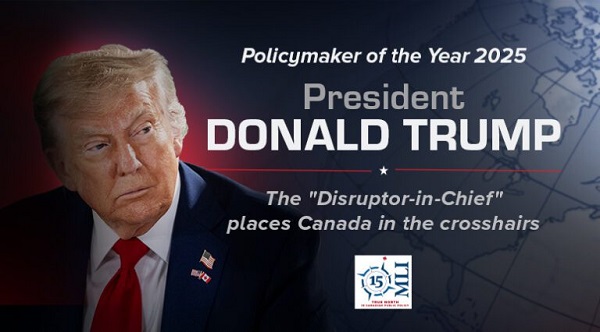
The “Disruptor-in-Chief” places Canada in the crosshairs

UK Police Pilot AI System to Track “Suspicious” Driver Journeys

Judge Declares Mistrial in Landmark New York PRC Foreign-Agent Case

Canadian government launches trial version of digital ID for certain licenses, permits
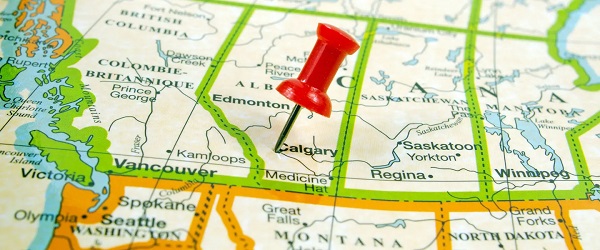
Alberta Next Panel calls to reform how Canada works

World-leading biochemist debunks evolutionary theory

Ottawa-Alberta agreement may produce oligopoly in the oilsands
-
 Haultain Research1 day ago
Sweden Fixed What Canada Won’t Even Name
-
 Business1 day ago
What Do Loyalty Rewards Programs Cost Us?
-
 Business15 hours ago
Land use will be British Columbia’s biggest issue in 2026
-
 Business12 hours ago
Mainstream media missing in action as YouTuber blows lid off massive taxpayer fraud
-
 Business12 hours ago
Stripped and shipped: Patel pushes denaturalization, deportation in Minnesota fraud
-
 Energy3 hours ago
Rulings could affect energy prices everywhere: Climate activists v. the energy industry in 2026
-
 Digital ID2 hours ago
The Global Push for Government Mandated Digital IDs And Why You Should Worry
-
 Energy15 hours ago
Why Japan wants Western Canadian LNG