
International
Nigeria, 3 other African countries are deadliest for Christians: report


From LifeSiteNews
By Angeline Tan

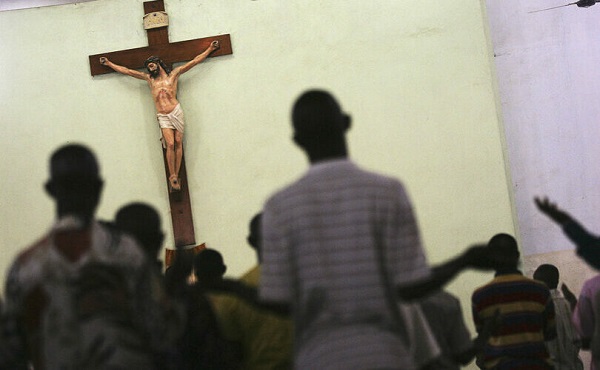
The 2025 Global Christian Relief Red List report has found that the deadliest region for Christians is Africa, with Nigeria taking the top spot with 10,000 deaths in 2 years.
The 2025 Global Christian Relief (GCR) Red List report, which highlighted “the 25 worst countries for Christian persecution across five categories of concern” including killings, building attacks, arrests, displacements, abductions and assaults, has found that Africa, in particular Nigeria, is the most dangerous region for Christians.
Released in January, the GCR report, which relied on data from the Violent Incidents Database, a project founded by the International Institute for Religious Freedom (IIRF), summarized:
Africa remains the deadliest region for Christians, with Nigeria consistently being the most dangerous country for followers of Jesus. Between November 2022 and November 2024, nearly 10,000 Christians were killed, primarily by Islamic extremist groups such as Boko Haram, Armed Fulani Herdsmen, and the Islamic State’s West Africa Province (ISWAP). Similar patterns emerge in the Democratic Republic of the Congo (DRC), Mozambique, and Ethiopia, where numerous armed militant groups target Christians.
The GCR report detailed how “most of the killings” in Nigeria happened in the country’s northern “sharia” states, where Christians “often live in remote villages in semi-arid landscapes, making them particularly vulnerable to attacks.” Notably, the same report highlighted the failure of the Nigerian government in stopping these anti-Christian attacks, stating that “despite government assurances that they will defeat the extremists, the violence continues to escalate.”
Ranking second to Nigeria as the next “deadliest country for Christians” was the Democratic Republic of Congo (DRC), where “390 Christians were recorded as killed” during the reporting period of November 2022 to 2024. The GRC report singled out “Islamic militant groups like the Allied Democratic Forces” as the “main killers.”
Coming in third was Mozambique, with “262 recorded deaths.” The report declared that although Mozambique was “once a relatively peaceful Christian-majority country,” “a swarm of militants led by the Islamic State Mozambique (ISM)” has disrupted the peace of the country.
Strikingly, Ethiopia emerged as the fourth deadliest country for Christians, “with at least 181 Christians killed.” The GCR report detailed how “believers — particularly converts — faced high risks of violence in regions dominated by Islamic militants”.
Apart from killings, African Christians have to contend with the risk of displacements, assaults, and kidnappings.
“Despite the intense challenges in places like Nigeria, China, and India, we continue to see remarkable resilience in these communities,” Brian Orme, acting chief executive of Global Christian Relief, declared. “Even in the darkest circumstances, the Church not only survives but grows stronger — millions are choosing to follow Jesus despite knowing the risks they face.”
“Working closely with our partners on the ground in these high-risk areas, we provide emergency aid, safe houses, and trauma counseling to Christians facing violent persecution,” Orme said.
Regarding attacks on Christian property, India, a country noted for its controversial anti-conversion laws, ranked top on the list in the GCR report, with 4,949 incidents during the November 2022-2024 reporting period.
According to the report, “much of the violence occurred in Manipur, where unrest erupted in May 2024. Rioters, driven by Hindu extremists from the Meitei tribe, attacked predominantly Christian Kukis, systematically burning churches and setting fire to the homes of believers.”
Meanwhile, China led the world in arrests of Christians, with more than 1,500 believers detained under the communist government’s religious prohibitions. The report stated:
It is no surprise that China tops the 2025 GCR Red List for Arrests, given that the communist nation has the world’s most sophisticated surveillance mechanisms.


From the Daily Caller News Foundation
All eyes will be on the Supreme Court later this week when the justices conference on Friday to decide whether to grant a petition for writ of certiorari on a high-stakes climate lawsuit out of Colorado. The case is a part of the long-running lawfare campaign seeking to extract billions of dollars in jury awards from oil companies on claims of nebulous damages caused by carbon emissions.
In Suncor Energy (U.S.A.) Inc., et al. v. County Commissioners of Boulder County, major American energy companies are asking the Supreme Court to decide whether federal law precludes state law nuisance claims targeting interstate and global emissions. This comes as the City and County of Boulder, Colo. sued a long list of energy companies under Colorado state nuisance law for alleged impacts from global climate change.
The Colorado Supreme Court allowed a lower state trial court decision to go through, improbably finding that federal law did not preempt state law claims. The central question hangs on whether the federal Clean Air Act (CAA) preempts state common law public nuisance claims related to the regulation of carbon emissions. In this case, as in at least 10 other cases that have been decided in favor of the defendant companies, the CAA clearly does preempt Colorado law. It seems inevitable that the Supreme Court, if it grants the cert petition, would make the same ruling.
Dear Readers:
As a nonprofit, we are dependent on the generosity of our readers.
Please consider making a small donation of any amount here.
Thank you!
Such a finding by the Supreme Court would reinforce a 2021 ruling by the Second Circuit Appeals Court that also upheld this longstanding principle of federal law. In City of New York v. Chevron Corp. (2021), the Second Circuit ruled that municipalities may not use state tort law to hold multinational companies liable for climate damages, since global warming is a uniquely international concern that touches upon issues of federalism and foreign policy. Consequently, the court called for the explicit application of federal common law, with the CAA granting the Environmental Protection Agency – not federal courts – the authority to regulate domestic greenhouse gas emissions. This Supreme Court, with its 6-3 conservative majority, should weigh in here and find in the same way.
Boulder-associated attorneys have become increasingly open to acknowledging the judicial lawfare inherent in their case, as they try to supplant federal regulatory jurisdiction with litigation meant to force higher energy prices rise for consumers. David Bookbinder, an environmental lawyer associated with the Boulder legal team, said the quiet part out loud in a recent Federalist Society webinar titled “Can State Courts Set Global Climate Policy. “Tort liability is an indirect carbon tax,” Bookbinder stated plainly. “You sue an oil company, an oil company is liable. The oil company then passes that liability on to the people who are buying its products … The people who buy those products are now going to be paying for the cost imposed by those products.”
Oh.
While Bookbinder recently distanced himself from the case, no notice of withdrawal had appeared in the court’s records as of this writing. Bookbinder also writes that “Gas prices and climate change policy have become political footballs because neither party in Congress has had the courage to stand up to the oil and gas lobby. Both sides fear the spin machine, so consumers get stuck paying the bill.”
Let’s be honest: The “spin machine” works in all directions. Make no mistake about it, consumers are already getting stuck paying the bill related to this long running lawfare campaign even though the defendants have repeatedly been found not to be liable in case after case. The many millions of dollars in needless legal costs sustained by the dozens of defendants named in these cases ultimately get passed to consumers via higher energy costs. This isn’t some evil conspiracy by the oil companies: It is Business Management 101.
Because the climate alarm lobby hasn’t been able to force its long-sought national carbon tax through the legislative process, sympathetic activists and plaintiff firms now pursue this backdoor effort in the nation’s courts. But their problem is that the law on this is crystal clear, and it is long past time for the Supreme Court to step in and put a stop to this serial abuse of the system.
David Blackmon is an energy writer and consultant based in Texas. He spent 40 years in the oil and gas business, where he specialized in public policy and communications.


President Trump revealed Wednesday afternoon that U.S. authorities intercepted a Cuba-bound oil tanker off the Venezuelan coast, a dramatic move aimed at tightening the squeeze on illicit oil networks operating throughout the region. Speaking to reporters at the White House, Trump described the vessel as “a very large tanker — the largest one ever seized in action,” hinting that more developments are coming. He declined to get into specifics, saying only that the operation happened “for a very good reason.” When asked about the tanker’s crude, Trump didn’t overcomplicate it. “Well, we keep it, I guess,” he said.
According to a U.S. official familiar with the operation, the seizure was executed by the Coast Guard with support from the U.S. Navy after a federal judge green-lit the warrant roughly two weeks ago. Another official told the New York Times the ship — identified as the Skipper — had been sailing under a falsified flag and has a documented history of trafficking illicit Iranian oil. The vessel, although carrying Venezuelan crude at the time, was seized because of those Iranian smuggling ties, not because of any direct connection to Nicolás Maduro’s regime.
Today, the Federal Bureau of Investigation, Homeland Security Investigations, and the United States Coast Guard, with support from the Department of War, executed a seizure warrant for a crude oil tanker used to transport sanctioned oil from Venezuela and Iran. For multiple… pic.twitter.com/dNr0oAGl5x
— Attorney General Pamela Bondi (@AGPamBondi) December 10, 2025
Vanguard, a UK-based maritime risk firm, confirmed Wednesday that the Skipper fits the profile of a tanker previously sanctioned by the United States for operating under the alias Adisa while moving banned Iranian oil. A source speaking to Politico said the ship was on its way to Cuba, where state-run Cubametales intended to flip the cargo to Asian brokers — an increasingly common workaround as U.S. sanctions isolate both Havana and Caracas from traditional buyers. With most Venezuelan product now flowing to China under the sanctions regime, oil traders began recalibrating almost immediately after the news broke. Prices ticked upward modestly as markets waited to learn whether any Venezuelan crude was on board and how much would be effectively taken off the table.
Maduro, for his part, avoided directly mentioning the seizure during a speech later Wednesday, instead railing against the United States and claiming Venezuela’s military stands ready “to break the teeth of the North American empire, if necessary.” His bluster did little to obscure the reality: the Trump administration just disrupted yet another shadowy oil operation linking Caracas, Havana, and Tehran — and sent a clear signal that these networks will be confronted, tanker by tanker.


The Trickster Politics of the Tanker Ban are Hiding a Much Bigger Reckoning for B.C.

Integration Or Indignation: Whose Strategy Worked Best Against Trump?

While Trump has southern border secure, hundreds of thousands of illegal immigrants still flooding in from Canada
Alberta will use provincial laws to stop Canadian gov’t from trying to confiscate legal firearms

What the Data Shows About the New Canada-Alberta Pipeline Opportunity
Canada’s EV Mandate Is Running On Empty

Why Does Canada “Lead” the World in Funding Racist Indoctrination?
-
 Business1 day ago
Conservative MP warns Liberals’ national AI plan could increase gov’t surveillance
-
 Great Reset1 day ago
Proposed ban on euthanasia for mental illness sparks passionate debate in Canada’s Parliament
-
 Censorship Industrial Complex1 day ago
Liberals gain support for ‘hate speech’ bill targeting Bible passages against homosexuality
-
 Automotive22 hours ago
The $50 Billion Question: EVs Never Delivered What Ottawa Promised
-
 Business2 days ago
Canada Can Finally Profit From LNG If Ottawa Stops Dragging Its Feet
-
 Agriculture19 hours ago
Growing Alberta’s fresh food future
-
 Health1 day ago
US podcaster Glenn Beck extends a lifeline to a Saskatchewan woman waiting for MAiD
-
 Business1 day ago
Storm clouds of uncertainty as BC courts deal another blow to industry and investment