
Environment
New must-see documentary exposes climate alarm as an “invented scare”



From the Climate Intelligence Foundation (CLINTEL).
Founded in 2019 by emeritus professor of geophysics Guus Berkhout and science journalist Marcel Crok, CLINTEL‘s main objective is to generate knowledge and insight into the extent, nature, causes and consequences of climate change and the climate policy related to it.

From CLINTEL on YouTube
This film exposes the climate alarm as an invented scare without any basis in science. It shows that mainstream studies and official data do not support the claim that we are witnessing an increase in extreme weather events – hurricanes, droughts, heatwaves, wildfires and all the rest. It emphatically counters the claim that current temperatures and levels of atmospheric CO2 are unusually and worryingly high.
The film includes interviews with a number of very prominent scientists, including Professor Steven Koonin (author of ‘Unsettled’, a former provost and vice-president of Caltech), Professor Richard (Dick) Lindzen (formerly professor of meteorology at Harvard and MIT), Professor Will Happer (professor of physics at Princeton), Dr John Clauser (winner of the Nobel prize in Physics in 2022), Professor Nir Shaviv (Racah Institute of Physics), professor Ross McKitrick (University of Guelph), Willie Soon and several others.
The film was written and directed by the British filmmaker Martin Durkin and is the sequel of his excellent 2007 documentary The Great Global Warming Swindle. Tom Nelson, a podcaster who has been deeply examining climate debate issues for the better part of two decades, was the producer of the film.
Follow @ClimateTheMovie and @ClintelOrg for updates.
Climate Intelligence Foundation (CLINTEL) is an independent foundation that reports objectively on climate change and climate policy and aims to be a voice of reason in the often overheated climate debate. CLINTEL was founded in 2019 by emeritus professor of geophysics Guus Berkhout and science journalist Marcel Crok . CLINTEL’s main objective is to generate knowledge and insight into the extent, nature, causes and consequences of climate change and the climate policy related to it. CLINTEL also wants to participate in debates on climate science and policy, as well as in decision-making processes in this regard.
To this end:
- The foundation tries to communicate clearly and transparently to the general public what facts are available about climate change and climate policy and also where facts turn into assumptions and predictions.
- The foundation conducts and encourages a public debate on this matter and carries out investigative journalism work in this area.
- The foundation aims to function as an international meeting place for scientists with different views on climate change and climate policy.
- Will the foundation also conduct or finance scientific research in the field of climate change and climate policy?
- The foundation participates in decision-making procedures regarding the climate, climate communication and climate policy, in particular legislative and regulatory processes, but possibly also legal procedures regarding climate policy of governments, companies or other parties.
CLINTEL wants to take on the role of ‘climate watchdog’, both in the field of climate science and climate policy.
CLINTEL was made possible in part by a start-up donation from real estate entrepreneur Niek Sandmann. The foundation is very grateful to him for this. Several people have already indicated that they would also like to contribute financially to the foundation. This can also be done anonymously if desired. You can support us by becoming a Friend of CLINTEL or making a one-time donation .
The foundation strives for as few overhead costs as possible, so that almost all resources can be spent on investigative journalism, scientific research and public information. CLINTEL will work on an extensive national network of “friends” and “ambassadors”. To this end, meetings ( CLINTEL Chambers ) will be organized throughout the country . CLINTEL also has a youth organization, Young CLINTEL .
CLINTEL is located in Amsterdam and can be reached via [email protected].
Links
Channel details
| www.youtube.com/@clintel628 |

From the Fraser Institute
By Annika Segelhorst and Elmira Aliakbari
According to Steven Guilbeault, former environment minister under Justin Trudeau and former member of Prime Minister Carney’s cabinet, “Switching to an electric vehicle is one of the most impactful things Canadians can do to help fight climate change.”
And the Carney government has only paused Trudeau’s electric vehicle (EV) sales mandate to conduct a “review” of the policy, despite industry pressure to scrap the policy altogether.
So clearly, according to policymakers in Ottawa, EVs are essentially “zero emission” and thus good for environment.
But is that true?
Clearly, EVs have some environmental advantages over traditional gasoline-powered vehicles. Unlike cars with engines that directly burn fossil fuels, EVs do not produce tailpipe emissions of pollutants such as nitrogen dioxide and carbon monoxide, and do not release greenhouse gases (GHGs) such as carbon dioxide. These benefits are real. But when you consider the entire lifecycle of an EV, the picture becomes much more complicated.
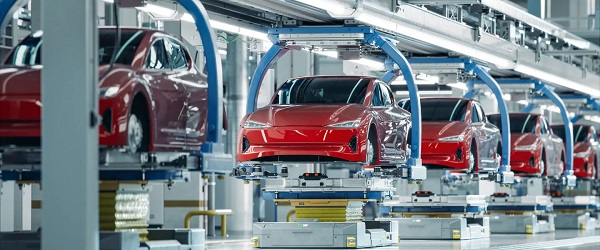
Unlike traditional gasoline-powered vehicles, battery-powered EVs and plug-in hybrids generate most of their GHG emissions before the vehicles roll off the assembly line. Compared with conventional gas-powered cars, EVs typically require more fossil fuel energy to manufacture, largely because to produce EVs batteries, producers require a variety of mined materials including cobalt, graphite, lithium, manganese and nickel, which all take lots of energy to extract and process. Once these raw materials are mined, processed and transported across often vast distances to manufacturing sites, they must be assembled into battery packs. Consequently, the manufacturing process of an EV—from the initial mining of materials to final assembly—produces twice the quantity of GHGs (on average) as the manufacturing process for a comparable gas-powered car.
Once an EV is on the road, its carbon footprint depends on how the electricity used to charge its battery is generated. According to a report from the Canada Energy Regulator (the federal agency responsible for overseeing oil, gas and electric utilities), in British Columbia, Manitoba, Quebec and Ontario, electricity is largely produced from low- or even zero-carbon sources such as hydro, so EVs in these provinces have a low level of “indirect” emissions.
However, in other provinces—particularly Alberta, Saskatchewan and Nova Scotia—electricity generation is more heavily reliant on fossil fuels such as coal and natural gas, so EVs produce much higher indirect emissions. And according to research from the University of Toronto, in coal-dependent U.S. states such as West Virginia, an EV can emit about 6 per cent more GHG emissions over its entire lifetime—from initial mining, manufacturing and charging to eventual disposal—than a gas-powered vehicle of the same size. This means that in regions with especially coal-dependent energy grids, EVs could impose more climate costs than benefits. Put simply, for an EV to help meaningfully reduce emissions while on the road, its electricity must come from low-carbon electricity sources—something that does not happen in certain areas of Canada and the United States.
Finally, even after an EV is off the road, it continues to produce emissions, mainly because of the battery. EV batteries contain components that are energy-intensive to extract but also notoriously challenging to recycle. While EV battery recycling technologies are still emerging, approximately 5 per cent of lithium-ion batteries, which are commonly used in EVs, are actually recycled worldwide. This means that most new EVs feature batteries with no recycled components—further weakening the environmental benefit of EVs.
So what’s the final analysis? The technology continues to evolve and therefore the calculations will continue to change. But right now, while electric vehicles clearly help reduce tailpipe emissions, they’re not necessarily “zero emission” vehicles. And after you consider the full lifecycle—manufacturing, charging, scrapping—a more accurate picture of their environmental impact comes into view.

Annika Segelhorst
Junior Economist

Elmira Aliakbari

From the Fraser Institute
By Annika Segelhorst and Elmira Aliakbari
Canadians care about the environment and breathing clean air. In 2023, the share of Canadians concerned about the state of outdoor air quality was 7 in 10, according to survey results from Abacus Data. Yet Canada outperforms most comparable high-income countries on air quality, suggesting a gap between public perception and empirical reality. Overall, Canada ranks 8th for air quality among 31 high-income countries, according to our recent study published by the Fraser Institute.
A key determinant of air quality is the presence of tiny solid particles and liquid droplets floating in the air, known as particulates. The smallest of these particles, known as fine particulate matter, are especially hazardous, as they can penetrate deep into a person’s lungs, enter the blood stream and harm our health.
Exposure to fine particulate matter stems from both natural and human sources. Natural events such as wildfires, dust storms and volcanic eruptions can release particles into the air that can travel thousands of kilometres. Other sources of particulate pollution originate from human activities such as the combustion of fossil fuels in automobiles and during industrial processes.
The World Health Organization (WHO) and the Canadian Council of Ministers of the Environment (CCME) publish air quality guidelines related to health, which we used to measure and rank 31 high-income countries on air quality.
Using data from 2022 (the latest year of consistently available data), our study assessed air quality based on three measures related to particulate pollution: (1) average exposure, (2) share of the population at risk, and (3) estimated health impacts.
The first measure, average exposure, reflects the average level of outdoor particle pollution people are exposed to over a year. Among 31 high-income countries, Canadians had the 5th-lowest average exposure to particulate pollution.
Next, the study considered the proportion of each country’s population that experienced an annual average level of fine particle pollution greater than the WHO’s air quality guideline. Only 2 per cent of Canadians were exposed to fine particle pollution levels exceeding the WHO guideline for annual exposure, ranking 9th of 31 countries. In other words, 98 per cent of Canadians were not exposed to fine particulate pollution levels exceeding health guidelines.
Finally, the study reviewed estimates of illness and mortality associated with fine particle pollution in each country. Canada had the fifth-lowest estimated death and illness burden due to fine particle pollution.
Taken together, the results show that Canada stands out as a global leader on clean air, ranking 8th overall for air quality among high-income countries.

Canada’s record underscores both the progress made in achieving cleaner air and the quality of life our clean air supports.
Annika Segelhorst
Junior Economist
Elmira Aliakbari


The Recall Trap: 21 Alberta MLA’s face recall petitions
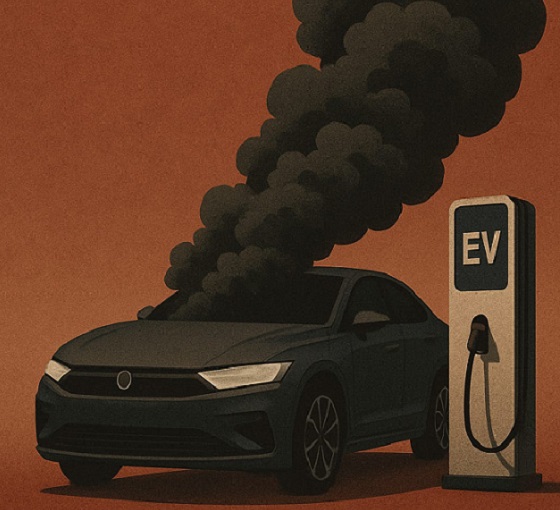
The $50 Billion Question: EVs Never Delivered What Ottawa Promised

Liberals gain support for ‘hate speech’ bill targeting Bible passages against homosexuality

Wisdom of Our Elders: The Contempt for Memory in Canadian Indigenous Policy

Taxpayers Federation calls on politicians to reject funding for new Ottawa Senators arena

Conservative MP warns Liberals’ national AI plan could increase gov’t surveillance

Canada’s free speech record is cracking under pressure
-
 Digital ID23 hours ago
Canada releases new digital ID app for personal documents despite privacy concerns
-
 Business1 day ago
Major tax changes in 2026: Report
-
 Daily Caller1 day ago
Chinese Billionaire Tried To Build US-Born Baby Empire As Overseas Elites Turn To American Surrogates
-
 Censorship Industrial Complex1 day ago
Death by a thousand clicks – government censorship of Canada’s internet
-
 Energy22 hours ago
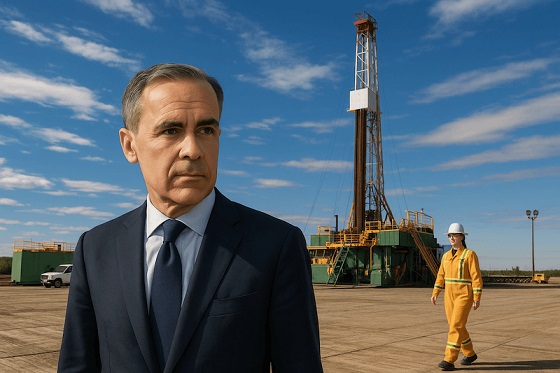
Canada’s sudden rediscovery of energy ambition has been greeted with a familiar charge: hypocrisy
-
 Alberta1 day ago
Schools should go back to basics to mitigate effects of AI
-
 Daily Caller1 day ago
Two states designate Muslim group as terrorist
-
 International1 day ago
Russia Now Open To Ukraine Joining EU, Officials Briefed On Peace Deal Say