
Alberta
New era of police accountability



The Police Review Commission (PRC) is now fully operational, giving Albertans a single, independent process to file policing complaints and ensure accountability.

Alberta’s government is putting the province at the forefront of police oversight in Canada with the creation of the PRC. This new commission replaces the current patchwork of police investigating police with one independent body responsible for receiving complaints, conducting investigations and overseeing disciplinary hearings. By centralizing these functions within a single, independent agency, Alberta is ensuring complaints are handled fairly and consistently.
“The Police Review Commission represents a new era in how Alberta addresses policing complaints. These changes are part of a broader paradigm shift where police are no longer seen as an arm of the state, but rather an extension and a reflection of the community they serve. As an independent agency, it is committed to fairness, accountability and public trust, ensuring every complaint is investigated impartially and resolved openly.”
The Police Amendment Act, 2022 laid the groundwork for this new model, establishing a modern approach to oversight built on accountability, consistency and public confidence. The PRC will manage the full complaints process from receiving and assessing, to investigating and resolving complaints related to police conduct, including serious incidents and statutory offences.
“The Alberta Association of Chiefs of Police welcomes the launch of the Police Review Commission as a meaningful step toward enhanced oversight and greater transparency in policing. By ensuring complaints are reviewed fairly and impartially, the Commission will help strengthen accountability and reinforce public trust in Alberta’s police agencies. Police leaders across the province are committed to working with the Commission and our communities to ensure every Albertan has confidence in the integrity of our police services.”
A timely and transparent complaint resolution process is essential for both the public and police. That is why the PRC must complete investigations within 180 days, and if more time is needed, the chief executive officer must publicly report on delays and provide justification. This ensures clarity, predictability and accountability throughout the process. The commission will be arm’s length from government and police services, meaning people can have greater confidence that their complaints will be investigated and resolved impartially.
“Our goal is to build trust in policing by delivering timely resolutions and fair, consistent outcomes that put people first. Every complaint will be reviewed thoroughly and handled with the transparency and respect Albertans expect and deserve.”
The PRC can also initiate systemic reviews related to police conduct or emerging trends without the need for a public complaint, and these reviews must be made public. Together, these measures create a clear, accountable process that strengthens transparency, supports continuous improvement and enhances trust in how police oversight is carried out across Alberta.
“Public safety and the confidence the public has in our police services and service members are incumbent for effective and responsible service delivery. The PRC has been developed so that Albertans may have a responsible and impartial mechanism to voice concerns regarding delivery of policing services in Alberta. I am confident that the PRC will be an inclusive and diverse representation of the communities, so we may better understand the most appropriate and effective way to respond to concerns regarding police services. I look forward to the positive outcomes for the community.”
The commission’s design was informed by engagement with Indigenous communities, law enforcement partners, municipal officials and community organizations, ensuring its structure and training reflect Alberta’s diversity and values.
Quick facts
- The PRC will handle complaints in three categories:
- Level 1: Death, serious injury and serious or sensitive allegations involving all police services in Alberta, as well as peace officer agencies.
- Level 2: Allegations of criminal and other statutory offences involving all police services in Alberta.
- Level 3: Complaints about non-criminal misconduct involving officers employed by municipal and First Nations police services.
- Complaints that fall outside the three categories will be referred to the appropriate bodies or agencies for review.
- The Alberta Serious Incident Response Team (ASIRT) will now operate under the PRC.


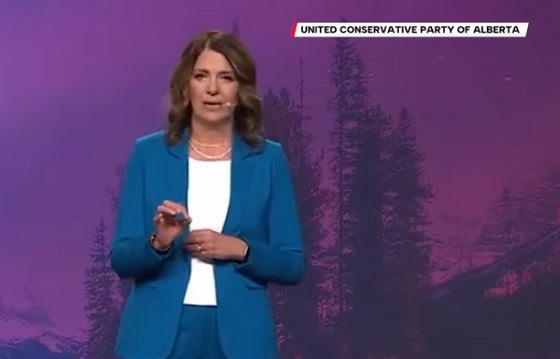
From the YouTube Channel of Rebel News

From the Fraser Institute
By Jason Clemens and Elmira Aliakbari
The challenge of GHG emissions in 2050 is not in the industrial world but rather in the developing world, where there is still significant basic energy consumption using timber and biomass.
The new Memorandum of Understanding (MOU) between the federal and Alberta governments lays the groundwork for substantial energy projects and infrastructure development over the next two-and-a-half decades. It is by all accounts a step forward, though, there’s debate about how large and meaningful that step actually is. There is, however, a fundamental flaw in the foundation of the agreement: it’s commitment to net zero in Canada by 2050.
The first point of agreement in the MOU on the first page of text states: “Canada and Alberta remain committed to achieving net zero greenhouse gas emissions by 2050.” In practice, it’s incredibly difficult to offset emissions with tree planting or other projects that reduce “net” emissions, so the effect of committing to “net zero” by 2050 means that both governments agree that Canada should produce very close to zero actual greenhouse gas (GHG) emissions. Consider the massive changes in energy production, home heating, transportation and agriculture that would be needed to achieve this goal.
So, what’s wrong with Canada’s net zero 2050 and the larger United Nations’ global goal for the same?
Let’s first understand the global context of GHG reductions based on a recent study by internationally-recognized scholar Vaclav Smil. Two key insights from the study. First, despite trillions being spent plus international agreements and regulatory measures starting back in 1997 with the original Kyoto agreement, global fossil fuel consumption between then and 2023 increased by 55 per cent.
Second, fossil fuels as a share of total global energy declined from 86 per cent in 1997 to 82 per cent in 2022, again, despite trillions of dollars in spending plus regulatory requirements to force a transition away from fossil fuels to zero emission energies. The idea that globally we can achieve zero emissions over the next two-and-a-half decades is pure fantasy. Even if there is an historic technological breakthrough, it will take decades to actually transition to a new energy source(s).
Let’s now understand the Canada-specific context. A recent study examined all the measures introduced over the last decade as part of the national plan to reduce emissions to achieve net zero by 2050. The study concluded that significant economic costs would be imposed on Canadians by these measures: inflation-adjusted GDP would be 7 per cent lower, income per worker would be more than $8,000 lower and approximately 250,000 jobs would be lost. Moreover, these costs would not get Canada to net zero. The study concluded that only 70 per cent of the net zero emissions goal would be achieved despite these significant costs, which means even greater costs would be imposed on Canadians to fully achieve net zero.
It’s important to return to a global picture to fully understand why net zero makes no sense for Canada within a worldwide context. Using projections from the International Energy Agency (IEA) in its latest World Energy Outlook, the current expectation is that in 2050, advanced countries including Canada and the other G7 countries will represent less than 25 per cent of global emissions. The developing world, which includes China, India, the entirety of Africa and much of South America, is estimated to represent at least 70 per cent of global emissions in 2050.
Simply put, the challenge of GHG emissions in 2050 is not in the industrial world but rather in the developing world, where there is still significant basic energy consumption using timber and biomass. A globally-coordinated effort, which is really what the U.N. should be doing rather than fantasizing about net zero, would see industrial countries like Canada that are capable of increasing their energy production exporting more to these developing countries so that high-emitting energy sources are replaced by lower-emitting energy sources. This would actually reduce global GHGs while simultaneously stimulating economic growth.
Consider a recent study that calculated the implications of doubling natural gas production in Canada and exporting it to China to replace coal-fired power. The conclusion was that there would be a massive reduction in global GHGs equivalent to almost 90 per cent of Canada’s total annual emissions. In these types of substitution arrangements, the GHGs would increase in energy-producing countries like Canada but global GHGs would be reduced, which is the ultimate goal of not only the U.N. but also the Carney and Smith governments as per the MOU.
Finally, the agreement ignores a basic law of economics. The first lesson in the very first class of any economics program is that resources are limited. At any given point in time, we only have so much labour, raw materials, time, etc. In other words, when we choose to do one project, the real cost is foregoing the other projects that could have been undertaken. Economics is mostly about trying to understand how to maximize the use of limited resources.
The MOU requires massive, literally hundreds of billions of dollars to be used to create nuclear power, other zero-emitting power sources and transmission systems all in the name of being able to produce low or even zero-emitting oil and gas while also moving to towards net zero.
These resources cannot be used for other purposes and it’s impossible to imagine what alternative companies or industries would have been invested in. What we do know is that workers, entrepreneurs, businessowners and investors are not making these decisions. Rather, politicians and bureaucrats in Ottawa and Edmonton are making these decisions but they won’t pay any price if they’re wrong. Canadians pay the price. Just consider the financial fiasco unfolding now with Ottawa, Ontario and Quebec’s subsidies (i.e. corporate welfare) for electric vehicle batteries.
Understanding the fundamentally flawed commitment to Canadian net zero rather than understanding a larger global context of GHG emissions lays at the heart of the recent MOU and unfortunately for Canadians will continue to guide flawed and expensive policies. Until we get the net zero policies right, we’re going to continue to spend enormous resources on projects with limited returns, costing all Canadians.

Jason Clemens
Executive Vice President, Fraser Institute

Elmira Aliakbari


From Underdog to Top Broodmare
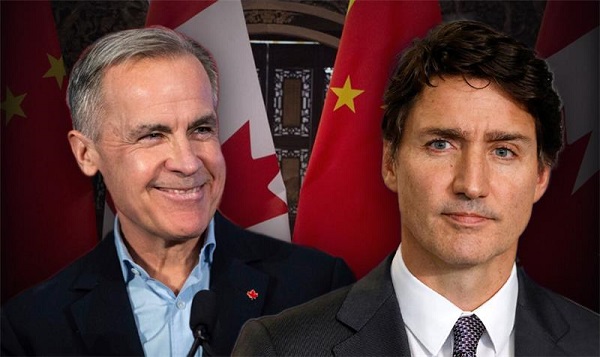
Beijing’s blueprint for breaking Canada-U.S. unity
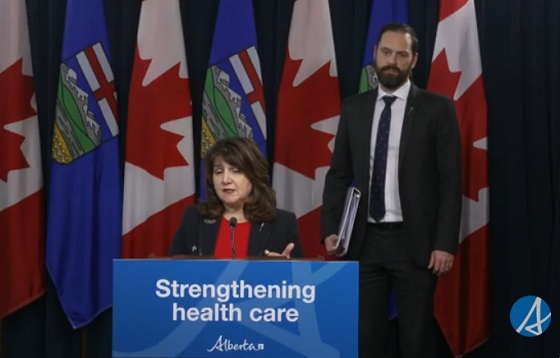
Alberta introducing dual practice health care model to increase options and shorten wait times while promising protection for publicly funded services

More than 200 children will receive dangerous puberty blockers for new UK study
US Supreme Court may end ‘emergency’ tariffs, but that won’t stop the President

Boris Johnson Urges Ukraine to Continue War
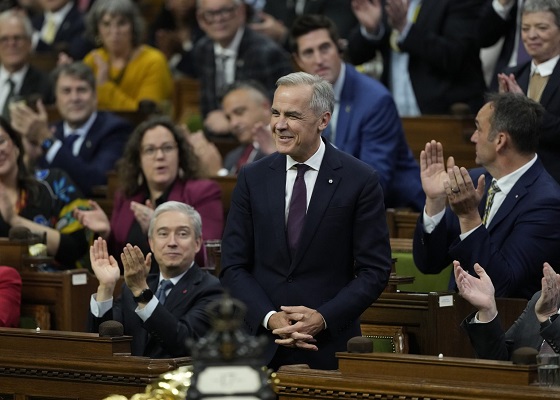
Is affirming existing, approved projects truly the best we can do in Canada?
-
 Addictions2 days ago
The Death We Manage, the Life We Forget
-
Alberta1 day ago
Net Zero goal is a fundamental flaw in the Ottawa-Alberta MOU
-
 Daily Caller2 days ago
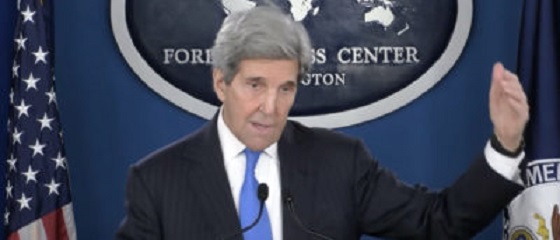
John Kerry Lurches Back Onto Global Stage For One Final Gasp
-
 Food1 day ago
Canada Still Serves Up Food Dyes The FDA Has Banned
-
 National1 day ago
Eco-radical Canadian Cabinet minister resigns after oil deal approved
-
 Addictions1 day ago
Manitoba Is Doubling Down On A Failed Drug Policy
-
 COVID-1921 hours ago
The dangers of mRNA vaccines explained by Dr. John Campbell
-
 Artificial Intelligence13 hours ago
‘Trouble in Toyland’ report sounds alarm on AI toys