
Sports
New Brunswick pulls plug on 2021 Francophonie Games, blames Ottawa


FREDERICTON — New Brunswick has abandoned plans to host the 2021 Francophonie Games, throwing the international event into turmoil and escalating a feud with the federal government.

Premier Blaine Higgs blamed a lack of financial support from Ottawa on Wednesday, but some federal and provincial politicians say his minority Progressive Conservative government never intended to allow the Games to proceed.
Cost estimates ballooned to $130 million from the original bid of $17 million, and Higgs said the province will withdraw because Ottawa’s funding formula was inadequate.
“This was a very difficult decision. We wanted these Games to go forward,” Higgs said.
“Without additional funding from the federal government hosting an event that could cost up to $130 million is irresponsible.”
The province’s decision to pull the plug brought immediate blowback from federal officials, but Dominic LeBlanc, the federal minister of Intergovernmental Affairs and a New Brunswick MP, said he wasn’t surprised by it.
“I think they planned all along to scuttle the Games,” he said.
“We had a number of conversations that I think led me to conclude that Mr. Higgs never had any intention to come up with a serious proposal that would have allowed the Government of Canada to meet its longstanding commitment of 50 per cent.”
Higgs, who took power in November, had previously said the province would cover only its original commitment to spend $10 million on the Games.
He said his government recognizes the Games are an important sports and cultural event, and they’d be happy to host if Ottawa paid for them.
“We need to look at these as a national event with events that could happen in different provinces, with a contribution such as we’re willing to make here, but it’s got to be a different process because this is more than a province can take on,” Higgs said.
The ninth Games of La Francophonie were scheduled to be held in the summer of 2021, attracting 3,000 athletes and artists from more than 50 member states that have French as a common language.
During an event in Quispamsis, N.B., last week, Prime Minister Justin Trudeau said Ottawa would only match provincial spending dollar-for-dollar.
On Wednesday, Trudeau called New Brunswick’s decision “unfortunate.”
“The Francophonie Games are important not just for francophone communities across this country but indeed around the world, and the athletes who were always looking forward to participating, of course, will be disappointed,” Trudeau said.
The original bid would have seen Ottawa and the province paying up to $10 million each, with the two host municipalities, Moncton and Dieppe, paying $750,000 each and the balance coming from ticket sales.
However, a federal consultant’s report pegged a reasonable cost at between $72 million and $115 million.
New Brunswick has a net debt of $13.9 billion and the Progressive Conservatives have vowed to get finances under control.
Kirsty Duncan, the federal sports minister, said they had hoped for further discussions on a funding proposal, but the province never offered one.
“Unfortunately despite productive talks at officials’ level yesterday, they have chosen not to bring forth any resolutions to be a willing and open partner, and instead have allowed their self-imposed deadline to expire for their own bid,” she said in a statement Wednesday.
“Once again, the Higgs government is leaving federal dollars on the table.”
She noted that New Brunswick is an independent member of the Francophonie and said she hopes it is taking steps to ensure the Games can occur elsewhere.
The New Brunswick Acadian Society said the announcement represents a fundamental challenge not only to New Brunswick’s place in Canada, but also Acadie’s place in the Francophonie.
Peoples Alliance Leader Kris Austin, whose party has been supporting the Tories, said he believes the government made a prudent decision.
“As much as I’m an elected official, I’m also a taxpayer, so I can’t say I’m disappointed. I pay federal taxes as well and I’d much rather see federal money going to things that are needed in New Brunswick, and I just don’t see games as one of them,” Austin said.
But Kevin Arseneau, a francophone and Green member of the provincial legislature, said the Tories did not seem to want the Games in the province.
“The message that Higgs just gave New Brunswickers is that we’re too small to do big things here,” Arseneau said.
The City of Moncton issued a statement Wednesday, saying it was unfortunate that the federal and provincial governments could not reach a deal on funding.
“As a host city, we believe the cultural, sports and economic impacts the Games could have on our region and our province are significant.”
Federal Health Minister Ginette Petitpas Taylor, the MP for the Moncton area, said it’s a lost opportunity to showcase the region.
“The federal government is not in a position to pay 100 per cent of the Games because it just doesn’t meet our funding formula.”
New Brunswick — one of 84 member states and governments that belong to the International Organization of the Francophonie — was awarded the Games in 2015.
The website for the Games still had a countdown clock ticking away Wednesday towards the start of the games.
The International Organization of the Francophonie issued a statement saying it regrets New Brunswick’s decision two years before the event.
It said members of the orientation committee would meet in Paris to discuss the situation on Feb. 14-15.
The Games include eight sporting events and 12 cultural events, including singing, storytelling, traditional dance, poetry, painting, photography and sculpture.
The Games, which Canada hosted in the Ottawa-Gatineau area in 2001, are held every four years in the year following the Olympic Summer Games.
Kevin Bissett, The Canadian Press


There’s an observation that only two things bind modern Canada. The federal equalization scheme and hockey, The past year illustrated that equalization is on tenuous ground with talk of separation in Quebec, Alberta and Saskatchewan.
Hockey, conversely, drew the nation closer at the moment that Donald Trump read the riot act to Canada’s elites. After the mens junior squad bombed out of the Junior Hockey championships for a second straight year, a new crisis emerged. To cover their purging of Justin Trudeau and insertion of Mark Carney as PM. the notorious Mike Myers’ Elbows Up homage to Gordie Howe’s elbows was appropriated by the Liberals (In true Woke wonk fashion, Howe never carried his elbows in Carney’s crash position. He kept them by his sides for greater power.)
In February’s Four Nations Cup, played at the height of tension between the two nations, Americans launched a Shoresy brawl in the first game, won easily by Team USA 3-1. As we wrote at the time, “Despite public calls for mutual respect, the sustained booing of the American national anthem and the Team Canada invocation by MMA legend Georges St. Pierre was answered by the Tkachuck brothers, Matthew and Brady, with a series of fights in the first nine seconds of the game.
Three fights to be exact when former Canuck J.T. Miller squared up with Brandon Hagel. (All three U.S. players have either played on or now play for Canadian NHL teams.) Premeditated and nasty. To say nothing of the vicious mugging of Canada’s legend Sidney Crosby behind the U.S. net moments later by Charlie McEvoy.”
Perhaps the least-appreciated aspect of the tension was the booing of the Star Spangled Banner by Canadians who have many Americans playing in their nation’s NHL squads. Leftist Toronto Star scribbler Bruce Arthur, bristled, “You’re damn right Canadians should boo the anthem.”
But in the rematch for the tournament title Canada reversed the tables, winning 3-2 in OT. The rush of nationalistic pride— from people who just weeks before were at each other’s throats over Indigenous claims and pipelines—fed a demographic topsy-turvy that swung Liberals 20 points in the polls, defeating the stunned Conservatives and coming within a few seats of a majority under Carney. Such was the hockey-fed insanity that NDP voters abandoned their far-left mantras to vote for a man who’d only weeks prior was a director of international giant Brookfield Investments.

One other byproduct of the Four Nations was the defrocking of Canadian legend Wayne Gretzky, who’d made a public show of his support for Trumping the 2024 presidential election. He was coldly rebuffed as he shook hands with the Canadian players before the Final game. It was not the finish for Gretz. He was reviled for golfing with The Donald in November, and then mocked for his faceplant appearance at the FIFA 2026 World Cup men’s draw. We wrote, “Gretzy apparently thinks there are countries called “North Mack-a-donia” and “Cur-ack-ow.” Other stabs at geography were almost as tortured.
Bitter Canadians could put up with him sucking up to Trump (he was mentioned as being in the crowd at the DC Xmas tree lighting) but failing geography is unforgivable. The week that started with Gretzky in a photo golfing at POTUS’s Jupiter, Florida, golf course was ending with him pummelled for his abuse of nations with different-sounding names. The Wayne Gretzky Center For Kids Who Want To Talk Good. “

In between the Gretzky episodes, two men who’d shaped modern hockey passed away. In September, on the anniversary of his participation in the 1972 Canada/ USSR series, Ken Dryden died at age 78. “For a generation that watched him develop he was likely the quintessential modern Canadian. Son of a charitable community figure. Educated in the Ivy League. Obtained his law degree. Served as a federal cabinet minister. Author of several definitive hockey books (The Game is perhaps the best sports non-fiction in the English language). Executive of the Toronto Maple Leafs. And more.
“He was on the American telecast of the 1980 U.S. Miracle On Ice at Lake Placid. And the radio broadcast of the 1976 Canada Cup. Ubiquitous media source. Loyal to Canada. And crucially, a son, husband, father and grandfather. If you’d created a model for the citizen of Canada of his times it was Ken.”
A less-loved figure in hockey— but no less significant— died the week after Dryden with the passing of former NHL Players Association director Bob Goodenow, who led the union through three momentous labour fights. Our take: “Tenacious, fearless and bold describes his style. Cuddly and sentimental he was not. The former lawyer and player agent for Brett Hull was not impressed by NHL self-dealing, and he said so. The Harvard product made a bad enemy after he succeeded Alan Eagleson in 1992.

“Today’s players owe him so much for finally giving them self respect. While players in other leagues ate steak, NHL players ate KD. Our book on the topic Money Players is an exhaustive catalogue of dirty dealing and deceit.
“Goodenow convinced hockey players that to earn their worth in the market they had to stick together in negotiations. It would be trying as fans and the media took the owners’ line under new commissioner Gary Bettman when they locked out players in 1994. He didn’t suffer reporters who were NHL echo chambers or old-timers who pined for their good old days of making $1000 a year.
CBA negotiations have never been the same. Player salaries have never been the same. Media covering hockey has never been the same. Eagleson was criminally convicted in the U.S. and Canada for the self dealing revealed by Conway and us. That’s an impressive legacy. RIP the man who reformed pro hockey from within.”
In a hangover story stretching back seven years, the sexual assault trial of the World Junior Hockey gold medalists of 2018 was a field day for narratives in the media and the courtroom. The facts, meanwhile, were stowed away beneath the surface of social media. As we reported in our June 28 column: “Outside diligent reporters such as Katie Strang of The Athletic and Rick Westhead of TSN, the media universe simply assumed guilt in the five players, because. hockey… Social media liberally smeared them as rapists, symbols of women’s degradation.

The five players on trial had been unfairly branded as criminals by Hockey Canada which rushed to condemn them in a quick civil settlement of EM’s charges. HC never consulted them about their side of the story before surrendering the cash. In the end, Ontario Justice Maria Carroccia found EM not “credible or reliable” enough to send the players to jail. While scolding their behaviour she declared the young men not guilty. It was a courageous decision, knowing it would prompt backlash. The Globe&Mail led the charge, declaring “After the Hockey Canada verdict Advocates fear survivors will fall silent”.
As 2026 dawns the outlook for Canadian NHL teams looks bleak. Just two teams would make the postseason today— Edmonton and Montreal— while Toronto, Ottawa, Winnipeg, Calgary and Vancouver wallow below the cut line. Which leaves the Elbows Up crowd pining for a replay of the Four Nations as Canada heads to the Olympic tournament. Don’t expect Wayne Gretzky to ride to their rescue.
Bruce Dowbiggin @dowbboy is the editor of Not The Public Broadcaster A two-time winner of the Gemini Award as Canada’s top television sports broadcaster, his 2025 book Deal With It: The Trades That Stunned The NHL And Changed Hockey is now available on Amazon. Inexact Science: The Six Most Compelling Draft Years In NHL History, his previous book with his son Evan, was voted the seventh-best professional hockey book of all time by bookauthority.org . His new poetry collection In Other Words is available via brucedowbigginbooks.ca and on Kindle books at https://www.amazon.ca/dp/1069802700


The Canadian Taxpayers Federation is calling on the federal, Ontario and municipal governments to publicly reject subsidizing a new arena for the Ottawa Senators.
“Politicians need to stand up for taxpayers and tell the Ottawa Senators’ lobbyists NO,” said Noah Jarvis, CTF Ontario Director. “Prime Minister Mark Carney, Ontario Premier Doug Ford and Ottawa Mayor Mark Sutcliffe all need to publicly reject giving taxpayers’ money to the owners of the Ottawa Senators.”
The Ottawa Citizen recently reported that “the Ottawa Senators have a team off the ice lobbying federal and provincial governments for funds to help pay the hefty price tag for a new arena.”
The Ottawa Senators said they don’t intend on asking the city of Ottawa for taxpayer dollars. However, the Ottawa Citizen reported that “it’s believed Senators’ owner Michael Andlauer would like a similar structure to the [Calgary] arena deal.” The Calgary arena deal included municipal subsidies.
As of December 2024, the Ottawa Senators were worth just under $1.2 billion, according to Forbes.
Meanwhile, both the federal and Ontario governments are deep in debt. The federal debt will reach $1.35 trillion by the end of the year. The Ontario government is $459 billion in debt. The city of Ottawa is proposing a 3.75 per cent property tax increase in 2026.
“Governments are up to their eyeballs in debt and taxpayers shouldn’t be forced to fund a brand-new fancy arena for a professional sports team,” said Franco Terrazzano, CTF Federal Director. “If the owners of the Ottawa Senators want to build a fancy new arena, then they should be forced to fund it with ticket sales not tax hikes.”


“Magnitude cannot be overstated”: Minnesota aid scam may reach $9 billion

Largest fraud in US history? Independent Journalist visits numerous daycare centres with no children, revealing massive scam
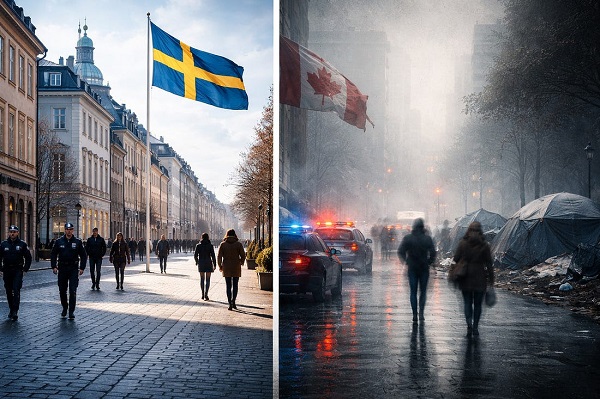
Sweden Fixed What Canada Won’t Even Name

US Under Secretary of State Slams UK and EU Over Online Speech Regulation, Announces Release of Files on Past Censorship Efforts

Is Ukraine Peace Deal Doomed Before Zelenskyy And Trump Even Meet At Mar-A-Lago?
What Do Loyalty Rewards Programs Cost Us?

China Stages Massive Live-Fire Encirclement Drill Around Taiwan as Washington and Japan Fortify
-
 Business1 day ago
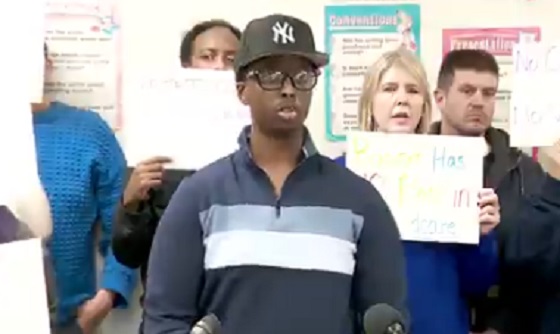
How convenient: Minnesota day care reports break-in, records gone
-
 Business1 day ago
The great policy challenge for governments in Canada in 2026
-
 Opinion2 days ago
Globally, 2025 had one of the lowest annual death rates from extreme weather in history
-
 International1 day ago
Trump confirms first American land strike against Venezuelan narco networks
-
 International7 hours ago
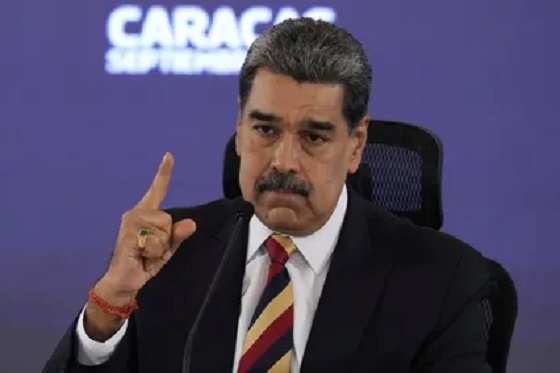
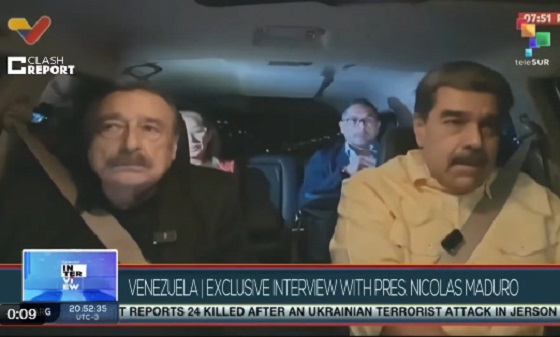
Maduro says he’s “ready” to talk
-
 Bruce Dowbiggin7 hours ago
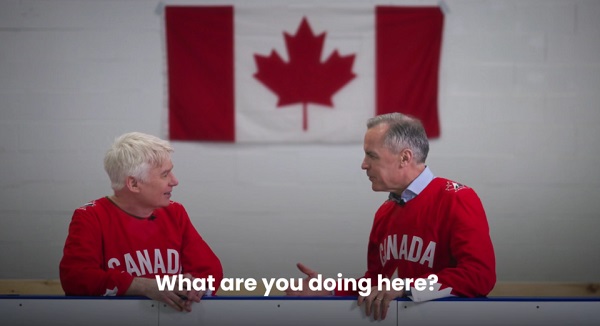
The Rise Of The System Engineer: Has Canada Got A Prayer in 2026?
-
 International7 hours ago
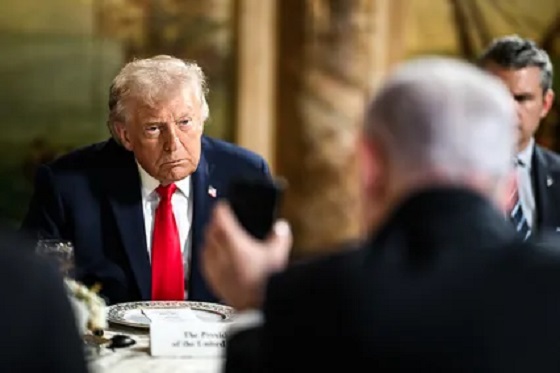
LOCKED AND LOADED: Trump threatens U.S. response if Iran slaughters protesters