
Uncategorized
Nearly 85 per cent of UN nations back migration deal; not US


MARRAKECH, Morocco — Defying fierce opposition from the United States and a few other nations, nearly 85

The debate over the Global Compact for Migration, the first of its kind, has proven to be a pivotal test of the U.N.-led effort to crack down on the often dangerous and illegal movements across borders that have turned people smuggling into a booming worldwide industry.
“Unregulated migration bears a terrible human cost: a cost in lives lost on perilous journeys across deserts, oceans and rivers; and a cost in lives ruined at the hands of smugglers, unscrupulous employers and other predators,” U.N. Secretary-General Antonio Guterres told a migration conference in Marrakech, Morocco.
“More than 60,000 migrants have died on the move since the year 2000,” he said. “This is a source of collective shame.”
Migration affects hundreds of millions of people across the globe — farmers coming off the land or forced by climate change to head to cities, families fleeing war or persecution at home, impoverished workers from the developing world looking for jobs in rich countries. It can also involve high-skilled workers from developed nations looking for opportunities beyond their homelands.
Defenders say migration greases the wheels of the world economy by diversifying and rejuvenating workforce in aging rich countries and providing a needed source of cash to poorer countries through remittances sent home by migrants.
Opponents often fear that an influx of migrants can dilute their countries’ character, import poverty or crime, reduce wages and take jobs from tax-paying citizens.
A total of 164 countries among the 193 U.N. members approved the agreement by acclamation Monday.
At the two-day conference, U.N. leaders were hoping to lure in holdouts from mostly Western nations who were not signing: Australia, Austria, the Czech Republic, the Dominican Republic, Hungary, Latvia, Poland and Slovakia along with the United States, which under President Donald Trump did not participate in drafting the accord.
Louise Arbour of Canada, a former U.N. human rights chief, said the issue also has been tied up in parliamentary debates in Belgium, Bulgaria, Estonia, Italy, Israel, Slovenia and Switzerland — although some of them did participate in creating the accord, which has since been ensnared by tough political headwinds.
The conference is the capstone of efforts set in motion two years ago when all 193 U.N. member states, including the U.S. under President Barack Obama, adopted a declaration saying that no country can manage international migration on its own and agreed to work on a global compact.
The Trump administration — which is demanding a wall on the Mexican border and has sent U.S. military troops to the border to block a migrant caravan moving toward the U.S. through Central America — pulled out of the accord a year ago. It claimed that parts of the compact clashed with “U.S. immigration and refugee policies.”
Some European Union countries, including Italy, Poland and Hungary, now have anti-migrant populist governments that have reacted strongly after over 1 million migrants — mostly refugees fleeing conflict in Syria, Iraq and Afghanistan — poured into Europe in 2015.
Since then, right-wing and anti-immigration movements have enjoyed a surge in political support in pockets of Europe.
Amira El Masaiti And Jamey Keaten, The Associated Press



The cost of the bureaucracy increased by $6 billion last year, according to newly released numbers in Public Accounts disclosures. The Canadian Taxpayers Federation is calling on Prime Minister Mark Carney to immediately shrink the bureaucracy.
“The Public Accounts show the cost of the federal bureaucracy is out of control,” said Franco Terrazzano, CTF Federal Director. “Tinkering around the edges won’t cut it, Carney needs to take urgent action to shrink the bloated federal bureaucracy.”
The federal bureaucracy cost taxpayers $71.4 billion in 2024-25, according to the Public Accounts. The cost of the federal bureaucracy increased by $6 billion, or more than nine per cent, over the last year.
The federal bureaucracy cost taxpayers $39.6 billion in 2015-16, according to the Public Accounts. That means the cost of the federal bureaucracy increased 80 per cent over the last 10 years. The government added 99,000 extra bureaucrats between 2015-16 and 2024-25.
Half of Canadians say federal services have gotten worse since 2016, despite the massive increase in the federal bureaucracy, according to a Leger poll.
Not only has the size of the bureaucracy increased, the cost of consultants, contractors and outsourcing has increased as well. The government spent $23.1 billion on “professional and special services” last year, according to the Public Accounts. That’s an 11 per cent increase over the previous year. The government’s spending on professional and special services more than doubled since 2015-16.
“Taxpayers should not be paying way more for in-house government bureaucrats and way more for outside help,” Terrazzano said. “Mere promises to find minor savings in the federal bureaucracy won’t fix Canada’s finances.
“Taxpayers need Carney to take urgent action and significantly cut the number of bureaucrats now.”
Table: Cost of bureaucracy and professional and special services, Public Accounts
| Year | Bureaucracy | Professional and special services |
|
$71,369,677,000 |
$23,145,218,000 |
|
|
$65,326,643,000 |
$20,771,477,000 |
|
|
$56,467,851,000 |
$18,591,373,000 |
|
|
$60,676,243,000 |
$17,511,078,000 |
|
|
$52,984,272,000 |
$14,720,455,000 |
|
|
$46,349,166,000 |
$13,334,341,000 |
|
|
$46,131,628,000 |
$12,940,395,000 |
|
|
$45,262,821,000 |
$12,950,619,000 |
|
|
$38,909,594,000 |
$11,910,257,000 |
|
|
$39,616,656,000 |
$11,082,974,000 |

From the Daily Caller News Foundation
By Jason Hopkins
The Trump administration is creating a first-of-its-kind task force aimed at ushering in a new “Golden Age” of beautiful infrastructure across the U.S.
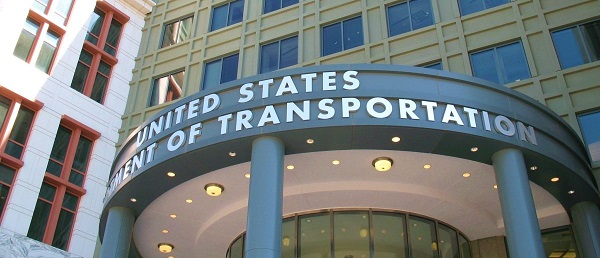
The Department of Transportation (DOT) will announce the establishment of the Beautifying Transportation Infrastructure Council (BTIC) on Thursday, the Daily Caller News Foundation exclusively learned. The BTIC seeks to advise Transportation Secretary Sean Duffy on design and policy ideas for key infrastructure projects, including highways, bridges and transit hubs.
“What happened to our country’s proud tradition of building great, big, beautiful things?” Duffy said in a statement shared with the DCNF. “It’s time the design for America’s latest infrastructure projects reflects our nation’s strength, pride, and promise.”
“We’re engaging the best and brightest minds in architectural design and engineering to make beautiful structures that move you and bring about a new Golden Age of Transportation,” Duffy continued.
Mini scoop – here is the DOT’s rollout of its Beautifying Transportation Infrastructure Council, which will be tasked with making our buildings beautiful again. pic.twitter.com/
9iV2xSxdJM — Jason Hopkins (@jasonhopkinsdc) October 23, 2025
The DOT is encouraging nominations of the country’s best architects, urban planners, artists and others to serve on the council, according to the department. While ensuring that efficiency and safety remain a top priority, the BTIC will provide guidance on projects that “enhance” public areas and develop aesthetic performance metrics.
The new council aligns with an executive order signed by President Donald Trump in August 2025 regarding infrastructure. The “Making Federal Architecture Beautiful Again” order calls for federal public buildings in the country to “respect regional architectural heritage” and aims to prevent federal construction projects from using modernist and brutalist architecture styles, instead returning to a classical style.
“The Founders, in line with great societies before them, attached great importance to Federal civic architecture,” Trump’s order stated. “They wanted America’s public buildings to inspire the American people and encourage civic virtue.”
“President George Washington and Secretary of State Thomas Jefferson consciously modeled the most important buildings in Washington, D.C., on the classical architecture of ancient Athens and Rome,” the order continued. “Because of their proven ability to meet these requirements, classical and traditional architecture are preferred modes of architectural design.”
The DOT invested millions in major infrastructure projects since Trump’s return to the White House. Duffy announced in August a $43 million transformation initiative of the New York Penn Station in New York City and in September unveiledmajor progress in the rehabilitation and modernization of Washington Union Station in Washington, D.C.
The BTIC will comprise up to 11 members who will serve two-year terms, with the chance to be reappointed, according to the DOT. The task force will meet biannually. The deadline for nominations will end Nov. 21.

Carney’s Toronto cabinet meetings cost $530,000

Integration Or Indignation: Whose Strategy Worked Best Against Trump?

What the Data Shows About the New Canada-Alberta Pipeline Opportunity

While Trump has southern border secure, hundreds of thousands of illegal immigrants still flooding in from Canada
Alberta will use provincial laws to stop Canadian gov’t from trying to confiscate legal firearms

The Trickster Politics of the Tanker Ban are Hiding a Much Bigger Reckoning for B.C.

Alberta Sports Hall of Fame Announces Class of 2026 Inductees
-
 espionage2 days ago
Western Campuses Help Build China’s Digital Dragnet With U.S. Tax Funds, Study Warns
-
 Bruce Dowbiggin2 days ago
Wayne Gretzky’s Terrible, Awful Week.. And Soccer/ Football.
-
 Health2 days ago
CDC Vaccine Panel Votes to End Universal Hep B Vaccine for Newborns
-
 Business2 days ago
Canada invests $34 million in Chinese drones now considered to be ‘high security risks’
-
 Agriculture2 days ago
Canada’s air quality among the best in the world
-
 Business2 days ago
The EU Insists Its X Fine Isn’t About Censorship. Here’s Why It Is.
-
 Great Reset1 day ago
Surgery Denied. Death Approved.
-
 Business1 day ago
The Climate-Risk Industrial Complex and the Manufactured Insurance Crisis