

Connect with us
[the_ad id="89560"]

Internet

Musk launches Grokipedia to break Wikipedia’s information monopoly

Published

3 minute read

MXM logo MxM News

Elon Musk’s artificial intelligence venture xAI launched “Grokipedia” on Monday — a new online encyclopedia built to challenge what he says is Wikipedia’s entrenched political bias. The site, powered by xAI’s technology and integrated with Grok, the same AI system behind Musk’s X platform, aims to provide a politically balanced alternative to the long-dominant Wikipedia, which critics have accused for years of leftist censorship and selective editing.

Grokipedia, now live in its beta “v0.1” stage, opens with roughly 885,000 entries — a fraction of Wikipedia’s seven million English-language pages but a notable start for a platform that launched just hours ago. Some users experienced temporary errors upon the rollout, but by Monday evening the site was running smoothly. Musk framed the project as part of his broader effort to restore transparency and ideological diversity to the digital space, echoing his moves to overhaul Twitter into X.

The billionaire’s feud with Wikipedia co-founder Jimmy Wales has grown increasingly bitter in recent months. Musk has accused Wales of allowing Wikipedia to devolve into a propaganda outlet that protects liberal narratives while suppressing dissenting voices. “Defund Wikipedia until balance is restored,” Musk wrote in a January post on X. Wales, for his part, has dismissed Grokipedia as an unserious experiment, telling the Washington Post last week that AI-generated content is prone to “massive factual errors” and lacks editorial oversight.

Breitbart News has documented numerous examples of Wikipedia’s bias, from its editors smearing Turning Point USA founder Charlie Kirk following his assassination to attempts to delete articles about his widow Erika Kirk and Ukrainian activist Iryna Zarutska. One editor even proposed deleting Bible verses, while another added Nazi references to politically conservative entries. The site’s governing “neutrality working group,” announced amid backlash, has ignored allegations of left-wing bias and instead congratulated itself on maintaining “neutrality on contentious subjects.”

For Musk, Grokipedia represents more than a product launch — it’s another front in his campaign to dismantle what he sees as the internet’s entrenched progressive gatekeepers. While Wikipedia’s defenders dismiss his challenge as quixotic, the early traffic surge to Grokipedia suggests that many users are ready to see if Musk’s alternative can deliver what the old encyclopedia no longer does: balance, transparency, and a willingness to question the narrative.

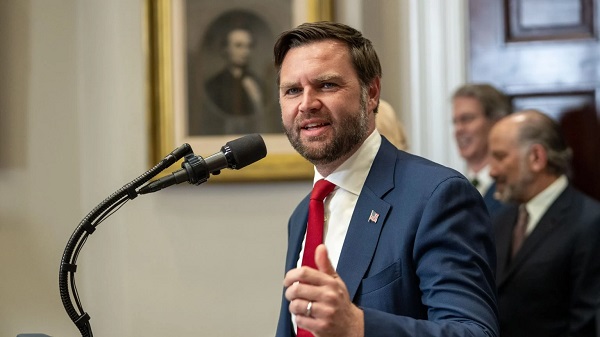
(Photo/Alex Brandon)

Censorship Industrial Complex

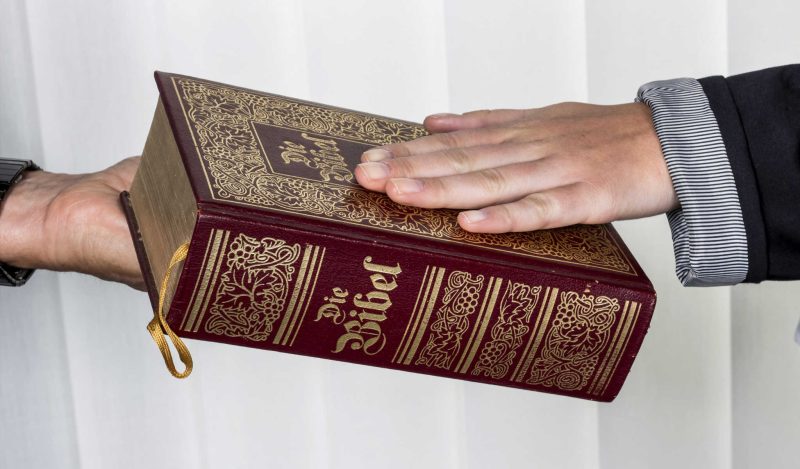
Conservative MP calls on religious leaders to oppose Liberal plan to criminalize quoting Scripture

Published on

From LifeSiteNews

By Clare Marie Merkowsky

Quoting the Bible, Quran, or Torah to condemn abortion, homosexuality, or LGBT propaganda could be considered criminal activity

Conservatives are warning that Canadians should be “very afraid” of the Liberals’ proposal to punish quoting Scripture, while advising religious leaders to voice their opposition to the legislation.

During a December 6 session in Parliament, Conservative Member of Parliament (MP) Larry Brock warned Canadians of the very real threat to their religious freedom thanks to proposed amendments to Bill C-9, the “Combating Hate Act,” that would allow priests quoting Scripture to be punished.

“Do Christians need to be concerned about this legislation?” MP Bob Zimmer questioned. “Does it really threaten the Bible and free speech in Canada?”

“They should be very afraid,” Brock responded. “Every faith leader should be very afraid as to what this Liberal government with the support of the Bloc Quebecois wishes to do.”

“As I indicated, religious freedom is under attack at the hands of this Liberal government,” he declared.

Brock stressed the need for religious leaders to “speak out loud and clear” against the proposed amendment and contact their local Liberal and Bloc MPs.

Already, the Canadian Conference of Catholic Bishops penned an open letter to the Carney Liberals, condemning the proposed amendment and calling for its removal.

As LifeSiteNews reported earlier this week, inside government sources revealed that Liberals agreed to remove religious exemptions from Canada’s hate speech laws as part of a deal with the Bloc Québécois to keep Liberals in power.

Bill C-9, as reported by LifeSiteNews, has been blasted by constitutional experts as empowering police and the government to go after those it deems to have violated a person’s “feelings” in a “hateful” way.

As a result, quoting the Bible, Quran, or Torah to condemn abortion, homosexuality, or LGBT propaganda could be considered criminal activity.

Shortly after the proposed amendment was shared on social media, Conservatives launched a petition, calling “on the Liberal government to protect religious freedom, uphold the right to read and share sacred texts, and prevent government overreach into matters of faith.”

Already, in October, Liberal MP Marc Miller said that certain passages of the Bible are “hateful” because of what it says about homosexuality and those who recite the passages should be jailed.

“Clearly there are situations in these texts where these statements are hateful,” Miller said. “They should not be used to invoke or be a defense, and there should perhaps be discretion for prosecutors to press charges.”

His comments were immediately blasted by Conservative politicians throughout Canada, with Alberta provincial Conservative MLA and Minister of Municipal Affairs Dan Williams saying, “I find it abhorrent when MPs sitting in Ottawa – or anyone in positions of power – use their voice to attack faith.”

Continue Reading

Censorship Industrial Complex

US Condemns EU Censorship Pressure, Defends X

Published on

US Vice President JD Vance criticized the European Union this week after rumors reportedly surfaced that Brussels may seek to punish X for refusing to remove certain online speech.

In a post on X, Vance wrote, “Rumors swirling that the EU commission will fine X hundreds of millions of dollars for not engaging in censorship. The EU should be supporting free speech not attacking American companies over garbage.”

His remarks reflect growing tension between the United States and the EU over the future of online speech and the expanding role of governments in dictating what can be said on global digital platforms.

Screenshot of a verified social-media post with a profile photo, reading: "Rumors swirling that the EU commission will fine X hundreds of millions of dollars for not engaging in censorship. The EU should be supporting free speech not attacking American companies over garbage." Timestamp Dec 4, 2025, 5:03 PM and "1.1M Views" shown.

Vance was likely referring to rumors that Brussels intends to impose massive penalties under the bloc’s Digital Services Act (DSA), a censorship framework that requires major platforms to delete what regulators define as “illegal” or “harmful” speech, with violations punishable by fines up to six percent of global annual revenue.

For Vance, this development fits a pattern he’s been warning about since the spring.

In a May 2025 interview, he cautioned that “The kind of social media censorship that we’ve seen in Western Europe, it will and in some ways, it already has, made its way to the United States. That was the story of the Biden administration silencing people on social media.”

He added, “We’re going to be very protective of American interests when it comes to things like social media regulation. We want to promote free speech. We don’t want our European friends telling social media companies that they have to silence Christians or silence conservatives.”

Yet while the Vice President points to Europe as the source of the problem, a similar agenda is also advancing in Washington under the banner of “protecting children online.”

This week’s congressional hearing on that subject opened in the usual way: familiar talking points, bipartisan outrage, and the recurring claim that online censorship is necessary for safety.

The House Subcommittee on Commerce, Manufacturing, and Trade convened to promote a bundle of bills collectively branded as the “Kids Online Safety Package.”

The session, titled “Legislative Solutions to Protect Children and Teens Online,” quickly turned into a competition over who could endorse broader surveillance and moderation powers with the most moral conviction.

Rep. Gus Bilirakis (R-FL) opened the hearing by pledging that the bills were “mindful of the Constitution’s protections for free speech,” before conceding that “laws with good intentions have been struck down for violating the First Amendment.”

Despite that admission, lawmakers from both parties pressed ahead with proposals requiring digital ID age verification systems, platform-level content filters, and expanded government authority to police online spaces; all similar to the EU’s DSA censorship law.

Vance has cautioned that these measures, however well-intentioned, mark a deeper ideological divide. “It’s not that we are not friends,” he said earlier this year, “but there’re gonna have some disagreements you didn’t see 10 years ago.”

That divide is now visible on both sides of the Atlantic: a shared willingness among policymakers to restrict speech for perceived social benefit, and a shrinking space for those who argue that freedom itself is the safeguard worth protecting.

If you’re tired of censorship and surveillance, join Reclaim The Net.

Fight censorship and surveillance. Reclaim your digital freedom.

Get news updates, features, and alternative tech explorations to defend your digital rights.

Continue Reading

Trending

X