
Uncategorized
Mueller’s most devoted fans anxiously await his report


Her family wanted a puppy, so Alicia Barnett dreamed they would find one that was smart, steady and a bit mysterious. She hoped their new addition could share a personality — and a name — with the man who has become her rather unlikely idol.

And so, the Barnetts’ new chocolate Lab was christened Mueller — an homage to the stoic special prosecutor appointed to investigate Russian interference in the 2016 election and whether members of the Trump campaign played any part.
For devoted Democrats like Barnett, Robert Mueller has become a sort of folk hero since his appointment in May 2017. To them, he represents calm in the face of a storm, quiet in a city of bombast, a symbol of hope that a presidency they view as
“He gives me reassurance that all is not lost,” says Barnett, who lives with her family and Mueller the puppy in Kansas City, Kansas. “I admire his mystique. I admire that I haven’t heard his voice. He is someone who can sift through all this mess and come up with a rationale that makes sense to everyone.”
The special counsel — a 74-year-old registered Republican, Marine and former director the FBI — has even inspired his own genre of arts and crafts. One can buy Mueller paintings, prayer candles, valentines and ornaments. A necklace, earrings, keychains. A stuffed toy of Mueller in a Superman outfit, cross-stitch patterns, baby onesies — even an illustration of his haircut to hang on the wall.
“Stare at Special Counsel Mueller’s crisp coiffure for three minutes and you will notice a sense of calm come over you,” that artist, Oakland, California-based Wayne Shellabarger, wrote in his online listing for a $10 print. “That’s a haircut you can set your watch to.”
Mueller has become a boogeyman for many of President Donald Trump’s most ardent supporters, as the leader of the investigation the president derides as a “witch hunt.” But his fans often speak of him in soaring analogies. Barnett imagines him as a duck’s legs: kicking heroically to keep things afloat but under the water, out of view. Karen Adler, a Placerville, California, crafter who sells a coffee mug with Mueller dressed as a saint and wearing a crown of laurels “for victory,” describes him as “Paul Bunyan-esque,” a man of superhuman
Mueller has remained completely silent as the ceaseless speculation about his investigation turned him into one of the most famous men in America. He hasn’t given a single interview, and his office does not leak.
When Kim Six posted her cross-stitch tribute to Mueller on her Facebook page, some people told her to keep politics out of crafting. The framed stitching featured the letters “M.A.G.A.” down the side, a reference to Trump’s “Make American Great Again” slogan but with these words substituted: “Mueller Ain’t Going Away.” Her critics assumed she was far-left, but she considers herself a centrist, having voted in the past for moderate Republicans.
Her husband is a “card-carrying Trump fan,” says the resident of California’s Bay Area. They agree to disagree, and she thinks Americans should be able to do the same. To her, Mueller represents a middle ground where facts exist, as opposed to the ideological rants that consume political discourse.
“Let’s get all the facts on the table,” she says, “and let this impartial person come in and tell us what the truth is — not spin, just truth.”
She’s imagined findings so thorough Congress and voters would be forced to act accordingly. But as the investigation has continued on, with 34 people charged and five sentenced to prison, she’s noticed Americans retreating to their corners and rearranging the facts to fit their political position.
She’s losing faith that Mueller’s probe, whenever it does come to an end, will change anything at all.
“How naive I was,” she says. “I have this fear, no matter what happens, either side is going to spin it the way they want to. So I don’t know anymore if he’s the coming
Carmen Martinez feels doubt, too. She and her business partner in New York City have sold 500 Christmas ornaments and earrings with Mueller’s face. They tend to get a rush of orders after major Mueller news: indictments, sentencings. Martinez saw him as the one person who could lead the country out of chaos with truth, and believed his report would push everyone to turn away from Trumpism.
But Martinez, a Peruvian immigrant, was shocked last year by the administration’s policy of separating children from their parents at the Mexico border. She started to wonder: If images of children in cages don’t sway many minds, how could Mueller’s report, just words on paper?
Others remain hopeful: “I feel like we’re in the middle of a book, like a saga,” says Janice Harris, a textile artist in Detroit. “And we’re just waiting for the climax.”
She was never a particularly political person before Trump’s election — much of her work featured kittens or dancers. But she was inspired to immortalize Mueller on handmade makeup bags. She had custom fabric printed with Mueller’s face, stitched it into her pouches and sold around 50.
Wayne Shellabarger has sold two prints of his Mueller haircut illustration. One happy customer wrote that using the print as a meditation aide allowed her to stop taking anti-anxiety medication.
“The world has gone completely insane and topsy-turvy,” Shellabarger says. “Mueller’s hair is one little shining piece of sanity in a sea of madness, so precise and sober and straightforward and without deceit, absolutely by the book, the opposite of everything that’s going on in the world.”
He hung one of the haircut prints in his own living room in Oakland, California — close to the television, so when he watches the news and his heart starts to pound, he can glance up at it.
There is such a thing as fact, it reminds him.
“And that gives me hope,” Shellabarger says, “that since he’s in charge, the world can be normal again.”
Claire Galofaro, The Associated Press

Uncategorized
Mortgaging Canada’s energy future — the hidden costs of the Carney-Smith pipeline deal


Much of the commentary on the Carney-Smith pipeline Memorandum of Understanding (MOU) has focused on the question of whether or not the proposed pipeline will ever get built.
That’s an important topic, and one that deserves to be examined — whether, as John Robson, of the indispensable Climate Discussion Nexus, predicted, “opposition from the government of British Columbia and aboriginal groups, and the skittishness of the oil industry about investing in a major project in Canada, will kill [the pipeline] dead.”
But I’m going to ask a different question: Would it even be worth building this pipeline on the terms Ottawa is forcing on Alberta? If you squint, the MOU might look like a victory on paper. Ottawa suspends the oil and gas emissions cap, proposes an exemption from the West Coast tanker ban, and lays the groundwork for the construction of one (though only one) million barrels per day pipeline to tidewater.
But in return, Alberta must agree to jack its industrial carbon tax up from $95 to $130 per tonne at a minimum, while committing to tens of billions in carbon capture, utilization, and storage (CCUS) spending, including the $16.5 billion Pathways Alliance megaproject.
Here’s the part none of the project’s boosters seem to want to mention: those concessions will make the production of Canadian hydrocarbon energy significantly more expensive.
As economist Jack Mintz has explained, the industrial carbon tax hike alone adds more than $5 USD per barrel of Canadian crude to marginal production costs — the costs that matter when companies decide whether to invest in new production. Layer on the CCUS requirements and you get another $1.20–$3 per barrel for mining projects and $3.60–$4.80 for steam-assisted operations.
While roughly 62% of the capital cost of carbon capture is to be covered by taxpayers — another problem with the agreement, I might add — the remainder is covered by the industry, and thus, eventually, consumers.
Total damage: somewhere between $6.40 and $10 US per barrel. Perhaps more.
“Ultimately,” the Fraser Institute explains, “this will widen the competitiveness gap between Alberta and many other jurisdictions, such as the United States,” that don’t hamstring their energy producers in this way. Producers in Texas and Oklahoma, not to mention Saudi Arabia, Venezuela, or Russia, aren’t paying a dime in equivalent carbon taxes or mandatory CCUS bills. They’re not so masochistic.
American refiners won’t pay a “low-carbon premium” for Canadian crude. They’ll just buy cheaper oil or ramp up their own production.
In short, a shiny new pipe is worthless if the extra cost makes barrels of our oil so expensive that no one will want them.
And that doesn’t even touch on the problem for the domestic market, where the higher production cost will be passed onto Canadian consumers in the form of higher gas and diesel prices, home heating costs, and an elevated cost of everyday goods, like groceries.
Either way, Canadians lose.
So, concludes Mintz, “The big problem for a new oil pipeline isn’t getting BC or First Nation acceptance. Rather, it’s smothering the industry’s competitiveness by layering on carbon pricing and decarbonization costs that most competing countries don’t charge.” Meanwhile, lurking underneath this whole discussion is the MOU’s ultimate Achilles’ heel: net-zero.
The MOU proudly declares that “Canada and Alberta remain committed to achieving Net-Zero greenhouse gas emissions by 2050.” As Vaclav Smil documented in a recent study of Net-Zero, global fossil-fuel use has risen 55% since the 1997 Kyoto agreement, despite trillions spent on subsidies and regulations. Fossil fuels still supply 82% of the world’s energy.
With these numbers in mind, the idea that Canada can unilaterally decarbonize its largest export industry in 25 years is delusional.
This deal doesn’t secure Canada’s energy future. It mortgages it. We are trading market access for self-inflicted costs that will shrink production, scare off capital, and cut into the profitability of any potential pipeline. Affordable energy, good jobs, and national prosperity shouldn’t require surrendering to net-zero fantasy.If Ottawa were serious about making Canada an energy superpower, it would scrap the anti-resource laws outright, kill the carbon taxes, and let our world-class oil and gas compete on merit. Instead, we’ve been handed a backroom MOU which, for the cost of one pipeline — if that! — guarantees higher costs today and smothers the industry that is the backbone of the Canadian economy.
This MOU isn’t salvation. It’s a prescription for Canadian decline.

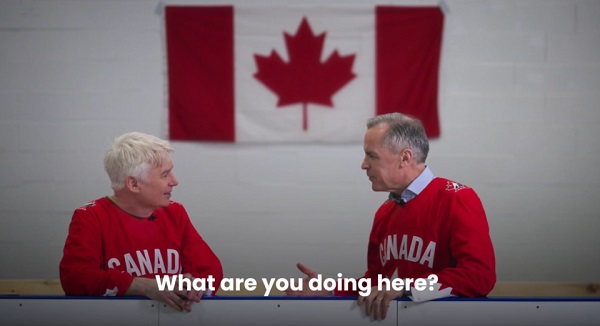

The cost of the bureaucracy increased by $6 billion last year, according to newly released numbers in Public Accounts disclosures. The Canadian Taxpayers Federation is calling on Prime Minister Mark Carney to immediately shrink the bureaucracy.
“The Public Accounts show the cost of the federal bureaucracy is out of control,” said Franco Terrazzano, CTF Federal Director. “Tinkering around the edges won’t cut it, Carney needs to take urgent action to shrink the bloated federal bureaucracy.”
The federal bureaucracy cost taxpayers $71.4 billion in 2024-25, according to the Public Accounts. The cost of the federal bureaucracy increased by $6 billion, or more than nine per cent, over the last year.
The federal bureaucracy cost taxpayers $39.6 billion in 2015-16, according to the Public Accounts. That means the cost of the federal bureaucracy increased 80 per cent over the last 10 years. The government added 99,000 extra bureaucrats between 2015-16 and 2024-25.
Half of Canadians say federal services have gotten worse since 2016, despite the massive increase in the federal bureaucracy, according to a Leger poll.
Not only has the size of the bureaucracy increased, the cost of consultants, contractors and outsourcing has increased as well. The government spent $23.1 billion on “professional and special services” last year, according to the Public Accounts. That’s an 11 per cent increase over the previous year. The government’s spending on professional and special services more than doubled since 2015-16.
“Taxpayers should not be paying way more for in-house government bureaucrats and way more for outside help,” Terrazzano said. “Mere promises to find minor savings in the federal bureaucracy won’t fix Canada’s finances.
“Taxpayers need Carney to take urgent action and significantly cut the number of bureaucrats now.”
Table: Cost of bureaucracy and professional and special services, Public Accounts
| Year | Bureaucracy | Professional and special services |
|
$71,369,677,000 |
$23,145,218,000 |
|
|
$65,326,643,000 |
$20,771,477,000 |
|
|
$56,467,851,000 |
$18,591,373,000 |
|
|
$60,676,243,000 |
$17,511,078,000 |
|
|
$52,984,272,000 |
$14,720,455,000 |
|
|
$46,349,166,000 |
$13,334,341,000 |
|
|
$46,131,628,000 |
$12,940,395,000 |
|
|
$45,262,821,000 |
$12,950,619,000 |
|
|
$38,909,594,000 |
$11,910,257,000 |
|
|
$39,616,656,000 |
$11,082,974,000 |


Residential school burials controversy continues to fuel wave of church arsons, new data suggests
Canada Hits the Brakes on Population

Canadian gov’t considers sharing census data on gender-confused children

Brown University shooter dead of apparent self-inflicted gunshot wound

Paris Climate Deal Now Decade-Old Disaster
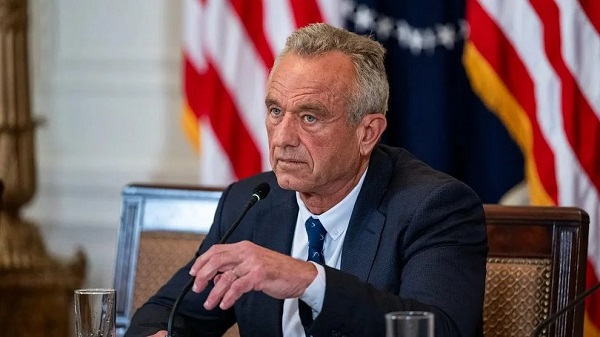
RFK Jr reversing Biden-era policies on gender transition care for minors
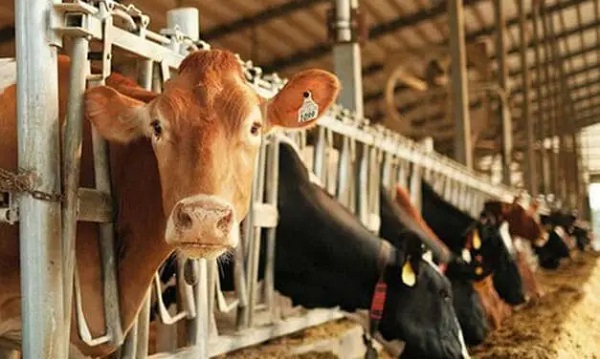
Why is Canada paying for dairy ‘losses’ during a boom?
-
Uncategorized1 day ago
Mortgaging Canada’s energy future — the hidden costs of the Carney-Smith pipeline deal
-
 International2 days ago
2025: The Year The Narrative Changed
-
 Business2 days ago
There’s No Bias at CBC News, You Say? Well, OK…
-
 International1 day ago
Australian PM booed at Bondi vigil as crowd screams “shame!”
-
 Opinion2 days ago
Religion on trial: what could happen if Canada passes its new hate speech legislation
-
 Automotive16 hours ago
Canada’s EV gamble is starting to backfire
-
 Agriculture13 hours ago
End Supply Management—For the Sake of Canadian Consumers
-
 Alberta12 hours ago
Alberta Next Panel calls to reform how Canada works