
Uncategorized
Messiah complex? Klaus Schwab declares unelected Davos elites as ‘trustees of the future’

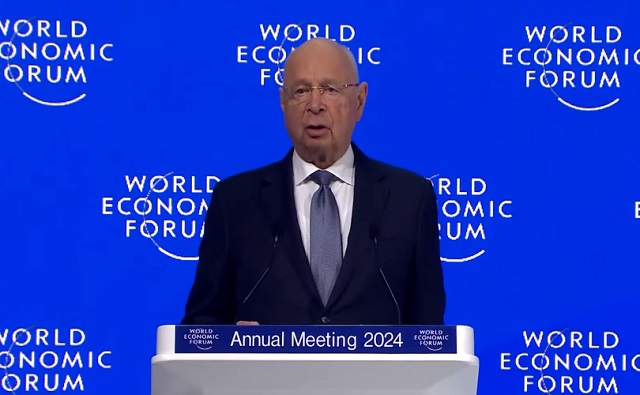

WEF founder Klaus Schwab delivers an address at the 2024 summit in Davos, Switzerland
From LifeSiteNews

The unelected globalists’ approach to rebuilding trust is to declare themselves trustees over the future of humanity.
In an effort to rebuild trust, World Economic Forum (WEF) founder Klaus Schwab appoints himself and the Davos crowd “trustees of the future” at the WEF annual meeting.
Kicking off the WEF annual meeting in Davos, Switzerland on Tuesday, Schwab focused on the theme of this year’s gathering, “Rebuilding Trust” while never once mentioning rebuilding the trust of private citizens.
READ: UN secretary-general calls for ‘global governance’ in ‘new multipolar order’ at 2024 Davos summit
“We have to rebuild trust – trust in our future, trust in our capacity to overcome challenges, and most importantly, trust in each other,” said Schwab, referring to the Davos crowd.
He then gave a rather peculiar definition of what “trust” means to him:
Trust is not just a feeling; trust is a commitment to action, to belief, to hope
Klaus Schwab, WEF: "We have to rebuild trust… most importantly trust in each other… Trust is a commitment to action, to belief, to hope… We must rediscover & embrace the narrative that has driven humanity since its inception – acting as trustees for a better future" pic.twitter.com/5N4khOQhWs
— Tim Hinchliffe (@TimHinchliffe) January 16, 2024
So, in Schwab’s eyes, trust means committing to action, believing, and hoping.
Therefore, every time Klaus Schwab says, “We have to rebuild trust,” what he’s actually saying is that the unelected globalists need to rebuild their own commitments to action through hope and faith.
How does Schwab and the Davos crowd hope to achieve trust (aka blind commitments to action)?
Why, a great narrative of course!
Schwab regurgitated the need to embrace the WEF’s Great Narrative Initiative, which was launched in November, 2021 as a follow up to the launch of the Great Reset agenda a year prior, stating:
We must rediscover and embrace the narrative that has driven humanity since its inception – acting as trustees for a better future.
Here, we see Schwab’s somewhat circular logic in emphasizing the need for unelected globalists to become stewards of the world.
In order “to rebuild trust” [faith-based commitments to action], “we” [unelected globalists], must act as “trustees.”
Great! And he says this believing this has been the narrative since humanity’s inception.
“The concept of trust and trusteeship compels us to think beyond borders and beyond our lifetimes,” said Schwab, adding, “It encourages collaboration over competition, sustainability over expediency, and empathy over apathy.”
He then appointed himself and everyone else at Davos “trustees of the future.”
In some circles, this is called having a messiah complex.
As trustees of the future, we are responsible for advancing a world which is richer in possibilities, more equitable in opportunities, and more secure in its foundations. Moreover, as leaders in government, business, and society, we bear a particular responsibility to rebuild trust in how we assume our own role as trustees.
Klaus Schwab, WEF: "As trustees of the future, we are responsible for advancing a world which is richer in possibilities, more equitable in opportunities.. As leaders in govt, business & society, we bear responsibility to rebuild trust in how we assume our own role as trustees" pic.twitter.com/GC670YqZ43
— Tim Hinchliffe (@TimHinchliffe) January 16, 2024
In other words, globalists are the ones responsible for rebuilding trust because they appointed themselves as trustees of our collective future.
Schwab concluded his speech by saying:
Trust is a fundamental pillar of our social, economic, and political lives. It is vital for cooperation, social cohesion, and effective, functioning institutions. To rebuild trust, there’s a fundamental need to embody trusteeship, which means to care for the greater good. Let’s use this annual meeting to rebuild trust by exercising our trusteeship individually and collectively for safeguarding the future of humanity and nature.
Klaus Schwab, WEF: "To rebuild trust there's a fundamental need to embody trusteeship, which means to care for the greater good. Let's use this meeting to rebuild trust by exercising our trusteeship individually & collectively for safeguarding the future of humanity & nature" pic.twitter.com/otC9QpHaEt
— Tim Hinchliffe (@TimHinchliffe) January 16, 2024
And with that, Schwab set the stage for the overlapping theme of rebuilding trust at this year’s WEF annual meeting in Davos.
To recap, rebuilding trust means “a commitment to action” by unelected, self-appointed trustees who act as stewards over our social, economic, and political lives.
It is the sort of elitist rhetoric that led to the people losing trust in their institutions long ago – “trust the experts, trust the science, have faith in institutions, don’t do your own research, critical thinking isn’t helping” – all of these phrases have been beaten to the point that anyone with eyes to see or ears to hear can spot the propaganda from a mile away.
Schwab’s brief speech is a continuation of the unelected globalists’ great reset agenda, coupled with the great narrative initiative meant to dictate how society and the global economy is run from the top-down by a group of unelected, self-appointed trustees who “care for the greater good” by “safeguarding the future of humanity and nature.”
Reprinted with permission from The Sociable.

Uncategorized
Mortgaging Canada’s energy future — the hidden costs of the Carney-Smith pipeline deal


Much of the commentary on the Carney-Smith pipeline Memorandum of Understanding (MOU) has focused on the question of whether or not the proposed pipeline will ever get built.
That’s an important topic, and one that deserves to be examined — whether, as John Robson, of the indispensable Climate Discussion Nexus, predicted, “opposition from the government of British Columbia and aboriginal groups, and the skittishness of the oil industry about investing in a major project in Canada, will kill [the pipeline] dead.”
But I’m going to ask a different question: Would it even be worth building this pipeline on the terms Ottawa is forcing on Alberta? If you squint, the MOU might look like a victory on paper. Ottawa suspends the oil and gas emissions cap, proposes an exemption from the West Coast tanker ban, and lays the groundwork for the construction of one (though only one) million barrels per day pipeline to tidewater.
But in return, Alberta must agree to jack its industrial carbon tax up from $95 to $130 per tonne at a minimum, while committing to tens of billions in carbon capture, utilization, and storage (CCUS) spending, including the $16.5 billion Pathways Alliance megaproject.
Here’s the part none of the project’s boosters seem to want to mention: those concessions will make the production of Canadian hydrocarbon energy significantly more expensive.
As economist Jack Mintz has explained, the industrial carbon tax hike alone adds more than $5 USD per barrel of Canadian crude to marginal production costs — the costs that matter when companies decide whether to invest in new production. Layer on the CCUS requirements and you get another $1.20–$3 per barrel for mining projects and $3.60–$4.80 for steam-assisted operations.
While roughly 62% of the capital cost of carbon capture is to be covered by taxpayers — another problem with the agreement, I might add — the remainder is covered by the industry, and thus, eventually, consumers.
Total damage: somewhere between $6.40 and $10 US per barrel. Perhaps more.
“Ultimately,” the Fraser Institute explains, “this will widen the competitiveness gap between Alberta and many other jurisdictions, such as the United States,” that don’t hamstring their energy producers in this way. Producers in Texas and Oklahoma, not to mention Saudi Arabia, Venezuela, or Russia, aren’t paying a dime in equivalent carbon taxes or mandatory CCUS bills. They’re not so masochistic.
American refiners won’t pay a “low-carbon premium” for Canadian crude. They’ll just buy cheaper oil or ramp up their own production.
In short, a shiny new pipe is worthless if the extra cost makes barrels of our oil so expensive that no one will want them.
And that doesn’t even touch on the problem for the domestic market, where the higher production cost will be passed onto Canadian consumers in the form of higher gas and diesel prices, home heating costs, and an elevated cost of everyday goods, like groceries.
Either way, Canadians lose.
So, concludes Mintz, “The big problem for a new oil pipeline isn’t getting BC or First Nation acceptance. Rather, it’s smothering the industry’s competitiveness by layering on carbon pricing and decarbonization costs that most competing countries don’t charge.” Meanwhile, lurking underneath this whole discussion is the MOU’s ultimate Achilles’ heel: net-zero.
The MOU proudly declares that “Canada and Alberta remain committed to achieving Net-Zero greenhouse gas emissions by 2050.” As Vaclav Smil documented in a recent study of Net-Zero, global fossil-fuel use has risen 55% since the 1997 Kyoto agreement, despite trillions spent on subsidies and regulations. Fossil fuels still supply 82% of the world’s energy.
With these numbers in mind, the idea that Canada can unilaterally decarbonize its largest export industry in 25 years is delusional.
This deal doesn’t secure Canada’s energy future. It mortgages it. We are trading market access for self-inflicted costs that will shrink production, scare off capital, and cut into the profitability of any potential pipeline. Affordable energy, good jobs, and national prosperity shouldn’t require surrendering to net-zero fantasy.If Ottawa were serious about making Canada an energy superpower, it would scrap the anti-resource laws outright, kill the carbon taxes, and let our world-class oil and gas compete on merit. Instead, we’ve been handed a backroom MOU which, for the cost of one pipeline — if that! — guarantees higher costs today and smothers the industry that is the backbone of the Canadian economy.
This MOU isn’t salvation. It’s a prescription for Canadian decline.
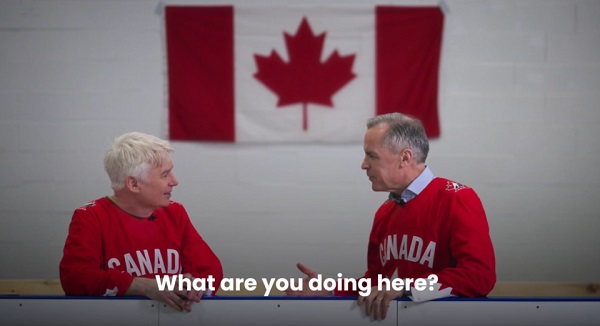

The cost of the bureaucracy increased by $6 billion last year, according to newly released numbers in Public Accounts disclosures. The Canadian Taxpayers Federation is calling on Prime Minister Mark Carney to immediately shrink the bureaucracy.
“The Public Accounts show the cost of the federal bureaucracy is out of control,” said Franco Terrazzano, CTF Federal Director. “Tinkering around the edges won’t cut it, Carney needs to take urgent action to shrink the bloated federal bureaucracy.”
The federal bureaucracy cost taxpayers $71.4 billion in 2024-25, according to the Public Accounts. The cost of the federal bureaucracy increased by $6 billion, or more than nine per cent, over the last year.
The federal bureaucracy cost taxpayers $39.6 billion in 2015-16, according to the Public Accounts. That means the cost of the federal bureaucracy increased 80 per cent over the last 10 years. The government added 99,000 extra bureaucrats between 2015-16 and 2024-25.
Half of Canadians say federal services have gotten worse since 2016, despite the massive increase in the federal bureaucracy, according to a Leger poll.
Not only has the size of the bureaucracy increased, the cost of consultants, contractors and outsourcing has increased as well. The government spent $23.1 billion on “professional and special services” last year, according to the Public Accounts. That’s an 11 per cent increase over the previous year. The government’s spending on professional and special services more than doubled since 2015-16.
“Taxpayers should not be paying way more for in-house government bureaucrats and way more for outside help,” Terrazzano said. “Mere promises to find minor savings in the federal bureaucracy won’t fix Canada’s finances.
“Taxpayers need Carney to take urgent action and significantly cut the number of bureaucrats now.”
Table: Cost of bureaucracy and professional and special services, Public Accounts
| Year | Bureaucracy | Professional and special services |
|
$71,369,677,000 |
$23,145,218,000 |
|
|
$65,326,643,000 |
$20,771,477,000 |
|
|
$56,467,851,000 |
$18,591,373,000 |
|
|
$60,676,243,000 |
$17,511,078,000 |
|
|
$52,984,272,000 |
$14,720,455,000 |
|
|
$46,349,166,000 |
$13,334,341,000 |
|
|
$46,131,628,000 |
$12,940,395,000 |
|
|
$45,262,821,000 |
$12,950,619,000 |
|
|
$38,909,594,000 |
$11,910,257,000 |
|
|
$39,616,656,000 |
$11,082,974,000 |

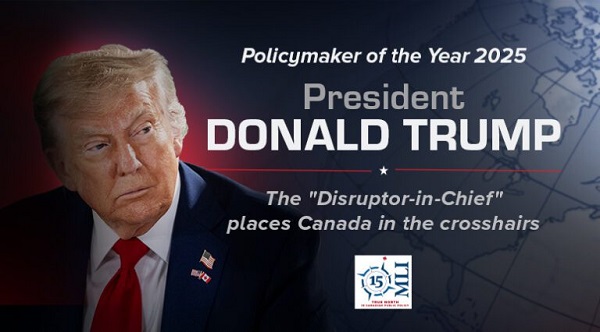
The “Disruptor-in-Chief” places Canada in the crosshairs
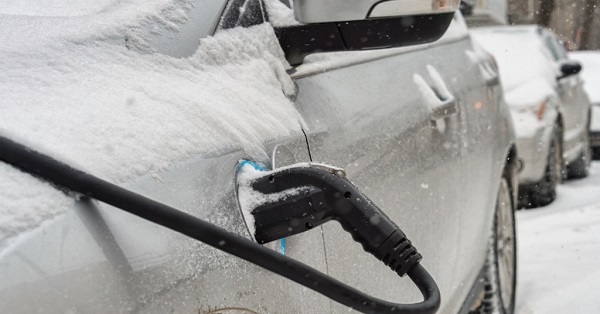
Canada’s EV gamble is starting to backfire

UK Police Pilot AI System to Track “Suspicious” Driver Journeys
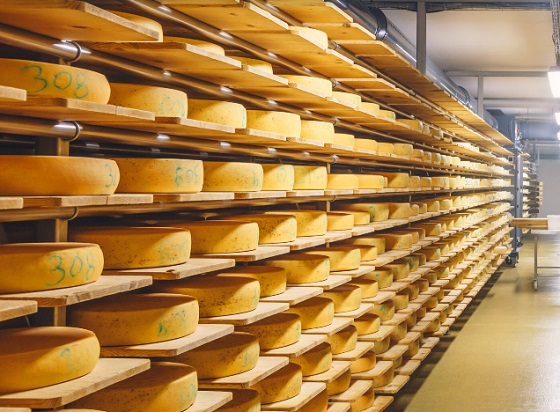
End Supply Management—For the Sake of Canadian Consumers

Judge Declares Mistrial in Landmark New York PRC Foreign-Agent Case

Canadian government launches trial version of digital ID for certain licenses, permits
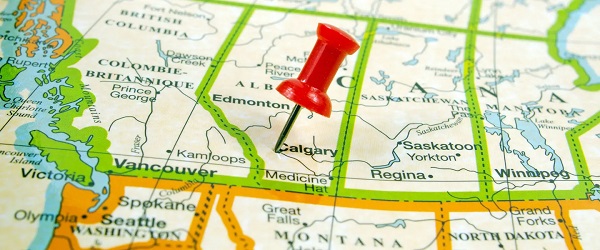
Alberta Next Panel calls to reform how Canada works
-
 Business2 days ago
“Magnitude cannot be overstated”: Minnesota aid scam may reach $9 billion
-
 Business2 days ago
Largest fraud in US history? Independent Journalist visits numerous daycare centres with no children, revealing massive scam
-
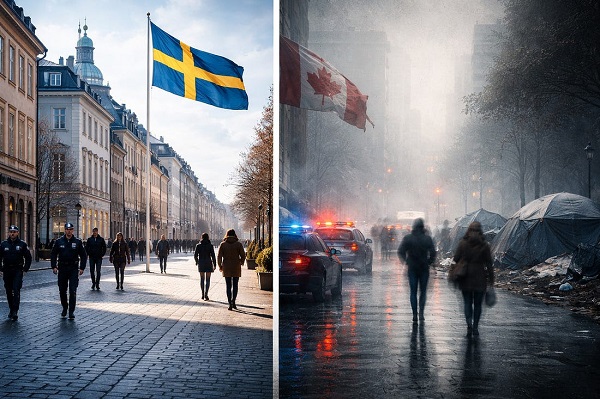 Haultain Research13 hours ago
Sweden Fixed What Canada Won’t Even Name
-
 Censorship Industrial Complex1 day ago
US Under Secretary of State Slams UK and EU Over Online Speech Regulation, Announces Release of Files on Past Censorship Efforts
-
 Business13 hours ago
What Do Loyalty Rewards Programs Cost Us?
-
 Business34 mins ago
Land use will be British Columbia’s biggest issue in 2026
-
 Energy1 hour ago
Why Japan wants Western Canadian LNG