
International
Mel Gibson’s home destroyed in LA fire while he was in Texas for the Joe Rogan podcast

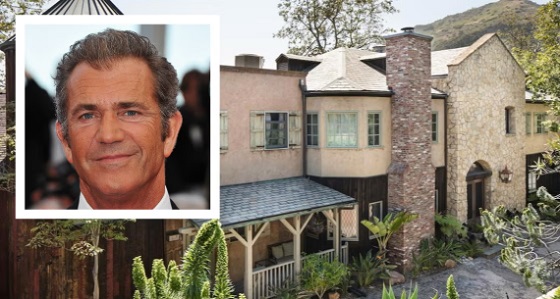

From LifeSiteNews
‘I’ve been relieved from the burden of my stuff because it’s all in cinders,’ a light-hearted Mel Gibson told NewsNation while the station aired video footage of his fire-destroyed Malibu home.
Mel Gibson’s California mansion burned to the ground while the popular Catholic director and actor was appearing on the Joe Rogan Experience podcast.

“I’ve been relieved from the burden of my stuff because it’s all in cinders,” a light-hearted Gibson told NewsNation Thursday while the station aired video footage of his fire-destroyed Malibu home. When asked by the presenter where he was when the fire took place, Gibson explained that he was in Austin, Texas, appearing on a now-viral episode of the Joe Rogan Experience podcast.
NEW – Mel Gibson's Malibu Mansion Burned Down While He Was Filming Joe Rogan's Podcast
"I was doing the Rogan podcast and I was kind of ill at ease while we were talking because I knew my neighborhood was on fire. So I thought, I wonder if my place is still there. When I got… pic.twitter.com/TvknivxywB
— Chief Nerd (@TheChiefNerd) January 10, 2025
“I was doing the Rogan podcast and I was kind of ill at ease while we were talking because I knew my neighborhood was on fire. So I thought, I wonder if my place is still there. When I got home, sure enough, it wasn’t there,” Gibson stated.

An easy-going Gibson reiterated that the fire was “devastating” enough that everything he owned “was completely toasted,” and many of his neighbors’ homes were also destroyed.
Gibson did mention the Los Angeles-area fires during his Joe Rogan podcast appearance, even making mention of the fact during the recording that there was a good chance his home would be leveled by the blaze.

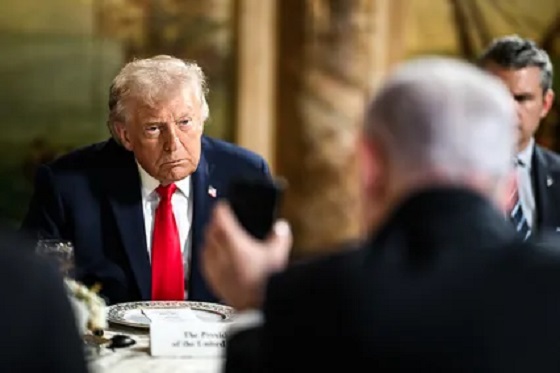

President Trump warned Friday that the United States stands ready to act if Iran’s regime escalates its crackdown on protesters, saying America would “come to their rescue” should peaceful demonstrators be violently killed as unrest spreads across the country. Writing on Truth Social, Trump said, “If Iran shoots and violently kills peaceful protesters, which is their custom, the United States of America will come to their rescue,” adding bluntly, “We are locked and loaded and ready to go.” His comments came as clashes between protesters and security forces erupted in multiple Iranian cities, leaving at least six people dead — the first confirmed fatalities since the latest wave of unrest intensified.
The demonstrations began as economic protests, driven by soaring prices, inflation, and a collapsing currency after years of sanctions tied to Iran’s nuclear program, but have quickly taken on a political edge. Shopkeepers in Tehran reportedly shut their doors in protest over economic stagnation, with similar actions and street demonstrations spreading into at least 15 cities, largely concentrated in western Iran. Iranian state media acknowledged deadly clashes in Lordegan and Azna, while state television reported that a member of Iran’s security forces was killed during unrest in Kouhdasht.
Tehran’s leadership responded sharply to Trump’s warning. Ali Larijani, head of Iran’s top security body, reportedly cautioned that U.S. involvement would “destabilize the entire region” and urged Trump to be “mindful of their soldiers’ safety.” Ali Shamkhani, an adviser to Supreme Leader Ali Khamenei, called Iran’s internal security a “red line,” warning that any American intervention would be met with a response. Even as Iranian officials attempt to strike a public tone of concern, the threat of force is unmistakable. President Masoud Pezeshkian described the protests over economic hardship as understandable and said Thursday that his government would “end up in hell” if it failed to fix the economy. At the same time, prosecutors and judiciary officials vowed zero tolerance. Lorestan prosecutor Ali Hasavand warned that participation in “illegal gatherings” or actions disturbing public order would be treated as crimes and punished “with the greatest firmness,” accusing “hostile individuals” of sowing chaos.
The unrest comes as Iran’s regional position appears weakened following setbacks to its allies in Gaza, Lebanon, and Syria, adding to pressure on the regime at home. While the current demonstrations remain smaller than the massive 2022 protests sparked by the death of Mahsa Amini — which left hundreds dead — the echoes are unmistakable. Similar nationwide unrest in 2019 over fuel prices eventually evolved into open calls to overthrow Iran’s clerical rulers. Trump’s message, characteristically direct, places Tehran on notice: if the regime chooses mass bloodshed again, he says the United States will not look away.
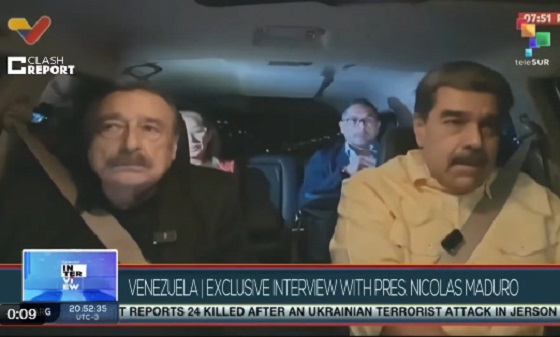
Venezuelan strongman Nicolás Maduro is striking a suddenly conciliatory tone toward Washington after a reported CIA drone strike targeted a cartel-linked docking area inside his country, claiming Caracas is now “ready” to negotiate with the United States on drug trafficking — and even dangling access to Venezuela’s oil sector as leverage.
In a sit-down interview recorded on New Year’s Eve with Spanish journalist Ignacio Ramonet and aired Thursday on state television, Maduro said the U.S. government has long known Venezuela is open to talks, insisting that if Washington wants a note-for-note agreement to combat narcotics flows, “we’re ready.”
He went further, suggesting that American energy firms could return in force, saying Venezuela is open to U.S. oil investment “whenever they want it, wherever they want it and however they want it,” explicitly referencing past dealings with Chevron.
Venezuelan President Maduro:
If the United States wants to seriously talk about an agreement to combat drug trafficking, we are ready. pic.twitter.com/3cWMyDxuC8
— Open Source Intel (@Osint613) January 2, 2026
The remarks come amid an aggressive U.S. pressure campaign that has seen at least 35 American strikes on suspected drug-smuggling vessels across the Caribbean and eastern Pacific since early September, operations U.S. officials say have killed more than 115 suspected traffickers.
Those actions are widely viewed as part of a broader effort to choke off cartel pipelines tied to the Maduro regime and destabilize a government Washington has long accused of functioning as a narco-state.
Last week’s strike — the first publicly acknowledged U.S. operation on Venezuelan soil since the maritime campaign began — was revealed by President Trump himself in a Dec. 26 radio interview, marking a sharp escalation.
Maduro refused to address the strike directly during the interview, saying only that he could “talk about it in a few days,” a silence that stood in contrast to his sudden eagerness to negotiate.
U.S. officials have been far less ambiguous. Secretary of State Marco Rubio said in December that the current relationship with Caracas is “intolerable,” accusing the regime of actively partnering with terrorist organizations and criminal networks that threaten U.S. national interests.
Maduro, who is under U.S. indictment on charges including drug trafficking, money laundering, and corruption, is now signaling flexibility just as American pressure tightens — a familiar pattern for a regime that has often talked cooperation when cornered, only to revert once the heat eases.
Whether Washington sees this latest outreach as a genuine shift or another tactical feint remains an open question, but the timing suggests the message was less about diplomacy than survival.


“Magnitude cannot be overstated”: Minnesota aid scam may reach $9 billion

Largest fraud in US history? Independent Journalist visits numerous daycare centres with no children, revealing massive scam
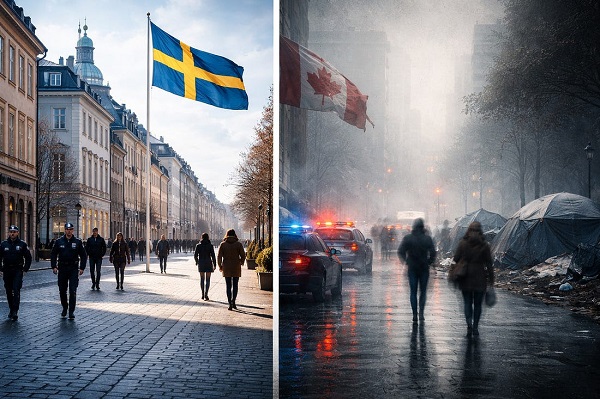
Sweden Fixed What Canada Won’t Even Name

US Under Secretary of State Slams UK and EU Over Online Speech Regulation, Announces Release of Files on Past Censorship Efforts

Is Ukraine Peace Deal Doomed Before Zelenskyy And Trump Even Meet At Mar-A-Lago?
What Do Loyalty Rewards Programs Cost Us?

China Stages Massive Live-Fire Encirclement Drill Around Taiwan as Washington and Japan Fortify
-
 Business1 day ago
How convenient: Minnesota day care reports break-in, records gone
-
 Business1 day ago
The great policy challenge for governments in Canada in 2026
-
 Opinion2 days ago
Globally, 2025 had one of the lowest annual death rates from extreme weather in history
-
 International1 day ago
Trump confirms first American land strike against Venezuelan narco networks
-
International7 hours ago
Maduro says he’s “ready” to talk
-
 Bruce Dowbiggin7 hours ago
The Rise Of The System Engineer: Has Canada Got A Prayer in 2026?
-
International7 hours ago
LOCKED AND LOADED: Trump threatens U.S. response if Iran slaughters protesters