
Business
Mark Carney’s Fiscal Fantasy Will Bankrupt Canada



By Gwyn Morgan
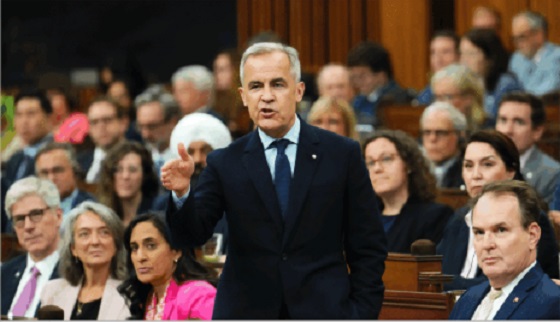
Mark Carney was supposed to be the adult in the room. After nearly a decade of runaway spending under Justin Trudeau, the former central banker was presented to Canadians as a steady hand – someone who could responsibly manage the economy and restore fiscal discipline.

Instead, Carney has taken Trudeau’s recklessness and dialled it up. His government’s recently released spending plan shows an increase of 8.5 percent this fiscal year to $437.8 billion. Add in “non-budgetary spending” such as EI payouts, plus at least $49 billion just to service the burgeoning national debt and total spending in Carney’s first year in office will hit $554.5 billion.
Even if tax revenues were to remain level with last year – and they almost certainly won’t given the tariff wars ravaging Canadian industry – we are hurtling toward a deficit that could easily exceed 3 percent of GDP, and thus dwarf our meagre annual economic growth. It will only get worse. The Parliamentary Budget Officer estimates debt interest alone will consume $70 billion annually by 2029. Fitch Ratings recently warned of Canada’s “rapid and steep fiscal deterioration”, noting that if the Liberal program is implemented total federal, provincial and local debt would rise to 90 percent of GDP.
This was already a fiscal powder keg. But then Carney casually tossed in a lit match. At June’s NATO summit, he pledged to raise defence spending to 2 percent of GDP this fiscal year – to roughly $62 billion. Days later, he stunned even his own caucus by promising to match NATO’s new 5 percent target. If he and his Liberal colleagues follow through, Canada’s defence spending will balloon to the current annual equivalent of $155 billion per year. There is no plan to pay for this. It will all go on the national credit card.
This is not “responsible government.” It is economic madness.
And it’s happening amid broader economic decline. Business investment per worker – a key driver of productivity and living standards – has been shrinking since 2015. The C.D. Howe Institute warns that Canadian workers are increasingly “underequipped compared to their peers abroad,” making us less competitive and less prosperous.
The problem isn’t a lack of money; it’s a lack of discipline and vision. We’ve created a business climate that punishes investment: high taxes, sluggish regulatory processes, and politically motivated uncertainty. Carney has done nothing to reverse this. If anything, he’s making the situation worse.
Recall the 2008 global financial meltdown. Carney loves to highlight his role as Bank of Canada Governor during that time but the true credit for steering the country through the crisis belongs to then-prime minister Stephen Harper and his finance minister, Jim Flaherty. Facing the pressures of a minority Parliament, they made the tough decisions that safeguarded Canada’s fiscal foundation. Their disciplined governance is something Carney would do well to emulate.
Instead, he’s tearing down that legacy. His recent $4.3 billion aid pledge to Ukraine, made without parliamentary approval, exemplifies his careless approach. And his self-proclaimed image as the experienced technocrat who could go eyeball-to-eyeball against Trump is starting to crack. Instead of respecting Carney, Trump is almost toying with him, announcing in June, for example that the U.S. would pull out of the much-ballyhooed bilateral trade talks launched at the G7 Summit less than two weeks earlier.
Ordinary Canadians will foot the bill for Carney’s fiscal mess. The dollar has weakened. Young Canadians – already priced out of the housing market – will inherit a mountain of debt. This is not stewardship. It’s generational theft.
Some still believe Carney will pivot – that he will eventually govern sensibly. But nothing in his actions supports that hope. A leader serious about economic renewal would cancel wasteful Trudeau-era programs, streamline approvals for energy and resource projects, and offer incentives for capital investment. Instead, we’re getting more borrowing and ideological showmanship.
It’s no longer credible to say Carney is better than Trudeau. He’s worse. Trudeau at least pretended deficits were temporary. Carney has made them permanent – and more dangerous.
This is a betrayal of the fiscal stability Canadians were promised. If we care about our credit rating, our standard of living, or the future we are leaving our children, we must change course.
That begins by removing a government unwilling – or unable – to do the job.
Canada once set an economic example for others. Those days are gone. The warning signs – soaring debt, declining productivity, and diminished global standing – are everywhere. Carney’s defenders may still hope he can grow into the job. Canada cannot afford to wait and find out.
The original, full-length version of this article was recently published in C2C Journal.
Gwyn Morgan is a retired business leader who was a director of five global corporations.

Business
Largest fraud in US history? Independent Journalist visits numerous daycare centres with no children, revealing massive scam


A young journalist has uncovered perhaps the largest fraud scheme in US history.
He certainly isn’t a polished reporter with many years of experience, but 23 year old independent journalist Nick Shirley seems to be getting the job done. Shirley has released an incredible video which appears to outline fraud after fraud after fraud in what appears to be a massive taxpayer funded scheme involving up to $9 Billion Dollars.
In one day of traveling around Minneapolis-St. Paul, Shirley appears to uncover over $100 million in fraudulent operations.
🚨 Here is the full 42 minutes of my crew and I exposing Minnesota fraud, this might be my most important work yet. We uncovered over $110,000,000 in ONE day. Like it and share it around like wildfire! Its time to hold these corrupt politicians and fraudsters accountable
We ALL… pic.twitter.com/E3Penx2o7a
— Nick shirley (@nickshirleyy) December 26, 2025


Federal prosecutors say Minnesota’s exploding social-services fraud scandal may now rival nearly the entire economy of Somalia, with as much as $9 billion allegedly stolen from taxpayer-funded programs in what authorities describe as industrial-scale abuse that unfolded largely under the watch of Democrat Gov. Tim Walz. The staggering new estimate is almost nine times higher than the roughly $1 billion figure previously suspected and amounts to about half of the $18 billion in federal funds routed through Minnesota-run social-services programs since 2018, according to prosecutors. “The magnitude cannot be overstated,” First Assistant U.S. Attorney Joe Thompson said Thursday, stressing that investigators are still uncovering massive schemes. “This is not a handful of bad actors. It’s staggering, industrial-scale fraud. Every day we look under a rock and find another $50 million fraud operation.”
Authorities say the alleged theft went far beyond routine overbilling. Dozens of defendants — the vast majority tied to Minnesota’s Somali community — are accused of creating sham businesses and nonprofits that claimed to provide housing assistance, food aid, or health-care services that never existed, then billing state programs backed by federal dollars. Thompson said the opportunity became so lucrative it attracted what he called “fraud tourism,” with out-of-state operators traveling to Minnesota to cash in. Charges announced Thursday against six more people bring the total number of defendants to 92.
BREAKING: First Assistant U.S. Attorney Joe Thompson revealed that 14 state Medicaid programs have cost Minnesota $18 billion since 2018, including more than $3.5 billion in 2024 alone.
Thompson stated, "Now, I'm sure everyone is wondering how much of this $18 billion was… pic.twitter.com/hCNDBuCTYH
— FOX 9 (@FOX9) December 18, 2025
Among the newly charged are Anthony Waddell Jefferson, 37, and Lester Brown, 53, who prosecutors say traveled from Philadelphia to Minnesota after spotting what they believed was easy money in the state’s housing assistance system. The pair allegedly embedded themselves in shelters and affordable-housing networks to pose as legitimate providers, then recruited relatives and associates to fabricate client notes. Prosecutors say they submitted about $3.5 million in false claims to the state’s Housing Stability Services Program for roughly 230 supposed clients.
Other cases show how deeply the alleged fraud penetrated Minnesota’s health-care programs. Abdinajib Hassan Yussuf, 27, is accused of setting up a bogus autism therapy nonprofit that paid parents to enroll children regardless of diagnosis, then billed the state for services never delivered, netting roughly $6 million. Another defendant, Asha Farhan Hassan, 28, allegedly participated in a separate autism scheme that generated $14 million in fraudulent reimbursements, while also pocketing nearly $500,000 through the notorious Feeding Our Future food-aid scandal. “Roughly two dozen Feeding Our Future defendants were getting money from autism clinics,” Thompson said. “That’s how we learned about the autism fraud.”
The broader scandal began to unravel in 2022 when Feeding Our Future collapsed under federal investigation, but prosecutors say only in recent months has the true scope of the alleged theft come into focus. Investigators allege large sums were wired overseas or spent on luxury vehicles and other high-end purchases. The revelations have fueled political fallout in Minnesota and prompted renewed federal scrutiny of immigration-linked fraud as well as criticism of state oversight failures. Walz, who is seeking re-election in 2026 after serving as Kamala Harris’ running mate in 2024, defended his administration Thursday, saying, “We will not tolerate fraud, and we will continue to work with federal partners to ensure fraud is stopped and fraudsters are caught.” Prosecutors, however, made clear the investigation is far from finished — and warned the final tally could climb even higher.

There’s No Bias at CBC News, You Say? Well, OK…
FDA warns ‘breast binder’ manufacturers to stop marketing to gender-confused girls
2025: The Year The Narrative Changed

Religion on trial: what could happen if Canada passes its new hate speech legislation

Australian PM booed at Bondi vigil as crowd screams “shame!”

Trump Reportedly Escalates Pressure On Venezuela With Another Oil Tanker Seizure

All 12 Vaccinated vs. Unvaccinated Studies Found the Same Thing: Unvaccinated Children Are Far Healthier
-
 Censorship Industrial Complex4 hours ago
US Under Secretary of State Slams UK and EU Over Online Speech Regulation, Announces Release of Files on Past Censorship Efforts
-
Business7 hours ago
“Magnitude cannot be overstated”: Minnesota aid scam may reach $9 billion
-
 Alberta1 day ago
Alberta project would be “the biggest carbon capture and storage project in the world”
-
 Energy1 day ago
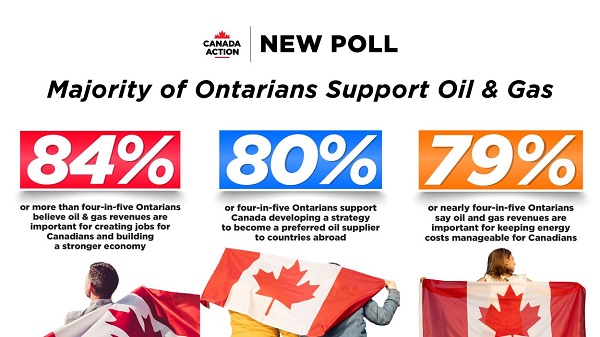
New Poll Shows Ontarians See Oil & Gas as Key to Jobs, Economy, and Trade
-
 Energy1 day ago
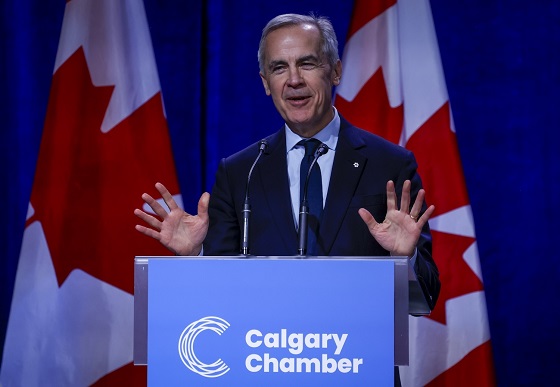
Canada’s debate on energy levelled up in 2025
-
 Fraser Institute2 days ago
Carney government sowing seeds for corruption in Ottawa
-
 Daily Caller21 hours ago
Is Ukraine Peace Deal Doomed Before Zelenskyy And Trump Even Meet At Mar-A-Lago?
-
 Alberta2 days ago
Alberta Next Panel calls for less Ottawa—and it could pay off