
Carbon Tax
Mark Carney has history of supporting CBDCs, endorsed Freedom Convoy crackdown

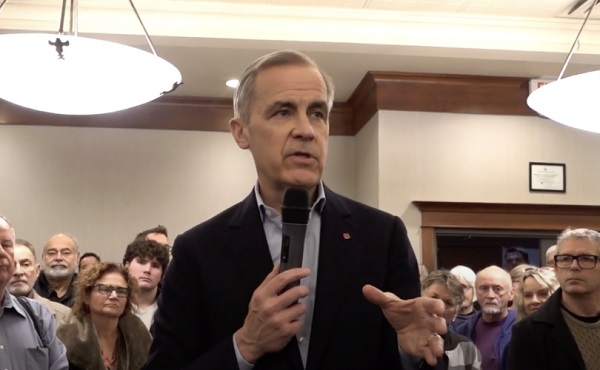

From LifeSiteNews

Carney also said last week that he is willing to use all government powers, including “emergency powers,” to enforce his energy plan if elected prime minister.
World Economic Forum-linked Liberal Party leadership frontrunner Mark Carney has a history of supporting central bank digital currencies, and in 2022 supported “choking off the money” donated to the Freedom Convoy.
In his 2021 book Value(s), Carney said that the “future of money” is a “central bank stablecoin, known as a central bank digital currency or CBDC.”
He noted in his book that such a currency would be similar to current cryptocurrencies such as Bitcoin, but without the private nature afforded to it by its decentralization.
“It is simply untenable in democracies that the core of the monetary system could be based on forms of electronic private money whose creators control large blocks of the currency, like Bitcoin,” he wrote. “Cryptocurrencies are not the future of money.”
Carney noted that a CBDC, if “properly designed,” could serve “all the functions to which private cryptocurrencies and stablecoins aspire while addressing the fundamental legal and governance issues that will, in time, undermine those alternatives.”
Expanding on his worldview in relation to CBDCs, Carney suggested that “fear” can be taken advantage of to shape the future of money.
“With fear on the march, people were willing to surrender to Hobbes’ ‘Leviathan’ such basic rights as the freedom to leave their homes,” he wrote. “And so it is with money. People will support the delegation to independent central banks of the tough decisions that are necessary to maintain the value of money provided the authorities deliver monetary and financial stability.”
Some Canadians are alarmed by the prospect of CBDCs, a fear that only worsened after the Liberals under Prime Minister Justin Trudeau froze hundreds of bank accounts it deemed were importantly linked to the 2022 Freedom Convoy.
During the Freedom Convoy, Carney wrote in an op-ed for the Globe and Mail, “Those who are still helping to extend this occupation must be identified and punished to the full force of the law,” adding that “Drawing the line means choking off the money that financed this occupation.”
Carney is a former head of the Bank of Canada and Bank of England. His ties to globalist groups have led to Conservative Party leader Pierre Poilievre calling him the World Economic Forum’s “golden boy.”
In addition to his comments on CBDCs, Carney has a history of promoting anti-life and anti-family agendas, including abortion and LGBT-related efforts. He has also previously endorsed the carbon tax and even criticized Trudeau when the tax was exempted from home heating oil to reduce costs for some Canadians.
Carney also said last week that he is willing to use all government powers, including “emergency powers,” to enforce his energy plan if elected prime minister.
The Liberal Party of Canada will choose its next leader, who will automatically become prime minister, on March 9, after Prime Minister Justin Trudeau announced that he plans to step down as Liberal Party leader once a new leader has been chosen.
In contrast to Carney, Poilievre has promised that if he is elected prime minister, he would stop any implementation of a “digital currency” or a compulsory “digital ID” system.
When it comes to a digital Canadian dollar, the Bank of Canada found that Canadians are very wary of a government-backed digital currency, concluding that a “significant number” of citizens would resist the implementation of such a system.

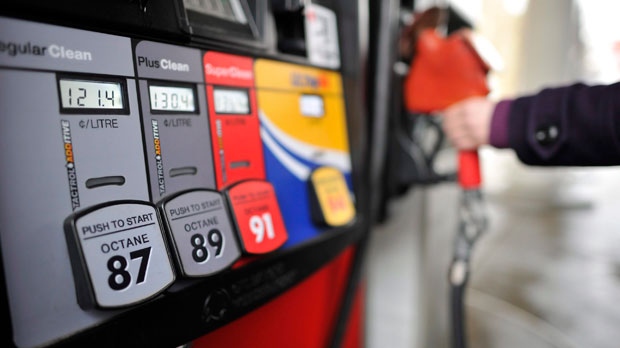

The Canadian Taxpayers Federation is criticizing the Memorandum of Understanding between the federal and Alberta governments for including higher carbon taxes.
“Hidden carbon taxes will make it harder for Canadian businesses to compete and will push Canadian entrepreneurs to shift production south of the border,” said Franco Terrazzano, CTF Federal Director. “Politicians should not be forcing carbon taxes on Canadians with the hope that maybe one day we will get a major project built.
“Politicians should be scrapping all carbon taxes.”
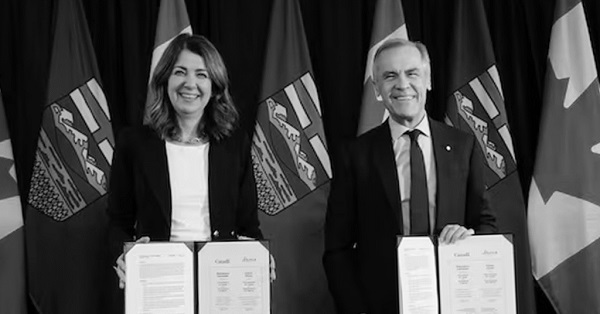
The federal and Alberta governments released a memorandum of understanding. It includes an agreement that the industrial carbon tax “will ramp up to a minimum effective credit price of $130/tonne.”
“It means more than a six times increase in the industrial price on carbon,” Prime Minister Mark Carney said while speaking to the press today.
Carney previously said that by “changing the carbon tax … We are making the large companies pay for everybody.”
A Leger poll shows 70 per cent of Canadians believe businesses pass most or some of the cost of the industrial carbon tax on to consumers. Meanwhile, just nine per cent believe businesses pay most of the cost.
“It doesn’t matter what politicians label their carbon taxes, all carbon taxes make life more expensive and don’t work,” Terrazzano said. “Carbon taxes on refineries make gas more expensive, carbon taxes on utilities make home heating more expensive and carbon taxes on fertilizer plants increase costs for farmers and that makes groceries more expensive.
“The hidden carbon tax on business is the worst of all worlds: Higher prices and fewer Canadian jobs.”
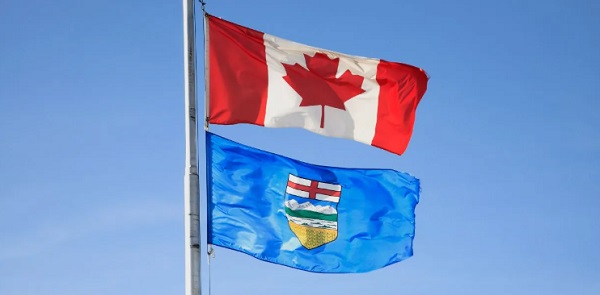
From the Fraser Institute
The stiffer carbon tax will make Alberta’s oil sector more expensive and thus less competitive at a time when many analysts expect a surge in oil production. The costs of mandated carbon capture will similarly increase costs in the oilsands and make the province less cost competitive.
As we enter the final days of 2025, a “deal” has been struck between Carney government and the Alberta government over the province’s ability to produce and interprovincially transport its massive oil reserves (the world’s 4th-largest). The agreement is a step forward and likely a net positive for Alberta and its citizens. However, it’s not a second- or even third-best option, but rather a fourth-best option.
The agreement is deeply rooted in the development of a particular technology—the Pathways carbon capture, utilization and storage (CCUS) project, in exchange for relief from the counterproductive regulations and rules put in place by the Trudeau government. That relief, however, is attached to a requirement that Alberta commit to significant spending and support for Ottawa’s activist industrial policies. Also, on the critical issue of a new pipeline from Alberta to British Columbia’s coast, there are commitments but nothing approaching a guarantee.
Specifically, the agreement—or Memorandum of Understanding (MOU)—between the two parties gives Alberta exemptions from certain federal environmental laws and offers the prospect of a potential pathway to a new oil pipeline to the B.C. coast. The federal cap on greenhouse gas (GHG) emissions from the oil and gas sector will not be instituted; Alberta will be exempt from the federal “Clean Electricity Regulations”; a path to a million-barrel-per day pipeline to the BC coast for export to Asia will be facilitated and established as a priority of both governments, and the B.C. tanker ban may be adjusted to allow for limited oil transportation. Alberta’s energy sector will also likely gain some relief from the “greenwashing” speech controls emplaced by the Trudeau government.
In exchange, Alberta has agreed to implement a stricter (higher) industrial carbon-pricing regime; contribute to new infrastructure for electricity transmission to both B.C. and Saskatchewan; support through tax measures the building of a massive “sovereign” data centre; significantly increase collaboration and profit-sharing with Alberta’s Indigenous peoples; and support the massive multibillion-dollar Pathways project. Underpinning the entire MOU is an explicit agreement by Alberta with the federal government’s “net-zero 2050” GHG emissions agenda.
The MOU is probably good for Alberta and Canada’s oil industry. However, Alberta’s oil sector will be required to go to significantly greater—and much more expensive—lengths than it has in the past to meet the MOU’s conditions so Ottawa supports a west coast pipeline.
The stiffer carbon tax will make Alberta’s oil sector more expensive and thus less competitive at a time when many analysts expect a surge in oil production. The costs of mandated carbon capture will similarly increase costs in the oilsands and make the province less cost competitive. There’s additional complexity with respect to carbon capture since it’s very feasibility at the scale and time-frame stipulated in the MOU is questionable, as the historical experience with carbon capture, utilization and storage for storing GHG gases sustainably has not been promising.
These additional costs and requirements are why the agreement is the not the best possible solution. The ideal would have been for the federal government to genuinely review existing laws and regulations on a cost-benefit basis to help achieve its goal to become an “energy superpower.” If that had been done, the government would have eliminated a host of Trudeau-era regulations and laws, or at least massively overhauled them.
Instead, the Carney government, and now with the Alberta government, has chosen workarounds and special exemptions to the laws and regulations that still apply to everyone else.
Again, it’s very likely the MOU will benefit Alberta and the rest of the country economically. It’s no panacea, however, and will leave Alberta’s oil sector (and Alberta energy consumers) on the hook to pay more for the right to move its export products across Canada to reach other non-U.S. markets. It also forces Alberta to align itself with Ottawa’s activist industrial policy—picking winning and losing technologies in the oil-production marketplace, and cementing them in place for decades. A very mixed bag indeed.

Kenneth P. Green
Senior Fellow, Fraser Institute


From Underdog to Top Broodmare

Man overboard as HMCS Carney lists to the right
Higher carbon taxes in pipeline MOU are a bad deal for taxpayers
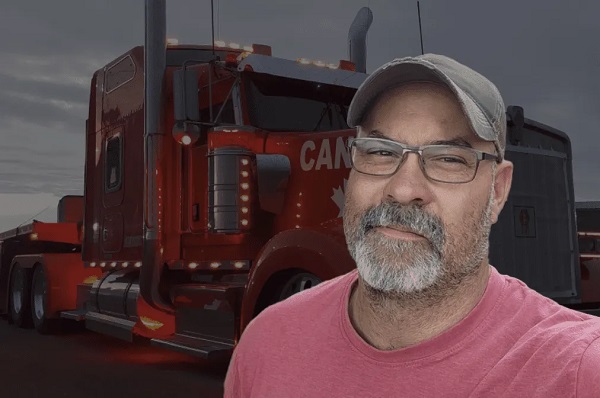
Canadian government seeking to destroy Freedom Convoy leader, taking Big Red from Chris Barber
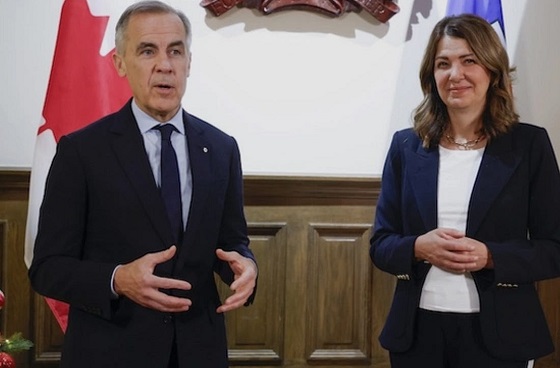
READ IT HERE – Canada-Alberta Memorandum of Understanding – From the Prime Minister’s Office
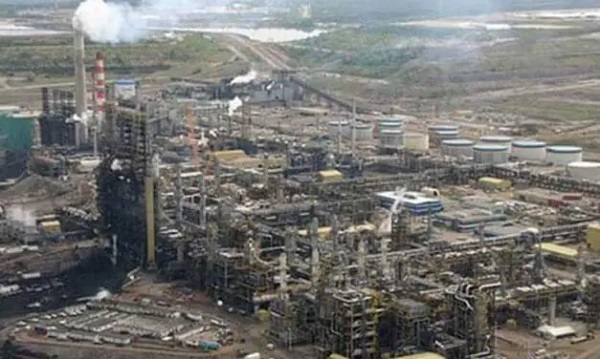
IEA peak-oil reversal gives Alberta long-term leverage

Quebec proposes to ban public prayer, harden laws against religious symbols
-
 Alberta1 day ago
Alberta Sports Hall of Fame Announces Class of 2026 Inductees
-
 Business21 hours ago
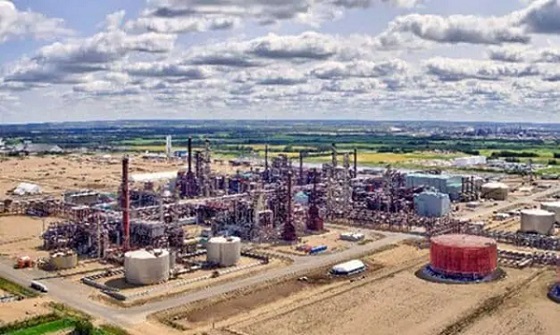
Canada’s climate agenda hit business hard but barely cut emissions
-
 Business2 days ago
New Chevy ad celebrates marriage, raising children
-
 Automotive2 days ago
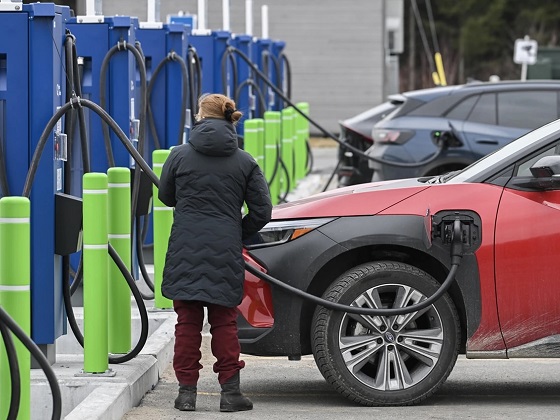
Power Struggle: Governments start quietly backing away from EV mandates
-
 MAiD1 day ago
From Exception to Routine. Why Canada’s State-Assisted Suicide Regime Demands a Human-Rights Review
-
 Alberta2 days ago
This new Canada–Alberta pipeline agreement will cost you more than you think
-
 Energy2 days ago
Unceded is uncertain
-
 Business1 day ago
Is Carney Falling Into The Same Fiscal Traps As Trudeau?