
Uncategorized
Making Alberta a geothermal energy leader

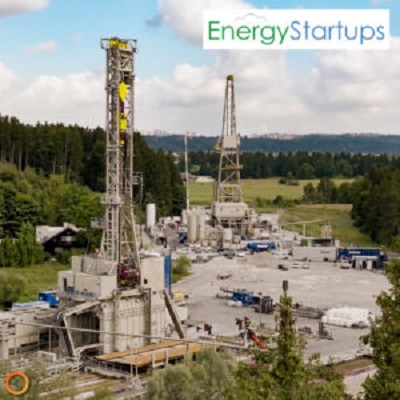

Eavor announces it’s the #1 geothermal energy startup company in the world – January 2024
Alberta is creating Canada’s first geothermal test site to advance drilling innovation, reduce emissions and create jobs.
Geothermal energy uses naturally occurring heat within the earth to heat water and buildings and generate power, with few emissions or environmental impacts. Alberta has vast pockets of heat below ground, making the province Canada’s geothermal leader, but testing and developing new technologies can be a barrier for many companies. Unlike the United States, Japan and other countries, Canada does not currently have an open-access test site to help spur innovation.

Alberta is taking the first steps to create a new Alberta Drilling Accelerator. This groundbreaking facility would be the first of its kind in Canada, establishing Alberta as a global hub for geothermal technology. This will drive new innovations in geothermal and other clean energy projects that can reduce emissions and power communities around the world.
To kick-start the project, the Alberta government is investing $750,000 to conduct a feasibility study led by Calgary-based Eavor Technologies and other stakeholders. The study is the first step in assessing the proposed facility. It will include identifying a site, business planning, research on the governance model, an economic impact analysis and stakeholder engagement that will lay the groundwork for the initial planning stages of the project.
“Alberta has been a global energy leader for more than a century, renowned for our skilled workforce, innovation and one of the largest oil and gas reserves on the planet. The proposed Alberta Drilling Accelerator presents enormous potential to help our province lead the next wave of energy projects here at home and around the world that reduce emissions, create jobs and enhance energy security.”
The Alberta Drilling Accelerator would help companies test out and develop new geothermal drilling techniques or technologies to reduce emissions and drive growth across the clean energy sector. It would be an open-access, technology-agnostic drilling test facility capable of drilling in challenging environments, including deep depths, high temperatures and different rock types.
The accelerator also would help speed up the development of carbon capture, utilization and storage; helium; critical minerals; and other clean technologies and commodities that rely on Alberta’s drilling sector. All of this helps attract investment and bring new technologies to scale in Canada.
“With cumulative geothermal investment poised to reach $1 trillion by 2050, a geothermal arms race is very much underway to commercialize novel drilling techniques that accelerate geothermal development – exhibited by testing facilities in the United States, China and Iceland. As Canada’s first geothermal test bed, the Alberta Drilling Accelerator will help bring geothermal technologies to scale, supporting companies like Eavor. We commend the Government of Alberta for this bold initiative.”
“We are proud to witness Eavor, a CDL-Rockies alumni company, create new opportunities for innovators like themselves to advance the adoption of energy transition technologies like geothermal. The Alberta Drilling Accelerator will further solidify Alberta’s position as a leader in the global sustainable energy landscape.”
If the feasibility study shows the facility is economically and environmentally viable, and if the project is approved by the Alberta government, the facility will start taking shape at the selected site and drilling could start as early as 2025.
“Canada is home to the most advanced drilling technology in the world. Not only do our members support the responsible development of oil and gas, but we are integral in the extraction of new energy resources like geothermal and critical minerals. Our workers are at the epicentre of Canada’s energy transformation. Our people, technology and processes are leading the way towards a more diverse energy future. The Alberta Drilling Accelerator is a government-enabled policy approach to expand Alberta’s drilling capacity and reach its full potential as the world’s most diverse and technologically advanced producer and exporter of sustainable energy and critical minerals.”
“The Alberta Drilling Accelerator is a testament to Alberta’s innovative and entrepreneurial spirit. Leveraging our oil and gas sector expertise, Alberta is poised to become the global leader in developing new geothermal technologies that will play an integral role in reducing emissions while supporting job creation.”
Quick facts
- The Canadian Association of Energy Contractors estimates that one active drilling rig, whether drilling for natural gas or geothermal, creates approximately 220 direct and indirect jobs and
$1 million in tax revenue. - In 2019, Eavor received $2 million in provincial funding through Emissions Reduction Alberta and Alberta Innovates for the world’s first closed-loop geothermal system.
Related information




The cost of the bureaucracy increased by $6 billion last year, according to newly released numbers in Public Accounts disclosures. The Canadian Taxpayers Federation is calling on Prime Minister Mark Carney to immediately shrink the bureaucracy.
“The Public Accounts show the cost of the federal bureaucracy is out of control,” said Franco Terrazzano, CTF Federal Director. “Tinkering around the edges won’t cut it, Carney needs to take urgent action to shrink the bloated federal bureaucracy.”
The federal bureaucracy cost taxpayers $71.4 billion in 2024-25, according to the Public Accounts. The cost of the federal bureaucracy increased by $6 billion, or more than nine per cent, over the last year.
The federal bureaucracy cost taxpayers $39.6 billion in 2015-16, according to the Public Accounts. That means the cost of the federal bureaucracy increased 80 per cent over the last 10 years. The government added 99,000 extra bureaucrats between 2015-16 and 2024-25.
Half of Canadians say federal services have gotten worse since 2016, despite the massive increase in the federal bureaucracy, according to a Leger poll.
Not only has the size of the bureaucracy increased, the cost of consultants, contractors and outsourcing has increased as well. The government spent $23.1 billion on “professional and special services” last year, according to the Public Accounts. That’s an 11 per cent increase over the previous year. The government’s spending on professional and special services more than doubled since 2015-16.
“Taxpayers should not be paying way more for in-house government bureaucrats and way more for outside help,” Terrazzano said. “Mere promises to find minor savings in the federal bureaucracy won’t fix Canada’s finances.
“Taxpayers need Carney to take urgent action and significantly cut the number of bureaucrats now.”
Table: Cost of bureaucracy and professional and special services, Public Accounts
| Year | Bureaucracy | Professional and special services |
|
$71,369,677,000 |
$23,145,218,000 |
|
|
$65,326,643,000 |
$20,771,477,000 |
|
|
$56,467,851,000 |
$18,591,373,000 |
|
|
$60,676,243,000 |
$17,511,078,000 |
|
|
$52,984,272,000 |
$14,720,455,000 |
|
|
$46,349,166,000 |
$13,334,341,000 |
|
|
$46,131,628,000 |
$12,940,395,000 |
|
|
$45,262,821,000 |
$12,950,619,000 |
|
|
$38,909,594,000 |
$11,910,257,000 |
|
|
$39,616,656,000 |
$11,082,974,000 |


From the Daily Caller News Foundation
By Jason Hopkins
The Trump administration is creating a first-of-its-kind task force aimed at ushering in a new “Golden Age” of beautiful infrastructure across the U.S.
The Department of Transportation (DOT) will announce the establishment of the Beautifying Transportation Infrastructure Council (BTIC) on Thursday, the Daily Caller News Foundation exclusively learned. The BTIC seeks to advise Transportation Secretary Sean Duffy on design and policy ideas for key infrastructure projects, including highways, bridges and transit hubs.
“What happened to our country’s proud tradition of building great, big, beautiful things?” Duffy said in a statement shared with the DCNF. “It’s time the design for America’s latest infrastructure projects reflects our nation’s strength, pride, and promise.”
“We’re engaging the best and brightest minds in architectural design and engineering to make beautiful structures that move you and bring about a new Golden Age of Transportation,” Duffy continued.
Mini scoop – here is the DOT’s rollout of its Beautifying Transportation Infrastructure Council, which will be tasked with making our buildings beautiful again. pic.twitter.com/
9iV2xSxdJM — Jason Hopkins (@jasonhopkinsdc) October 23, 2025
The DOT is encouraging nominations of the country’s best architects, urban planners, artists and others to serve on the council, according to the department. While ensuring that efficiency and safety remain a top priority, the BTIC will provide guidance on projects that “enhance” public areas and develop aesthetic performance metrics.
The new council aligns with an executive order signed by President Donald Trump in August 2025 regarding infrastructure. The “Making Federal Architecture Beautiful Again” order calls for federal public buildings in the country to “respect regional architectural heritage” and aims to prevent federal construction projects from using modernist and brutalist architecture styles, instead returning to a classical style.
“The Founders, in line with great societies before them, attached great importance to Federal civic architecture,” Trump’s order stated. “They wanted America’s public buildings to inspire the American people and encourage civic virtue.”
“President George Washington and Secretary of State Thomas Jefferson consciously modeled the most important buildings in Washington, D.C., on the classical architecture of ancient Athens and Rome,” the order continued. “Because of their proven ability to meet these requirements, classical and traditional architecture are preferred modes of architectural design.”
The DOT invested millions in major infrastructure projects since Trump’s return to the White House. Duffy announced in August a $43 million transformation initiative of the New York Penn Station in New York City and in September unveiledmajor progress in the rehabilitation and modernization of Washington Union Station in Washington, D.C.
The BTIC will comprise up to 11 members who will serve two-year terms, with the chance to be reappointed, according to the DOT. The task force will meet biannually. The deadline for nominations will end Nov. 21.


From Underdog to Top Broodmare
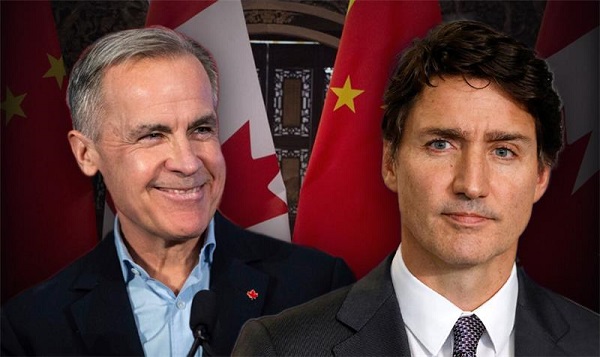
Beijing’s blueprint for breaking Canada-U.S. unity
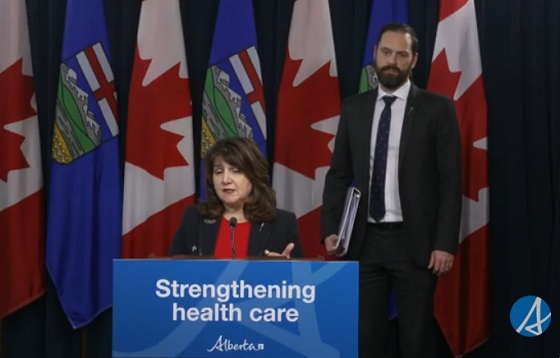
Alberta introducing dual practice health care model to increase options and shorten wait times while promising protection for publicly funded services

More than 200 children will receive dangerous puberty blockers for new UK study

US Supreme Court may end ‘emergency’ tariffs, but that won’t stop the President

Boris Johnson Urges Ukraine to Continue War

Elbows Down For The Not-So-Magnificent Seven: Canada’s Wilting NHL Septet
-
 International2 days ago
Trump vows to pause migration after D.C. shooting
-
 Daily Caller2 days ago
‘No Critical Thinking’: Parents Sound Alarm As Tech Begins To ‘Replace The Teacher’
-
 National2 days ago
Alleged Liberal vote-buying scandal lays bare election vulnerabilities Canada refuses to fix
-
 Food14 hours ago
Canada Still Serves Up Food Dyes The FDA Has Banned
-
 Addictions2 days ago
The Death We Manage, the Life We Forget
-
 Alberta14 hours ago
Net Zero goal is a fundamental flaw in the Ottawa-Alberta MOU
-
 Crime2 days ago
Vancouver police seize fentanyl and grenade launcher in opioid-overdose crisis zone
-
 Daily Caller1 day ago
John Kerry Lurches Back Onto Global Stage For One Final Gasp