Connect with us
[the_ad id="89560"]

DEI

Lawmakers press investigation into DEI agenda at the Pentagon

Published

3 minute read

Marines in amphibious task force gunnery exercise in the East China Sea.   

From The Center Square

By

A Department of Defense official recently reported that in fiscal year 2023, all branches collectively fell short of their recruitment targets by more than 40,000. But that shortfall came even after recruitment targets were lowered significantly.

A coalition of lawmakers is pushing forward the ongoing investigation into just how much taxpayer money Pentagon officials are taking away from national defense and putting toward diversity, equity and inclusivity initiatives.

The Pentagon has been under increasing scrutiny for its focus on DEI, even as the Ukraine-Russia and Israel-Hamas wars continue.

The lawmakers sent a letter to the Defense Advisory Committee on Diversity and Inclusion Chair General (Ret.) Lester Lyles expressing concerns that the focus on DEI was a distraction and was hurting recruitment.

“DoD’s emphasis on diversity and inclusion over mission effectiveness and capability concerns our nation’s national security and safety,” the letter said.

The letter comes ahead of an expected report from that committee on its work for DOD.

Military branches have struggled to meet recruitment goals in recent years. A Department of Defense official recently reported that in fiscal year 2023, all branches collectively fell short of their recruitment targets by more than 40,000. But that shortfall came even after recruitment targets were lowered significantly.

“Stand Together Against Racism and Radicalism in the Services (STARRS), an educational organization that includes retired military members, assembled a study of over one thousand unsolicited comments from military service members, veterans, and their respective families,” the letter said. “Their findings showed that many did not feel comfortable recommending military service because of the DEI policies instituted throughout DoD.”

As The Center Square has previously reported, the Pentagon has embraced an array of equity initiatives, from training on white privilege to guidelines on gender pronouns. Recently, the DOD asked for more than $100 million just for DEI initiatives, sparking backlash.

House Oversight Subcommittee on National Security, the Border, and Foreign Affairs Chairman Glenn Grothman, R-Wisc., and House Armed Services Subcommittee on Military Personnel Chairman Jim Banks, R-Ind., led other Republicans on the letter.

The lawmakers want a full explanation of what the DEI efforts at the Pentagon are, in detail.

“The Subcommittee remains concerned that under the guise of DEI, promotions are being rewarded based on sex, gender, ethnicity, and race at the expense of merit,” the letter said.

The lawmakers expressly called for transparency in the upcoming report.

“Americans have the right to expect that their sons and daughters in uniform are led, trained, and equipped by the very best,” the letter said. “The Subcommittee understands that the STARRS report was provided to DACODAI, but it is unclear the extent to which DACODAI will incorporate that information into its final report.”

DEI

AT&T ditches DE&I

Published on

MXM logo MxM News

AT&T’s retreat from the diversity, equity, and inclusion playbook marks one of the most significant corporate course corrections of the year — and it didn’t happen by accident. After months of pressure from FCC Chairman Brendan Carr, the telecom giant has confirmed it will unwind its DEI programs top to bottom, ending everything from race-based training modules to staff positions dedicated to enforcing ideological compliance.

The move follows years of controversy, much of it fueled by revelations that AT&T’s internal training materials pushed the notion that racism was a “uniquely white trait” and urged white employees to accept blame as part of a broader critical-race-theory framework. Those claims first surfaced in 2021 through documents obtained by researcher Christopher Rufo, who reported that the company’s curriculum told white staffers they “are the problem.” The backlash never fully subsided — and with Carr signaling that companies seeking key FCC licenses would need to demonstrate they are not running discriminatory programs, the pressure point became impossible for AT&T to ignore.

In a letter sent Monday to Carr, AT&T Senior Executive Vice President and General Counsel David McAtee said the company has overhauled its employment and business practices “to ensure compliance with all applicable laws,” emphasizing that the changes would be substantive, not cosmetic. According to AT&T, that means no hiring quotas, no supplier-contract quotas, no race-based training, and no positions devoted to policing identity-based metrics. DEI courses have been stripped from employee requirements, and the company says it will not resurrect them.

AT&T’s announcement mirrors what has become a growing trend in the corporate world as the regulatory environment shifts. In May, Verizon made a similar pledge, informing the FCC that it, too, would dissolve its DEI department and reassign staff to conventional HR roles. Carr praised that decision at the time as “a good step forward for equal opportunity, nondiscrimination, and the public interest.”

The broader message coming out of Washington is unmistakable: the days of federally regulated industries running ideological experiments under the guise of “equity” are coming to an end. Companies that want federal approval for major licenses are being told to stick to the law, treat employees equally, and drop programs that sort workers by skin color or political theory. AT&T is the latest to fall in line — and almost certainly not the last.

Continue Reading

Agriculture

Federal cabinet calls for Canadian bank used primarily by white farmers to be more diverse

Published on

From LifeSiteNews

By Anthony Murdoch

A finance department review suggested women, youth, Indigenous, LGBTQ, Black and racialized entrepreneurs are underserved by Farm Credit Canada.

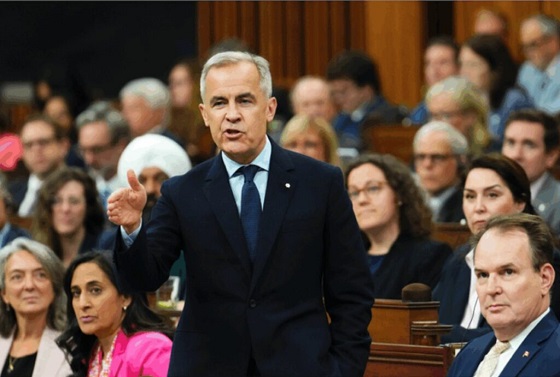
The Cabinet of Prime Minister Mark Carney said in a note that a Canadian Crown bank mostly used by farmers is too “white” and not diverse enough in its lending to “traditionally underrepresented groups” such as LGBT minorities.

Farm Credit Canada Regina, in Saskatchewan, is used by thousands of farmers, yet federal cabinet overseers claim its loan portfolio needs greater diversity.

The finance department note, which aims to make amendments to the Farm Credit Canada Act, claims that agriculture is “predominantly older white men.”

Proposed changes to the Act mean the government will mandate “regular legislative reviews to ensure alignment with the needs of the agriculture and agri-food sector.”

“Farm operators are predominantly older white men and farm families tend to have higher average incomes compared to all Canadians,” the note reads.

“Traditionally underrepresented groups such as women, youth, Indigenous, LGBTQ, and Black and racialized entrepreneurs may particularly benefit from regular legislative reviews to better enable Farm Credit Canada to align its activities with their specific needs.”

The text includes no legal amendment, and the finance department did not say why it was brought forward or who asked for the changes.

Canadian census data shows that there are only 590,710 farmers and their families, a number that keeps going down. The average farmer is a 55-year-old male and predominantly Christian, either Catholic or from the United Church.

Data shows that 6.9 percent of farmers are immigrants, with about 3.7 percent being “from racialized groups.”

Historically, most farmers in Canada are multi-generational descendants of Christian/Catholic Europeans who came to Canada in the mid to late 1800s, mainly from the United Kingdom, Ireland, Ukraine, Russia, Italy, Poland, the Netherlands, Germany, and France.

Continue Reading

Trending

X