
Uncategorized
Take a weight off: ‘Grand K’ kilo being retired


VERSAILLES, France — In a historic vote, nations on Friday unanimously approved a ground-breaking overhaul to the international system of measurements that underpins global trade and other vital human

Scientists, for whom the update represents decades of work, clapped, cheered and even wept as the 50-plus nations gathered in Versailles, west of Paris, one by one said “yes” or “oui” to the change, hailed as a revolution for how humanity measures and quantifies its world.
The redefinition of the kilogram, the globally approved unit of mass, was the mostly hotly anticipated change. For more than a century, the kilogram has been defined as the mass of a cylinder of platinum-iridium alloy kept in a high-security vault in France. That artefact, nicknamed “Le Grand K,” has been the world’s sole true kilogram since 1889.
But now, with the vote, the kilogram and all of the other main measurement units will be defined using numerical values that fit handily onto a wallet card. Those numbers were read to the national delegates before they voted.
Scientists at the meeting were giddy with excitement: some even sported tattoos on their forearms that celebrated the science.
Nobel prize winner William Phillips called the update “the greatest revolution in measurement since the French revolution,” which ushered in the metric system of meters and kilograms.
Jon Pratt of the U.S. National Institute of Standards and Technology said the vote left him “a basket case” and “extremely emotional.”
“Those units, those constants chosen now, include everything we know, everything we have always known and provide that springboard for us to go pursue those things that we don’t know,” he said. “That was just leaving me in a puddle of tears.”
The Grand K and its six official copies, kept together in the same safe on the edge of Paris and collectively known as the “heir and the spares,” will be retired but not forgotten. Scientists want to keep studying them to see whether their masses decay over time.
The change will have no discernable impact for most people. Bathroom scales won’t suddenly get kinder and kilos and grams won’t change in supermarkets.
But the new formula-based definition of the kilogram will have multiple advantages over the precision-crafted metal lump that set the standard from the 19th century to the 21st, through periods of stunning human achievement and stunning follies, including two world wars.
Unlike a physical object, the new formula for the kilo, now also known as “the electric kilo,” cannot pick up particles of dust, decay with time or be dropped and damaged.
It is expected to be more accurate when measuring very, very small or very, very large masses and help usher in new innovations in science, industry, climate study and other fields.
With time, as the science behind the new definition becomes more accessible and affordable, it should also mean that countries won’t have to send their own kilograms back to France to be checked occasionally against Le Grand K, as they have done until now, to see whether their mass was still accurate.
John Leicester, The Associated Press

Uncategorized
Mortgaging Canada’s energy future — the hidden costs of the Carney-Smith pipeline deal


Much of the commentary on the Carney-Smith pipeline Memorandum of Understanding (MOU) has focused on the question of whether or not the proposed pipeline will ever get built.
That’s an important topic, and one that deserves to be examined — whether, as John Robson, of the indispensable Climate Discussion Nexus, predicted, “opposition from the government of British Columbia and aboriginal groups, and the skittishness of the oil industry about investing in a major project in Canada, will kill [the pipeline] dead.”
But I’m going to ask a different question: Would it even be worth building this pipeline on the terms Ottawa is forcing on Alberta? If you squint, the MOU might look like a victory on paper. Ottawa suspends the oil and gas emissions cap, proposes an exemption from the West Coast tanker ban, and lays the groundwork for the construction of one (though only one) million barrels per day pipeline to tidewater.
But in return, Alberta must agree to jack its industrial carbon tax up from $95 to $130 per tonne at a minimum, while committing to tens of billions in carbon capture, utilization, and storage (CCUS) spending, including the $16.5 billion Pathways Alliance megaproject.
Here’s the part none of the project’s boosters seem to want to mention: those concessions will make the production of Canadian hydrocarbon energy significantly more expensive.
As economist Jack Mintz has explained, the industrial carbon tax hike alone adds more than $5 USD per barrel of Canadian crude to marginal production costs — the costs that matter when companies decide whether to invest in new production. Layer on the CCUS requirements and you get another $1.20–$3 per barrel for mining projects and $3.60–$4.80 for steam-assisted operations.
While roughly 62% of the capital cost of carbon capture is to be covered by taxpayers — another problem with the agreement, I might add — the remainder is covered by the industry, and thus, eventually, consumers.
Total damage: somewhere between $6.40 and $10 US per barrel. Perhaps more.
“Ultimately,” the Fraser Institute explains, “this will widen the competitiveness gap between Alberta and many other jurisdictions, such as the United States,” that don’t hamstring their energy producers in this way. Producers in Texas and Oklahoma, not to mention Saudi Arabia, Venezuela, or Russia, aren’t paying a dime in equivalent carbon taxes or mandatory CCUS bills. They’re not so masochistic.
American refiners won’t pay a “low-carbon premium” for Canadian crude. They’ll just buy cheaper oil or ramp up their own production.
In short, a shiny new pipe is worthless if the extra cost makes barrels of our oil so expensive that no one will want them.
And that doesn’t even touch on the problem for the domestic market, where the higher production cost will be passed onto Canadian consumers in the form of higher gas and diesel prices, home heating costs, and an elevated cost of everyday goods, like groceries.
Either way, Canadians lose.
So, concludes Mintz, “The big problem for a new oil pipeline isn’t getting BC or First Nation acceptance. Rather, it’s smothering the industry’s competitiveness by layering on carbon pricing and decarbonization costs that most competing countries don’t charge.” Meanwhile, lurking underneath this whole discussion is the MOU’s ultimate Achilles’ heel: net-zero.
The MOU proudly declares that “Canada and Alberta remain committed to achieving Net-Zero greenhouse gas emissions by 2050.” As Vaclav Smil documented in a recent study of Net-Zero, global fossil-fuel use has risen 55% since the 1997 Kyoto agreement, despite trillions spent on subsidies and regulations. Fossil fuels still supply 82% of the world’s energy.
With these numbers in mind, the idea that Canada can unilaterally decarbonize its largest export industry in 25 years is delusional.
This deal doesn’t secure Canada’s energy future. It mortgages it. We are trading market access for self-inflicted costs that will shrink production, scare off capital, and cut into the profitability of any potential pipeline. Affordable energy, good jobs, and national prosperity shouldn’t require surrendering to net-zero fantasy.If Ottawa were serious about making Canada an energy superpower, it would scrap the anti-resource laws outright, kill the carbon taxes, and let our world-class oil and gas compete on merit. Instead, we’ve been handed a backroom MOU which, for the cost of one pipeline — if that! — guarantees higher costs today and smothers the industry that is the backbone of the Canadian economy.
This MOU isn’t salvation. It’s a prescription for Canadian decline.

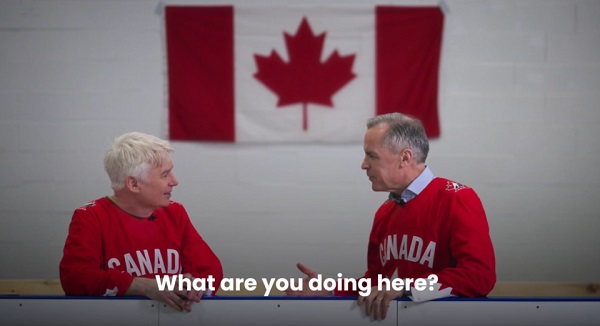

The cost of the bureaucracy increased by $6 billion last year, according to newly released numbers in Public Accounts disclosures. The Canadian Taxpayers Federation is calling on Prime Minister Mark Carney to immediately shrink the bureaucracy.
“The Public Accounts show the cost of the federal bureaucracy is out of control,” said Franco Terrazzano, CTF Federal Director. “Tinkering around the edges won’t cut it, Carney needs to take urgent action to shrink the bloated federal bureaucracy.”
The federal bureaucracy cost taxpayers $71.4 billion in 2024-25, according to the Public Accounts. The cost of the federal bureaucracy increased by $6 billion, or more than nine per cent, over the last year.
The federal bureaucracy cost taxpayers $39.6 billion in 2015-16, according to the Public Accounts. That means the cost of the federal bureaucracy increased 80 per cent over the last 10 years. The government added 99,000 extra bureaucrats between 2015-16 and 2024-25.
Half of Canadians say federal services have gotten worse since 2016, despite the massive increase in the federal bureaucracy, according to a Leger poll.
Not only has the size of the bureaucracy increased, the cost of consultants, contractors and outsourcing has increased as well. The government spent $23.1 billion on “professional and special services” last year, according to the Public Accounts. That’s an 11 per cent increase over the previous year. The government’s spending on professional and special services more than doubled since 2015-16.
“Taxpayers should not be paying way more for in-house government bureaucrats and way more for outside help,” Terrazzano said. “Mere promises to find minor savings in the federal bureaucracy won’t fix Canada’s finances.
“Taxpayers need Carney to take urgent action and significantly cut the number of bureaucrats now.”
Table: Cost of bureaucracy and professional and special services, Public Accounts
| Year | Bureaucracy | Professional and special services |
|
$71,369,677,000 |
$23,145,218,000 |
|
|
$65,326,643,000 |
$20,771,477,000 |
|
|
$56,467,851,000 |
$18,591,373,000 |
|
|
$60,676,243,000 |
$17,511,078,000 |
|
|
$52,984,272,000 |
$14,720,455,000 |
|
|
$46,349,166,000 |
$13,334,341,000 |
|
|
$46,131,628,000 |
$12,940,395,000 |
|
|
$45,262,821,000 |
$12,950,619,000 |
|
|
$38,909,594,000 |
$11,910,257,000 |
|
|
$39,616,656,000 |
$11,082,974,000 |


Brown University shooter dead of apparent self-inflicted gunshot wound

Alberta’s new diagnostic policy appears to meet standard for Canada Health Act compliance
Canada Hits the Brakes on Population

Why is Canada paying for dairy ‘losses’ during a boom?

Ford’s EV Fiasco Fallout Hits Hard

Bondi Beach Survivor Says Cops Prevented Her From Fighting Back Against Terrorists
Geopolitics no longer drives oil prices the way it used to
-
 Artificial Intelligence2 days ago
UK Police Pilot AI System to Track “Suspicious” Driver Journeys
-
 Business2 days ago
Judge Declares Mistrial in Landmark New York PRC Foreign-Agent Case
-
 Alberta21 hours ago
A Christmas wish list for health-care reform
-
 International2 days ago
World-leading biochemist debunks evolutionary theory
-
 Business15 hours ago
Some Of The Wackiest Things Featured In Rand Paul’s New Report Alleging $1,639,135,969,608 In Gov’t Waste
-
 Business2 days ago
The “Disruptor-in-Chief” places Canada in the crosshairs
-
 Energy15 hours ago
‘The electric story is over’
-
 International1 day ago
Georgia county admits illegally certifying 315k ballots in 2020 presidential election