
International
Kentucky federal judge issues injunction against Title IX rules in 6 states



From The Center Square
By Jon Styf

“This is a big victory for women and girls because the Title IX revisions being pushed by the Biden administration would have ended sex-based protections for biological women in locker rooms, bathrooms, sports and elsewhere”
A Kentucky federal judge issued a preliminary injunction against the Biden administration’s Title IX overhaul on Kentucky.
The injunction comes in a case filed by Kentucky, Tennessee, Indiana, Ohio, Virginia and West Virginia and comes less than a week after a federal judge in Louisiana issued a similar ruling in a case filed by Louisiana, Mississippi, Montana and Idaho.
The Kentucky preliminary injunction only impacts the six states that were part of the lawsuit, along with the Christian Educators Association International.
The new rules finalized by the Department of Education and which are supposed to go into effect Aug. 1 expand the definition of sex discrimination to include gender identity and pregnancy, but the agency didn’t issue any rules relating to transgender athletes. Among the changes include a prohibition on single-sex bathrooms and locker rooms and requirements that a school use pronouns based on a student’s preferred gender identity.
“At bottom, the Department would turn Title IX on its head by redefining ‘sex’ to include ‘gender identity,’” the Kentucky order said. “But ‘sex’ and ‘gender identity’ do not mean the same thing.”
“As a parent and as attorney general, I joined this effort to protect our women and girls from harm,” Kentucky Attorney General Russell Coleman said. “Today’s ruling recognized the 50-plus years of educational opportunities Title IX has created for students and athletes.”
U.S. District Judge Danny C. Reeves said that the new Title IX rules also have serious First Amendment implications because they compel speech from educators.
“This is a big victory for women and girls because the Title IX revisions being pushed by the Biden administration would have ended sex-based protections for biological women in locker rooms, bathrooms, sports and elsewhere, plain and simple,” West Virginia Attorney General Patrick Morrisey said. “This is a retreat from the progress women have made.”
Jon Styf
Staff Reporter


By James Corbett
corbettreport.com
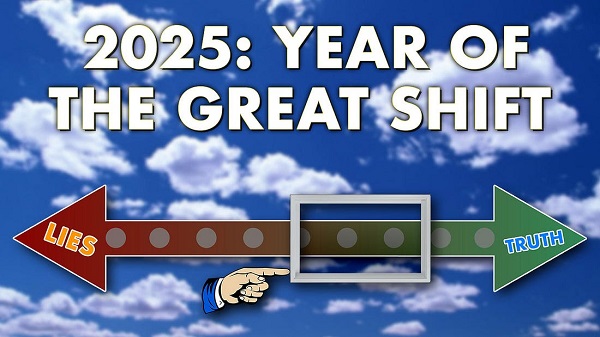
I kicked off 2025 with “The Pendulum Has Swung Again,” an editorial in which I noted how the lefty/progressive pieties of yore were being swept away by the righty/MAGA pieties of the new Trump and Change regime.
It didn’t take long for this narrative shift to be confirmed in grand style by The Great Resetter himself, Donald J. Trump:
I return to the presidency confident and optimistic that we are at the start of a thrilling new era of national success. A tide of change is sweeping the country, sunlight is pouring over the entire world, and America has the chance to seize this opportunity like never before.
Those are the bold words President Trump uttered in his inaugural address to the nation as he returned to the White House to begin his second administration this past January. And, like the bold words of so many politicians before him, they were a bunch of hot air.
After the Iran strikes betrayal, the Trump Gaza/”Board of Peace“ debacle, the Project Stargate fiasco, the Ukraine “peace plan“ disaster, the Venezuelan drug boat massacres, the “untalented Americans“ insult and, of course, the “Epstein hoax“ hoax, even the most die-hard MAGA hopium swillers have started to realize that Trump’s inaugural speech about a new “golden age” was the same old garbage that every President-to-be likes to spew on their first day in office.
But still, just because a politician is lying (i.e., his lips are moving) doesn’t mean that a dramatic “tide of change” hasn’t swept across the planet this year.
On the contrary. A remarkable shift has taken place in popular understanding and popular discourse in 2025. This shift has changed the conversation surrounding some of the core topics the independent media has been covering for years. The shift has nothing whatsoever to do with the politicians, academics, talking heads and other bloviators who presume to be “thought leaders” and “trend setters.” And, despite the best efforts of those who look for the storm cloud in every silver lining, this narrative shift is actually something to be celebrated.
So, hopefully you’ve heard my doom-and-gloom story of the year in New World Next Year 2026. Now, let’s end the year with a little holiday cheer by examining how 2025 became the year that Joe Sixpack and Jane Soccermom started tuning into conspiracy reality.
This Substack is reader-supported.
To receive new posts and support my work, consider becoming a free or paid subscriber.
MAHA
 |
Historians of the future may very well note that 2025 was the beginning of one of the most consequential revolutions in recent history: the health revolution.
Last year the usual establishment mouthpieces were running fake news articles trying to “debunk” the fact that the Big Food cartel has been filling their products with synthetic chemicals, food dyes and other toxic crap.
But this year the gangsters of the Big Food syndicate—from Kraft Heinz and General Mills to PepsiCo to Kellogg to Tyson Foods, along with their retail accomplice, Walmart—are falling over themselves to announce the removal of those very chemical poisons from their products.
Last year, COVID vaccines were still officially deemed safe as mother’s milk and the health establishment was pushing boosters on everyone with a pulse.
But this year the FDA now officially admits that an unknown number of children have been killed by those vaccines and a comprehensive review of the entire childhood vaccination schedule has been ordered for the first time ever.
Last year, the WHO passed their scamdemic treaty, and the erection of the biosecurity state seemed like a fait accomplis.
But this year, faced with a $2.5 billion budget deficit and a loss in its reputation worldwide, the WHO—and, indeed, the entire biosecurity project—is in shambles.
But as bad as things are for Big Pharma and Big Food, they’re even worse for Big Climate.
THE COLLAPSE OF THE CLIMATE HOAX
 |
Veterans of the climate hoax have been gobsmacked by the monumental implosion of the climate change narrative that took place this year.
Last year it was business as usual, with the Chicken Littles of the Malthusian, anti-human “climate emergency” narrative furthering their agenda with little perceptible opposition. They continued to argue for killing humans and killing pets and they continued building their $100 trillion carbon market, monopolizing the world’s resources under the guise of “saving Mother Earth.”
But this year the public, alert to the politicization of science exposed by the scamdemic, has finally begun to question and even push back on this pseudoscientific scam.
We saw early signs of this narrative tidal shift in the farmer protests of recent years and in the growing awareness that the greenwashed, virtue-signalling “Net Zero” platitudes of the politicians were in fact a smokescreen for a collective death pact signed by the Green Reaper himself.
But the “climate crisis” hoax didn’t just stall this year; it burnt to the ground.
It started with every one of the Big Six American banks withdrawing from the Net Zero Banking Alliance this past spring.
It continued with the stunning narrative about-face of climate agenda-pusher Bill Gates, who directly contradicted decades of his own fearmongering about weather gods to admit that climate change will not, in fact, lead to humanity’s demise.
And it culminated in the world-historic failure of COP30—the United Nations’ annual climate summit—which not only failed to produce any agreement of substance but which generated headlines like “The climate cult’s dissolution is inevitable.” Even the Los Angeles Times was compelled to declare that America is “finally waking up from its decades-long climate catastrophism stupor.”
If you had told the average conspiracy realist in 2024 that the climate cult would be on death watch by the end of 2025, he would surely not have believed you.
But what if you told that same 2024 truther that 2025 would also be the year that moved the Overton Window on 9/11 Truth?
9/11 TRUTH TURNS THE TIDE
 |
January 1, 2025, dawned like every New Year since the catastrophic and catalyzing false flag attack of September 11, 2001. For New Year’s revelers in the conspiracy reality community, the thought that anyone within 100 miles of the corridors of power would be caught openly questioning the conclusions of The 9/11 Commission seemed as remote as it ever had.
But then ex-Congressman Curt Weldon came out to voice his opposition to the official 9/11 fairy tale.
And ex-Congressman Dennis Kucinich embraced the fight for 9/11 justice.
And CIA whistleblower John Kiriakou appeared along 9/11 Truth researchers and activists at a three-day conference dedicated to dissecting the government’s 9/11 conspiracy theory.
And, of course, the Chair of the US Senate’s Permanent Subcommittee on Investigations, Ron Johnson, has joined the ranks of those daring to question the events of September 11.
As Corbett Reporteers know by now, though, more important by far than the action of any of these individuals in staking their public reputation on 9/11 Truth is the narrative change that has taken place around the idea of 9/11 Truth. Today, pointing out that the US government’s explanation of 9/11 is a tissue of lies is no longer an automatic social death sentence. And, emboldened by these examples of 9/11 Truth-telling, millions more people are aware that there are serious, unanswered questions about the events of that day than were aware even a year ago.
And, best of all, an added bonus of the turning of this turning of the tide on 9/11 is that people are now questioning other false flag events and the illegal wars of aggression that those events have enabled.
CALLING OUT GENOCIDE
 |
In years past, the default position of all establishment news sources has been to uncritically accept the Israeli narrative in any conflict between the Israeli government and the Palestinians. To the extent that Palestinian voices were even allowed onto such programs, it was to mock, denigrate and dismiss them as representatives of a savage, terror-supporting people.
That began to change during 2014’s Operation Protective Edge, an Israeli military incursion of the Gaza Strip that even the establishment media had to concede was characterized by war crimes and massacres. In subsequent years, reports on Israel’s ongoing war crimes, its apartheid against Palestinians and its rampant illegal behaviour gave rise to the BDS movement and a worldwide protest campaign.
But it wasn’t until 2025 that that long-simmering pot finally came to a boil. After the International Criminal Court issued an arrest warrant for Israeli Prime Minister Benjamin Netanyahu and other top Israeli officials late last year, more and more people came out this year to denounce Israel’s campaign of carnage in Gaza. Now it’s gotten to the point where the usual grifters, bandwagon-jumpers and literal sons of CIA agents that populate the ranks of the Mainstream Alternative Media have had to completely change their views on the genocide in Gaza.
And, as usual, politicians everywhere were compelled to jump in front of that parade and pretend to be leading it. Although the establishment press is loathe to admit it, a sea change has taken place on the international stage this year, with many long-time defenders of the US/Israel orthodoxy stepping out in defiance of the imperial consensus on occupied Palestine. Mexico led the way by recognizing the Palestinian state in February of this year, followed by Canada, Australia, the UK, France and several other countries later in the year.
It’s difficult to overstate how dramatic the change in public opinion on the situation in Palestine has been in 2025. Just as in the wake of 9/11, when Bush and the neocons managed to turn a tidal wave of public support and sympathy into worldwide hatred by using the event as an excuse to wage an illegal and immoral War of Terror, so, too, has Netanyahu and his band of Likudniks managed to turn near-worldwide sympathy and support over the (similarly suspicious) events of 10/7 into a wave of condemnation for a blatantly genocidal assault on Gaza. (Israel’s 9/11, indeed.)
It seems 2025 was the year that the magical spell the Zionists have cast over the world for generations—the one that deems all criticism of Israel to be “anti-Semitic“—was finally broken.
But after reading all this, we’re still left with the most important question: what does this all mean for the year ahead?
WHAT WILL 2026 BRING?
I could go on and on about the profound narrative shifts that have taken place this past year.
In fact, I haven’t even mentioned the spectacular downfall of Klaus Schwab and the utter abandonment of the “Great Reset” agenda. Who even pays attention to the WEF and their minions at this point?
And I haven’t talked about the public furor over the ongoing Epstein cover up and the confirmation that all sides of the phoney left/right political charade have a vested interest in keeping the public’s attention away from the topic of political pedophilia.
But I know what some of you are thinking: “James, how can you possibly be celebrating these narrative shifts? There are still problems in the world!”
Yes, thank you in advance to all those who will point out that:
- just because the Big Food cartel are removing food dyes from their products doesn’t make their products healthy; and
- just because the US government are going to review the childhood vaccination schedule doesn’t mean that they will end vaccination; and
- just because Gates has admitted that rising temperatures are not an existential threat doesn’t mean he will start promoting a pro-human agenda; and
- just because some politicians are promoting (partial) 9/11 Truth doesn’t mean any 9/11 perp is about to be frog-marched in an orange jumpsuit to the courthouse; and
- just because people are now emboldened to call Israel’s aggression against the Palestinians out for the genocide that it is doesn’t mean the genocide is about to stop; and
- just because Klaus Schwab is out doesn’t mean globalism is finished; etc.
I am well aware of all that, obviously.
But if that is your objection to the celebration of the narrative shift, then you haven’t understood the narrative shift.
The narrative shift isn’t about what politicians or academics or establishment puppets are saying or doing. It’s about what you and your neighbours and those around you are saying or doing.
Pleasse understand what it is I’m saying here.
Of course, not everyone is suddenly a super-awake Level 99 Jedi Truth Warrior who knows that the flat earth is being controlled by 12-dimensional lizard people from the planet Archon.
But more people than ever are ready and willing and able to hear about the toxins in the food and the poisons in the vaccines and concede the truth about the climate hoax and ask questions about 9/11 and call the genocide in Gaza a genocide in Gaza. This is a good thing.
The only thing the would-be rulers of humanity really fear is the idea that we—the great, teeming, unwashed masses—might one day wake up to the fact that humanity is being enslaved by a handful of people.
That we might discover that their control over us is primarily narrative control.
That we might decide to reclaim our power and write our own narrative.
And, to the extent that that is what has begun happening this year—even if it’s only the thinnest edge of that giant wedge—we are in fact winning.
But even if you don’t even see the faintest spark of hope in any of this yet, there is still one thing to keep in mind: the narrative shift I speak of is what we make it.
We are not helpless spectators who are watching this shift happening with no part to play in it. Rather, we are making things happen (or not) by participating in conversation with those around us. We are informing, educating and mentoring those who are just now waking up to reality . . . or we’re standing on the sidelines critiquing the efforts of those who are trying to do so.
What happens in 2026 is not a foregone conclusion. It will be the end result of the efforts we make today (or don’t make today) to encourage this narrative shift.
I know what side I’m on, and what I’m going to continue to do. And, with your support, I’m going to continue doing it.
Let’s make 2026 the year we put the first (if not the final) nail in the bastards’ coffin.
Merry Christmas, everyone!
Like this type of essay? Then you’ll love The Corbett Report Subscriber newsletter, which contains my weekly editorial as well as recommended reading, viewing and listening.
If you’re a Corbett Report member, you can sign in to corbettreport.com and read the newsletter today.
Not a member yet? Sign up today to access the newsletter and support this work.

From the Daily Caller News Foundation
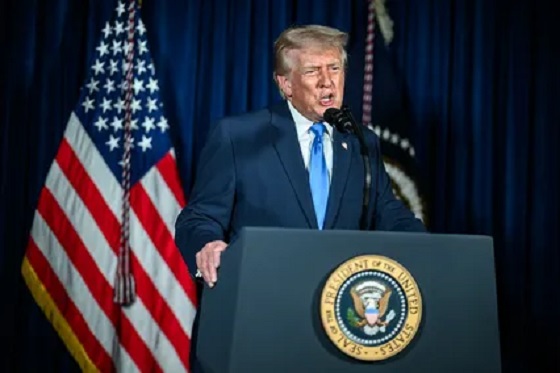
The U.S. intercepted and seized a vessel in international waters near Venezuela, marking the second such operation in recent weeks, multiple outlets reported Saturday.
The U.S. Coast Guard led the operation with assistance from other branches of the military, U.S. officials told CNN.
The interdiction follows on the heels of the Dec. 10 seizure of a sanctioned tanker off the Venezuelan coast. It also comes just days after President Donald Trump announced a sweeping blockade on all sanctioned oil tankers arriving to or leaving the South American nation, the ruling regime of which he designated a foreign terrorist organization.
Dear Readers:
As a nonprofit, we are dependent on the generosity of our readers.
Please consider making a small donation of any amount here.
Thank you!
“The illegitimate Maduro Regime is using Oil from these stolen Oil Fields to finance themselves, Drug Terrorism, Human Trafficking, Murder, and Kidnapping,” Trump posted Tuesday on Truth Social. “I am ordering A TOTAL AND COMPLETE BLOCKADE OF ALL SANCTIONED OIL TANKERS going into, and out of, Venezuela.”
When asked following the first seizure what the U.S. would do with the confiscated oil, Trump said, “Well, we keep it, I guess.”
The operations come amid months of escalating U.S. pressure on Venezuela.
American armed forces have steadily increased their presence and operations in the southern Caribbean off Venezuela’s coast, including numerous strikes on drug smuggling vessels. The buildup has fueled speculation about a potential full-scale confrontation with Maduro or even a material push for regime change.
Trump reportedly offered Maduro a deal in late November to vacate power in exchange for safe passage for him and his family. The U.S. also placed a $50 million bounty on Maduro in August, the largest sum ever offered for a sitting head of state.
In announcing the blockade Tuesday, Trump warned the “illegitimate Maduro Regime” that the “Armada” surrounding the country “will only get bigger, and the shock to them will be like nothing they have ever seen before.” He also demanded that Maduro “return to the United States of America all of the oil, land, and other assets that they previously stole from us.”
Despite the growing pressure, Maduro dispatched two non-sanctioned vessels Thursday carrying oil to China, Reuters reported.
The Coast Guard referred questions on the operation to the White House, which did not immediately respond to the Daily Caller News Foundation’s request for comment.


Chinese Billionaire Tried To Build US-Born Baby Empire As Overseas Elites Turn To American Surrogates
Paris Climate Deal Now Decade-Old Disaster
Major tax changes in 2026: Report
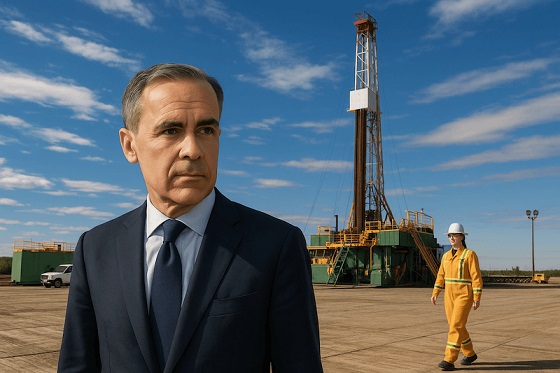
Canada’s sudden rediscovery of energy ambition has been greeted with a familiar charge: hypocrisy
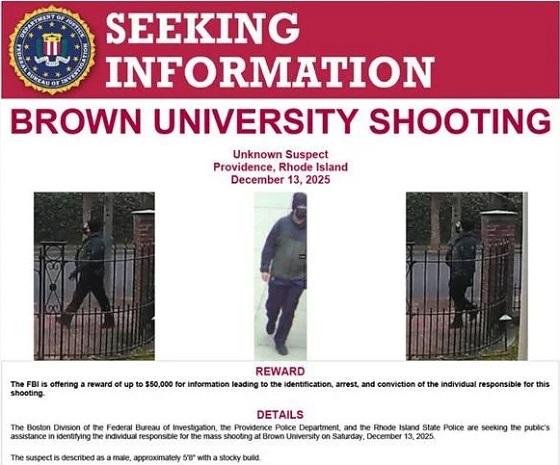
Brown University shooter dead of apparent self-inflicted gunshot wound

Alberta’s new diagnostic policy appears to meet standard for Canada Health Act compliance
Canada Hits the Brakes on Population
-
 Business2 days ago
Geopolitics no longer drives oil prices the way it used to
-
 Business2 days ago
Deadlocked Jury Zeroes In on Alleged US$40 Million PPE Fraud in Linda Sun PRC Influence Case
-
 Business2 days ago
Argentina’s Milei delivers results free-market critics said wouldn’t work
-
 International1 day ago
Ottawa is still dodging the China interference threat
-
 Business1 day ago
Taxing food is like slapping a surcharge on hunger. It needs to end
-
 COVID-191 day ago
Judge denies Canadian gov’t request to take away Freedom Convoy leader’s truck
-
 espionage1 day ago
Carney Floor Crossing Raises Counterintelligence Questions aimed at China, Former Senior Mountie Argues
-
 Energy1 day ago
75 per cent of Canadians support the construction of new pipelines to the East Coast and British Columbia