
Uncategorized
Kavanaugh’s accuser says she would testify under right terms


WASHINGTON — Christine Blasey Ford may testify against Supreme Court nominee Brett Kavanaugh after all, her attorney said, breathing new life into the prospect of a dramatic Senate showdown next week over Ford’s accusation that he assaulted her when they were in high school.

The preference would be for Ford to testify next Thursday, and she doesn’t want Kavanaugh in the same room, her attorney told Judiciary Committee staff in a 30-minute call that also touched on security concerns and others issues, according to a Senate aide who wasn’t authorized to discuss the matter and spoke on the condition of anonymity.
Ford is willing to tell her story to the Judiciary Committee, whose senators will vote on Kavanaugh’s confirmation — but only if agreement can be reached on “terms that are fair and which ensure her safety,” the attorney said in an email earlier Thursday. In the call, she said Ford needs time to secure her family, prepare her testimony and travel to Washington. No decisions were reached, the aide said.
The discussion revived the possibility that the panel would hold an electrifying campaign season hearing at which both Ford and President Donald Trump’s Supreme Court nominee could give their versions of what did or didn’t happen at a party in the 1980s. Kavanaugh, now a judge on the powerful U.S. Court of Appeals for the District of Columbia Circuit, has repeatedly denied her allegation.
The accusation has jarred the 53-year-old conservative jurist’s prospects for winning confirmation, which until Ford’s emergence last week had seemed all but certain. It has also bloomed into a broader clash over whether women alleging abuse are taken seriously by men and how both political parties address such claims with the advent of the #MeToo movement — a theme that could echo in this November’s elections for control of Congress.
Judiciary Chairman Chuck Grassley, R-Iowa, has scheduled a hearing for Monday morning, and he and Senate Majority Leader Mitch McConnell, R-Ky., have indicated it would be Ford’s only chance to make her case. Republicans are anxious to move ahead to a vote by the committee, where they hold an 11-10 majority, and then by the full Senate, which they control, 51-49.
Taylor Foy, spokesman for Republicans on the panel, said after the call that Grassley “will consult with his colleagues on the committee. He remains committed to providing a fair forum for both Dr. Ford and Judge Kavanaugh.”
Attorney Debra Katz said anew that Ford, 51, a psychology professor in California, has received death threats and for safety reasons has relocated her family.
“She wishes to testify, provided that we can agree on terms that are fair and which ensure her safety,” Katz wrote in the email, which was obtained by The Associated Press after first being reported by The New York Times.
In the call later Thursday, Katz asked the committee to subpoena Mark Judge, whom Ford has named as the other teen in the room at the time. Judge has told the committee he does not recall the incident and does not want to speak publicly.
Should Ford testify, especially in public, it would pit the words of two distinguished professionals against each other as television close-ups capture every emotion. Assessing them would be not just the committee’s 21 senators —only four of whom are women, all Democrats — but also millions of viewing voters.
Underscoring the sensitivity of all-male GOP senators grilling a woman who’s alleged abuse, Republicans are considering reaching out to female attorneys who might question Ford, according to a person familiar with the situation but who wasn’t authorized to discuss it publicly and spoke on condition of anonymity.
If Ford opts not to participate, Republicans could well dispense with the hearing to avoid giving Democrats a forum for peppering Kavanaugh with embarrassing questions. They would argue that they’d offered Ford several options for describing her accusation, but that she’d snubbed them.
Kavanaugh, who’s been eager to testify, said he was ready to appear Monday.
“I will be there,” he wrote Grassley in a letter. “I continue to want a hearing as soon as possible, so that I can clear my name.” Kavanaugh was spotted at the White House on Thursday.
Trump, who has been careful in recent days not to criticize Ford as he defends his nominee, told Fox News host Sean Hannity Thursday that he feels the nomination has been delayed long enough.
“I think it’s a very sad situation,” he said, asking, ‘Why didn’t somebody call the FBI 36 years ago?… What’s going on?”
He said Kavanaugh’s accuser should “have her say and let’s see how it all works out, but I don’t think you can delay it any longer. They’ve delayed it a week already.”
At a Las Vegas rally not long after, Trump praised Kavanaugh as “one of the finest human beings you will ever have the privilege of knowing or meeting” and called his reputation “impeccable.”
Ford has contended that at a house party in Washington’s Maryland suburbs, a drunken Kavanaugh tried undressing her and stifling her cries on a bed before she fled.
Grassley has said that in the interest of making Ford comfortable, he’d be willing to let Ford testify in public or private. He even offered to send committee aides to her California home to take testimony.
As the week has proceeded, Republicans have seemed to regain momentum toward approving Kavanaugh though his prospects have remained uncertain.
Even moderate Sen. Susan Collins, R-Maine, said it would be “unfair” to Kavanaugh if Ford decides to not appear, and others were urging leaders to proceed quickly to a vote. Still, the bare 51-49 Republican majority means they can lose just one vote and still approve him if all Democrats vote no.
Democrats have tried using the issue to demonstrate that Republicans treat women unfairly, their eyes on upcoming elections in which suburban, anti-Trump female voters could be pivotal in many races. Sen. Kirsten Gillibrand, D-N.Y., a possible 2020 presidential candidate, said Republicans were “bullying” Ford by giving her a Monday deadline to testify.
Ford went public with her accusation over the weekend in a Washington Post interview and said Monday through her lawyer that she was ready to testify. But Tuesday, she began insisting on an FBI investigation of her allegations and said other witnesses should also participate in a hearing. Those conditions had cast strong doubts on her willingness to appear, and it became unclear whether Republicans would even hold the hearing.
The email said Ford’s “strong preference” remains that the committee allow a thorough investigation of her claim before she appears. But that wording fell short of a nonnegotiable demand.
Republicans have resisted all Democratic efforts to slow and perhaps block Kavanaugh’s confirmation. A substantial delay could push confirmation past the November elections, when Democrats have a shot at winning Senate control, plus allow more time for unforeseen problems to crop up.
___
Associated Press writers Padmananda Rama, Catherine Lucey, Jill Colvin and Mary Clare Jalonick contributed to this report.
Alan Fram And Lisa Mascaro, The Associated Press

Uncategorized
Mortgaging Canada’s energy future — the hidden costs of the Carney-Smith pipeline deal


Much of the commentary on the Carney-Smith pipeline Memorandum of Understanding (MOU) has focused on the question of whether or not the proposed pipeline will ever get built.
That’s an important topic, and one that deserves to be examined — whether, as John Robson, of the indispensable Climate Discussion Nexus, predicted, “opposition from the government of British Columbia and aboriginal groups, and the skittishness of the oil industry about investing in a major project in Canada, will kill [the pipeline] dead.”
But I’m going to ask a different question: Would it even be worth building this pipeline on the terms Ottawa is forcing on Alberta? If you squint, the MOU might look like a victory on paper. Ottawa suspends the oil and gas emissions cap, proposes an exemption from the West Coast tanker ban, and lays the groundwork for the construction of one (though only one) million barrels per day pipeline to tidewater.
But in return, Alberta must agree to jack its industrial carbon tax up from $95 to $130 per tonne at a minimum, while committing to tens of billions in carbon capture, utilization, and storage (CCUS) spending, including the $16.5 billion Pathways Alliance megaproject.
Here’s the part none of the project’s boosters seem to want to mention: those concessions will make the production of Canadian hydrocarbon energy significantly more expensive.
As economist Jack Mintz has explained, the industrial carbon tax hike alone adds more than $5 USD per barrel of Canadian crude to marginal production costs — the costs that matter when companies decide whether to invest in new production. Layer on the CCUS requirements and you get another $1.20–$3 per barrel for mining projects and $3.60–$4.80 for steam-assisted operations.
While roughly 62% of the capital cost of carbon capture is to be covered by taxpayers — another problem with the agreement, I might add — the remainder is covered by the industry, and thus, eventually, consumers.
Total damage: somewhere between $6.40 and $10 US per barrel. Perhaps more.
“Ultimately,” the Fraser Institute explains, “this will widen the competitiveness gap between Alberta and many other jurisdictions, such as the United States,” that don’t hamstring their energy producers in this way. Producers in Texas and Oklahoma, not to mention Saudi Arabia, Venezuela, or Russia, aren’t paying a dime in equivalent carbon taxes or mandatory CCUS bills. They’re not so masochistic.
American refiners won’t pay a “low-carbon premium” for Canadian crude. They’ll just buy cheaper oil or ramp up their own production.
In short, a shiny new pipe is worthless if the extra cost makes barrels of our oil so expensive that no one will want them.
And that doesn’t even touch on the problem for the domestic market, where the higher production cost will be passed onto Canadian consumers in the form of higher gas and diesel prices, home heating costs, and an elevated cost of everyday goods, like groceries.
Either way, Canadians lose.
So, concludes Mintz, “The big problem for a new oil pipeline isn’t getting BC or First Nation acceptance. Rather, it’s smothering the industry’s competitiveness by layering on carbon pricing and decarbonization costs that most competing countries don’t charge.” Meanwhile, lurking underneath this whole discussion is the MOU’s ultimate Achilles’ heel: net-zero.
The MOU proudly declares that “Canada and Alberta remain committed to achieving Net-Zero greenhouse gas emissions by 2050.” As Vaclav Smil documented in a recent study of Net-Zero, global fossil-fuel use has risen 55% since the 1997 Kyoto agreement, despite trillions spent on subsidies and regulations. Fossil fuels still supply 82% of the world’s energy.
With these numbers in mind, the idea that Canada can unilaterally decarbonize its largest export industry in 25 years is delusional.
This deal doesn’t secure Canada’s energy future. It mortgages it. We are trading market access for self-inflicted costs that will shrink production, scare off capital, and cut into the profitability of any potential pipeline. Affordable energy, good jobs, and national prosperity shouldn’t require surrendering to net-zero fantasy.If Ottawa were serious about making Canada an energy superpower, it would scrap the anti-resource laws outright, kill the carbon taxes, and let our world-class oil and gas compete on merit. Instead, we’ve been handed a backroom MOU which, for the cost of one pipeline — if that! — guarantees higher costs today and smothers the industry that is the backbone of the Canadian economy.
This MOU isn’t salvation. It’s a prescription for Canadian decline.

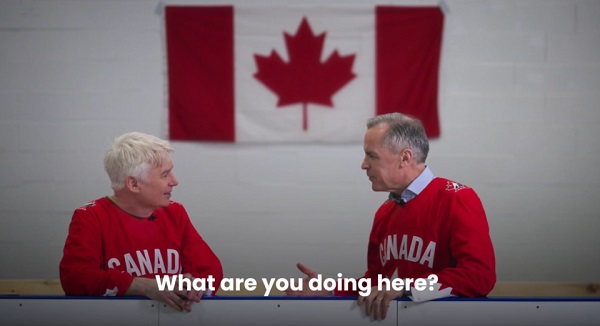

The cost of the bureaucracy increased by $6 billion last year, according to newly released numbers in Public Accounts disclosures. The Canadian Taxpayers Federation is calling on Prime Minister Mark Carney to immediately shrink the bureaucracy.
“The Public Accounts show the cost of the federal bureaucracy is out of control,” said Franco Terrazzano, CTF Federal Director. “Tinkering around the edges won’t cut it, Carney needs to take urgent action to shrink the bloated federal bureaucracy.”
The federal bureaucracy cost taxpayers $71.4 billion in 2024-25, according to the Public Accounts. The cost of the federal bureaucracy increased by $6 billion, or more than nine per cent, over the last year.
The federal bureaucracy cost taxpayers $39.6 billion in 2015-16, according to the Public Accounts. That means the cost of the federal bureaucracy increased 80 per cent over the last 10 years. The government added 99,000 extra bureaucrats between 2015-16 and 2024-25.
Half of Canadians say federal services have gotten worse since 2016, despite the massive increase in the federal bureaucracy, according to a Leger poll.
Not only has the size of the bureaucracy increased, the cost of consultants, contractors and outsourcing has increased as well. The government spent $23.1 billion on “professional and special services” last year, according to the Public Accounts. That’s an 11 per cent increase over the previous year. The government’s spending on professional and special services more than doubled since 2015-16.
“Taxpayers should not be paying way more for in-house government bureaucrats and way more for outside help,” Terrazzano said. “Mere promises to find minor savings in the federal bureaucracy won’t fix Canada’s finances.
“Taxpayers need Carney to take urgent action and significantly cut the number of bureaucrats now.”
Table: Cost of bureaucracy and professional and special services, Public Accounts
| Year | Bureaucracy | Professional and special services |
|
$71,369,677,000 |
$23,145,218,000 |
|
|
$65,326,643,000 |
$20,771,477,000 |
|
|
$56,467,851,000 |
$18,591,373,000 |
|
|
$60,676,243,000 |
$17,511,078,000 |
|
|
$52,984,272,000 |
$14,720,455,000 |
|
|
$46,349,166,000 |
$13,334,341,000 |
|
|
$46,131,628,000 |
$12,940,395,000 |
|
|
$45,262,821,000 |
$12,950,619,000 |
|
|
$38,909,594,000 |
$11,910,257,000 |
|
|
$39,616,656,000 |
$11,082,974,000 |

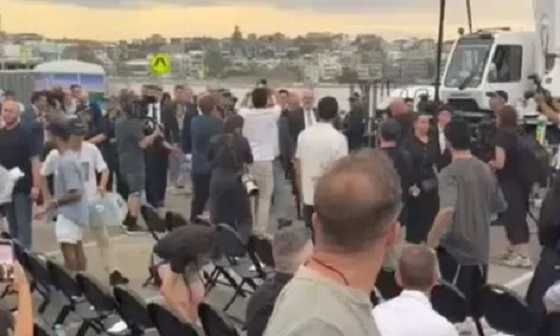
Australian PM booed at Bondi vigil as crowd screams “shame!”
Mortgaging Canada’s energy future — the hidden costs of the Carney-Smith pipeline deal
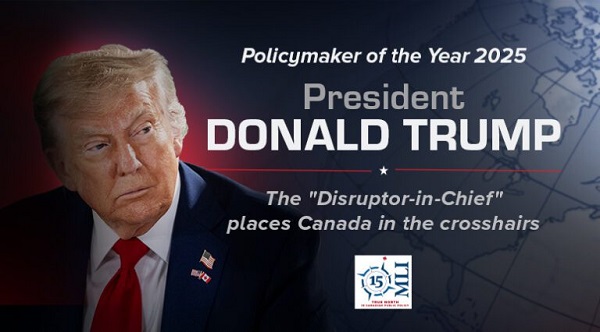
The “Disruptor-in-Chief” places Canada in the crosshairs
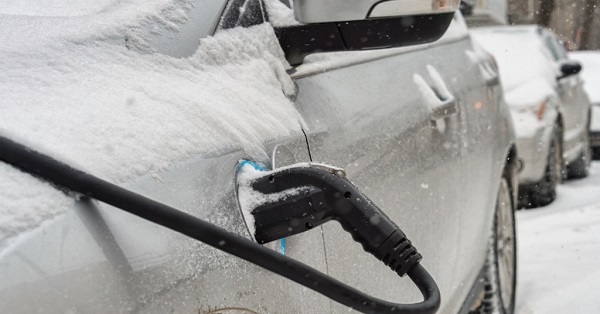
Canada’s EV gamble is starting to backfire

UK Police Pilot AI System to Track “Suspicious” Driver Journeys
End Supply Management—For the Sake of Canadian Consumers

Judge Declares Mistrial in Landmark New York PRC Foreign-Agent Case
-
 Business1 day ago
“Magnitude cannot be overstated”: Minnesota aid scam may reach $9 billion
-
 Haultain Research9 hours ago
Sweden Fixed What Canada Won’t Even Name
-
 Business1 day ago
Largest fraud in US history? Independent Journalist visits numerous daycare centres with no children, revealing massive scam
-
 Censorship Industrial Complex1 day ago
US Under Secretary of State Slams UK and EU Over Online Speech Regulation, Announces Release of Files on Past Censorship Efforts
-
 Daily Caller2 days ago
Is Ukraine Peace Deal Doomed Before Zelenskyy And Trump Even Meet At Mar-A-Lago?
-
 Business9 hours ago
What Do Loyalty Rewards Programs Cost Us?