
Uncategorized
Indonesia limits foreign role in Sulawesi disaster relief


PALU, Indonesia — Indonesia’s disaster agency said Wednesday that it only needs tents, water treatment units, generators and transport from other countries as it responds to the Sulawesi earthquake and tsunami that killed more than 2,000 people.

The agency’s spokesman, Sutopo Purwo Nugroho, said the death toll from the double disaster on Sept. 28 has risen to 2,045, with most of the fatalities in the coastal city of Palu. More than 80,000 people are living in temporary shelters or otherwise displaced, he said.
Possibly 5,000 people are buried in obliterated parts of the city and its surroundings where the force of the quake liquefied the soil and sucked houses into the earth. Kilometers (miles) of coastline were trashed by the tsunami and Nugroho said its waves were up to 11
Nugroho reiterated at a news conference in Jakarta, Indonesia’s capital, that the official search for bodies will end Thursday with mass prayers in hard-hit
Memorials will be constructed in hard-hit
“People are traumatized. They don’t want to go back” to those places, Nugroho said. “They asked to be relocated to another place and a house made for them.”
After a rare appeal for international assistance, Indonesia is now trying to limit foreign involvement in the disaster relief effort. Nugroho said there’s no need for international aid other than the four priorities identified by Indonesia.
The disaster agency has circulated guidelines that say foreign aid workers can be in the field only with Indonesian partners. Groups that sent foreign personnel to the disaster zone are “advised to retrieve their personnel immediately,” according to those guidelines.
International aid groups with Indonesian sister organizations say foreign personnel they want to send are being vetted by the government in a process that takes several days or longer.
In a belated response to the influx of international journalists, Nugroho said foreign reporters need to apply for a journalist visa to report on the disaster. It’s likely the majority have already left.
___
Jatmiko reported from Jakarta, Indonesia.
Dita Alangkara And Andi Jatmiko, The Associated Press


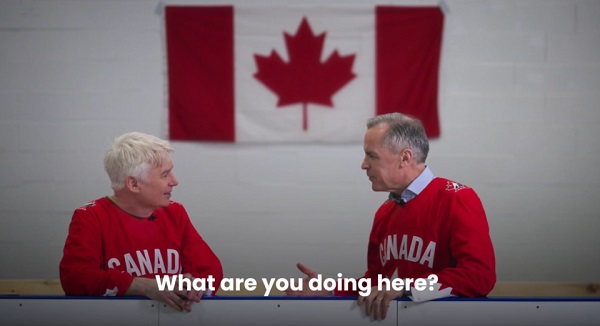

The cost of the bureaucracy increased by $6 billion last year, according to newly released numbers in Public Accounts disclosures. The Canadian Taxpayers Federation is calling on Prime Minister Mark Carney to immediately shrink the bureaucracy.
“The Public Accounts show the cost of the federal bureaucracy is out of control,” said Franco Terrazzano, CTF Federal Director. “Tinkering around the edges won’t cut it, Carney needs to take urgent action to shrink the bloated federal bureaucracy.”
The federal bureaucracy cost taxpayers $71.4 billion in 2024-25, according to the Public Accounts. The cost of the federal bureaucracy increased by $6 billion, or more than nine per cent, over the last year.
The federal bureaucracy cost taxpayers $39.6 billion in 2015-16, according to the Public Accounts. That means the cost of the federal bureaucracy increased 80 per cent over the last 10 years. The government added 99,000 extra bureaucrats between 2015-16 and 2024-25.
Half of Canadians say federal services have gotten worse since 2016, despite the massive increase in the federal bureaucracy, according to a Leger poll.
Not only has the size of the bureaucracy increased, the cost of consultants, contractors and outsourcing has increased as well. The government spent $23.1 billion on “professional and special services” last year, according to the Public Accounts. That’s an 11 per cent increase over the previous year. The government’s spending on professional and special services more than doubled since 2015-16.
“Taxpayers should not be paying way more for in-house government bureaucrats and way more for outside help,” Terrazzano said. “Mere promises to find minor savings in the federal bureaucracy won’t fix Canada’s finances.
“Taxpayers need Carney to take urgent action and significantly cut the number of bureaucrats now.”
Table: Cost of bureaucracy and professional and special services, Public Accounts
| Year | Bureaucracy | Professional and special services |
|
$71,369,677,000 |
$23,145,218,000 |
|
|
$65,326,643,000 |
$20,771,477,000 |
|
|
$56,467,851,000 |
$18,591,373,000 |
|
|
$60,676,243,000 |
$17,511,078,000 |
|
|
$52,984,272,000 |
$14,720,455,000 |
|
|
$46,349,166,000 |
$13,334,341,000 |
|
|
$46,131,628,000 |
$12,940,395,000 |
|
|
$45,262,821,000 |
$12,950,619,000 |
|
|
$38,909,594,000 |
$11,910,257,000 |
|
|
$39,616,656,000 |
$11,082,974,000 |

From the Daily Caller News Foundation
By Jason Hopkins
The Trump administration is creating a first-of-its-kind task force aimed at ushering in a new “Golden Age” of beautiful infrastructure across the U.S.
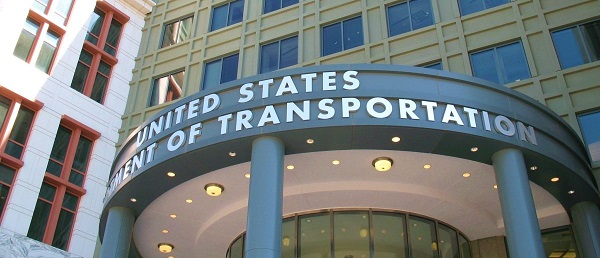
The Department of Transportation (DOT) will announce the establishment of the Beautifying Transportation Infrastructure Council (BTIC) on Thursday, the Daily Caller News Foundation exclusively learned. The BTIC seeks to advise Transportation Secretary Sean Duffy on design and policy ideas for key infrastructure projects, including highways, bridges and transit hubs.
“What happened to our country’s proud tradition of building great, big, beautiful things?” Duffy said in a statement shared with the DCNF. “It’s time the design for America’s latest infrastructure projects reflects our nation’s strength, pride, and promise.”
“We’re engaging the best and brightest minds in architectural design and engineering to make beautiful structures that move you and bring about a new Golden Age of Transportation,” Duffy continued.
Mini scoop – here is the DOT’s rollout of its Beautifying Transportation Infrastructure Council, which will be tasked with making our buildings beautiful again. pic.twitter.com/
9iV2xSxdJM — Jason Hopkins (@jasonhopkinsdc) October 23, 2025
The DOT is encouraging nominations of the country’s best architects, urban planners, artists and others to serve on the council, according to the department. While ensuring that efficiency and safety remain a top priority, the BTIC will provide guidance on projects that “enhance” public areas and develop aesthetic performance metrics.
The new council aligns with an executive order signed by President Donald Trump in August 2025 regarding infrastructure. The “Making Federal Architecture Beautiful Again” order calls for federal public buildings in the country to “respect regional architectural heritage” and aims to prevent federal construction projects from using modernist and brutalist architecture styles, instead returning to a classical style.
“The Founders, in line with great societies before them, attached great importance to Federal civic architecture,” Trump’s order stated. “They wanted America’s public buildings to inspire the American people and encourage civic virtue.”
“President George Washington and Secretary of State Thomas Jefferson consciously modeled the most important buildings in Washington, D.C., on the classical architecture of ancient Athens and Rome,” the order continued. “Because of their proven ability to meet these requirements, classical and traditional architecture are preferred modes of architectural design.”
The DOT invested millions in major infrastructure projects since Trump’s return to the White House. Duffy announced in August a $43 million transformation initiative of the New York Penn Station in New York City and in September unveiledmajor progress in the rehabilitation and modernization of Washington Union Station in Washington, D.C.
The BTIC will comprise up to 11 members who will serve two-year terms, with the chance to be reappointed, according to the DOT. The task force will meet biannually. The deadline for nominations will end Nov. 21.


Canada invests $34 million in Chinese drones now considered to be ‘high security risks’

Western Campuses Help Build China’s Digital Dragnet With U.S. Tax Funds, Study Warns

CDC Vaccine Panel Votes to End Universal Hep B Vaccine for Newborns
The Climate-Risk Industrial Complex and the Manufactured Insurance Crisis

Wayne Gretzky’s Terrible, Awful Week.. And Soccer/ Football.

Affordable housing out of reach everywhere in Canada
Surgery Denied. Death Approved.
-
 Alberta2 days ago
The Recall Trap: 21 Alberta MLA’s face recall petitions
-
 Daily Caller2 days ago
‘There Will Be Very Serious Retaliation’: Two American Servicemen, Interpreter Killed In Syrian Attack
-
 illegal immigration2 days ago
US Notes 2.5 million illegals out and counting
-
 International2 days ago
Tyler Robinson shows no remorse in first court appearance for Kirk assassination
-
 Business1 day ago
Inflation Reduction Act, Green New Deal Causing America’s Energy Crisis
-
 Crime21 hours ago
Terror in Australia: 12 killed after gunmen open fire on Hanukkah celebration
-
 Media21 hours ago
Reporters determined to drive their industry and its reputation into the abyss one Tweet at a time
-
 Automotive2 days ago
Politicians should be honest about environmental pros and cons of electric vehicles