
Haultain Research
Inclusion and Disorder: Unlearned Lessons from Palestinian Protests



Haultain’s Research is a reader-supported publication.
To receive new posts and support our work, please consider becoming a free or paid subscriber.
Try it out.
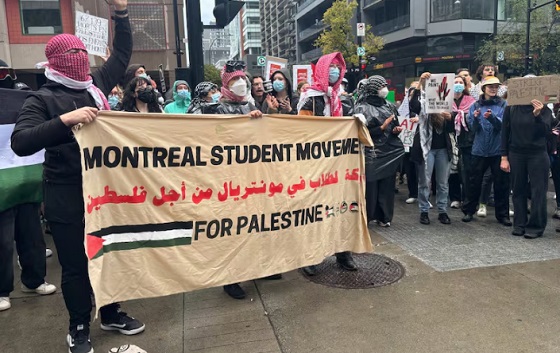
Tuesday (October 7 , 2025), two years after the Hamas massacre of Israeli civilians, mobs gathered across Canadian cities to honour their “martyrs.” At Concordia University in Montreal, administrators closed the downtown campus after two agitators, neither students nor staff, were arrested carrying incendiary devices. The university president wrote to the community expressing “sadness” for the disruption, affirming that Concordia “values inclusion, compassion, and the right to peaceful expression.” She explained that the closure was taken to “ensure the safety of all members of our community” amid the “heightened tension” surrounding the day. The tone was heavy with empathy and the vocabulary of inclusion, yet the act itself was exclusion by necessity. An institution that proudly celebrates tolerance and has repeatedly looked the other way when violence visited it, could no longer tolerate its own openness.
 |
This was no isolated disturbance. It exposed a country that has lost the ability to distinguish between rights and indulgences. Every person in Canada, citizen or not, enjoys freedom of expression under the Charter. But the right to speak is not the same as the right to intimidate free citizens or to steer the ship of state. Political influence, whether through organized protest or lobbying, is the privilege of citizenship. That distinction once defined the sovereignty of the Canadian electorate. Canadians blur it and obscure human decency at their peril.
Haultain Research is a reader-supported publication.
To receive new posts and support our work, consider becoming a free or paid subscriber.
When non-citizens, including refugees and temporary residents, take to the streets to influence policy or intimidate authority, they step beyond expression into the political arena. Such demonstrations are not exercises in speech but acts of pressure. When they honour the maniacal murdering militancy of a terrorist organization or directly menace Canadian citizens, they move from persuasion to coercion. To allow that is to confuse liberty with licence.
Defending the boundary between speech and influence is not xenophobia. It is democratic hygiene. The right to shape the national direction belongs to those who share in its civic burdens and shoulder the responsibility to maintain order. Citizenship is a contract of mutual responsibility, not a costume of convenience.
The larger question is whether a liberal democracy can endure if it loses the will to defend itself from those who despise it or openly call for its demise. Canada’s cult of inclusion has become a moral weakness. As I wrote in Inclusion as Exclusion, revolutionaries begin by invoking “the people” and end by deciding who among the people must be silenced. The illusion of harmony soon gives way to the machinery of coercion. Once inclusion loses its grounding in reason and character, it collapses into sentimental tyranny.
Canada’s political class long ago traded prudence for performance. It mistakes sympathy for justice and emotion for policy. Justin Trudeau’s politics of feeling rested on the belief that those he pitied are too delicate to survive disagreement (For the rest, there is the Emergencies Act). This insecurity explains his fascination with inclusion campaigns and his instinct to brand dissenters as extremists. It also explains why, when he told Donald Trump that a tariff might destroy Canada’s economy, Trump concluded that any country undone by a tariff was not a serious country, let alone a country worthy of partnering with to defend hemispheric security.
Carney’s response has been to hide behind Europeans. A country unwilling to stand for itself isn’t a real country.
The same weakness shapes our handling of protest movements. When radical Islamists celebrate blood-lusting massacre, Canada’s leaders speak of understanding. When women object to being erased by gender politics, they speak of diversity. When immigration overwhelms cities, they call it growth. Compassion has become the disguise of decay.
Sweden provides a mirror. For decades it was the symbol of multicultural virtue, convinced that tolerance alone could reconcile every difference. Then came crime, social division, and collapsing trust. Sweden finally admitted the obvious: generosity without limits destroys cohesion. The country began to rebuild.
Sweden tightened its asylum rules, limited access to certain welfare benefits, and moved to make citizenship a clearer boundary for political rights and privileges that residency alone does not confer. Foreign nationals may speak, worship, and assemble, but they may not direct the country’s political course. Sweden continues to protect the right to protest under constitutional guarantees, though demonstrations may be restricted if they amount to incitement, threats to public order, or agitation against protected groups. These measures are not cruelty but recovery. They remind Swedes that harmony depends on shared norms and that tolerance must have boundaries.
Canada refuses the lesson. It continues to pursue immigration at a scale that strains housing, infrastructure, and wages. The policy is an attempt at a moral display, not governance. Citizens who question it are called intolerant. The insult replaces argument and conceals failure.
In this climate inclusion no longer means participation. It means obedience. It demands surrender to ideology rather than respect for difference. At Concordia, administrators claimed to protect community by closing classrooms. In Ottawa, the government preaches equality while enforcing privilege by category. The result is exclusion parading as virtue.
The rule of law, a crowning achievement of Western civilization, rests on restraint. Rights are reciprocal, not infinite. When inclusion is detached from responsibility, that reciprocity dissolves. What begins as compassion ends as coercion. Sweden learned through hardship that multiculturalism without integration breeds division. Canada insists on not learning it the expensive way.
The remedy is simple, though not easy. We must restore the distinction between citizen and non-citizen, between expression and manipulation, between inclusion and indulgence. A country exists to defend the liberty of its people, not to exhibit the moral vanity of its ruling classes. That would require courage, a quality seldom visible in present leadership.
The defense of liberty is not an act of hostility. It is an act of self-respect. A confident country knows who belongs, what it stands for, and what it will not tolerate. Does Canada? Sweden, sobered by experience, has remembered this truth. Canada, lost in woke sentimental fog, must rediscover it or continue drifting toward the soft despotism of its own good intentions.
To help us bring you more quality research and commentary, please Subscribe to Haultain Research


Speech Crimes on Campus
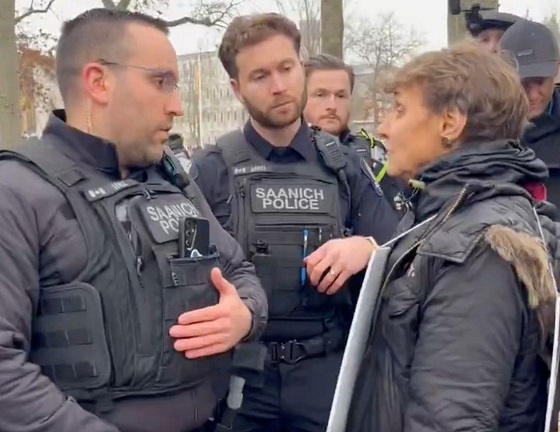
Frances Widdowson, a former colleague professor at Mount Royal University, was arrested this past week on the University of Victoria campus. Her offence? Walking, conversing, and asking questions on a university campus. She was not carrying a megaphone, making threats, organizing a protest, or waving foreign flags. She was planning quietly to discuss, with whoever wished it, a widespread claim that has curiously evaded forensic scrutiny in Canada for five years: that the remains of 215 Indigenous children lie beneath the grounds of the former Kamloops Residential School.
UVic Campus security did not treat her as a scholar. Nor even as a citizen. They treated her as a contaminating source.
The director of security, a woman more reminiscent of a diversity consultant than a peace officer, almost shaking, presented Widdowson with papers and told her to vacate “the property.” When Widdowson questioned the order, citing her Charter rights and the university’s public nature, she was told to leave. She refused, and she was arrested. No force, no defiance, only a refusal to concede that inquiry is trespass.
Widdowson is no provocateur in the modern sense. She is not a shock-jock in a cardigan. She is a once-tenured academic with a long record of challenging orthodoxies in Indigenous policy, identity politics, and campus culture.
In 2008, she co-authored Disrobing the Aboriginal Industry, a book that deconstructed the bureaucratic machinery that profits from preserving Indigenous dependency. The book was methodical, sourced, and daring enough to be labelled heretical in some quarters, but simultaneously boringly Marxist materialistic.
Her arguments have made people uncomfortable for a long time. When I assigned her book to my political science students in the Department of Policy Studies, where Frances also taught, I was summoned by the department head’s office. Someone in my class complained about the book, though I ignored what was said, and the technocratic colleague, as chair of the department, had prepared a host of arguments to chastise me for assigning the book.
Widdowson was good enough to be hired as a colleague of that department, but they were all afraid of her ideas, and perhaps her manner. I have often wondered if the folks in the Mount Royal hiring committee had bothered to read her book. Hey, they had a female Marxist applying for a teaching job. Knowing how they operate makes me think they made giant assumptions about Frances.
My bureaucratic colleague relented. I got the impression that the department head was putting on a show, going through motions he didn’t want to engage in, but which he had to perform for administrative purposes. He had to act on the complaint, though the complaint had no substance. He tried to tell me that the ideas in the book might offend some students, and then went on with the typical dribble about being caring, but agreed that protecting feelings was not the objective of an education, nor the job of a professor.
Haultain’s Substack is a reader-supported publication.
To receive new posts and support our work, please consider becoming a free or paid subscriber.
Try it out.
I went to my campus office after the conversation with the department head, typed up a memo detailing our discussion, and emailed it to him to ensure there was a record of my viewpoint. The email got no response. He never mentioned it again, and to this day, 15 or 16 years later, we still haven’t spoken about it.
Some academic arguments are meant to shake things up. That is the purpose of scholarship: to stir the sediment of consensus. To challenge conventional views. Marxist or no, scholars are supposed to push the envelope. Expand the boundaries of our understanding. But in today’s academic culture, discomfort is treated as injury and dissent as violence. So, Widdowson was treated as a threat merely by walking and speaking.
Was the university within its legal rights to remove her? Possibly. Universities can invoke property rights, ironically in Cowichan territory, and provincial legislation sometimes grants them a curious status: publicly funded yet selectively private. But the question is not merely legal. It is cultural and constitutional.
The University of Victoria is a publicly funded institution, governed under provincial authority and subsidized by taxpayers. Its grounds, though some claim they are on unceded Indigenous territory, are functionally administered by the Crown. The university is not a monastery. While it is not a temple to be kept free of doubt, it is not a temple to be torched either. It is a civic institution. An institution of higher learning. When it uses its resources to shield ideology and expel dissenters, it forfeits its academic character.
Consider the contrast. On this same campus, as on many others across the country, protests have called for the destruction of Israel and the extermination of Jews. Banners are waved, slogans chanted, and genocidal euphemisms like “from the river to the sea” are uttered without hesitation. These demonstrations, some of which praise Hamas or glorify martyrdom, proceed unimpeded. Security stands down. The administration issues boilerplate statements about inclusion and respect.
But when a female academic arrives to ask whether the number “215” refers to actual remains or mere radar anomalies, she is marched off by police. The imbalance is not accidental. It is a product of institutional capture.
Contemporary universities have adopted a new moral vocabulary. Terms like “safety,” “inclusion,” and “harm” are now treated as constitutional categories. But their terms are undefined, fluid, shaped by ideology rather than principle. “Safety” no longer refers to bodily security, but has become an emotional preference. “Inclusion” does not mean openness to different ideas and people, but a validation of specific identities. “Harm” is not an act, but a feeling.
Under this logic, Widdowson’s presence becomes a form of injury. Her questions are recast as wounds. And because feelings have been elevated to rights, her removal becomes a public good.
This ideology has structure. It is not random. It rests on a model of revolutionary politics in which dissent must not be part of the conversation. A differing opinion is an obstacle to be cleared. The new inclusivity has become a form of exclusion. It uses the language of welcome to police belief, and the rhetoric of tolerance to enforce conformity.
Charter rights were once the guardrails of public life. They are not supposed to vanish down the rabbit holes when one steps onto that university lawn. The right to free expression, to peaceful assembly, and to enter public space are not conditional on popularity. They are not subject to the feelings of a security director or the preferences of a DEI office.
Widdowson is testing this principle. She did not resist arrest, nor did she make a spectacle of herself. She acted as a citizen asserting a constitutional right. The courts may eventually rule on whether her rights were infringed. But the deeper issue is already visible.
If our public institutions can exile peaceful critics while accommodating radical political agitators who cheer for foreign terror movements, we are not in a neutral society. We are in an elite-managed consensus.
This consensus is enforced by policy. It does not need debate. The consensus managers already know what is true and treat challenges as threats. In this environment, universities are no longer places where young minds wrestle with the pangs of uncertainty. They are enforcing temples of doctrine. Their priests wear lanyards. Their rituals involve land acknowledgments. Their blasphemies include asking inconvenient questions about graves that no one has bothered to exhume.
Frances Widdowson may not be universally admired. No one is. Her conclusions are sharp. Her manner is uncompromising. But that is precisely why her treatment should alarm us. The test of a free society is not how it treats the agreeable, but how it tolerates the disagreeable, to paraphrase Bernard Crick.
When universities lose the confidence to host dissent, they cease to be universities in any meaningful sense. They become echo chambers with fancy libraries. They educate students in the same way a treadmill provides runners with travel: motion without movement.
We are at a moment of reckoning for universities and for Canadian liberal democracy. When citizens cannot openly raise questions without fear of removal, the Charter becomes ornamental. If the test of allowable speech is whether it affirms prevailing narrative and myths, then neither truth nor inquiry has a place among us.
Widdowson’s arrest is not an isolated event. It is a signal that tells us who is welcome in the public square and who is not. It tells us that the basic right to question popular opinions is now conditional. And it affirms for us what we already know: that the guardians of inclusion are, in practice, the agents of exclusion.
No democracy can afford such arbiters. Certainly not one that still calls itself liberal.
Haultain’s Substack is a reader-supported publication.
To receive new posts and support our work, please consider becoming a free or paid subscriber.
Try it out.

 Marco Navarro-Génie
Our culture has lost the plot about what it means to live.
Reading that Manitoba is bringing supervised consumption to Winnipeg got me thinking.
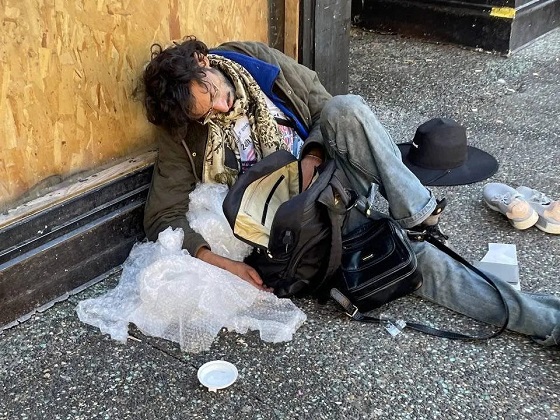
Walk through just about any major Canadian city, and you will see them. Figures bent forward at seemingly impossible angles, swaying in the characteristic “fentanyl fold,” suspended between consciousness and oblivion. They resemble the zombies of fiction: bodies that move through space without agency, awareness, or connection to the world around them. We think of zombies as the walking dead. Health workers and bureaucrats reverse their overdoses, send them back to the street, and call it saving lives.
At the same time, Canada offers medical assistance in dying to a woman who cited chemical sensitivities and the inability to find housing. It has been offered to veterans who asked for support and were met instead with an option for death. We fight to prevent one form of death while facilitating another. The contradiction is not accidental. It reveals something about the people involved and the funding behind it. That’s our culture. Us. It appears to me that our culture no longer knows what life is.
Ask any politician or program bureaucrat, and you will hear them explain, in the dry language of bureaucracy, that the twin approach to what they call harm reduction and medical assistance in dying (MAiD) rests on the shared premise of what they believe to be compassion. They think they respect autonomy, prevent suffering, and keep people alive when possible. It sounds humane. It is, in practice, incoherent. Bear with me for a moment.
The medical establishment administers naloxone to reverse overdoses in people who spend as many as twenty hours a day unconscious. They live without meaningful relationships or memories, with little capacity for choice. The technocrats and politicians call that saving lives. They also provide assisted death to people whose suffering comes primarily from poverty, isolation, or lack of housing. There was a time when these factors could, at least in theory, be addressed so that the terminal decision did not need to be made. Now they are accepted as grounds for ending life.
But why is one preference final and the other treated as an error to correct? That question reflects the deeper disorientation.
We saw the same thing during COVID. Elderly people in care homes were left without touch, family, or comfort for days. They often died in solitude, their dementia accelerated by isolation. And those conditions were inflicted upon them in the name of saving their lives. The “system” measured success in preventing infections, not in preserving connections. Je me souviens. Or we should.
There is a pattern here. We have reduced the idea of saving lives to keeping bodies breathing, while ignoring what makes a life human: agency, meaning, development, and relationship. And in doing so, we begin to define life as mere biological persistence. But to define life by the capacity to breathe and perform basic functions is to place ourselves on the same footing as the non-human animals. It is to say, tacitly, that there is no fundamental distinction between a person and a creature. That, too, is a form of forgetting.
To be clear, the argument here is not that hopeless drug users should be administered MAiD. Instead, it is essential to recognize that the intellectual framework behind harm reduction and MAiD must be taken seriously, as it rests on some rationally defensible claims. In an age where most arguments are emotive and unexamined, the mildly logical has become strangely compelling.
It begins with the idea of autonomy. We cannot force others to live by our values. Every person must decide what makes life worth living. To insist otherwise is paternalism.
Then comes pragmatic compassion. People will use drugs whether we approve or not. People will find their lives unbearable, whether we acknowledge it or not. We can support them or moralize while they die.
There is also an emphasis on subjective experience. No one knows another’s pain. If someone says their suffering is intolerable, we are in no position to deny it, they say. If a user would rather face opioids than withdrawal and despair, are we entitled to interfere?
Finally, the comparison to medical ethics: we do not withhold insulin from diabetics who continue to eat poorly. We do not deny cancer treatment to smokers. Medicine responds to suffering, even when the patient has contributed to their condition. Harm reduction, they argue, simply applies that principle to addiction.
These arguments produced tangible benefits, they argue. Needle exchanges reduced HIV transmission. Naloxone kits prevented deaths. Safe injection sites meant fewer people dying alone. MAiD brought relief to those in agony. These were not trivial outcomes. I am aware.
Yet when we look more closely, the very logic that underlies these policies also exposes their fatal limitations.
Addiction undermines choice. It hijacks the brain’s ability to reason, compare, and choose. A person deep in addiction is not selecting between alternatives like someone choosing coffee or tea. The structure of choice, the human will, itself is broken. The addiction decides before the person does. St Augustine knew this. Dostoyevsky knew it too.
And for the empirically minded, the research supports this. In British Columbia, where the “safe supply” model was pioneered, some addiction physicians now say the policy is failing. Worse, it may be creating new opioid dependencies in people who were not previously addicted. A study earlier this year found that opioid‑related hospitalizations increased by about 33 percent, compared with pre‑policy rates. With the later addition of a drug-possession decriminalization policy, hospitalizations rose even more (overall, a 58 percent increase compared to before SOS’s implementation). The study concluded that neither safer supply nor decriminalization was associated with a statistically significant reduction in overdose deaths. This is not freedom. It is a new form of bondage, meticulously paved by official compassion.
Despair disguises itself as autonomy, especially in a spiritually unmoored culture that no longer knows how to cope with suffering. A person requesting assisted death because of chronic, untreatable pain may appear lucid and composed, but lucidity is not the same as wisdom. One can reason clearly from false premises. If life is reduced to the absence of pain and the preservation of comfort, then the presence of suffering will seem like failure, and death will appear rational. But that is not a genuine choice because it is based on a misapprehension of what life is. All life entails pain. Some of it is redemptive. Some of it is endured. But it does not follow that the presence of suffering justifies the conclusion of life.
Someone turning to drugs because of homelessness, abandonment, or despair is often in an even deeper eclipse of the will. Here, there is not even the appearance of deliberation, only the reach for numbness in the absence of meaning. What looks like a decision is the residue of collapse. We are not witnessing two forms of autonomy, one clearer than the other. We are witnessing the breakdown of autonomy in various forms, and pretending that it is freedom.
Biological survival is not life. When we maintain someone in a state of near-constant unconsciousness, with no relationships, no capacity for flourishing, we are not preserving life. We are preserving a body. The person may already be gone. To define life as nothing more than breathing and performing bodily functions is to deny what makes us human. It reduces us to the level of non-human creatures, sentient, perhaps, but without reason, memory, moral reflection, or the possibility of transcendence. It tacitly advances the view that there is no essential difference between a person and a critter, so long as both breathe and respond to some stimuli.
Governments do these things to keep ballooning overdosing deaths down, preferring to maintain drugs users among the undead instead. That reminds me of how the Mexican government hardly moves a finger to find the disappeared, 100,000 strong of lately. For as long ss they’re disappeared, they choose not to count them as homicides, and they feel justified in ignoring the causes of all the killing around them.
Some choices are nefarious. Some choices deserve challenge. Not all autonomous acts are equal. The decision to continue living with pain, or to fight addiction, requires agency. The decision to surrender to despair may signal the absence of it. To say all choices are equal is to empty the word autonomy of meaning.
This reflects a dangerously thin view of the human person that permeates our present. What we now call “harm” is only death or physical pain. What we call good is whatever someone prefers. But people are more than collections of wants.
We should have learned this by now. In Alberta, safer supply prescribing was effectively banned in 2022. Officials cited diversion and lack of measurable improvement. We are forcing some people into treatment because we recognize the impairment of judgement in addiction.
In British Columbia, public drug use was quietly re-criminalized after communities rebelled. This was an admission of policy failure. “Keeping people safe is our highest priority,” Premier David Eby said. Yet safe supply remains. In 2023, the province recorded more than 2,500 overdose deaths. Paramedics continue to respond to thousands of overdose calls each month. This is not success. It is a managed collapse.
Meanwhile, Manitoba is preparing to open its own supervised drug-use site. Premier Wab Kinew said, “We have too many Manitobans dying from overdose… so this is one tool we can use.” That may be so. However, it is a tool that others are beginning to set aside. It is a largely discredited tool. Sadly, in the self-professed age of “Reconciliation” with Aboriginal Canadians, Aboricompassionadians are disproportionately affected by these discredited policies.
The Manitoba example illustrates the broader problem, despite damning evidence. Instead of asking what helps people live, we ask whether they gave consent. We do not ask whether they were capable of it. We ask whether they avoided death. We do not ask whether they found purpose.
We are not asking what might lead someone out of addiction. We are not asking what they need to flourish. We ask only what we can do to prevent them from dying in the short term. And when that becomes impossible, technocracy offers them death in a more organized form, cleanly approved by government. That’s compasson.
The deeper problem is not policy incoherence. It is the cultural despair that skates on the thin ice of meaninglessness. These policies make sense only in a culture that has already decided life is not worth too much. What matters is state endorsement and how it’s done .
It is more cost-effective to distribute naloxone than to construct long-term recovery homes. It is easier to train nurses to supervise injection than to provide months of residential treatment. It is far simpler to legalize euthanasia for the poor and the suffering than to work on solutions that lift them out of both. But is it right?
This is not compassion. It is surrender.
A humane policy would aim to restore agency, not validate its absence. It would seek out what helps people grow in wisdom and self-command, not what leaves them comfortably sedated. It would measure success not in lives prolonged into darker dependency but in persons recovered. In lives better lived.
This vision is harder. It costs time. It requires greater effort. It requires care and what some Christians call love of neighbour. It may require saying no when someone asks for help that could lead to ruin. But anything less is not mercy. It is a slow walk toward death while we leave the “system” to pretend there is no choice.
We did have a choice. We chose shallow comfort over deep obligation. We chose to manage symptoms rather than confront the deeper conditions of our age: loneliness, meaninglessness, despair. And now we live among the results: more, not fewer, people swaying in silence, already gone walking dead.
We might ask what we’ve forgotten about suffering, about responsibility, about what life is. Lives are at stake. True. But when our understanding of life is misdirected, so will be the policies the state gives us.
We are grateful that you’re reading Haultain Research.
For the full experience, and to help us bring you more quality research and commentary,


Net Zero goal is a fundamental flaw in the Ottawa-Alberta MOU

Eco-radical Canadian Cabinet minister resigns after oil deal approved

Learning the Truth about “Children’s Graves” and Residential Schools is More Important than Ever

Canadians will soon be versed in massive West Coast LPG mega-project

Recent price declines don’t solve Toronto’s housing affordability crisis
Manitoba Is Doubling Down On A Failed Drug Policy

Canada Still Serves Up Food Dyes The FDA Has Banned
-
 Censorship Industrial Complex1 day ago
Canadian bishops condemn Liberal ‘hate speech’ proposal that could criminalize quoting Scripture
-
 National2 days ago
Alberta will use provincial laws to stop Canadian gov’t from trying to confiscate legal firearms
-
 COVID-192 days ago
Canadian legislator introduces bill to establish ‘Freedom Convoy Recognition Day’ as a holiday
-
 Energy2 days ago
A look inside the ‘floatel’ housing B.C.’s LNG workforce
-
 Daily Caller18 hours ago
Trump Orders Review Of Why U.S. Childhood Vaccination Schedule Has More Shots Than Peer Countries
-
 Business2 days ago
US Energy Secretary says price of energy determined by politicians and policies
-
 Economy1 day ago
What the Data Shows About the New Canada-Alberta Pipeline Opportunity
-
 illegal immigration1 day ago
While Trump has southern border secure, hundreds of thousands of illegal immigrants still flooding in from Canada