
Agriculture
In the USA, Food Trumps Green Energy, Wind And Solar

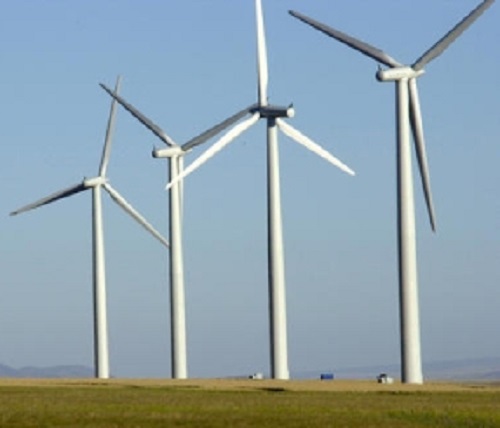


From the Daily Caller News Foundation
By Bonner Cohen

“We will not approve wind or farmer destroying Solar,” said President Trump in an Aug. 20 post on Truth Social. “The days of stupidity are over in the USA!!!”
Trump’s remarks came six weeks after enactment of his One Big Beautiful Bill terminated tax credits for wind and solar projects by the end of 2027.
The Trump administration has also issued a stop-work order for the Revolution Wind project, an industrial-scale offshore wind project 12 miles off the Rhode Island coast that was 80 percent completed. This was followed by an Aug. 29 announcement by the Department of Transportation that it was cutting around $679 million in federal funding for 12 offshore wind farms in 11 states, calling the projects “wasteful.”
Sending an unmistakable message to investors to avoid risking their capital on no-longer-fashionable green energy, the Department of Agriculture (USDA) is pulling the plug on a slew of funding programs for wind and solar power.
“Our prime farmland should not be wasted and replaced with green new deal subsidized solar panels,” said Agriculture Secretary Brooke Rollins on a visit to Tennessee in late August. “We are no longer allowing businesses to use your taxpayer dollars to fund solar projects on prime American farmland, and we will no longer allow solar panels manufactured by foreign adversaries to be used in our USDA-funded projects.”
The White House is putting the squeeze on an industry that can ill-afford to lose the privileges it has enjoyed for so many years. Acknowledging the hesitancy of investors to fund green-energy projects with the looming phaseout of federal subsidies, James Holmes, CEO of Solx, a solar module manufacturer, told The Washington Post, “We’re seeing some paralysis in decision-making in the developer world right now.” He added, “There’s been a pretty significant hit to our industry, but we’ll get through it.”
That may not be easy. According to SolarInsure, a firm that tracks the commercial performance of the domestic solar industry, over 100 solar companies declared bankruptcy or shut down in 2024—a year before the second Trump administration started turning the screws on the industry.
As wind and solar companies confront an increasingly unfavorable commercial and political climate, green energy is also taking a hit from its global financial support network.
The United Nations-backed Net Zero Banking Alliance (NZBA) “has suspended activities, following the departure of numerous financial institutions from its ranks amid political pressure from the Trump administration,” The Wall Street Journal reported. Established in 2021, the NZBA’s 120 banks in 40 countries were a formidable element in global decarbonization schemes, which included support for wind and solar power. Among the U.S. banks that headed for the exits in the aftermath of Trump’s election were JP Morgan, Citi, and Morgan Stanley. They have been joined more recently by European heavyweights HSBC, Barclays, and UBS.
Wind and solar power require a lot of upfront capital, and investors may be having second thoughts about placing their bets on what looks like a losing horse.
“Wind and solar energy are dilute, intermittent, fragile, surface-intensive, transmission-extensive, and government-dependent,” notes Robert Bradley, founder and CEO of the Institute for Energy Research.
Given these inherent disadvantages of wind and solar power, it’s no surprise that the Department of Agriculture is throttling the flow of taxpayer money to solar projects. The USDA’s mission is to “provide leadership on food, agriculture, food, natural resources, rural development, nutrition, and related issues….” It is not to help prop up an industry whose best days are behind it.
Effective immediately, wind and solar projects will no longer be eligible for USDA Rural Development Business and Industry (B&I) Guaranteed Loan Program. A second USDA energy-related guaranteed loan program, known by the acronym REAP, will henceforth require that wind and solar installations on farms and ranches be “right-sized for their facilities.”
If project applications include ground-mounted solar photovoltaic systems larger than 50 kilowatts or such systems that “cannot document historical energy usage,” they will not be eligible for REAP.
Ending Misallocation Of Resources
“For too long, Washington bureaucrats and foreign adversaries have tried to dictate how we use our land and our resources,” said Republican Rep. Harriot Hagermann of Wyoming. “Taxpayers should never be forced to bankroll green new deal scams that destroy our farmland and undermine our food security.”
Hagermann’s citing of “foreign adversaries” is a clear reference to China, which is by far the world’s leading manufacturer of solar panels, according to the International Energy Agency.
According to a USDA study from 2024, 424,000 acres of rural land were home to wind turbines and solar arrays in 2020. While this – outdated – figure represents less than 0.05 percent of the nearly 900 million acres of farmland in the U.S., the prospect of ever-increasing amounts of farmland being taken out of full-time food production to support part-time energy was enough to persuade USDA that a change of course was in order.
Bonner Russell Cohen, Ph. D., is a senior policy analyst with the Committee for a Constructive Tomorrow (CFACT).


A new program funded by the Sustainable Canadian Agricultural Partnership will accelerate expansion in Alberta greenhouses and vertical farms.
Albertans want to keep their hard-earned money in the province and support producers by choosing locally grown, high-quality produce. The new three-year, $10-milllion Growing Greenhouses program aims to stimulate industry growth and provide fresh fruit and vegetables to Albertans throughout the year.
“Everything our ministry does is about ensuring Albertans have secure access to safe, high-quality food. We are continually working to build resilience and sustainability into our food production systems, increase opportunities for producers and processors, create jobs and feed Albertans. This new program will fund technologies that increase food production and improve energy efficiency.”
“Through this investment, we’re supporting Alberta’s growers and ensuring Canadians have access to fresh, locally-grown fruits and vegetables on grocery shelves year-round. This program strengthens local communities, drives innovation, and creates new opportunities for agricultural entrepreneurs, reinforcing Canada’s food system and economy.”
The Growing Greenhouses program supports the controlled environment agriculture sector with new construction or expansion improvements to existing greenhouses and vertical farms that produce food at a commercial scale. It also aligns with Alberta’s Buy Local initiative launched this year as consumers will be able to purchase more local produce all year-round.
The program was created in alignment with the needs identified by the greenhouse sector, with a goal to reduce seasonal import reliance entering fall, which increases fruit and vegetable prices.
“This program is a game-changer for Alberta’s greenhouse sector. By investing in expansion and innovation, we can grow more fresh produce year-round, reduce reliance on imports, and strengthen food security for Albertans. Our growers are ready to meet the demand with sustainable, locally grown vegetables and fruits, and this support ensures we can do so while creating new jobs and opportunities in communities across the province. We are very grateful to the Governments of Canada and Alberta for this investment in our sector and for working collaboratively with us.”
Sustainable Canadian Agricultural Partnership (Sustainable CAP)
Sustainable CAP is a five-year, $3.5-billion investment by federal, provincial and territorial governments to strengthen competitiveness, innovation and resiliency in Canada’s agriculture, agri-food and agri-based products sector. This includes $1 billion in federal programs and activities and $2.5 billion that is cost-shared 60 per cent federally and 40 per cent provincially/territorially for programs that are designed and delivered by provinces and territories.
Quick facts
- Alberta’s greenhouse sector ranks fourth in Canada:
- 195 greenhouses produce $145 million in produce and 60 per cent of them operate year-round.
- Greenhouse food production is growing by 6.2 per cent annually.
- Alberta imports $349 million in fresh produce annually.
- The program supports sector growth by investing in renewable and efficient energy systems, advanced lighting systems, energy-saving construction, and automation and robotics systems.
Related information
From the Fraser Institute
By Annika Segelhorst and Elmira Aliakbari
Canadians care about the environment and breathing clean air. In 2023, the share of Canadians concerned about the state of outdoor air quality was 7 in 10, according to survey results from Abacus Data. Yet Canada outperforms most comparable high-income countries on air quality, suggesting a gap between public perception and empirical reality. Overall, Canada ranks 8th for air quality among 31 high-income countries, according to our recent study published by the Fraser Institute.
A key determinant of air quality is the presence of tiny solid particles and liquid droplets floating in the air, known as particulates. The smallest of these particles, known as fine particulate matter, are especially hazardous, as they can penetrate deep into a person’s lungs, enter the blood stream and harm our health.
Exposure to fine particulate matter stems from both natural and human sources. Natural events such as wildfires, dust storms and volcanic eruptions can release particles into the air that can travel thousands of kilometres. Other sources of particulate pollution originate from human activities such as the combustion of fossil fuels in automobiles and during industrial processes.
The World Health Organization (WHO) and the Canadian Council of Ministers of the Environment (CCME) publish air quality guidelines related to health, which we used to measure and rank 31 high-income countries on air quality.
Using data from 2022 (the latest year of consistently available data), our study assessed air quality based on three measures related to particulate pollution: (1) average exposure, (2) share of the population at risk, and (3) estimated health impacts.
The first measure, average exposure, reflects the average level of outdoor particle pollution people are exposed to over a year. Among 31 high-income countries, Canadians had the 5th-lowest average exposure to particulate pollution.
Next, the study considered the proportion of each country’s population that experienced an annual average level of fine particle pollution greater than the WHO’s air quality guideline. Only 2 per cent of Canadians were exposed to fine particle pollution levels exceeding the WHO guideline for annual exposure, ranking 9th of 31 countries. In other words, 98 per cent of Canadians were not exposed to fine particulate pollution levels exceeding health guidelines.
Finally, the study reviewed estimates of illness and mortality associated with fine particle pollution in each country. Canada had the fifth-lowest estimated death and illness burden due to fine particle pollution.
Taken together, the results show that Canada stands out as a global leader on clean air, ranking 8th overall for air quality among high-income countries.

Canada’s record underscores both the progress made in achieving cleaner air and the quality of life our clean air supports.

Annika Segelhorst
Junior Economist

Elmira Aliakbari


Can the COVID Scamsters Stick the Landing?
Canada’s EV Mandate Is Running On Empty
Why Does Canada “Lead” the World in Funding Racist Indoctrination?

Frances Widdowson’s Arrest Should Alarm Every Canadian

Canadian bishops condemn Liberal ‘hate speech’ proposal that could criminalize quoting Scripture

Canadian Health Department funds study to determine effects of COVID lockdowns on children

A Memorandum of Understanding that no Canadian can understand
-
 Crime2 days ago
U.S. seizes Cuba-bound ship with illicit Iranian oil history
-
 Daily Caller2 days ago
US Supreme Court Has Chance To End Climate Lawfare
-
 Business1 day ago
Albertans give most on average but Canadian generosity hits lowest point in 20 years
-
 Censorship Industrial Complex2 days ago
Conservative MP calls on religious leaders to oppose Liberal plan to criminalize quoting Scripture
-
 National24 hours ago
Canada’s free speech record is cracking under pressure
-
 Alberta2 days ago
The case for expanding Canada’s energy exports
-
 Digital ID16 hours ago
Canada considers creating national ID system using digital passports for domestic use
-
 International2 days ago
Marjorie Taylor Greene’s ’60 Minutes’ interview reveals power struggle between populists and RINOs