
Immigration
Immigrant background checks are unrelated to national security?


 By David L. Thomas for Inside Policy
Canadians are rightly under the impression that migrants have been properly vetted before coming into our country. But it’s clear we’re not living up to expectations.
A recently de-classified 2022 report of the National Security and Intelligence Review Agency (NSIRA) suggests we’ve entirely misplaced our priorities when it comes to protecting Canadians from foreigners with dangerous backgrounds. Apparently referring prospective immigrants from places in the world beset with violent extremism for deeper background checks could constitute discrimination against those individuals that is “not justifiable on security grounds.”

Arbitrary discrimination on a prohibited ground is wrong. However, it is obviously important, for example, for the government to conduct proper security checks when we admit people into Canada as immigrants. There are times when certain discrimination might be warranted.
Essentially, for fear of being accused of discrimination, our national security oversight committee has deemed that checking prospective immigrants for ties to terrorist organizations is not a matter of national security. This is plainly absurd and is a grave risk to our national security.
The decision-style report of the NSIRA tribunal related to a group of complaints before the Canadian Human Rights Tribunal (CHRT) under the Canadian Human Rights Act (CHRA). The large group of complainants were citizens of Iran seeking temporary or permanent visas to Canada and who were subjected to security background checks. They alleged discrimination on the basis of race and that the CSIS checks delayed the processing of their visa applications (reported by NSIRA as an average delay of 14 days for temporary visas and 26 days for immigration visas). Iran is a country with which we have no diplomatic relations and we have designated as a state sponsor of terrorism since 2012.
Without the resources of CSIS and a deeper security check, how could an immigration officer in the field determine if a visa applicant may have once been a member of a terrorist organization, like al-Qaeda, or a drug cartel? CSIS security checks are designed to look deeper into an individual’s background, sometimes with the co-operation of foreign spy agencies.
These complaints came across my desk in the final months of my term as the Chairperson of the CHRT. Having previously practiced immigration law for more than 20 years, I was well aware of CSIS security background checks. My expectation was that the NSIRA would recommend dismissal of the complaints because, well of course, checking whether a prospective immigrant is connected to a terrorist organization has to be related to the security of Canada, no?
Apparently not.
The CHRT complaints were suspended under a never-before-used section of the CHRA. Under Section 45, the Minister of Immigration, Refugees and Citizenship Canada gave notice “that the (alleged discriminatory) practice to which the complaint relates was based on considerations relating to the security of Canada.” Despite this notice, the Human Rights Commission declined to dismiss the complaints and instead referred the matter to the NSIRA to provide a report on the matter.
The NSIRA report was the first of its kind and acknowledged there is little legislative guidance on the nature of its role under a Section 45 referral. However, in my view, the NSIRA has usurped the role of the CHRT by determining that the criteria applied for requesting the CSIS background checks “was not justifiable on security grounds.” In my view, their determination should have been limited to only whether the alleged discriminatory practices related to national security.
Nevertheless, the complaints are now proceeding before the CHRT to determine if it was discriminatory to make referrals for security background checks.
Arbitrary discrimination is, in most cases, against the law. However, there are exceptions, and one of them is Section 45 of the CHRA which creates a “carve out” from the normal rules when a matter of national security is on the line. And yet, the NSIRA decision bizarrely set aside national security and failed to grant the exception.
Canada has drastically increased its intake of migrants in recent years. Since 2021, the annual target for permanent residents was almost doubled to 500,000. Non-immigrant foreigners, mostly students and temporary workers, accounted for 2.5 million people, or 6.2% or the population in 2023. As these are people entering Canada legally, Canadians are rightly under the impression that migrants have been properly vetted before coming into our country. But it’s clear we’re not living up to expectations.
Canada recently admitted Muhammad Shahzeb Khan from Pakistan, accused of plotting a massive attack against Jews in New York last October. When this news broke Canada was still reeling from the embarrassment of having just granted Canadian citizenship to Ahmed Fouad Mostafa Eldidi. Along with his son, Mostafa Eldidi, he was arrested in July last year as the pair was accused of being in the advanced stages of planning a violent attack on behalf of ISIS in Toronto. Apparently, Ahmed appears in a 2015 video dismembering an ISIS prisoner with a sword.
All prospective immigrants to Canada are subject to checks for past criminal activity. However, sometimes an immigration officer might flag an applicant for a security screening by the Canadian Security Intelligence Service (CSIS) to determine if a visa applicant has ties to terrorist groups, espionage, war crimes, crimes against humanity, etc.
In order to protect Canada, immigration officers in the field should have the unfettered discretion to refer any non-Canadian for a CSIS security background check. The referral is not a denial of entry into Canada. Applicants are just being asked to wait a little longer until we’re satisfied about their background. Immigration officers should not be second-guessing themselves about this discretion for fear of a human rights complaint.
Now is the time for Canada to set its priorities right. Our national security must be paramount and should not be hamstrung by unrealistic idealism.
David Thomas, a senior fellow at the Macdonald-Laurier Institute, is a lawyer and mediator in British Columbia. From 2014 to 2021, he was the chairperson of the Canadian Human Rights Tribunal.




The population drops for the first time in years, exposing an economy built on temporary residents, tuition cash, and government debt rather than real productivity
Canadians have been told for years that population decline was unthinkable, that it was an economic death spiral, that only mass immigration could save us. That was the line. Now the numbers are in, and suddenly the people who said that are very quiet.
Statistics Canada reports that between July 1 and October 1, 2025, Canada’s population fell by 76,068 people, a decline of 0.2 percent, bringing the total population to 41,575,585. This is not a rounding error. It is not a model projection. It is an official quarterly population loss, outside the COVID period, confirmed by the federal government’s own data
The reason matters. This did not happen because Canadians suddenly stopped having children or because of a natural disaster. It happened because the number of non‑permanent residents dropped by 176,479 people in a single quarter, the largest quarterly decline since comparable records began in 1971. Permit expirations outpaced new permits by more than two to one. Outflows totaled 339,505, while inflows were just 163,026
That is the so‑called growth engine shutting down.
Permanent immigration continued at roughly the same pace as before. Canada admitted 102,867 permanent immigrants in the quarter, consistent with recent levels. Births minus deaths added another 17,600 people. None of that was enough to offset the collapse in temporary residency. Net international migration overall was negative, at minus 93,668
And here’s the part you’re not supposed to say out loud. For the Liberal‑NDP government, this is bad news. Their entire economic story has rested on population‑driven GDP growth, not productivity. Add more people, claim the economy is growing, borrow more money, and run the national credit card a little harder. When population growth reverses, that illusion collapses. GDP per capita does not magically improve. Housing shortages do not disappear. The math just stops working.
The regional numbers make that clear. Ontario’s population fell by 0.4 percent in the quarter. British Columbia fell by 0.3 percent. Every province and territory lost population except Alberta and Nunavut, and even Alberta’s growth was just 0.2 percent, its weakest since the border‑closure period of 2021
Now watch who starts complaining first. Universities are already bracing for it. Study permit holders alone fell by 73,682 people in three months, with Ontario losing 47,511 and British Columbia losing 14,291. These are the provinces with the largest university systems and the highest dependence on international tuition revenue
You’re going to hear administrators and activists say this is a crisis. What they mean is that fewer students are paying international tuition to subsidize bloated campuses and programs that produce no measurable economic value. When the pool of non‑permanent residents shrinks, departments that exist purely because enrollment was artificially inflated start to disappear. That’s not mysterious. That’s arithmetic.
For years, Canadians were told that any slowdown in population growth was dangerous. The truth is more uncomfortable. What’s dangerous is building a national economic model on temporary residents, borrowed money, and headline GDP numbers while productivity stagnates. The latest StatsCan release doesn’t just show a population decline. It shows how fragile the story really was, and how quickly it unravels when the numbers stop being padded.
Subscribe to The Opposition with Dan Knight
Immigration
Conservatives blame Liberals for allowing man on UK child sex offender list to enter Canada
From LifeSiteNews
A Pakistani man was granted a visa in 2023 under former Prime Minister Justin Trudeau’s government after hiding that he was found guilty of sexually abusing his underage niece.
Canada’s Conservative Party blasted the federal Liberal government’s immigration department after it came to light that a Pakistani man on the U.K.’s sex-offender list was granted a visa to come to Canada
Gullfam Hussain, who was found guilty of sexually abusing his underage niece, arrived in Canada in 2023 on a visitor’s visa even though he had spent time in jail for his crimes but did not finish his sentence.
Conservative MP Michelle Rempel Garner blasted Canada’s current Justice Minister Sean Fraser, who was immigration minister in 2023 under former Prime Minister Justin Trudeau, for the gaffe.
“This is truly disgusting and is antithetical to what it means to be Canadian,” Rempel Garner noted during a question period in the House of Commons last week.
“The person who allowed this incestuous child sex abuser into Canada should be fired.”
Rempel Garner stressed that Hussain should have not been allowed into Canada in the first place.
“Why did the prime minister (Mark Carney) promote the then-immigration minister, who allowed an incestuous child sex abuser into Canada, to the minister of justice?” she asked.
According to court documents, only now are Canadian officials trying to deport Hussain for what they deemed “serious criminality and misrepresentation” because he lied on his visa application.
Records show that Hussain claimed protected person status last year, saying he was at risk of “honour crimes from his family members in Pakistan” should he be sent back to his home country. He was denied his request for protected status.
As for Fraser, he was not in the House of Commons to answer Rempel Garner’s questions. Public Safety Minister Gary Anandasangaree stated that the Canada Border Services Agency is working to ensure that criminals can’t enter Canada.
As for Hussain, Rempel Garner noted how he was put on the U.K.’s sex offender registry because he had engaged in “incestuous sex” with his young niece, who was between age 13 and 17. Hussain is 10 years older than the girl.
A court found him guilty of adult sexual activity with a minor and he was sentenced in 2017 to six years in jail. However, he was let go in 2020 and fled to Spain without serving the rest of his sentence.
Records show his niece later joined him, and they had a child in 2022 before he came to Canada in 2023.
“He did not disclose his criminal history on his Canadian visa application or upon his entry to Canada,” the court documents read.
When it comes to immigration under Trudeau and now Carney, Canada has allowed millions into the country, many from Muslim nations, including so-called LGBT “refugees,” which calls into question just how well people are being screened.


Residential school burials controversy continues to fuel wave of church arsons, new data suggests
Canada Hits the Brakes on Population

Canadian gov’t considers sharing census data on gender-confused children
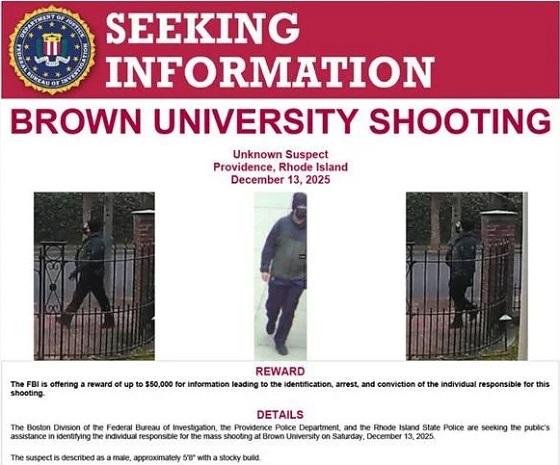
Brown University shooter dead of apparent self-inflicted gunshot wound

Paris Climate Deal Now Decade-Old Disaster

Why is Canada paying for dairy ‘losses’ during a boom?

Alberta’s new diagnostic policy appears to meet standard for Canada Health Act compliance
-
 International2 days ago
Australian PM booed at Bondi vigil as crowd screams “shame!”
-
 Uncategorized2 days ago
Mortgaging Canada’s energy future — the hidden costs of the Carney-Smith pipeline deal
-
 Automotive1 day ago
Canada’s EV gamble is starting to backfire
-
 Agriculture1 day ago
End Supply Management—For the Sake of Canadian Consumers
-
 Alberta1 day ago
Alberta Next Panel calls to reform how Canada works
-
 Agriculture7 hours ago
The Climate Argument Against Livestock Doesn’t Add Up
-
 Environment1 day ago
Canada’s river water quality strong overall although some localized issues persist
-
 Digital ID19 hours ago
Canadian government launches trial version of digital ID for certain licenses, permits