
Business
How the Deep State is using the ‘Censorship Industrial Complex’ to crush free speech

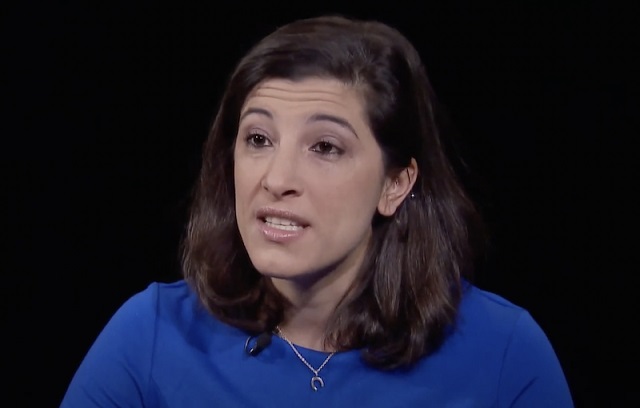

Renée DiResta is the research director of the Stanford Internet Observatory (SIO)
From LifeSiteNews

The Censorship Industrial Complex, dominated by organizations often run by ex-CIA agents, is working around the First Amendment to suppress dissent and promote a one-world government
Author and reformed climate activist Michael Shellenberger has coined the term “Censorship Industrial Complex,” an apparent reference to President Dwight D. Eisenhower’s Farewell Address in 1961, where the former Army General warned about the influence of the “military-industrial complex.”
In a recently published article, Dr. Joseph Mercola explored the Censorship Industrial Complex, how it works, and who some of the protagonists are. We will examine the following points regarding this nefarious network to understand how the censorship apparatus works:
- A key figure: Renée DiResta
- The Election Integrity Partnership and Virality Project
- The Council on Foreign Relations and the One World Government
- NewsGuard and the “middleware” approach
A key figure: Renée DiResta
Renée DiResta is the research director of the Stanford Internet Observatory (SIO). Mercola fittingly described the organization’s purpose: “[Founded] in June 2019,” the SIO “promote[s] internet censorship policies and conduct[s] real-time social media narrative monitoring.”
DiResta quickly climbed the career ladder despite being involved in a major election manipulation scandal. She previously worked for the CIA and is a member of the influential Council on Foreign Relations (CFR).
DiResta is a prominent example of the connections between the intelligence agency and the censorship industry, but she is certainly not the only one. The organizations that are deciding what is deemed “misinformation” or “hate speech” (i.e., the Censorship Industrial Complex) are often run by former CIA agents. According to Shellenberger’s research, seven former CIA executives serve on the board of the Atlantic Council, an organization partnered with the SIO through several projects.
“The Chief Strategy Officer and the Director of Federal Programs at Graphika, another DiResta partner organization, are former CIA officials,” Shellenberger writes.
In 2018, DiResta organized a false flag online operation that influenced an Alabama Senate race. Before she worked at the SIO, DiResta was the research director at a small political consultant firm, New Knowledge LLC, which received $100,000 from Reid Hoffman, founder of LinkedIn, to help the Democrat candidate win the U.S. Senate race in Alabama. New Knowledge used that money to subscribe thousands of fake Russian bot accounts to Republican candidate Roy Moore’s social media campaign. Mainstream media reports at the time claimed Moore was “backed by Russia,” even though his “Russian backers” were fake accounts created by New Knowledge. Moore’s Democratic opponent, Doug Jones, went on to win the race by a slim margin.
After the election, an internal report from New Knowledge, which detailed the Russian bot operation, was obtained by The New York Times. The report admits that: “We orchestrated an elaborate ‘false flag’ operation that planted the idea that the Moore campaign was amplified on social media by a Russian botnet.”
This revelation gained national media attention and was so scandalous that even members of the Atlantic Council (an organization that now collaborates with DiResta) publicly criticized this egregious example of election interference by New Knowledge.
“Somehow, DiResta survived this scandal and continues to be a leading spokesperson AGAINST disinformation and FOR election integrity, even though New Knowledge was caught red-handed using disinformation to interfere in a U.S. election,” Mercola writes.
Shellenberger said the reason that DiResta was made “the leader of the Censorship Industrial Complex,” next to her intellect and articulateness, is that “[l]ike other American elites, DiResta believes that it is the role of people like her to control what information the public is allowed to consume, lest they elect a populist ogre like Donald Trump, decide not to get vaccinated, or don’t accept whatever happens to be mainstream liberal opinion on everything from climate change to transgenderism to the business dealings of the president[‘s] family.”
The Election Integrity Partnership and Virality Project
The Election Integrity Partnership (EIP) was founded only months before the 2020 U.S. presidential election “to defend our elections against those who seek to undermine them by exploiting weaknesses in the online information environment.”
Mike Benz, former State Department official in the Trump administration and executive director for the Foundation for Freedom Online, explained in a video that EIP was created as a “government cut-out,” a “private” organization that de facto acts as censorship arm for the things the government cannot censor because it lacks the legal authority to do so.
One of the “partners” of the EIP is DiResta’s SIO. Benz also notes that all of the EIP’s partners are at least partly funded by the government.
Elon this video goes over it in insta-PhD level detail. It shows exactly how DHS created the EIP censorship octopus. Condensed to 8 mins here: pic.twitter.com/l5EaxAIChD
— Mike Benz (@MikeBenzCyber) November 7, 2023
In May 2020, a new organization with mostly the same “partners” as the EIP was created, the Virality Project (VP). The VP focused on censoring COVID-related content online, including factual information that “might promote vaccine hesitancy.”
A spokesperson from the SIO (one of the VP’s founding partners) claimed it “did not censor or ask social media platforms to remove any social media content regarding coronavirus vaccine side effects.” Perhaps the SIO did not censor content directly, but the VP that was founded by the SIO certainly did, as the Twitter Files released by Elon Musk have shown.
According to the Twitter Files published by journalist Matt Taibbi, the VP pressured social media platforms such as Twitter (now X) and TikTok to remove or flag online content. Posts flagged by VP included:
- True information that could fuel “vaccine hesitancy”
- Posts critical of vaccine passports
- True testimonies of people experiencing blood clots after receiving COVID shots
- People asking questions about possible adverse reactions from the jabs
The Council on Foreign Relations and the One World government
As mentioned above, DiResta, in addition to being a former CIA agent, is also a member of the Council on Foreign Relations (CFR), a think tank specialized in U.S. foreign policy. The globalist CFR is partly funded by the Bill & Melinda Gates Foundation and the Rockefeller Foundation.
The CFR was founded in 1921 and has heavily influenced U.S. foreign policy ever since. Most CIA directors and U.S. secretaries of defense have been members of the Council. Mercola argues that the CFR’s ultimate goal “has been to bring about a totalitarian one world government, a New World Order (NWO) with global top-down rule.”
According to the Centre for Research on Globalization, James Warburg, the son of one of the CFR’s founders, told the Senate Foreign Relations Committee in 1950: “We shall have world government whether or not you like it – by conquest or consent.”
Moreover, CFR insider and former U.S. Navy Admiral Chester Ward stated the following in his 1975 book Kissinger on the Couch:
“[The CFR has as a goal] submergence of U.S. sovereignty and national independence into an all-powerful one-world government … This lust to surrender the sovereignty and independence of the United States is pervasive throughout most of its membership … In the entire CFR lexicon, there is no term of revulsion carrying a meaning so deep as ‘America First.’”
Mercola concludes that the Censorship Industrial Complex is part of the network that seeks to establish a one-world government.
“Those who oppose America First policies do so because they’re working on behalf of a network that seeks to eliminate nationalism in favor of a one-world government, and DiResta is part of that club,” he writes.
NewsGuard and the ‘middleware approach’
In another condensed video, Benz explains how the Censorship Industrial Complex is now using so-called “middleware” organizations like the news rating site NewsGuard to suppress dissent from the mainstream narratives.
The "Middleware" Plan To Restructure The Censorship Industry
1. Middleware = 'censorship as a service' orgs
2. Morphing from top-down to middle-out
3. Regs + middleware = disinfo compliance market pic.twitter.com/lDPqH72HrD
— Mike Benz (@MikeBenzCyber) August 1, 2023
According to Benz, the Censorship Industrial Complex is anticipating a loss in the Missouri v. Biden Supreme Court case, which “threatens to ban all government coordination of domestic censorship with a few exceptions[.]”
To circumvent these possible legal restrictions, the government is propping up “intermediary censorship mercenary firms like NewsGuard.”
READ: Elon Musk slams leftist rating group NewsGuard as ‘scam’ that ‘should be disbanded immediately’
By funding these “private” organizations, the deep state government agencies can “effectively circumvent the First Amendment prohibitions on running a comparable thing out of the DHS [Department of Homeland Security].”
However, the idea that NewsGuard is somehow independent from the government is wholly divorced from reality. In 2021, the Department of Defense awarded NewsGuard $750,000 for its project “Misinformation Fingerprints,” which aims to combat what it calls “a catalogue of known hoaxes, falsehoods and misinformation narratives that are spreading online.”
Moreover, Benz notes that NewsGuard’s Advisory Board consists of “an all-star apex predator caste of the national security state,” including
- retired Four-Star General Michael Hayden, who was formerly the head of the CIA and NSA,
- Richard Stengel, former Undersecretary of State,
- Tom Ridge, former head of the DHS,
- and Anders Fogh Rasmussen, former head of NATO.
By propping up “middleware” companies such as NewsGuard that are not technically part of the government, the Censorship Industrial Complex is able to work around possible First Amendment restrictions, as websites that receive a negative rating from NewsGuard will have reduced visibility on Big tech platforms and search engines. The negative rating by NewsGuard also provides a pretext for private Big Tech platforms to label outlets as spreaders of “misinformation” and censor them outright.
“There’s no clear solution to this threat, other than to continue pushing back against any and all efforts to legalize, standardize and normalize censorship,” Mercola writes in his conclusion. “To vocally object, to refuse using middleware like NewsGuard, and to boycott any company or organization that uses middleware or engages in censorship of any kind.”

Business
Federal funds FROZEN after massive fraud uncovered: Trump cuts off Minnesota child care money


The Trump administration has cut off all federal child care payments to Minnesota, ordering a sweeping audit of the state’s day care system as investigators dig into what officials describe as one of the largest fraud schemes ever tied to social service programs.
“We have frozen all child care payments to the state of Minnesota,” Deputy Health and Human Services Secretary Jim O’Neill wrote Tuesday afternoon, saying the move comes after mounting evidence that taxpayer dollars were being siphoned to sham or non-operational day care centers. The freeze follows a viral investigative video that put a national spotlight on facilities across Minneapolis that were receiving large sums of public money despite appearing closed or barely functioning.
According to Alex Adams, assistant secretary at HHS’s Administration for Children and Families, Minnesota has already received roughly $185 million in federal child care funding this year alone. Those funds, the administration says, will remain locked down until the state can demonstrate that payments are being used lawfully. “Funds will be released only when states prove they are being spent legitimately,” Adams said.
We have frozen all child care payments to the state of Minnesota.
You have probably read the serious allegations that the state of Minnesota has funneled millions of taxpayer dollars to fraudulent daycares across Minnesota over the past decade.
Today we have taken three actions… pic.twitter.com/VYbyf3WGop
— Deputy Secretary Jim O'Neill (@HHS_Jim) December 30, 2025
O’Neill accused Minnesota officials of allowing abuse to fester for years, alleging the state has “funneled millions of taxpayer dollars to fraudulent daycares across Minnesota over the past decade.” To halt further losses, HHS outlined a series of immediate enforcement steps. Going forward, states seeking reimbursement through the Administration for Children and Families will be required to provide receipts or photographic proof documenting how funds are spent.
The department has also formally demanded that Gov. Tim Walz order a “comprehensive audit” of the day care centers flagged by investigators. O’Neill said the review must include attendance records, licensing documents, complaints, investigative files, and inspection reports. He pointed directly to a video published Friday by YouTuber Nick Shirley, who visited multiple Minneapolis-area centers listed as receiving millions in public funds but found locations that appeared closed or inactive.
In addition, HHS has launched a dedicated fraud hotline and email address at childcare.gov to encourage tips from parents, providers, and the public. “We have turned off the money spigot and we are finding the fraud,” O’Neill said, urging anyone with information to come forward.
Federal prosecutors say the scope of the alleged abuse is staggering. Authorities have already confirmed at least $1 billion in fraud tied to Minnesota child care programs, with 92 people charged so far. The U.S. Attorney’s Office has warned the total could ultimately reach as high as $9 billion as investigators continue combing through records.
The funding freeze marks one of the most aggressive crackdowns yet by the Trump administration on state-run social programs accused of lax oversight, sending a clear message that federal dollars will not flow until Minnesota can account for where the money went — and who was cashing in.

From the Frontier Centre for Public Policy
By Conrad Eder
Conrad Eder supports universal health care, but not Canada’s broken version. Despite massive spending, Canadians face brutal wait times. He argues it’s time to allow private options, as other countries do, without abandoning universality.
It’s not about money. It’s about the rules shaping how Canada’s health care system works
Canada’s health care system isn’t failing because it lacks funding or public support. It’s failing because governments have tied it to restrictive rules that block private medical options used in other developed countries to deliver timely care.
Canada spends close to $400 billion a year on health care, placing it among the highest-spending countries in the Organization for Economic Co-operation and Development (OECD). Yet the system continues to struggle with some of the longest waits for care, the fewest doctors per capita and among the lowest numbers of hospital beds in the OECD. This is despite decades of spending increases, including growth of 4.5 per cent in 2023 and 5.7 per cent in 2024, according to estimates from the Canadian Institute for Health Information.
Canadians are losing confidence that government spending is the solution. In fact, many don’t even think it’s making a difference.
And who could blame them? Median health care wait times reached 30 weeks in 2024, up from 27.7 weeks in 2023, which was up from 27.4 weeks in 2022, according to annual surveys by the Fraser Institute.
Nevertheless, politicians continue to tout our universal health care system as a source of national pride and, according to national surveys, 74 per cent of Canadians agree. Yet only 56 per cent are satisfied with it. This gap reveals that while Canadians value universal health care in principle, they are frustrated with it in practice.
But it isn’t universal health care that’s the problem; it’s Canada’s uniquely restrictive version of it. In most provinces, laws restrict physicians from working simultaneously in public and private systems and prohibit private insurance for medically necessary services covered by medicare, constraints that do not exist in most other universal health care systems.
The United Kingdom, France, Germany and the Netherlands all maintain universal health care systems. Like Canada, they guarantee comprehensive insurance coverage for essential health care services. Yet they achieve better access to care than Canada, with patients seeing doctors sooner and benefiting from shorter surgical wait times.
In Germany, there are both public and private hospitals. In France, universal insurance covers procedures whether patients receive them in public hospitals or private clinics. In the Netherlands, all health insurance is private, with companies competing for customers while coverage remains guaranteed. In the United Kingdom, doctors working in public hospitals are allowed to maintain private practices.
All of these countries preserved their commitment to universal health care while allowing private alternatives to expand choice, absorb demand and deliver better access to care for everyone.
Only 26 per cent of Canadians can get same-day or next-day appointments with their family doctor, compared to 54 per cent of Dutch and 47 per cent of English patients. When specialist care is needed, 61 per cent of Canadians wait more than a month, compared to 25 per cent of Germans. For elective surgery, 90 per cent of French patients undergo procedures within four months, compared to 62 per cent of Canadians.
If other nations can deliver timely access to care while preserving universal coverage, so can Canada. Two changes, inspired by our peers, would preserve universal coverage and improve access for all.
First, allow physicians to provide services to patients in both public and private settings. This flexibility incentivizes doctors to maximize the time they spend providing patient care, expanding service capacity and reducing wait times for all patients. Those in the public system benefit from increased physician availability, as private options absorb demand that would otherwise strain public resources.
Second, permit private insurance for medically necessary services. This would allow Canadians to obtain coverage for private medical services, giving patients an affordable way to access health care options that best suit their needs. Private insurance would enable Canadians to customize their health coverage, empowering patients and supporting a more responsive health care system.
These proposals may seem radical to Canadians. They are not. They are standard practice everywhere else. And across the OECD, they coexist with universal health care. They can do the same in Canada.
Alberta has taken an important first step by allowing some physicians to work simultaneously in public and private settings through its new dual-practice model. More Canadian provinces should follow Alberta’s lead and go one step further by removing legislative barriers that prohibit private health insurance for medically necessary services. Private insurance is the natural complement to dual practice, transforming private health care from an exclusive luxury into a viable option for Canadian families.
Canadians take pride in their health care system. That pride should inspire reform, not prevent it. Canada’s health care crisis is real. It’s a crisis of self-imposed constraints preventing our universal system from functioning at the level Canadians deserve.
Policymakers can, and should, preserve universal health care in this country. But maintaining it will require a willingness to learn from those who have built systems that deliver universality and timely access to care, something Canada’s current system does not.
Conrad Eder is a policy analyst at the Frontier Centre for Public Policy.


Remembering Afghanistan and the sacrifices of our military families

“Magnitude cannot be overstated”: Minnesota aid scam may reach $9 billion

Largest fraud in US history? Independent Journalist visits numerous daycare centres with no children, revealing massive scam

Alberta Next Panel calls for less Ottawa—and it could pay off

US Under Secretary of State Slams UK and EU Over Online Speech Regulation, Announces Release of Files on Past Censorship Efforts

US Halts Construction of Five Offshore Wind Projects Due To National Security
Sweden Fixed What Canada Won’t Even Name
-
 Alberta1 day ago
The Canadian Energy Centre’s biggest stories of 2025
-
 Business1 day ago
Resurfaced Video Shows How Somali Scammers Used Day Care Centers To Scam State
-
Business1 day ago
Minneapolis day care filmed empty suddenly fills with kids
-
 Business1 day ago
Disclosures reveal Minnesota politician’s husband’s companies surged thousands-fold amid Somali fraud crisis
-
 Bruce Dowbiggin2 days ago
In Contentious Canada Reality Is Still Six Degrees Of Hockey
-
 Business2 days ago
Canada needs serious tax cuts in 2026
-
 Business1 day ago
Ottawa Is Still Dodging The China Interference Threat
-
 Business11 hours ago
Dark clouds loom over Canada’s economy in 2026