
Business
High-speed rail between Toronto and Quebec City a costly boondoggle for Canadian taxpayers




“It’s a good a bet that high-speed rail between Toronto and Quebec City isn’t even among the top 1,000 priorities for most Canadians.”
The Canadian Taxpayers Federation is criticizing Prime Minister Mark Carney for borrowing billions more for high-speed rail between Toronto and Quebec City.
“Canadians need help paying for basics, they don’t need another massive bill from the government for a project that only benefits one corner of the country,” said Franco Terrazzano, CTF Federal Director. “It’s a good a bet that high-speed rail between Toronto and Quebec City isn’t even among the top 1,000 priorities for most Canadians.
“High-speed rail will be another costly taxpayer boondoggle.”
The federal government announced today that the first portion of the high-speed rail line will be built between Ottawa and Montreal with constructing starting in 2029. The entire high-speed rail line is expected to go between Toronto and Quebec City.
The federal Crown corporation tasked with overseeing the project “estimated that the full line will cost between $60 billion and $90 billion, which would be funded by a mix of government money and private investment,” the Globe and Mail reported.
The government already owns a railway company, VIA Rail. The government gave VIA Rail $1.9 billion over the last five years to cover its operating losses, according to the Crown corporation’s annual report.
The federal government is borrowing about $78 billion this year. The federal debt will reach $1.35 trillion by the end of this year. Debt interest charges will cost taxpayers $55.6 billion this year, which is more than the federal government will send to the provinces in health transfers ($54.7 billion) or collect through the GST ($54.4 billion).
“The government is up to its eyeballs in debt and is already spending hundreds of millions of dollars bailing out its current train company, the last thing taxpayers need is to pay higher debt interest charges for a new government train boondoggle,” Terrazzano said. “Instead of borrowing billions more for pet projects, Carney needs to focus on making life more affordable and paying down the debt.”


From the Fraser Institute
By Matthew Lau
Canada’s lagging productivity growth has been widely discussed, especially after Bank of Canada senior deputy governor Carolyn Rogers last year declared it “an emergency” and said “it’s time to break the glass.” The federal Liberal government, now entering its eleventh year in office, admitted in its recent budget that “productivity remains weak, limiting wage gains for workers.”
Numerous recent reports show just how weak Canada’s productivity has been. A recent study published by the Fraser Institute shows that since 2001, labour productivity has increased only 16.5 per cent in Canada vs. 54.7 per cent in the United States, with our underperformance especially notable after 2017. Weak business investment is a primary reason for Canada’s continued poor economic outcomes.
A recent McKinsey study provides worrying details about how the productivity crisis pervades almost all sectors of the economy. Relative to the U.S., our labour productivity underperforms in: mining, quarrying, and oil and gas extraction; construction; manufacturing; transportation and warehousing; retail trade; professional, scientific, and technical services; real estate and rental leasing; wholesale trade; finance and insurance; information and cultural industries; accommodation and food services; utilities; arts, entertainment and recreation; and administrative and support, waste management and remediation services.
Canada has relatively higher labour productivity in just one area: agriculture, forestry, fishing and hunting. To make matters worse, in most areas where Canada’s labour productivity is less than American, McKinsey found we had fallen further behind from 2014 to 2023. In addition to doing poorly, Canada is trending in the wrong direction.
Broadening the comparison to include other OECD countries does not make the picture any rosier—Canada “is growing more slowly and from a lower base,” as McKinsey put it. This underperformance relative to other countries shows Canada’s economic productivity crisis is not the result of external factors but homemade.
The federal Liberals have done little to reverse our relative decline. The Carney government’s proposed increased spending on artificial intelligence (AI) may or may not help. But its first budget missed a clear opportunity to implement tax reform and cuts. As analyses from the Fraser Institute, University of Calgary, C.D. Howe Institute, TD Economics and others have argued, fixing Canada’s uncompetitive tax regime would help lift productivity.
Regulatory expansion has also driven Canada’s relative economic decline but the federal budget did not reduce the red tape burden. Instead, the Carney government empowered cabinet to decide which large natural resource and infrastructure projects are in the “national interest”—meaning that instead of predictable transparent rules, businesses must answer to the whims of politicians.
The government has also left in place many of its Trudeau-era environmental regulations, which have helped push pipeline investors away for years. It is encouraging that a new “memorandum of understanding” between Ottawa and Alberta may pave the way for a new oil pipeline. A memorandum of undertaking would have been better.
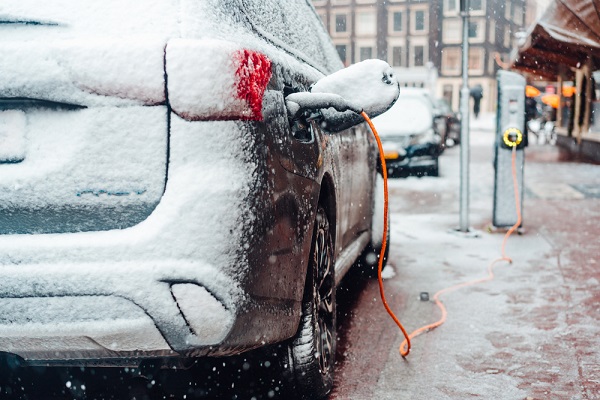
Although the government paused its phased-in ban on conventionally-powered vehicle sales in the face of heavy tariff-related headwinds to Canada’s automobile sector, it still insists that all new light-duty vehicle sales by 2035 must be electric. Liberal MPs on the House of Commons Industry Committee recently voted against a Conservative motion calling for repeal of the EV mandate. Meanwhile, Canadian consumers are voting with their wallets. In September, only 10.2 per cent of new motor vehicle sales were “zero-emission,” an ominous18.2 per cent decline from last year.
If the Carney government continues down its current path, it will only make productivity and consumer welfare worse. It should change course to reverse Canada’s economic underperformance and help give living standards a much-needed boost.

From Resource Works
Gitxaala has changed all the ground rules in British Columbia reshaping the risks around mills, mines and the North Coast transmission push.
The British Columbia Court of Appeal’s decision in Gitxaala v. British Columbia (Chief Gold Commissioner) is poised to reshape how the province approves and defends major resource projects, from mills and mines to new transmission lines.
In a split ruling on 5 December, the court held that British Columbia’s Declaration on the Rights of Indigenous Peoples Act makes consistency with the United Nations Declaration on the Rights of Indigenous Peoples a question courts can answer. The majority went further, saying UNDRIP now operates as a general interpretive aid across provincial law and declaring the Mineral Tenure Act’s automatic online staking regime inconsistent with article 32(2).
University of Saskatchewan law professor Dwight Newman, who has closely followed the case, says the majority has stretched what legislators thought they were doing when they passed the statute. He argues that section 2 of British Columbia’s UNDRIP law, drafted as a purpose clause, has been turned from guidance for reading that Act into a tool for reading all provincial laws, shifting decisions that were meant for cabinet and the legislature toward the courts.
The decision lands in a province already coping with legal volatility on land rights. In August, the Cowichan Tribes title ruling raised questions about the security of fee simple ownership in parts of Richmond, with critics warning that what used to be “indefeasible” private title may now be subject to senior Aboriginal claims. Newman has called the resulting mix of political pressure, investor hesitation and homeowner anxiety a “bubbling crisis” that governments have been slow to confront.
Gitxaala’s implications reach well beyond mining. Forestry communities are absorbing another wave of closures, including the looming shutdown of West Fraser’s 100 Mile House mill amid tight fibre and softwood duties. Industry leaders have urged Ottawa to treat lumber with the same urgency as steel and energy, warning that high duties are squeezing companies and towns, while new Forests Minister Ravi Parmar promises to restore prosperity in mill communities and honour British Columbia’s commitments on UNDRIP and biodiversity, as environmental groups press the government over pellet exports and protection of old growth.
At the same time, Premier David Eby is staking his “Look West” agenda on unlocking about two hundred billion dollars in new investment by 2035, including a shift of trade toward Asia. A centrepiece is the North Coast Transmission Line, a grid expansion from Prince George to Bob Quinn Lake that the government wants to fast track to power new mines, ports, liquefied natural gas facilities and data centres. Even as Eby dismisses a proposed Alberta to tidewater oil pipeline advanced under a new Alberta memorandum as a distraction, Gitxaala means major energy corridors will also be judged against UNDRIP in court.
Supporters of the ruling say that clarity is overdue. Indigenous nations and human rights advocates who backed the appeal have long argued that governments sold UNDRIP legislation as more than symbolism, and that giving it judicial teeth will front load consultation, encourage genuine consent based agreements and reduce the risk of late stage legal battles that can derail projects after years of planning.
Critics are more cautious. They worry that open ended declarations about inconsistency with UNDRIP will invite strategic litigation, create uncertainty around existing approvals and tempt courts into policy making by another name, potentially prompting legislatures to revisit UNDRIP statutes altogether. For now, the judgment leaves British Columbia with fewer excuses: the province has built its growth plans around big, nation building projects and reconciliation framed as partnership with Indigenous nations, and Gitxaala confirms that those partnerships now have a hard legal edge that will shape the next decade of policy and investment.
Resource Works News


Can the COVID Scamsters Stick the Landing?
Canada’s EV Mandate Is Running On Empty

Why Does Canada “Lead” the World in Funding Racist Indoctrination?

Frances Widdowson’s Arrest Should Alarm Every Canadian

Canadian bishops condemn Liberal ‘hate speech’ proposal that could criminalize quoting Scripture

Trump Deals Biden’s EV Dreams A Death Blow

Canadian Health Department funds study to determine effects of COVID lockdowns on children
-
 Agriculture2 days ago
Growing Alberta’s fresh food future
-
 National23 hours ago
Canada’s free speech record is cracking under pressure
-
 Crime2 days ago
U.S. seizes Cuba-bound ship with illicit Iranian oil history
-
 Daily Caller2 days ago
US Supreme Court Has Chance To End Climate Lawfare
-
 Business1 day ago
Albertans give most on average but Canadian generosity hits lowest point in 20 years
-
 Censorship Industrial Complex2 days ago
Conservative MP calls on religious leaders to oppose Liberal plan to criminalize quoting Scripture
-
 International23 hours ago
100 Catholic schoolchildren rescued, Nigeria promises release of remaining hostages
-
 International2 days ago
Trump admin wants to help Canadian woman rethink euthanasia, Glenn Beck says