
Uncategorized
Over 7K-strong, migrant caravan pushes on; still far from US


TAPACHULA, Mexico — Thousands of Central American migrants resumed an arduous trek toward the U.S. border Monday, with many bristling at suggestions there could be terrorists among them and saying the caravan is being used for political ends by U.S. President Donald Trump.

The caravan’s numbers have continued to grow as they walk and hitch rides through hot and humid weather, and the United Nations estimated that it currently comprises some 7,200 people, “many of whom intend to continue the march north.”
However, they were still at least 1,140 miles (1,830
The same could well happen this time around as some turn back, splinter off on their own or decide to take their chances on asylum in Mexico — as 1,128 have done so far, according to the country’s Interior Department.
While such caravans have occurred semi-regularly over the years, this one has become a particularly hot topic ahead of the Nov. 6 midterm elections in the U.S., and an immigrant rights activist
“It is a shame that a president so powerful uses this caravan for political ends,” said Irineo Mujica of the group Pueblo Sin Fronteras — People Without Borders — which works to provide humanitarian aid to migrants.
Some have questioned the timing so close to the vote and whether some political force was behind it, though by all appearances it began as a group of about 160 who decided to band together in Honduras for protection and snowballed as they moved north.
“No one is capable of organizing this many people,” Mujica said, adding that there are only two forces driving them: “hunger and death.”
Earlier in the day Trump renewed threats against Central American governments and blasted Democrats via Twitter for what he called “pathetic” immigration laws.
In another tweet, he blamed Guatemala, Honduras and El Salvador for not stopping people from leaving their countries. “We will now begin cutting off, or substantially reducing, the massive foreign aid routinely given to them,” he wrote.
A team of AP journalists
It was clear, though, that more migrants were continuing to join the caravan.
Ana Luisa Espana, a laundry worker from Chiquimula, Guatemala, joined the caravan as she saw it pass through her country.
Even though the goal is to reach the U.S. border, she said: “We only want to work and if a job turns up in Mexico, I would do it. We would do anything, except bad things.”
Denis Omar Contreras, a Honduran-born caravan leader also with Pueblo Sin Fronteras, said accusations that the caravan is
“There isn’t a single terrorist here,” Contreras said. “We are all people from Honduras, El Salvador, Guatemala and Nicaragua. And as far as I know there are no terrorists in these four countries, at least beyond the corrupt governments.”
The migrants, many of them with blistered and bandaged feet, left the southern city of Tapachula in the early afternoon Monday under a burning sun bound for Huixtla, about 25 miles (40
In interviews along the journey, migrants have said they are fleeing widespread violence, poverty and corruption. The caravan is unlike previous mass migrations for its unprecedented large numbers and because it largely sprang up spontaneously through word of mouth.
Carlos Leonidas Garcia Urbina, a 28-year-old from Tocoa, Honduras, said he was cutting the grass in his father’s yard when he heard about the caravan, dropped the shears on the ground and ran to join with just 500 lempiras ($20) in his pocket.
“We are going to the promised land,” Garcia said, motioning to his fellow
Motorists in pickups and other vehicles have been offering the migrants rides, often in overloaded truck beds, and a male migrant fell from the back of one Monday and died.
“It is the responsibility of the driver, but it is very dangerous, and there you have the consequences,” Mexican federal police officer Miguel Angel Dominguez said, pointing to a puddle of blood around the man’s head.
Police started stopping crowded trucks and forcing people to get off.
Caravan leaders have not defined the precise route or decided where on the U.S. border they want to arrive, but in recent years most Central American migrants
Late Sunday, authorities in Guatemala said another group of about 1,000 migrants had entered that country from Honduras.
Red Cross official Ulises Garcia said some injured people refused to be taken to clinics or hospitals.
“We have had people who have ankle or shoulder injuries, from falls during the trip, and even though we have offered to take them somewhere where they can get better care, they have refused, because they fear they’ll be detained and deported,” Garcia said.
Roberto Lorenzana, a spokesman for El Salvador’s presidency, said his government hopes tensions over the caravan decrease after the U.S. elections.
“We have confidence in the maturity of United States authorities to continue strengthening a positive relationship with our country,” Lorenzana said.
Asked if he thinks Trump will follow through on his threat to cut aid to El Salvador, he said, “I don’t know. Of course the president has a lot of power, but they will have to explain it there to the different government structures.”
Lorenzana added that El Salvador has significantly reduced violence, a key driver of migration, and that the flow of Salvadoran migrants has dropped 60
U.N. deputy spokesman Farhan Haq said large numbers of migrants were still arriving in Mexico and were “likely to remain in the country for an extended period.”
The first waves of migrants began arriving in the southern town of Huixtla after an exhausting eight-hour trek and quickly staked out grassy spots in the town square to bed down overnight.
Marlon Anibal Castellanos, a 27-year-old former bus driver from San Pedro Sula, Honduras, roped a bit of plastic tarp to a tree to shelter his wife, 6-year-old son and 9-year-old daughter.
Castellanos said the family walked for six hours until they could go no farther. They saw the dead man who fell from the truck, and the danger of being on the road was troublesome, out in the middle of the countryside far from an ambulance or medical care should the kids to pass out in the heat.
“It’s hard to travel with children, Castellanos said.”
___
Associated Press writers Peter Orsi in Mexico City, Edie Lederer at the United Nations and Marcos Aleman in San Salvador, El Salvador, contributed to this report.
Mark Stevenson, The Associated Press


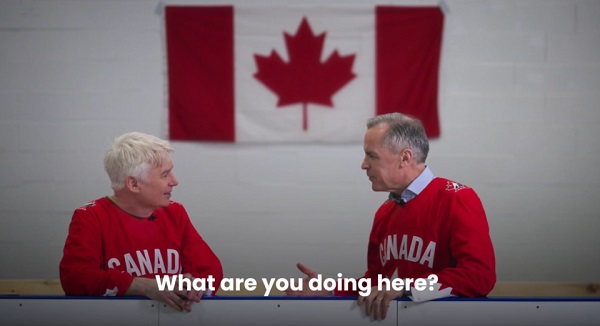

The cost of the bureaucracy increased by $6 billion last year, according to newly released numbers in Public Accounts disclosures. The Canadian Taxpayers Federation is calling on Prime Minister Mark Carney to immediately shrink the bureaucracy.
“The Public Accounts show the cost of the federal bureaucracy is out of control,” said Franco Terrazzano, CTF Federal Director. “Tinkering around the edges won’t cut it, Carney needs to take urgent action to shrink the bloated federal bureaucracy.”
The federal bureaucracy cost taxpayers $71.4 billion in 2024-25, according to the Public Accounts. The cost of the federal bureaucracy increased by $6 billion, or more than nine per cent, over the last year.
The federal bureaucracy cost taxpayers $39.6 billion in 2015-16, according to the Public Accounts. That means the cost of the federal bureaucracy increased 80 per cent over the last 10 years. The government added 99,000 extra bureaucrats between 2015-16 and 2024-25.
Half of Canadians say federal services have gotten worse since 2016, despite the massive increase in the federal bureaucracy, according to a Leger poll.
Not only has the size of the bureaucracy increased, the cost of consultants, contractors and outsourcing has increased as well. The government spent $23.1 billion on “professional and special services” last year, according to the Public Accounts. That’s an 11 per cent increase over the previous year. The government’s spending on professional and special services more than doubled since 2015-16.
“Taxpayers should not be paying way more for in-house government bureaucrats and way more for outside help,” Terrazzano said. “Mere promises to find minor savings in the federal bureaucracy won’t fix Canada’s finances.
“Taxpayers need Carney to take urgent action and significantly cut the number of bureaucrats now.”
Table: Cost of bureaucracy and professional and special services, Public Accounts
| Year | Bureaucracy | Professional and special services |
|
$71,369,677,000 |
$23,145,218,000 |
|
|
$65,326,643,000 |
$20,771,477,000 |
|
|
$56,467,851,000 |
$18,591,373,000 |
|
|
$60,676,243,000 |
$17,511,078,000 |
|
|
$52,984,272,000 |
$14,720,455,000 |
|
|
$46,349,166,000 |
$13,334,341,000 |
|
|
$46,131,628,000 |
$12,940,395,000 |
|
|
$45,262,821,000 |
$12,950,619,000 |
|
|
$38,909,594,000 |
$11,910,257,000 |
|
|
$39,616,656,000 |
$11,082,974,000 |


From the Daily Caller News Foundation
By Jason Hopkins
The Trump administration is creating a first-of-its-kind task force aimed at ushering in a new “Golden Age” of beautiful infrastructure across the U.S.
The Department of Transportation (DOT) will announce the establishment of the Beautifying Transportation Infrastructure Council (BTIC) on Thursday, the Daily Caller News Foundation exclusively learned. The BTIC seeks to advise Transportation Secretary Sean Duffy on design and policy ideas for key infrastructure projects, including highways, bridges and transit hubs.
“What happened to our country’s proud tradition of building great, big, beautiful things?” Duffy said in a statement shared with the DCNF. “It’s time the design for America’s latest infrastructure projects reflects our nation’s strength, pride, and promise.”
“We’re engaging the best and brightest minds in architectural design and engineering to make beautiful structures that move you and bring about a new Golden Age of Transportation,” Duffy continued.
Mini scoop – here is the DOT’s rollout of its Beautifying Transportation Infrastructure Council, which will be tasked with making our buildings beautiful again. pic.twitter.com/
9iV2xSxdJM — Jason Hopkins (@jasonhopkinsdc) October 23, 2025
The DOT is encouraging nominations of the country’s best architects, urban planners, artists and others to serve on the council, according to the department. While ensuring that efficiency and safety remain a top priority, the BTIC will provide guidance on projects that “enhance” public areas and develop aesthetic performance metrics.
The new council aligns with an executive order signed by President Donald Trump in August 2025 regarding infrastructure. The “Making Federal Architecture Beautiful Again” order calls for federal public buildings in the country to “respect regional architectural heritage” and aims to prevent federal construction projects from using modernist and brutalist architecture styles, instead returning to a classical style.
“The Founders, in line with great societies before them, attached great importance to Federal civic architecture,” Trump’s order stated. “They wanted America’s public buildings to inspire the American people and encourage civic virtue.”
“President George Washington and Secretary of State Thomas Jefferson consciously modeled the most important buildings in Washington, D.C., on the classical architecture of ancient Athens and Rome,” the order continued. “Because of their proven ability to meet these requirements, classical and traditional architecture are preferred modes of architectural design.”
The DOT invested millions in major infrastructure projects since Trump’s return to the White House. Duffy announced in August a $43 million transformation initiative of the New York Penn Station in New York City and in September unveiledmajor progress in the rehabilitation and modernization of Washington Union Station in Washington, D.C.
The BTIC will comprise up to 11 members who will serve two-year terms, with the chance to be reappointed, according to the DOT. The task force will meet biannually. The deadline for nominations will end Nov. 21.


The Recall Trap: 21 Alberta MLA’s face recall petitions

Canada’s free speech record is cracking under pressure

Taxpayers Federation calls on politicians to reject funding for new Ottawa Senators arena

Trump DOJ seeks to quash Pfizer whistleblower’s lawsuit over COVID shots

U.S. seizes Cuba-bound ship with illicit Iranian oil history

Albertans give most on average but Canadian generosity hits lowest point in 20 years

100 Catholic schoolchildren rescued, Nigeria promises release of remaining hostages
-
 Digital ID2 days ago
Canada releases new digital ID app for personal documents despite privacy concerns
-
 Energy2 days ago
Canada’s sudden rediscovery of energy ambition has been greeted with a familiar charge: hypocrisy
-
 Business9 hours ago
Ottawa Pretends To Pivot But Keeps Spending Like Trudeau
-
 armed forces1 day ago
Ottawa’s Newly Released Defence Plan Crosses a Dangerous Line
-
 Energy9 hours ago
Liberals Twisted Themselves Into Pretzels Over Their Own Pipeline MOU
-
 Censorship Industrial Complex6 hours ago
How Wikipedia Got Captured: Leftist Editors & Foreign Influence On Internet’s Biggest Source of Info
-
 Bruce Dowbiggin2 days ago
NFL Ice Bowls Turn Down The Thermostat on Climate Change Hysteria
-
 Energy2 days ago
Can we not be hysterical about AI and energy usage?