
Agriculture
Grain farmers warn Canadians that retaliatory tariffs against Trump, US will cause food prices to soar


From LifeSiteNews

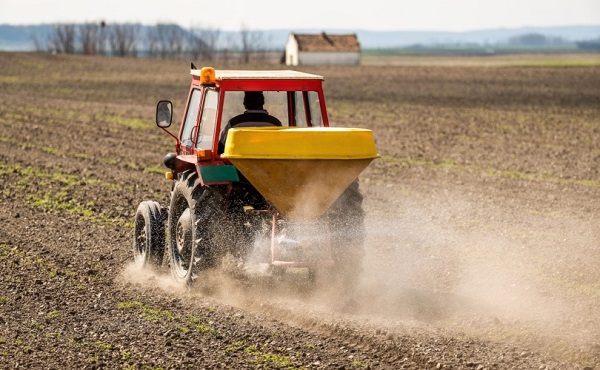
One of Canada’s prominent agricultural advocacy groups warned that should the federal Liberal government impose counter-tariffs on the United States, it could make growing food more expensive and would be a nightmare for Canadian farmers and consumers.
According to Grain Growers of Canada (GGC) executive director Kyle Larkin, the cost of phosphate fertilizer, which Canada does not make, would shoot up should the Mark Carney Liberal government enact counter-tariffs to U.S. President Donald Trump’s.
Larkin said recently that there is no “domestic phosphate production here (in Canada), so we rely on imports, and the United States is our major supplier.”
“A 25% tariff on phosphate fertilizer definitely would have an impact on grain farmers,” he added.
According to Statistics Canada, from 2018 to 2023, Canada imported about 4.12 million tonnes of fertilizer from the United States. This amount included 1.46 million tonnes of monoammonium phosphates (MAP) as well as 92,027 tonnes of diammonium phosphate (DAP).
Also imported were 937,000 tonnes of urea, 310,158 tonnes of ammonium nitrate, and 518,232 tonnes of needed fertilizers that have both nitrogen and phosphorus.
According to Larkin, although most farmers have purchased their fertilizer for 2025, they would be in for a rough 2026 should the 25 percent tariffs on Canadian exports by the U.S. still stand.
Larkin noted how Canadian farmers are already facing “sky-high input costs and increased government regulations and taxation.”
He said the potential “tariff on fertilizer is a massive concern.”
“If Ottawa goes ahead, we’re calling on them to compensate producers,” he said, adding that any funds raised through tariffs on “essential products like fertilizer should go back to the producer.”
Trump has routinely cited Canada’s lack of action on drug trafficking and border security as the main reasons for his punishing tariffs.
About three weeks ago, Trump announced he was giving Mexico and Canada a 30-day reprieve on 25 percent export tariffs for goods covered by the United States-Mexico-Canada Agreement (USMCA) on free trade.
However, Ontario Premier Doug Ford, despite the reprieve from Trump, later threatened to impose a 25 percent electricity surcharge on three American states. Ford, however, quickly stopped his planned electricity surcharge after Trump threatened a sharp increase on Canadian steel and aluminum in response to his threats.
As it stands, Canada has in place a 25 percent counter tariff on some $30 billion of U.S. goods.
It is not yet clear how new Prime Minister Mark Carney will respond to Trump’s tariffs. However, he may announce something after he calls the next election, which he is expected to do March 23.


A new program funded by the Sustainable Canadian Agricultural Partnership will accelerate expansion in Alberta greenhouses and vertical farms.
Albertans want to keep their hard-earned money in the province and support producers by choosing locally grown, high-quality produce. The new three-year, $10-milllion Growing Greenhouses program aims to stimulate industry growth and provide fresh fruit and vegetables to Albertans throughout the year.
“Everything our ministry does is about ensuring Albertans have secure access to safe, high-quality food. We are continually working to build resilience and sustainability into our food production systems, increase opportunities for producers and processors, create jobs and feed Albertans. This new program will fund technologies that increase food production and improve energy efficiency.”
“Through this investment, we’re supporting Alberta’s growers and ensuring Canadians have access to fresh, locally-grown fruits and vegetables on grocery shelves year-round. This program strengthens local communities, drives innovation, and creates new opportunities for agricultural entrepreneurs, reinforcing Canada’s food system and economy.”
The Growing Greenhouses program supports the controlled environment agriculture sector with new construction or expansion improvements to existing greenhouses and vertical farms that produce food at a commercial scale. It also aligns with Alberta’s Buy Local initiative launched this year as consumers will be able to purchase more local produce all year-round.
The program was created in alignment with the needs identified by the greenhouse sector, with a goal to reduce seasonal import reliance entering fall, which increases fruit and vegetable prices.
“This program is a game-changer for Alberta’s greenhouse sector. By investing in expansion and innovation, we can grow more fresh produce year-round, reduce reliance on imports, and strengthen food security for Albertans. Our growers are ready to meet the demand with sustainable, locally grown vegetables and fruits, and this support ensures we can do so while creating new jobs and opportunities in communities across the province. We are very grateful to the Governments of Canada and Alberta for this investment in our sector and for working collaboratively with us.”
Sustainable Canadian Agricultural Partnership (Sustainable CAP)
Sustainable CAP is a five-year, $3.5-billion investment by federal, provincial and territorial governments to strengthen competitiveness, innovation and resiliency in Canada’s agriculture, agri-food and agri-based products sector. This includes $1 billion in federal programs and activities and $2.5 billion that is cost-shared 60 per cent federally and 40 per cent provincially/territorially for programs that are designed and delivered by provinces and territories.
Quick facts
- Alberta’s greenhouse sector ranks fourth in Canada:
- 195 greenhouses produce $145 million in produce and 60 per cent of them operate year-round.
- Greenhouse food production is growing by 6.2 per cent annually.
- Alberta imports $349 million in fresh produce annually.
- The program supports sector growth by investing in renewable and efficient energy systems, advanced lighting systems, energy-saving construction, and automation and robotics systems.
Related information

From the Fraser Institute
By Annika Segelhorst and Elmira Aliakbari
Canadians care about the environment and breathing clean air. In 2023, the share of Canadians concerned about the state of outdoor air quality was 7 in 10, according to survey results from Abacus Data. Yet Canada outperforms most comparable high-income countries on air quality, suggesting a gap between public perception and empirical reality. Overall, Canada ranks 8th for air quality among 31 high-income countries, according to our recent study published by the Fraser Institute.
A key determinant of air quality is the presence of tiny solid particles and liquid droplets floating in the air, known as particulates. The smallest of these particles, known as fine particulate matter, are especially hazardous, as they can penetrate deep into a person’s lungs, enter the blood stream and harm our health.
Exposure to fine particulate matter stems from both natural and human sources. Natural events such as wildfires, dust storms and volcanic eruptions can release particles into the air that can travel thousands of kilometres. Other sources of particulate pollution originate from human activities such as the combustion of fossil fuels in automobiles and during industrial processes.
The World Health Organization (WHO) and the Canadian Council of Ministers of the Environment (CCME) publish air quality guidelines related to health, which we used to measure and rank 31 high-income countries on air quality.
Using data from 2022 (the latest year of consistently available data), our study assessed air quality based on three measures related to particulate pollution: (1) average exposure, (2) share of the population at risk, and (3) estimated health impacts.
The first measure, average exposure, reflects the average level of outdoor particle pollution people are exposed to over a year. Among 31 high-income countries, Canadians had the 5th-lowest average exposure to particulate pollution.
Next, the study considered the proportion of each country’s population that experienced an annual average level of fine particle pollution greater than the WHO’s air quality guideline. Only 2 per cent of Canadians were exposed to fine particle pollution levels exceeding the WHO guideline for annual exposure, ranking 9th of 31 countries. In other words, 98 per cent of Canadians were not exposed to fine particulate pollution levels exceeding health guidelines.
Finally, the study reviewed estimates of illness and mortality associated with fine particle pollution in each country. Canada had the fifth-lowest estimated death and illness burden due to fine particle pollution.
Taken together, the results show that Canada stands out as a global leader on clean air, ranking 8th overall for air quality among high-income countries.

Canada’s record underscores both the progress made in achieving cleaner air and the quality of life our clean air supports.

Annika Segelhorst
Junior Economist

Elmira Aliakbari

The Climate-Risk Industrial Complex and the Manufactured Insurance Crisis

The Recall Trap: 21 Alberta MLA’s face recall petitions

They never wanted a pipeline! – Deputy Conservative Leader Melissa Lantsman

Liberals gain support for ‘hate speech’ bill targeting Bible passages against homosexuality

Inside the Fortified Sinaloa-Linked Compound Canada Still Can’t Seize After 12 Years of Legal War

The $50 Billion Question: EVs Never Delivered What Ottawa Promised

Canada’s free speech record is cracking under pressure
-
 Business2 days ago
Inflation Reduction Act, Green New Deal Causing America’s Energy Crisis
-
 Crime2 days ago
Terror in Australia: 12 killed after gunmen open fire on Hanukkah celebration
-
 Media2 days ago
Reporters determined to drive their industry and its reputation into the abyss one Tweet at a time
-
 Crime2 days ago
Hero bystander disarms shooter in Australian terror attack
-
 Alberta9 hours ago
Schools should go back to basics to mitigate effects of AI
-
 Business8 hours ago
Major tax changes in 2026: Report
-
 Daily Caller8 hours ago
Chinese Billionaire Tried To Build US-Born Baby Empire As Overseas Elites Turn To American Surrogates
-
 Daily Caller8 hours ago
Two states designate Muslim group as terrorist