
espionage
Government-shackled interference inquiry unlikely to get answers


From the MacDonald Laurier Institute
By Ryan Alford

” the commission will receive a large portion of its testimony in secret with no cross-examination by the parties. Additionally, the government will have the last word not merely on what information is provided to the inquiry, but on what the commission can publish — even in its final report “
The foreign interference inquiry into the 2019 and 2021 elections (also known as the “Hogue commission,” named for Commissioner Marie-Josée Hogue) is holding preliminary hearings this week. Those with experience with public inquiries in general, and with the Rouleau commission into the emergency powers declaration of 2022 in particular, can see it will be a failure.
When it comes to public inquiries, the government makes the rules, and when it says, “Heads I win, tails you lose,” the only winning move is not to play. Those rules, written by the cabinet in the form of a public inquiry commission’s mandate and terms of reference, allow the government to reveal and restrict information about its own failures as it sees fit.
The most important feature of the Hogue commission’s mandate is the restriction on the information provided to the inquiry: the terms of reference state plainly that if the government didn’t provide a confidential cabinet document to Special Rapporteur David Johnston back in 2023 when he was tasked with looking into election interference without the authority of a public inquiry, the commissioner won’t see it, either.
The details that made it into Johnston’s final report were far more tame than what the Canadian Security Intelligence Service (CSIS) allegedly told former Conservative leader Erin O’Toole when he led the party. O’Toole told Parliament that CSIS informed him that he had been targeted in an ongoing campaign of misinformation coordinated by the Chinese Communist Party (CCP). When asked, Johnston said that was news to him. (Subsequently, NDP MP Jenny Kwan added that CSIS had told her she was an “evergreen” target of Beijing.)
When Johnston was confronted about the discrepancies, he merely noted that the information CSIS revealed had not been made available to him at the time, and he had “reported on what was made available to us … the amount of information available was an ocean and we saw a very large lake.” (Unfortunately, Johnston could not see any issue with the political equivalent of investigating the causes of the sinking of the Titanic when directed to do so at Lac Tremblant).
Johnston concluded, based on the information provided to him by the government, that he could not attribute the misinformation spread during the 2021 election to state actors. Information coming from many unofficial sources — and via leaks — makes this untenable. Evidence also shows that Chinese Canadians in Richmond, B.C. were bombarded with slander targeting local Conservative MP Kenny Chiu on the WeChat social media platform.
The Hogue commission should add to its focus the activities of Senator Yuen Pau Woo — and the government’s knowledge of these activities. However, once again, the commission’s ability to investigate hinges entirely on the government’s willingness to hand over sensitive and potentially incriminating documents, and for those targeted by misinformation to speak freely knowing that information will be available immediately to those they named as their persecutors.
Until 2022, Woo served as the facilitator (i.e., caucus leader) of the Liberal-aligned Independent Senators Group. In a decision made on Dec. 4, Commissioner Hogue granted Woo the right to participate in the foreign interference inquiry as an intervenor, as “he will contribute the perspective of a political figure working to address issues of foreign interference while advocating for a community that risks being stigmatized or negatively impacted by counter-interference measures, whether proposed or put in place.”
Woo has been accused of adopting the CCP’s rhetoric but has denied working for China. Groups targeted by CCP intelligence operations in Canada (including Uyghurs and Hong Kongers) opposed Woo’s participation in the interference inquiry (along with that of politicians Han Dong and Michael Chan) on the ground that he would be allowed “access to sensitive information shared by witnesses or victims (and) will deter witnesses from speaking freely.”
Their concerns were aired around the same time as a report emerged alleging Woo had pledged to support the United Front, which is an arm of the CCP. In December, investigative journalist Sam Cooper reported that a recording existed of Woo briefing the Canada Committee 100 Society — a Chinese cultural organization with ties to the United Front according to declassified American intelligence — in May of 2020. In that recording, Woo advised members that groups officially listed by the CCP as United Front Work Department (UFWD) organizations cannot (and presumably, will not) be considered agents of the Chinese state.
However, a Privy Council Office report from 2020 shows that the government knew the CCP’s UFWD had allegedly coordinated electoral interference through community groups. The report specified that the UFWD had facilitated electoral interference in 2019, noting that “the UFWD’s extensive network of quasi-official and local community and interest groups allow it to obfuscate communication and the flow of funds between Canadian targets and Chinese officials.” Despite all this, Woo had reassured the Canada Committee 100 Society that they could continue their activities.
It is already a given that the commission will receive a large portion of its testimony in secret with no cross-examination by the parties. Additionally, the government will have the last word not merely on what information is provided to the inquiry, but on what the commission can publish — even in its final report, as the commission’s terms of reference refer to disclosure procedures that clearly implicate the attorney general’s power to withhold information for the purpose of national security.
This is why the first two days of the inquiry were devoted to managing expectations about how the public’s right to know would need to be “balanced” against national security confidentiality and all the other reasons the government will invoke to justify withholding and censoring information.
It is ironic that at an inquiry made possible by whistleblowers within CSIS, those at the commission will be classed “persons personally bound to secrecy” by an order-in-council issued in tandem with the mandate of the Hogue commission. Most won’t mind; the Hogue commission hired a number of personnel who did yeoman service at the Rouleau commission, including its lead counsel and research council chair.
This time around, there have been no grand public assurances that the government is committed to providing unprecedented access to information. Rather, we’ve been put on notice that obfuscation and dithering over confidentiality will be used to beat us down.
Some parties, like the Uyghur Rights Advocacy Project, have already indicated they have had enough of the charade. Others, including those like members of Parliament Michael Chong and Jenny Kwan, who were the victims of shocking hostility and ineptitude from the CCP and the government, will likely persist, although it is already clear that they deserve much more information, and much better treatment from the Hogue commission.
As for myself, I can only say, “Fool me once, shame on you. Fool me twice, shame on me.”
Ryan Alford is a professor in the Bora Laskin Faculty of Law at Lakehead University and a senior fellow at the Macdonald-Laurier Institute.



AI-driven surveillance is shifting from spotting suspects to mapping ordinary life, turning everyday travel into a stream of behavioral data
|
|
espionage
Carney Floor Crossing Raises Counterintelligence Questions aimed at China, Former Senior Mountie Argues
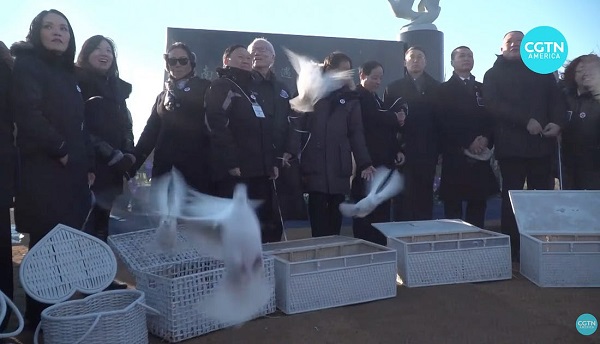
Michael Ma has recently attended events with Chinese consulate officials, leaders of a group called CTCCO, and the Toronto “Hongmen,” where diaspora community leaders and Chinese diplomats advocated Beijing’s push to subordinate Taiwan. These same entities have also appeared alongside Canadian politicians at a “Nanjing” memorial in Toronto.

By Garry Clement
Michael Ma’s meeting with consulate-linked officials proves no wrongdoing—but, Garry Clement writes, the timing and optics highlight vulnerabilities Canada still refuses to treat as a security issue.
I spent years in the Royal Canadian Mounted Police learning a simple rule. You assess risk based on capability, intent, and opportunity — not on hope or assumptions. When those three factors align, ignoring them is negligence.
That framework applies directly to Canada’s relationship with the People’s Republic of China — and to recent political events that deserve far more scrutiny than they have received.
Michael Ma’s crossover to the Liberal Party may be completely legitimate, although numerous observers have noted oddities in the timing, messaging, and execution surrounding Ma’s move, which brings Mark Carney within one seat of majority rule.
There is no evidence of wrongdoing.
But from a law enforcement and national security perspective, that is beside the point. Counterintelligence is not about proving guilt after the fact; it is about identifying vulnerabilities before damage is done — and about recognizing when a situation creates avoidable exposure in a known threat environment.
A constellation of ties and public appearances — reported by The Bureau and the National Post — has fueled questions about Ma’s China-facing judgment and vetting. Those reports describe his engagement with a Chinese-Canadian Conservative network that intervened in party leadership politics by urging Erin O’Toole to resign for his “anti-China” stance after 2021 and later calling for Pierre Poilievre’s ouster — while advancing Beijing-aligned framing on key Canada–China disputes.
The National Post has also reported that critics point to Ma’s pro-Beijing community endorsement during his campaign, and his appearance at a Toronto dinner for the Chinese Freemasons — where consular officials used the forum to promote Beijing’s “reunification” agenda for Taiwan. Ma reportedly offered greetings and praised the organization, but did not indicate support for annexation.
Open-source records also show that the same Toronto Chinese Freemasons and leaders Ma has met from a group called CTCCO sponsored and supported Ontario’s “Nanjing Massacre Commemorative Day” initiative (Bill 79) — a campaign celebrated in Chinese state and Party-aligned media, alongside public praise from PRC consular officials in Canada.
China Daily reported in 2018 that the Nanjing memorial was jointly sponsored by CTCCO and the Chinese Freemasons of Canada (Toronto), supported by more than $180,000 in community donations.
Photos show that PRC consular officials and Toronto politicians appeared at related Nanjing memorial ceremonies, including Zhao Wei, the alleged undercover Chinese intelligence agent later expelled from Canada after The Globe and Mail exposed Zhao’s alleged targeting of Conservative MP Michael Chong and his family in Hong Kong.
The fact that Michael Ma recently met with some of the controversial pro-Beijing community figures and organizations described above — including leaders from the Hongmen ecosystem and the CTCCO — does not prove any nefarious intent in either his Conservative candidacy or his decision to cross the floor to Mark Carney.
But it does demonstrate something Ottawa keeps avoiding: the PRC’s influence work is often conducted in plain sight, through community-facing institutions, elite access, and “normal” relationship networks — the very channels that create leverage, deniability, and political pressure over time.
Canada’s intelligence community has been clear.
The Canadian Security Intelligence Service has repeatedly identified the People’s Republic of China as the most active and persistent foreign interference threat facing Canada. These warnings are not abstract. They are rooted in investigations, human intelligence, and allied reporting shared across the Five Eyes intelligence alliance.
At the center of Beijing’s approach is the United Front Work Department — a Chinese Communist Party entity tasked with influencing foreign political systems, cultivating elites, and shaping narratives abroad. In policing terms, it functions as an influence and access network: operating legally where possible, covertly where necessary, and always in service of the Party’s strategic objectives.
What differentiates the People’s Republic of China from most foreign actors is legal compulsion.
Under China’s National Intelligence Law, Chinese citizens and organizations can be compelled to support state intelligence work and to keep that cooperation secret. In practical terms, that creates an inherent vulnerability for democratic societies: coercive leverage — applied through family, travel, business interests, community pressure, and fear.
This does not mean Chinese-Canadians are suspect.
Quite the opposite — many are targets of intimidation themselves. But it does mean the Chinese Communist Party has a mechanism to exert pressure in ways democratic states do not. Ignoring that fact is not tolerance; it is a failure to understand the threat environment.
In the RCMP, we were trained to recognize that foreign interference rarely announces itself. It operates through relationships, access, favors, timing, and silence. It does not require ideological agreement — only opportunity and leverage.
That is why transparency matters. When political figures engage with representatives of an authoritarian state known for interference operations, the burden is not on the public to “prove” concern is justified. The burden is on officials to explain why there is none — and to demonstrate that basic safeguards are in place.
Canada’s allies have already internalized this reality. Australia, the United States, and the United Kingdom have all publicly acknowledged and legislated against People’s Republic of China political interference. Their assessments mirror ours. Their conclusions are the same.
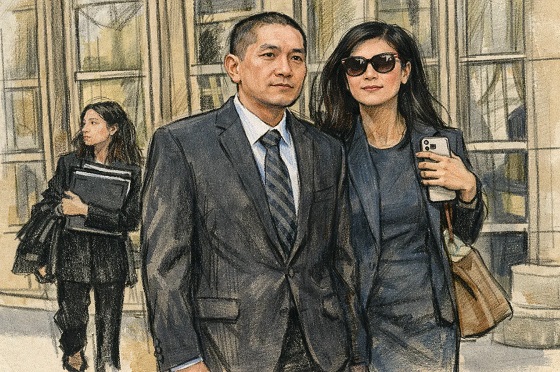
In the United States, the Linda Sun case — covered by The Bureau — illustrates, in the U.S. government’s telling, how United Front–style influence can be both deniable and effective: built through diaspora-facing proxies, insider access, and relationship networks that rarely look like classic espionage until the damage is done.
And this is not a niche concern.
Think tanks in both the United States and Canada — as well as allied research communities in the United Kingdom and Europe — have documented the scale and persistence of these political-influence ecosystems. Nicholas Eftimiades, an associate professor at Penn State and a former senior National Security Agency analyst, has estimated multiple hundreds of such entities are active in the United States. How many operate in Canada is the question Ottawa still refuses to treat with urgency — and, if an upcoming U.S. report is any indication, the answer may be staggering.
Canada’s hesitation to address United Front networks is not due to lack of information. It is due to lack of resolve.
From a law enforcement perspective, this is troubling. You do not wait for a successful compromise before tightening security. You act when the indicators are present — especially when your own intelligence agencies are sounding the alarm.
National security is not ideological. It is practical.
The Bureau is a reader-supported publication.
To receive new posts and support my work, consider becoming a free or paid subscriber.


Geopolitics no longer drives oil prices the way it used to
There’s No Bias at CBC News, You Say? Well, OK…
Carney Floor Crossing Raises Counterintelligence Questions aimed at China, Former Senior Mountie Argues
FDA warns ‘breast binder’ manufacturers to stop marketing to gender-confused girls
2025: The Year The Narrative Changed
Deadlocked Jury Zeroes In on Alleged US$40 Million PPE Fraud in Linda Sun PRC Influence Case
Australian PM booed at Bondi vigil as crowd screams “shame!”
-
 armed forces2 days ago
Remembering Afghanistan and the sacrifices of our military families
-
 Fraser Institute2 days ago
How to talk about housing at the holiday dinner table
-
 Opinion2 days ago
Pope Leo XIV’s Christmas night homily
-
 Frontier Centre for Public Policy1 day ago
Tent Cities Were Rare Five Years Ago. Now They’re Everywhere
-
 Fraser Institute21 hours ago
Carney government sowing seeds for corruption in Ottawa
-
 Alberta21 hours ago
Alberta Next Panel calls for less Ottawa—and it could pay off
-
 International20 hours ago
No peace on earth for ISIS: Trump orders Christmas strikes after Christian massacres
-
 Daily Caller19 hours ago
US Halts Construction of Five Offshore Wind Projects Due To National Security