
Addictions
Fuelling addiction – The “safe supply” disaster

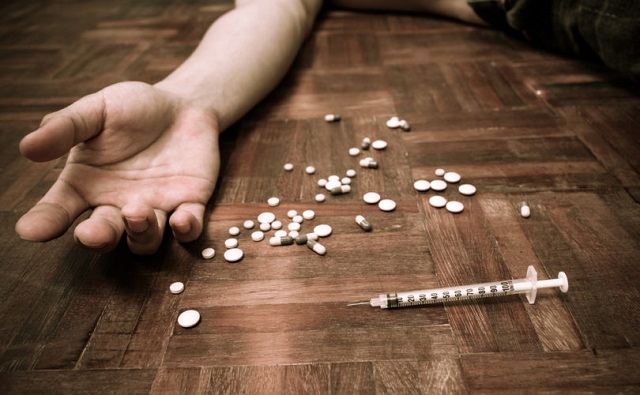


By Denise Denning

There is a growing schism in the Canadian addiction treatment community regarding safer supply.
[This article was originally published by the MacDonald Laurier Institute and has been syndicated with their permission]
As the death toll from the ongoing opioid poisoning crisis in Canada continues to rise, jurisdictions across the country struggle to find solutions. Safe consumption sites, where people can use drugs in a supervised setting that provides clean syringes and overdose kits, have opened across Canada. Addiction medicine clinics that provide treatments for drug use have proliferated nation-wide. Controversially, the Trudeau government has funded so-called “safer opioid supply” programs that provide powerful pharmaceutical opioids to people who use drugs with the presumption that they will use these in place of street drugs of unknown potency containing numerous and poorly understood toxic adulterants. But even though they lack those toxic adulterants, safer supply drugs are not safe. By virtue of the pharmacology inherent to all opioids, safer supply drugs may be increasing harm.
Unlike safe consumption sites, where people bring their own drugs and use them in a supervised environment, safer supply programs provide people who use opioids with up to 30 tablets per day of the powerful synthetic opioid hydromorphone to take away with them and use elsewhere without any supervision or proof that they are using the drugs themselves. “Safer supply services provide an alternative to the toxic illegal drug supply as a way to help prevent overdoses and can connect people to other health and social services,” touts Health Canada’s safer supply web page. Safer supply programs “build on existing approaches that provide medications to treat opioid use disorder” and these programs are “more flexible and do not necessarily focus on stopping drug use.”
Health Canada’s quietly optimistic tone is echoed and magnified by advocates and activists across the country, who insist that safer supply is “the most important intervention” to save the lives of people who use drugs and cite data suggesting that safer supply is a powerful harm reduction tool for helping people avoid the risks of exposure to sketchy street drugs. And the benefits of safer supply, proponents assert, go beyond saving people from overdose. Safer supply also protects people from the stigma associated with illicit drug use. “Overdose prevention measures that go beyond individual behaviour changes, including providing a safer supply of drugs and eliminating stigma, are paramount to mitigate harms,” asserts one review. “Increasing respectful treatment of people who use substances, and reducing stigma and trauma improves the health of communities,” a review of a drug checking service declares.
“Sociopolitical factors such as prohibition, stigma, and criminalization of people who use drugs have fuelled the current overdose crisis and toxic unregulated drug supply and limited the establishment and scale up of services for people who use drugs,” proclaims another paper promoting the benefits of safer supply.
Certainly, all of us working in addiction treatment agree that putting people in jail does not solve their drug use problems, and everyone should be able to access health care without concerns of being stigmatized. But suggesting that these factors have fuelled the current crisis is an assertion that not only lacks proof but also ignores the material reality of the pharmacology of these drugs and their impact on the human central nervous system.
There is a growing schism in the Canadian addiction treatment community regarding safer supply. Its opponents, who include prominent addiction medicine physicians across Canada, insist that none of the studies of safer supply consider the number of people in safer supply programs who sell or trade their safer supply drugs to buy fentanyl. They point out that the studies finding safer supply beneficial are too narrow in their scope because they only examine the benefits to the patients receiving the safer supply and do not consider diversion and its potential for harm by putting these drugs in the hands of people other than street drug users, such as youth, or people who have stopped using drugs.
In an article published by the Globe and Mail, addiction medicine physician and writer Dr. Vincent Lam wrote about how some of his patients are struggling with their addictions because the hydromorphone has become so cheap and readily available. “Patients of mine who were free of illicit opioids for years now struggle with hydromorphone, which they are buying from those to whom it is prescribed. One told me they prefer to sleep outside rather than in shelters, because they cannot avoid hydromorphone in the shelters. One who has never tried fentanyl – which hydromorphone is meant to protect them from – is injecting high doses of hydromorphone daily, struggling to get off, while their tolerance rapidly increases.”
Another critic of safer supply, Dr. Lori Regenstreif, has seen patients severely harmed when they crush and inject the tablets. “I’ve seen people become quadriplegic and paraplegic because the infection invaded their spinal cord and damaged their nervous system,” she said. And she called the studies in favour of safer supply “customer satisfaction surveys” that do not meet scientific standards of properly conducted research. For instance, a study that has been cited as powerful evidence for the effectiveness of safer supply did not control for patients using methadone or Suboxone, two well-established and effective treatments for opioid use disorder. At baseline, the control group and the study group were using these treatments at roughly the same rates. But the authors didn’t provide the number of participants using these treatments at the study’s end. So, the purported benefits of safer supply could have been from established treatments rather than safer supply.
A word about terminology: referring to these programs as “safer supply” is problematic because it implies that these programs are safe. Dr. Lori Regenstreif suggests the term “take home tablets” as a more neutral alternative that also describes exactly how these programs work. For the rest of this article, the term “take home tablets” or “prescribed opioids” will be used, only retaining “safer supply” in the previous paragraphs for the sake of clarity.
A review of 19 studies advocating for take home tablet programs found “no evidence demonstrating benefits.” For instance, only one of the studies recommended interventions that have been proven to address risk factors for addiction, even though all the studies found high rates of homelessness, unemployment, food insecurity, and other markers for poverty. And none of the studies investigated the implications of diversion, though there is increasing evidence that diversion is widespread. And a more recent review of these programs found that the “Safer Opioid Supply Policy” in British Columbia was associated with “a significant increase in opioid-related poisoning hospitalizations.”
The rhetoric is becoming increasingly heated and politicized. Supporters of take home tablet programs accuse its detractors of denying a potentially life-saving intervention to a vulnerable population of marginalized people. Critics, such as those discussed above, point to the paucity of good quality evidence and the plethora of potential harms from diversion. But what the discussion has been lacking is a consideration of how the pharmacology of these drugs should influence policies regarding the care provided to these marginalized and vulnerable people. Surely the way these drugs act in the human body should provide the underpinning for any evidence-based addiction management program.
Proponents of take home tablet programs will say, correctly, that opioids have been used for at least 3,000 years in the form of opium from Papaver somniferum, the poppy. Modern opioid pharmacology emerged out of the synthesis of morphine from opium in 1806. All opioids are derived from four compounds, including morphine, that are found in opium. Heroin is nothing more than morphine with a tweak to its molecule rendering it more fat soluble. Compared with water soluble substances, products that are fat soluble are better able to penetrate the blood brain barrier and enter the central nervous system. When heroin is injected, users experience a euphoric rush that they wouldn’t experience as intensely from injecting morphine, even though it’s almost the same drug as morphine, and within half an hour after injection, heroin is converted into morphine.
Stimulation of the opioid receptors by morphine and all its myriad opioid kin results in the classic effects of opioids such as pain relief, euphoria, sedation, respiratory depression, reduced heart rate, and a slowing of the gastrointestinal tract resulting in constipation. As the dosage is increased, respiration slows further, and patients sometimes experience nausea and vomiting. Depending on the dose taken and the person’s tolerance, increasing sedation may progress to coma and respiratory arrest. Opioids kill people by sedating them so deeply they stop breathing.
Subscribe for free to get Break The Needle’s latest news and analysis – or donate to our investigative journalism fund.
With chronic use, opioids cause adaptations in the body resulting in tolerance such that these habitual users require higher doses to achieve the same degree of euphoria. The flip side of tolerance is the withdrawal that happens when the person stops using and their autonomic nervous system goes into overdrive. The greater the tolerance, the worse the withdrawal, characterized by nausea and vomiting, diarrhea, muscle cramps, bone and joint aches, tremors, anxiety, goosebumps, sweating, restlessness. Opioid withdrawal isn’t generally fatal but may be if patients develop heart arrhythmias from electrolyte loss and autonomic overstimulation.
Tolerance and withdrawal are the evil twins of addiction. Addictive drugs have a rapid onset of action, produce a euphoriant effect, and have a short duration of action. The relative addictive potential of these drugs may be predicted by how much they adhere to these intersecting characteristics. For instance, morphine is less addictive than oxycodone, the active ingredient in OxyContin. Both morphine and oxycodone are rapid acting, produce euphoria, and have a short duration of action. Both may induce tolerance and withdrawal. But morphine gets metabolized to another substance that is more potent and sustains the opioid effect, and it accumulates if the person uses it every day. Morphine in effect has a longer duration of action compared with oxycodone, which has no active metabolites. A person who takes oxycodone will experience rapidly dropping blood levels as the drug is metabolized and excreted, leaving the user in withdrawal and craving more.
The manufacturers of the oxycodone product OxyContin infamously made a case for their product being less addictive because they formulated it into a long-acting dosage form that released the drug gradually over an 8-to-12-hour period. The story of OxyContin has been exhaustively covered elsewhere, and I won’t rehash it here. In brief: people quickly discovered that OxyContin’s sustained-release matrix could be easily defeated by chewing or crushing the tablets, thus releasing the drug all at once, and as knowledge of this hack spread, a growing public health crisis ensued, resulting in the destruction of communities, massive numbers of arrests as people seeking pain relief became criminalized by their addiction, and thousands of deaths across Canada and the United States.
The hydromorphone given to fentanyl users in safer supply programs is about five times stronger than morphine and four times stronger than oxycodone. It exerts its maximal effect in one to two hours and lasts for around three to four hours. In terms of relative addictiveness by virtue of its pharmacology, hydromorphone in theory would sit between heroin and fentanyl, though in a subset of a study called NAOMI, where people who use heroin were provided hydromorphone in place of heroin without their knowledge, none of the 25 participants could tell the difference.
Then there’s fentanyl. When injected, the onset of action for morphine and oxycodone is about 10 minutes. Injected fentanyl works almost immediately, and it is fat soluble, meaning that it can penetrate the blood-brain barrier and get into the brain with ease. The duration of action for morphine and oxycodone is similar, about 4 to 6 hours. Fentanyl’s duration of action is 30 to 60 minutes, maybe stretching to 2 hours if it’s injected intramuscularly rather than intravenously.
Fentanyl has a faster onset of action compared with other opioids, it produces a powerful euphoria by virtue of being about fifty times stronger than morphine, and its effects last about half as long at most. In other words, the public health disaster that has resulted from the widespread proliferation of fentanyl in the street drug supply could have been predicted from its pharmacology. Recall how people who use heroin could not distinguish it from hydromorphone. In contrast, fentanyl users prefer fentanyl because hydromorphone is not strong enough. There is increasing evidence, albeit anecdotal, that people who use fentanyl will sell their hydromorphone to other users reluctant to try the illicit drug supply. In turn, the pharmacology of these drugs predicts that those hydromorphone users may eventually transition to using fentanyl in search of a better high as their drug use continues and their opioid tolerance deepens.
Data published by Health Canada provides corroboration for this hypothesis. In 2016, fentanyl was implicated in 52 per cent of opioid toxicity deaths in Canada, while non-fentanyl opioids were present in 59 per cent of cases. By 2018, fentanyl and its analogues were present in 80 per cent of opioid toxicity deaths while non-fentanyl opioids had fallen to 46 per cent. As of 2024, fentanyl and its analogues were present in almost all opioid toxicity deaths while the prevalence of non-fentanyl opioids had fallen to 26 per cent.
If hydromorphone isn’t strong enough for fentanyl users, why not give them pharmaceutical fentanyl instead? But there are already stronger analogues of fentanyl, such as carfentanil, that are increasingly found when samples of illicit drugs are analyzed. A recent study discovered that 20 per cent of opioid-containing samples analyzed in Alberta in 2022 contained carfentanil. If drug dealers started losing customers to take home tablet programs (they currently are not), a potential arms race, where dealers increase the potency of their drugs to make them more attractive than legally available options, may result in an illicit drug supply of ever-increasing lethality. And what of the people who use these ultra-strong opioids? Obviously, more people will die. The potency of fentanyl means that people who use it find stopping using profoundly challenging. People working in addiction treatment struggle to help patients who are experiencing the worst withdrawal any of us have ever seen. If ultra-strong opioids dwarfing fentanyl in potency become predominant in the illicit drug supply, the people who survive using these drugs may be predicted to experience a withdrawal syndrome that approaches the limits of human misery.
And therein lies the harm of these drugs. Whether or not they are criminalized; whether people can freely access them, opioids are potent drugs with many significant side effects and long-term negative effects that worsen over time. People who use legitimately acquired opioids for therapeutic reasons struggle with chronic constipation, cognitive impairment, an increased risk of falls, paradoxical increased sensitivity to pain known as “opioid-induced hyperalgia,” and an ongoing risk of experiencing withdrawal if they are unable to access their medications. All drugs should be used in the context of balancing risks versus benefits, where the harms caused by side effects are balanced against the therapeutic benefits. Like pharmacologists David Juurlink and Matthew Herder said, “Put simply, high-dose opioids constitute a self-perpetuating therapy, with patients left vulnerable by the need for ongoing treatment to avoid withdrawal, itself a pernicious, drug-related harm.”
Comprehensive treatment aimed at recovery is the path forward
These problems are complex and multifaceted, involving intersecting domains of public health, law enforcement, and health care. My main objection to take home tablet programs, apart from the public health disaster to which these programs contribute, is the abandonment of the principle of eventual sobriety for people who use drugs. By giving people the drugs they want, we are giving up on the possibility of a better quality of life for a marginalized population of people, many of whom are self-medicating to deal with trauma that otherwise has been left unaddressed. Addiction is a chronic and long-standing condition marked by relapses. The main risk factors for addiction are mental illness and trauma. In particular, childhood abuse puts people at a magnified risk of having a substance use disorder as an adult. Women who engage in prostitution and use illicit drugs are more likely to have been sexually abused before the age of 15. These are traumatized people who are self-medicating to deal with psychological pain.
The key is to provide comprehensive treatment that aims at full recovery, but in a gradual way that makes use of gradated treatment pathways. This means that a prescribed supply of high potency opioids may be a useful tool for some people in their complex and long-standing journey to sobriety, if used as an adjunct to other treatments and supports. To minimize the risk of diversion, prescribers may use treatment agreements, documents that patients sign where they agree to take their medication as prescribed and not divert it, and submit urine drug screens if requested. But to offer take home tablets in the absence of evidence-based addiction treatment modalities and other psychosocial supports only serves to abandon people to ongoing severe intractable high potency opioid use.
What works for people caught in a web of seemingly intractable severe addiction? The two main treatment paradigms in addiction medicine have traditionally been abstinence-based programs such as the 12-step programs popularized by Alcoholics Anonymous, and harm reduction programs such as methadone maintenance treatment. Abstinence-based programs, as the name suggests, are defined by the all-or-nothing goal of total sobriety. These programs are attractive because of their “Kids, don’t do drugs” simplicity. But this simplicity is deceptive because addiction is complex, and these programs have been found not to work for most people. For instance, abstinence-based programs will frequently kick people out of treatment for using drugs, thus punishing them for the problems that motivated them to seek treatment in the first place. The focus on abstinence means that they minimize the reality that the journey to sobriety is punctuated by relapses. Current Canadian guidelines for the treatment of opioid use disorder warn against simple cessation of drug use without follow up because of the significant risk of overdose. When people stop using opioids, their tolerance wanes. If they relapse and use their former dose, they may suffer a fatal overdose.
The harm reduction treatment paradigm emerged out of the limitations of strict abstinence-based programs that eject patients who lapse, and that don’t offer gradated treatment pathways to gradually get patients to full recovery. Harm reduction accepts drug use with the overall goal, as the name suggests, of reducing the harms associated with using illicit drugs and retaining contact with those patients unwilling or unable to stop all drug use.
Harm reduction in the form of medication assisted treatments such as methadone, Suboxone and Sublocade has been the gold standard of opioid addiction treatment, effective in not only reducing illicit opioid use but also proven to reduce overdose risk, criminal behaviour, risky sexual behaviour, and the transmission of blood-borne infections propagated by needle sharing. Medication assisted treatments are also found improve people’s lives in the domains of social determinants of health, such as going back to school, finding employment, and regaining custody of children. And these programs have been proven to save lives, reducing mortality from overdose, suicide, alcohol, and even from causes one would not intuitively associate with drug use, such as cancer and cardiovascular disease. Medication assisted treatments are a resoundingly science-based harm reduction modality and should be the treatments of first choice offered to this vulnerable population.
But harm reduction is just one of the four pillars of addiction recovery. Harm reduction by itself saves lives, but it doesn’t help people move forwards towards sobriety. The other three pillars of addiction recovery are prevention, treatment, and enforcement. Prevention addresses the risk factors for addiction and involves treatment for mental illnesses and proper, more comprehensive pain management treatment plans that go beyond just prescribing painkillers. Enforcement means preventing these drugs or their precursors from entering Canada or prosecuting those who sell illicit drugs. And treatment for people who use drugs must involve not only just harm reduction, but also a comprehensive range of services such as housing supports, counselling and other psychosocial services, and employment support.
Take home tablet programs are based on two presumptions: firstly, that people receiving these drugs will use them in place of street drugs and not just sell them to buy street drugs, as they do; and secondly, that opioids are safe to take as long as the dose is not excessive. Given that these two presumptions are false, the only conclusion we can reach is that take home tablet programs do not reduce harm, but increase it. I concede that providing people with legally sourced opioids reduces their risk of criminal prosecution, and there is a reduction in stigma when you give people what they want without judgment, but this is a false dichotomy – you can achieve reductions in prosecution with better treatment, rather than supporting objectively harmful behaviour in the name of destigmatization. At the end of the day, stigma doesn’t kill people – bad drugs do, and providing people who use drugs with the wraparound supportive services that they need and have been shown to work is more complex, and probably more expensive. But complex problems are rarely solved by simple solutions.
Denise Denning is a correctional pharmacist with background in addiction treatment. After graduating from the University of Toronto Faculty of Pharmacy, Denning completed a specialized residency in the treatment of drug and alcohol use at the Addiction Research Foundation in Toronto (now CAMH). She worked as the pharmacist at the Toronto Jail for 17 years, and the pharmacy manager at the Toronto South Detention Centre for 8 years, where she provided clinical advice on the management of patients with opioid use disorder and supervised the preparation of methadone doses. She also worked part time for four years at a pharmacy providing mostly methadone in downtown Toronto. Currently, she is the provincial pharmacy manager for the Ontario Ministry of the Solicitor General, where she provides guidance on medication related policies and procedures for that province’s correctional facilities.
Subscribe to Break The Needle. Our content is always free – but if you want to help us commission more high-quality journalism, consider getting a voluntary paid subscription.


From the Frontier Centre for Public Policy
Manitoba is choosing to expand the same drug policy model that other provinces are abandoning, policies that normalize addiction while sidelining treatment, recovery, and public safety.
The New Democrat premier of British Columbia, David Eby, stood before reporters last spring and called his government’s decision to permit public drug use in certain spaces a failure.
The policy was part of the broader “harm reduction” strategy meant to address overdose deaths. Instead, it had stirred public anger, increased street disorder and had helped neither users nor the communities that host them. “We do not accept street disorder that makes communities feel unsafe,” Eby said. The province scrapped the plan.
In Alberta, the Conservative government began shutting down safer-supply prescribing due to concerns about drug diversion and misuse. The belief that more opioids can resolve the opioid crisis is losing credibility.
Ontario Progressive Conservatives are moving away from harm reduction by shutting down supervised consumption sites near schools and limiting safer-supply prescribing. Federal funding for programs is decreasing, and the province is shifting its focus to treatment models, even though not all sites are yet closed.
Yet amid these non-partisan reversals, Manitoba’s government has announced its intention to open a supervised drug-use site in Winnipeg. Premier Wab Kinew said, “We have too many Manitobans dying from overdose.” True. But it does not follow that repeating failed approaches will yield different results.
Reversing these failed policies is not a rejection of compassion. It is a recognition that good intentions do not produce good outcomes. Vancouver and Toronto have hosted supervised drug-use sites for years. The death toll keeps rising. Drug deaths in British Columbia topped 2,500 in 2023, even with the most expansive harm reduction infrastructure in the country. A peer-reviewed study published this year found that hospitalizations from opioid poisoning rose after B.C.’s safer-supply policy was implemented. Emergency department visits increased by more than three cases per 100,000 population, with no corresponding drop in fatal overdoses.
And the problem persists day to day. Paramedics in B.C. responded to nearly 4,000 overdose calls in July 2024 alone. The monthly call volume has exceeded 3,000 almost every month this year. These are signs of crisis management without a path to recovery.
There are consequences beyond public health. These policies change the character of neighbourhoods. Businesses suffer. Residents feel unsafe. And most tragically, the person using drugs is offered little more than a cot, a nurse and a quiet signal to continue. Real help, like treatment, housing and purpose, remains out of reach.
Somewhere along the way, bureaucracies stopped asking what recovery looks like. They have settled for managing human decline. They call it compassion. But it is really surrender, wrapped in medical language.
Harm reduction had its time. It made sense when it first emerged, during the AIDS crisis, when dirty needles spread HIV. Back then, the goal was to stop a deadly virus. Today, that purpose has been lost.
When policy drifts into ideology, reality becomes an afterthought. Underneath today’s approach is the belief that drug use is inevitable, that people cannot change, that liberty means letting others fade away quietly. These ideas do not reflect science. They do not reflect hope. They reflect despair. They reflect a politics that prioritizes the appearance of compassion over effectiveness.
What Manitoba needs is treatment access that meets the scale of the problem. That means detox beds, recovery homes and long-term care focused on restoring lives. These may not generate the desired headlines, but they work. They are demanding. They are slow. And they offer respect to the person behind the addiction.
There are no shortcuts. No policy will undo decades of pain overnight. But a policy that keeps people stuck using is not mercy. It is maintenance with no way out.
A government that believes in its people should not copy failure.
Marco Navarro-Genie is vice-president of research at the Frontier Centre for Public Policy and co-author, with Barry Cooper, of Canada’s COVID: The Story of a Pandemic Moral Panic (2023).


 Marco Navarro-Génie
Our culture has lost the plot about what it means to live.
Reading that Manitoba is bringing supervised consumption to Winnipeg got me thinking.
Walk through just about any major Canadian city, and you will see them. Figures bent forward at seemingly impossible angles, swaying in the characteristic “fentanyl fold,” suspended between consciousness and oblivion. They resemble the zombies of fiction: bodies that move through space without agency, awareness, or connection to the world around them. We think of zombies as the walking dead. Health workers and bureaucrats reverse their overdoses, send them back to the street, and call it saving lives.
At the same time, Canada offers medical assistance in dying to a woman who cited chemical sensitivities and the inability to find housing. It has been offered to veterans who asked for support and were met instead with an option for death. We fight to prevent one form of death while facilitating another. The contradiction is not accidental. It reveals something about the people involved and the funding behind it. That’s our culture. Us. It appears to me that our culture no longer knows what life is.
Ask any politician or program bureaucrat, and you will hear them explain, in the dry language of bureaucracy, that the twin approach to what they call harm reduction and medical assistance in dying (MAiD) rests on the shared premise of what they believe to be compassion. They think they respect autonomy, prevent suffering, and keep people alive when possible. It sounds humane. It is, in practice, incoherent. Bear with me for a moment.
The medical establishment administers naloxone to reverse overdoses in people who spend as many as twenty hours a day unconscious. They live without meaningful relationships or memories, with little capacity for choice. The technocrats and politicians call that saving lives. They also provide assisted death to people whose suffering comes primarily from poverty, isolation, or lack of housing. There was a time when these factors could, at least in theory, be addressed so that the terminal decision did not need to be made. Now they are accepted as grounds for ending life.
But why is one preference final and the other treated as an error to correct? That question reflects the deeper disorientation.
We saw the same thing during COVID. Elderly people in care homes were left without touch, family, or comfort for days. They often died in solitude, their dementia accelerated by isolation. And those conditions were inflicted upon them in the name of saving their lives. The “system” measured success in preventing infections, not in preserving connections. Je me souviens. Or we should.
There is a pattern here. We have reduced the idea of saving lives to keeping bodies breathing, while ignoring what makes a life human: agency, meaning, development, and relationship. And in doing so, we begin to define life as mere biological persistence. But to define life by the capacity to breathe and perform basic functions is to place ourselves on the same footing as the non-human animals. It is to say, tacitly, that there is no fundamental distinction between a person and a creature. That, too, is a form of forgetting.
To be clear, the argument here is not that hopeless drug users should be administered MAiD. Instead, it is essential to recognize that the intellectual framework behind harm reduction and MAiD must be taken seriously, as it rests on some rationally defensible claims. In an age where most arguments are emotive and unexamined, the mildly logical has become strangely compelling.
It begins with the idea of autonomy. We cannot force others to live by our values. Every person must decide what makes life worth living. To insist otherwise is paternalism.
Then comes pragmatic compassion. People will use drugs whether we approve or not. People will find their lives unbearable, whether we acknowledge it or not. We can support them or moralize while they die.
There is also an emphasis on subjective experience. No one knows another’s pain. If someone says their suffering is intolerable, we are in no position to deny it, they say. If a user would rather face opioids than withdrawal and despair, are we entitled to interfere?
Finally, the comparison to medical ethics: we do not withhold insulin from diabetics who continue to eat poorly. We do not deny cancer treatment to smokers. Medicine responds to suffering, even when the patient has contributed to their condition. Harm reduction, they argue, simply applies that principle to addiction.
These arguments produced tangible benefits, they argue. Needle exchanges reduced HIV transmission. Naloxone kits prevented deaths. Safe injection sites meant fewer people dying alone. MAiD brought relief to those in agony. These were not trivial outcomes. I am aware.
Yet when we look more closely, the very logic that underlies these policies also exposes their fatal limitations.
Addiction undermines choice. It hijacks the brain’s ability to reason, compare, and choose. A person deep in addiction is not selecting between alternatives like someone choosing coffee or tea. The structure of choice, the human will, itself is broken. The addiction decides before the person does. St Augustine knew this. Dostoyevsky knew it too.
And for the empirically minded, the research supports this. In British Columbia, where the “safe supply” model was pioneered, some addiction physicians now say the policy is failing. Worse, it may be creating new opioid dependencies in people who were not previously addicted. A study earlier this year found that opioid‑related hospitalizations increased by about 33 percent, compared with pre‑policy rates. With the later addition of a drug-possession decriminalization policy, hospitalizations rose even more (overall, a 58 percent increase compared to before SOS’s implementation). The study concluded that neither safer supply nor decriminalization was associated with a statistically significant reduction in overdose deaths. This is not freedom. It is a new form of bondage, meticulously paved by official compassion.
Despair disguises itself as autonomy, especially in a spiritually unmoored culture that no longer knows how to cope with suffering. A person requesting assisted death because of chronic, untreatable pain may appear lucid and composed, but lucidity is not the same as wisdom. One can reason clearly from false premises. If life is reduced to the absence of pain and the preservation of comfort, then the presence of suffering will seem like failure, and death will appear rational. But that is not a genuine choice because it is based on a misapprehension of what life is. All life entails pain. Some of it is redemptive. Some of it is endured. But it does not follow that the presence of suffering justifies the conclusion of life.
Someone turning to drugs because of homelessness, abandonment, or despair is often in an even deeper eclipse of the will. Here, there is not even the appearance of deliberation, only the reach for numbness in the absence of meaning. What looks like a decision is the residue of collapse. We are not witnessing two forms of autonomy, one clearer than the other. We are witnessing the breakdown of autonomy in various forms, and pretending that it is freedom.
Biological survival is not life. When we maintain someone in a state of near-constant unconsciousness, with no relationships, no capacity for flourishing, we are not preserving life. We are preserving a body. The person may already be gone. To define life as nothing more than breathing and performing bodily functions is to deny what makes us human. It reduces us to the level of non-human creatures, sentient, perhaps, but without reason, memory, moral reflection, or the possibility of transcendence. It tacitly advances the view that there is no essential difference between a person and a critter, so long as both breathe and respond to some stimuli.
Governments do these things to keep ballooning overdosing deaths down, preferring to maintain drugs users among the undead instead. That reminds me of how the Mexican government hardly moves a finger to find the disappeared, 100,000 strong of lately. For as long ss they’re disappeared, they choose not to count them as homicides, and they feel justified in ignoring the causes of all the killing around them.
Some choices are nefarious. Some choices deserve challenge. Not all autonomous acts are equal. The decision to continue living with pain, or to fight addiction, requires agency. The decision to surrender to despair may signal the absence of it. To say all choices are equal is to empty the word autonomy of meaning.
This reflects a dangerously thin view of the human person that permeates our present. What we now call “harm” is only death or physical pain. What we call good is whatever someone prefers. But people are more than collections of wants.
We should have learned this by now. In Alberta, safer supply prescribing was effectively banned in 2022. Officials cited diversion and lack of measurable improvement. We are forcing some people into treatment because we recognize the impairment of judgement in addiction.
In British Columbia, public drug use was quietly re-criminalized after communities rebelled. This was an admission of policy failure. “Keeping people safe is our highest priority,” Premier David Eby said. Yet safe supply remains. In 2023, the province recorded more than 2,500 overdose deaths. Paramedics continue to respond to thousands of overdose calls each month. This is not success. It is a managed collapse.
Meanwhile, Manitoba is preparing to open its own supervised drug-use site. Premier Wab Kinew said, “We have too many Manitobans dying from overdose… so this is one tool we can use.” That may be so. However, it is a tool that others are beginning to set aside. It is a largely discredited tool. Sadly, in the self-professed age of “Reconciliation” with Aboriginal Canadians, Aboricompassionadians are disproportionately affected by these discredited policies.
The Manitoba example illustrates the broader problem, despite damning evidence. Instead of asking what helps people live, we ask whether they gave consent. We do not ask whether they were capable of it. We ask whether they avoided death. We do not ask whether they found purpose.
We are not asking what might lead someone out of addiction. We are not asking what they need to flourish. We ask only what we can do to prevent them from dying in the short term. And when that becomes impossible, technocracy offers them death in a more organized form, cleanly approved by government. That’s compasson.
The deeper problem is not policy incoherence. It is the cultural despair that skates on the thin ice of meaninglessness. These policies make sense only in a culture that has already decided life is not worth too much. What matters is state endorsement and how it’s done .
It is more cost-effective to distribute naloxone than to construct long-term recovery homes. It is easier to train nurses to supervise injection than to provide months of residential treatment. It is far simpler to legalize euthanasia for the poor and the suffering than to work on solutions that lift them out of both. But is it right?
This is not compassion. It is surrender.
A humane policy would aim to restore agency, not validate its absence. It would seek out what helps people grow in wisdom and self-command, not what leaves them comfortably sedated. It would measure success not in lives prolonged into darker dependency but in persons recovered. In lives better lived.
This vision is harder. It costs time. It requires greater effort. It requires care and what some Christians call love of neighbour. It may require saying no when someone asks for help that could lead to ruin. But anything less is not mercy. It is a slow walk toward death while we leave the “system” to pretend there is no choice.
We did have a choice. We chose shallow comfort over deep obligation. We chose to manage symptoms rather than confront the deeper conditions of our age: loneliness, meaninglessness, despair. And now we live among the results: more, not fewer, people swaying in silence, already gone walking dead.
We might ask what we’ve forgotten about suffering, about responsibility, about what life is. Lives are at stake. True. But when our understanding of life is misdirected, so will be the policies the state gives us.
We are grateful that you’re reading Haultain Research.
For the full experience, and to help us bring you more quality research and commentary,


The Recall Trap: 21 Alberta MLA’s face recall petitions

Canada’s free speech record is cracking under pressure

Trump DOJ seeks to quash Pfizer whistleblower’s lawsuit over COVID shots

U.S. seizes Cuba-bound ship with illicit Iranian oil history

Albertans give most on average but Canadian generosity hits lowest point in 20 years

Growing Alberta’s fresh food future

Taxpayers Federation calls on politicians to reject funding for new Ottawa Senators arena
-
 Censorship Industrial Complex2 days ago
Death by a thousand clicks – government censorship of Canada’s internet
-
 Digital ID2 days ago
Canada releases new digital ID app for personal documents despite privacy concerns
-
 Energy2 days ago
Canada’s sudden rediscovery of energy ambition has been greeted with a familiar charge: hypocrisy
-
 Business4 hours ago
Ottawa Pretends To Pivot But Keeps Spending Like Trudeau
-
 armed forces22 hours ago
Ottawa’s Newly Released Defence Plan Crosses a Dangerous Line
-
 International2 days ago
Russia Now Open To Ukraine Joining EU, Officials Briefed On Peace Deal Say
-
 Censorship Industrial Complex1 hour ago
How Wikipedia Got Captured: Leftist Editors & Foreign Influence On Internet’s Biggest Source of Info
-
 Energy2 days ago
Can we not be hysterical about AI and energy usage?