
Censorship Industrial Complex
Freedom of speech tops list of concerns for Americans


From The Center Square
By

“Republicans trust Republicans to protect their speech, and Democrats trust Democrats. But the true test of commitment to free speech is whether politicians protect dissenting speech. No matter who’s in charge”
Freedom of speech is a critical issue for most Americans, over crime, immigration, and health care, a new poll says.
Despite bipartisan agreement on its importance, there is disagreement on who will safeguard our First Amendment rights – a question the outcome of the presidential election may soon answer.
A new poll from the Foundation for Individual Rights and Expression, or FIRE, conducted by NORC at the University of Chicago finds a majority of Americans rate free speech as very important to their vote in 2024, second only to inflation.
When asked about a host of issues in context with the upcoming election, 1,022 Americans were most concerned with inflation – 68% said increasing costs were “very important,” with 91% calling it at least “somewhat important.”
Free speech followed, with 63% saying it was “very important” and 90% said it was at least “somewhat important.”
“Higher prices might be the top concern for Americans, but a very close second is the increasing cost of speaking your mind,” said FIRE Research Fellow Nathan Honeycutt. “The message is clear: Americans want their free speech rights respected.”
Although at least 90% of both major parties rate it “somewhat important,” 70% of Republicans are more likely to rate it “very important,” as opposed to 60% of Democrats.
The report says Democrats and Republicans both express very low confidence the opposing party will respect their free speech – and Independents don’t trust either party to do so.
It also states that Republicans were more likely to respond that they were somewhat concerned about their ability to speak less freely today than they were four years ago.
“Republicans trust Republicans to protect their speech, and Democrats trust Democrats,” said FIRE’s Chief Research Advisor Sean Stevens. “But the true test of commitment to free speech is whether politicians protect dissenting speech. No matter who’s in charge, FIRE will be there to keep them honest.”
The organization’s Senior Program Officer Marcus Maldonado told The Center Square that it was pleased to partner with the National Constitution Center and First Amendment Watch at NYU to bring the First Amendment Summit back to Philadelphia for the second year in a row.
“Featuring a keynote conversation about global free speech with Jason Rezaian of The Washington Post and panel discussions about free speech online and on campus, the National First Amendment Summit presented the public with a vigorous discussion of the state of free speech in America and around the globe,” he said.
Jonathan Turley, another panelist and author of The Indispensable Right: Free Speech in an Age of Rage, said since the beginning of the republic, every generation believes they have some existential threat that allows them to silence their neighbors.
He added that technology and social media have created new free speech challenges, was critical of how Twitter and Facebook have restricted free speech and does not believe in trade-offs made to prevent “disinformation.”
Even though the technology is new, he said, “it takes a lot to get a free people to give up freedom. Since the beginning, fear and anger have caused rage rhetoric, which becomes an excuse for every government to crack down. And the question is whether each generation is willing to give up that part of their freedom.”
Turley asserted that “this is the most dangerous anti-free speech period in our history, because we’ve never seen an alliance with the government, media, academia, and corporations” like this one.”

Censorship Industrial Complex
Canadian university censors free speech advocate who spoke out against Indigenous ‘mass grave’ hoax
From LifeSiteNews
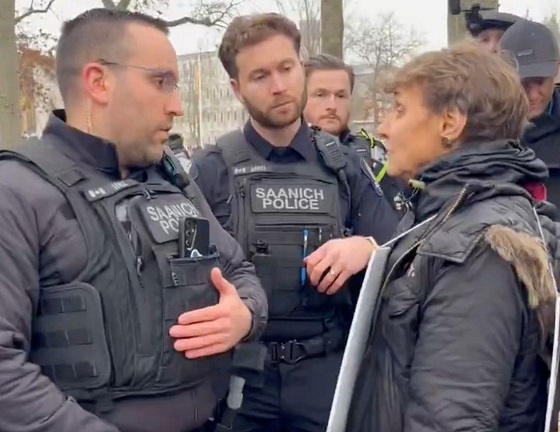
Dr. Frances Widdowson was arrested and given a ticket at the University of Victoria campus after trying to engage in conversation about ‘the disputed claims of unmarked graves in Kamloops.’
A Canadian academic who spoke out against claims there are mass unmarked graves of kids on former Indigenous residential schools, and who was arrested on a university campus as a result for trespassing, is fighting back with the help of a top constitutional group.
Dr. Frances Widdowson was arrested and given a ticket on December 2, 2025, at the University of Victoria (UVic) campus after trying to engage in conversation about “the disputed claims of unmarked graves in Kamloops,” noted the Justice Centre for Constitutional Freedoms (JCCF) in a recent news release.
According to the JCCF, Widdowson was trying to initiate a “good faith” conversation with people on campus, along with the leader of OneBC provincial party, Dallas Brodi.
“My arrest at the University of Victoria is an indication of an institution that is completely unmoored from its academic purpose,” said Widdowson in a statement made available to LifeSiteNews.
She added that the “institution” has been “perpetuating the falsehood” of the remains of 215 children “being confirmed at Kamloops since 2021, and is intent on censoring any correction of this claim.”
“This should be of concern for everyone who believes that universities should be places of open inquiry and critical thinking, not propaganda and indoctrination,” she added.
UVic had the day before Widdowson’s arrest warned on its website that those in favor of free speech were “not permitted to attend UVic property for the purpose of speaking publicly.”
Despite the warning, Widdowson, when she came to campus, was met with some “100 aggressive protesters assembled where she intended to speak at Petch Fountain,” noted the JCCF.
The protesters consisted of self-identified Communists, along with Antifa-aligned people and Hamas supporters.
When Widdowson was confronted by university security, along with local police, she was served with a trespass notice.
“When she declined to leave, she was arrested, detained for about two hours, and charged under British Columbia’s Trespass Act—an offence punishable by fines up to $2,000 or up to six months’ imprisonment,” said the JCCF.
According to Constitutional lawyer Glenn Blackett, UVic actions are shameful, as it “receives hundreds of millions of taxpayer dollars annually while it facilitates the arrest of Canadians attempting to engage in free inquiry on campus.”
Widdowson’s legal team, with the help of the JCCF, will be defending her ticket to protect her “Charter-protected freedoms of expression and peaceful assembly.”
Widdowson served as a tenured professor at Mount Royal University in Calgary, Alberta, before she was fired over criticism of her views on identity politics and Indigenous policy, notes the JCCF. She was vindicated, however, as an arbitrator later found her termination was wrongful.
In 2021 and 2022, the mainstream media ran with inflammatory and dubious claims that hundreds of children were buried and disregarded by Catholic priests and nuns who ran some Canadian residential schools. The reality is, after four years, there have been no mass graves discovered at residential schools.
However, as the claims went unfounded, over 120 churches, most of them Catholic and many of them on Indigenous lands that serve the local population, have been burned to the ground, vandalized, or defiled in Canada since the spring of 2021.
Last year, retired Manitoba judge Brian Giesbrecht said Canadians are being “deliberately deceived by their own government” after blasting the former Trudeau government for “actively pursuing” a policy that blames the Catholic Church for the unfounded “deaths and secret burials” of Indigenous children.
As reported by LifeSiteNews, new private members’ Bill C-254, “An Act To Amend The Criminal Code” introduced by New Democrat MP Leah Gazan, looks to give jail time to people who engage in so-called “Denialism.” The bill would look to jail those who question the media and government narrative surrounding Canada’s “Indian Residential School system” that there are mass graves despite no evidence to support this claim.
Censorship Industrial Complex
Top constitutional lawyer warns against Liberal bills that could turn Canada into ‘police state’
From LifeSiteNews
‘Freedom in Canada is dying slowly and gradually, not by a single fell swoop, but by a thousand cuts,’ wrote John Carpay of the JCCF.
One of Canada’s top constitutional legal experts has warned that freedom in the nation is “dying slowly” because of a host of laws both passed and now proposed by the Liberal federal government of Prime Minister Mark Carney, saying it is “up to citizens” to urge lawmakers to reverse course.
In an opinion piece that was published in the Epoch Times on December 15, John Carpay, who heads the Justice Centre for Constitutional Freedoms (JCCF), gave a bleak outlook on no less than six Liberal laws, which he warned will turn Canada into a “police state.”
“Freedom in Canada is dying slowly and gradually, not by a single fell swoop, but by a thousand cuts,” he wrote.
Carpay gave the example of laws passed in the United Kingdom dealing with freedom of online speech, noting how in Canada “too few Canadians have spoken out against the federal government gradually taking over the internet through a series of bills with innocuous and even laudable titles.”
“How did the United Kingdom end up arresting thousands of its citizens (more than 30 per day) over their Facebook, X, and other social media posts? This Orwellian nightmare was achieved one small step at a time. No single step was deemed worthy of fierce and effective opposition by British citizens,” he warned.
Carpay noted how UK citizens essentially let it happen that their rights were taken away from them via mass “state surveillance.”
He said that in Canada Bill C-11, also known as the Online Streaming Act, passed in 2023, “undermines net neutrality.” Bill C-11 mandates that Big Tech companies pay to publish Canadian content on their platforms. As a result, Meta, the parent company of Facebook and Instagram, blocked all access to news content in Canada.
“The Online Streaming Act undermines net neutrality (all online content being treated equally) and amounts to an aggressive expansion of government control over the internet and media companies. The CRTC now has broad power over what Canadians watch, hear, and access online, deciding what is discoverable, permissible, or even visible,” noted Carpay.
Carpay also warned about two recent bills before the House of Commons: Bill C-2, the Strong Borders Act, Bill C-8, and Bill C-9, as well as the Combating Hate Act.
He cautioned that Bill C-2, as it reads, “authorizes warrantless demands for subscriber data and metadata from online providers.”
“Bill C-2 should be called the Strong Surveillance Act, as it gives sweeping powers to a host of non-police government officials to conduct warrantless searches,” warned Carpay.
He observed how Bill C-2 would grant law enforcement “unprecedented powers to monitor Canadians’ digital activity,” without any “judicial oversight.”
“Any online service provider—including social media and cloud platforms, email domain hosts and even smaller service providers—would be compelled to disclose subscriber information and metadata,” he warned.
When it comes to Bill C-8, or The Critical Cyber Systems Protection Act, Carpay warned that if passed it would “allow government to kick Canadians off the internet.”
“The government’s pretext for the Critical Cyber Systems Protection Act is to ‘modernize’ Canada’s cybersecurity framework and protect it against any threats of ‘interference, manipulation, disruption or degradation,’” wrote Carpay.
“Sadly, it remains entirely unclear whether ‘disinformation’ (as defined by government) would constitute ‘interference, manipulation, disruption or degradation’.”
Lawyer warns new laws ‘grant government unprecedented control’
Bill C-9, the Combating Hate Act, has been blasted by constitutional experts as allowing empowered police and the government to go after those it deems have violated a person’s “feelings” in a “hateful” way.
Carpay, who has warned about this bill and others, noted that when it comes to Bill C-9, it affects Canadians’ right to religious freedom, as it “removes needed protection from religious leaders (and others) who wish to proclaim what their sacred scriptures teach about human sexuality.”
“Marc Miller, Minister of Canadian Identity and Culture, has stated publicly that he views certain Bible and Koran passages as hateful. Bill C-9 would chill free speech, especially on the internet where expression is recorded indefinitely, and particularly for activists, journalists, and other people expressing opinions contrary to government-approved narratives,” he wrote.
“This law also vastly increases the maximum sentences that could be imposed if a judge feels that the offence was ‘motivated by hatred,’ and creates new offences. It prohibits merely displaying certain symbols linked to hate or terrorism in public, and extends criminal liability to peaceful protest activity.”
Carpay said that both C-8 and C-9 together “collectively grant government unprecedented control over online speech, news, streaming services, and digital infrastructure.”
He said that the Liberal federal government is “transforming Canada’s centuries-old traditions of free speech and privacy rights into something revocable at the pleasure of the CRTC, politicians, and bureaucrats,” adding that Canadians need to wake up.
“Laziness and naivete are not valid reasons for failing to rise up (peacefully!) and revolt against all of these bills, which are slowly but surely turning Canada into a police state,” he wrote.
Carpay said that Canadians need to contact their MPs and “demand the immediate repeal of the Online Streaming Act and the Online News Act,” and “reject” the other bills before the House.
When it comes to Bill C-9, as reported by LifeSiteNews, the Canadian Constitution Foundation (CCF) launched a petition demanding that a Liberal government bill that would criminalize parts of the Bible dealing with homosexuality under Canada’s new “hate speech” laws be fully rescinded.
The amendments to Bill C-9 have been condemned by the Canadian Conference of Catholic Bishops, who penned an open letter to the Carney Liberals, blasting the proposed amendment and calling for its removal.

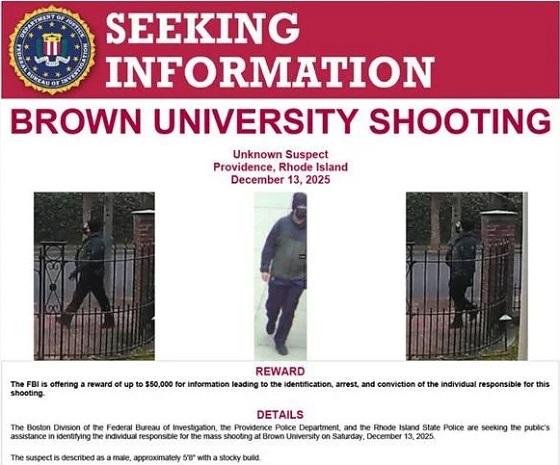
Brown University shooter dead of apparent self-inflicted gunshot wound

Alberta’s new diagnostic policy appears to meet standard for Canada Health Act compliance
Canada Hits the Brakes on Population

Ford’s EV Fiasco Fallout Hits Hard

Why is Canada paying for dairy ‘losses’ during a boom?
Geopolitics no longer drives oil prices the way it used to
RFK Jr reversing Biden-era policies on gender transition care for minors
-
 Artificial Intelligence2 days ago
UK Police Pilot AI System to Track “Suspicious” Driver Journeys
-
 Business2 days ago
Judge Declares Mistrial in Landmark New York PRC Foreign-Agent Case
-
 Energy16 hours ago
‘The electric story is over’
-
 International1 day ago
Georgia county admits illegally certifying 315k ballots in 2020 presidential election
-
 Digital ID2 days ago
Canadian government launches trial version of digital ID for certain licenses, permits
-
 Alberta22 hours ago
A Christmas wish list for health-care reform
-
 International2 days ago
World-leading biochemist debunks evolutionary theory
-
 Business16 hours ago
Some Of The Wackiest Things Featured In Rand Paul’s New Report Alleging $1,639,135,969,608 In Gov’t Waste