
Business
Ford’s Liquor War Trades Economic Freedom For Political Theatre


From the Frontier Centre for Public Policy
By Conrad Eder

Consumer choice, not government coercion, should shape the market. Doug Ford’s alcohol crackdown trades symbolic outrage for sound policy and Ontarians will pay the price
Ontario politicians have developed an insatiable appetite for prohibition. Having already imposed a sweeping ban on all American alcohol, Premier Doug Ford has now threatened to remove Crown Royal, Smirnoff and potentially other brands from LCBO shelves. Such authoritarian impulses reflect a disturbing shift in our political culture—one that undermines economic prosperity and individual liberty.
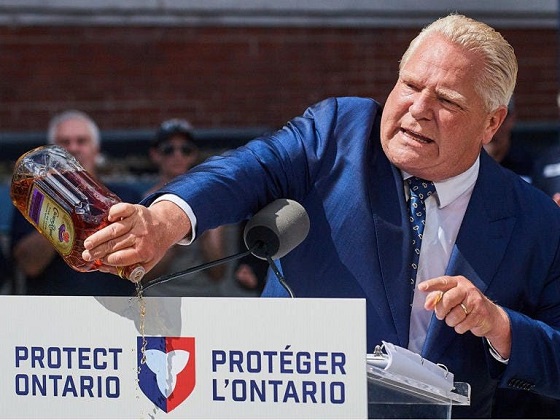
After Diageo, the multinational behind brands like Crown Royal and Smirnoff, announced in August that it would close its Amherstburg, Ont., bottling facility, affecting 200 workers, the political response was swift. NDP MPP Lisa Gretzky urged the government to retaliate by pulling Crown Royal from LCBO shelves. Days later, Ford dramatically dumped a bottle of the whisky during a press conference, signalling he might follow through.
Now, the premier has escalated the threat, vowing to remove Smirnoff and potentially other Diageo products.
These gestures may make headlines, but they come at a cost. They undermine business confidence, discourage investment, and send the wrong message to employers. More fundamentally, they reflect a poor understanding of how free societies settle disputes and make decisions.
To understand what’s at stake, it helps to consider the two basic mechanisms available to democratic societies: the marketplace and the ballot box. At the ballot box, citizens vote once, and majority rule determines a single outcome. The marketplace, by contrast, allows people to vote continuously with their dollars. Individuals make countless choices reflecting their own values and priorities. You get what you choose—without overriding anyone else’s preference.
There’s a role for government in correcting market failures, where there’s fraud, monopoly power or public risk. But banning legal products simply because of political displeasure with a company’s decision is not market correction. It’s coercion.
Diageo’s decision to close a facility may be unfortunate, but it doesn’t involve deception, unfair dominance, or harm to the public. Bans aren’t rooted in sound principle; they’re political, plain and simple.
Some argue the government is justified in acting to protect Ontario jobs. But that line of thinking is short-sighted. If job protection alone warranted banning products, we’d resist every innovation or trade deal that disrupted the status quo. Sustainable job growth depends on encouraging investment and innovation, not shielding every position from change.
The appropriate response to plant closures is policy reform, not retaliation. Ontario should focus on creating an environment where businesses want to invest and grow. That means fostering a stable, competitive business climate with clear rules, reasonable taxes, and efficient regulation. Threatening companies with bans only creates uncertainty and drives investment elsewhere.
With Ontarians spending $740 million annually on Diageo products, removing them from store shelves would impose real economic costs. Consumers would face fewer choices, weaker competition, and higher prices. Restaurants and retailers would be forced to adjust. The LCBO, Ontario’s government-run liquor retailer, would lose sales.
This isn’t hypothetical. The province’s ban on American alcohol is already projected to block nearly $1 billion in annual sales, while doing nothing to benefit Ontario consumers. The LCBO is serving political interests, not the public.
Supporters of such bans often reveal their lack of confidence in public opinion. Rather than persuade others to boycott a product voluntarily, they demand that government enforce a blanket restriction.
There’s a better way. Consumer-led boycotts offer accountability without coercion. They allow individuals to act on their beliefs without forcing others to comply. And they tend to be more effective, as companies respond faster to falling sales than to political theatrics.
But the issue at hand goes beyond liquor. It’s about whether elected officials should impose a single set of preferences on everyone, or whether citizens are trusted to decide for themselves.
Each new ban makes the next one easier to justify. Over time, these interventions accumulate and normalize government interference in private choice. Unlike consumer preferences, which can shift quickly and reverse, government prohibitions often persist. The LCBO’s century-old structure is evidence of how long some policies endure, even when they no longer serve the public interest.
This isn’t a call to eliminate government’s role. But it is a call for principled governance, the kind that distinguishes between legitimate oversight and overreach rooted in symbolism or political frustration.
Ontario’s government would do better to focus on long-term prosperity. That means building an economy where investors feel welcome, businesses can grow, and consumers are free to choose.
Ontarians are perfectly capable of making their own choices about which products to buy and which companies to support. They don’t need politicians like Ford making those decisions for them.
Conrad Eder is a policy analyst at the Frontier Centre for Public Policy.


The Canadian Taxpayers Federation released its annual New Year’s Tax Changes report today to highlight the major tax changes in 2026.
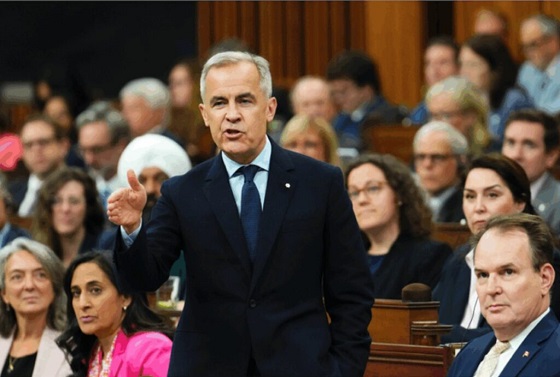
“There’s some good news and bad news for taxpayers in 2026,” said Franco Terrazzano, CTF Federal Director. “The federal government cut income taxes, but it’s hiking payroll taxes. The government cancelled the consumer carbon tax, but it’s hammering Canadian businesses with a higher industrial carbon tax.”
Payroll taxes: The federal government is raising the maximum mandatory Canada Pension Plan and Employment Insurance contributions in 2026. These payroll tax increases will cost a worker up to an additional $262 next year.
For workers making $85,000 or more, federal payroll taxes (CPP and EI tax) will cost $5,770 in 2026. Their employers will also be forced to pay $6,219.
Income tax: The federal government cut the lowest income tax rate from 15 to 14 per cent. This will save the average taxpayer $190 in 2026, according to the Parliamentary Budget Officer.
Carbon taxes: The government cancelled its consumer carbon tax effective April 1, 2025. However, the government still charges carbon taxes through its industrial carbon tax and a hidden carbon tax embedded in fuel regulations.
The industrial carbon tax will increase to $110 per tonne in 2026. While the government hasn’t provided further details on how much the industrial carbon tax will cost Canadians, 70 per cent of Canadians believe businesses pass on most or some of the cost of the tax to consumers, according to a Leger poll.
Alcohol taxes: Federal alcohol taxes are expected to increase by two per cent on April 1, 2026. This alcohol tax hike will cost taxpayers about $41 million in 2026-27, according to industry estimates.
First passed in the 2017 federal budget, the alcohol escalator tax automatically increases excise taxes on beer, wine and spirits every year without a vote in Parliament. Since being imposed, the alcohol escalator tax has cost taxpayers about $1.6 billion, according to industry estimates.
“Canadians pay too much tax because the government wastes too much money,” Terrazzano said. “Canadians are overtaxed and need serious tax cuts to help make life more affordable and our economy more competitive.
“Prime Minister Mark Carney needs to significantly cut spending, provide major tax relief and scrap all carbon taxes.”
You can read the CTF’s New Year’s Tax Changes report here.

From the Daily Caller News Foundation
By Greg Blackie
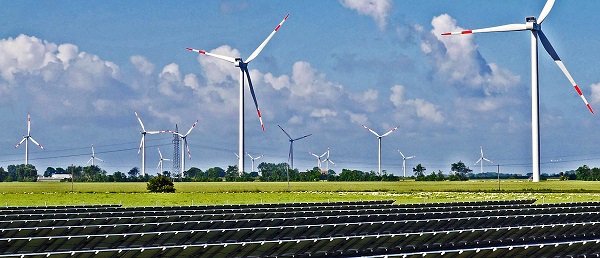
Our country is facing an energy crisis. No, not because of new demand from data centers or AI. Instead, it’s because utilities in nearly every state, due to government imposed “renewable” mandates, self-imposed mandates, and the supercharging of the Green New Scam under the so-called “Inflation Reduction Act,” have been shutting down vital coal resources and building out almost exclusively intermittent and costly resources like solar, wind, and battery storage.
President Donald Trump understands this, and that is why on day one of his administration he declared an Energy Emergency. Then, a few months later, the President signed a trio of Executive Orders designed to keep our “beautiful, clean coal” burning and providing the reliable, baseload, and affordable electricity Americans have benefitted from for generations.
Those orders have been used to keep coal generation online that was slated to shut down in Michigan and will potentially keep two units operating that were scheduled to shut down in Colorado this December. In Arizona, however, the Cholla Power Plant in Navajo County was shuttered by the utility just weeks after Trump explicitly called out the plant for saving in a press conference.
Dear Readers:
As a nonprofit, we are dependent on the generosity of our readers.
Please consider making a small donation of any amount here.
Thank you!
Unlike states with green mandates, Arizona essentially has none. Instead, our utilities, like many around the country, have self-imposed commitments to go “Net Zero” by 2050. To meet that target, they have planned to shut down all coal generation in the state by 2032 and plan to build out almost exclusively solar, wind, and battery storage to meet an expected explosive growth in demand, at a cost of tens of billions of dollars. So it is no surprise that like much of the rest of the country, Arizona is facing an energy crisis.
Taking a look at our largest regulated utilities (APS, TEP, and UNS) and the largest nonprofit utility, SRP, future plans paint an alarming picture. Combined, over the next 15 years, these utilities expect to see demand increase from 19,200 MW to 28,000 MW. For reference, 1,000 MW of electricity is enough to power roughly 250,000 homes. To meet that growth in demand, however, Arizonans will only get a net increase of 989 MW of reliable generation (coal, natural gas, and nuclear) compared to 22,543 MW (or nearly 23 times as much) of intermittent solar, wind, and battery storage.
But what about all of the new natural gas coming into the state? The vast majority of it will be eaten up just to replace existing coal resources, not to bring additional affordable energy to the grid. For example, the SRP board recently voted to approve the conversion of their Springerville coal plant to natural gas by 2030, which follows an earlier vote to convert another of their coal plants, Coronado, to natural gas by 2029. This coal conversion trap leaves ratepayers with the same amount of energy as before, eating up new natural gas capacity, without the benefit of more electricity.
So, while the Arizona utilities plan to collectively build an additional 4,538 MW of natural gas capacity over the next 15 years, at the same time they will be removing -3,549 MW (all of what is left on the grid today) of coal. And there are no plans for more nuclear capacity anytime soon. Instead, to meet their voluntary climate commitments, utilities plan to saddle ratepayers with the cost and resultant blackouts of the green new scam.
It’s no surprise then that Arizona’s largest regulated utilities, APS and TEP, are seeking double digit rate hikes next year. It’s not just Arizona. Excel customers in Colorado (with a 100% clean energy commitment) and in Minnesota (also with a 100% clean energy commitment) are facing nearly double-digit rate hikes. The day before Thanksgiving, PPL customers in Rhode Island (with a state mandate of 100% renewable by 2033) found out they may see rate hikes next year. Dominion (who has a Net Zero by 2050 commitment) wanted to raise rates for customers in Virginia by 15%. Just last month, regulators approved a 9% increase. Importantly, these rate increases are to recover costs for expenses incurred years ago, meaning they are clearly to cover the costs of the energy “transition” supercharged under the Biden administration, not from increased demand from data centers and AI.
It’s the same story around the country. Electricity rates are rising. Reliability is crumbling. We know the cause. For generations, we’ve been able to provide reliable energy at an affordable cost. The only variable that has changed has been what we are choosing to build. Then, it was reliable, dispatchable power. Now, it is intermittent sources that we know cost more, and that we know cause blackouts, all to meet absurd goals of going 100% renewable – something that no utility, state, or country has been able to achieve. And we know the result when they try.
This crisis can be avoided. Trump has laid out the plan to unleash American Energy. Now, it’s time for utilities to drop their costly green new scam commitments and go back to building reliable and affordable power that generations to come will benefit from.
Greg Blackie, Deputy Director of Policy at the Arizona Free Enterprise Club. Greg graduated summa cum laude from Arizona State University with a B.S. in Political Science in 2019. He served as a policy intern with the Republican caucus at the Arizona House of Representatives and covered Arizona political campaigns for America Rising during the 2020 election cycle.

The Recall Trap: 21 Alberta MLA’s face recall petitions

They never wanted a pipeline! – Deputy Conservative Leader Melissa Lantsman
The $50 Billion Question: EVs Never Delivered What Ottawa Promised

Liberals gain support for ‘hate speech’ bill targeting Bible passages against homosexuality

Storm clouds of uncertainty as BC courts deal another blow to industry and investment

Wisdom of Our Elders: The Contempt for Memory in Canadian Indigenous Policy

Taxpayers Federation calls on politicians to reject funding for new Ottawa Senators arena
-
 Digital ID11 hours ago
Canada releases new digital ID app for personal documents despite privacy concerns
-
Business22 hours ago
Major tax changes in 2026: Report
-
 Censorship Industrial Complex20 hours ago
Death by a thousand clicks – government censorship of Canada’s internet
-
 Energy10 hours ago
Canada’s sudden rediscovery of energy ambition has been greeted with a familiar charge: hypocrisy
-
 Alberta23 hours ago
Schools should go back to basics to mitigate effects of AI
-
 Daily Caller21 hours ago
Chinese Billionaire Tried To Build US-Born Baby Empire As Overseas Elites Turn To American Surrogates
-
 Bruce Dowbiggin11 hours ago
NFL Ice Bowls Turn Down The Thermostat on Climate Change Hysteria
-
 International1 day ago
At Least 15 Killed In Shooting Targeting Jewish Community At Australia’s Bondi Beach, Police Say