
Uncategorized
Facebook blocks 115 accounts ahead of US midterm elections


LONDON — Facebook said it blocked 115 accounts for suspected “

The social media company shut down 30 Facebook accounts and 85 Instagram accounts and is investigating them in more detail, it said in a blog post late Monday.
The company took action after being tipped off Sunday evening by U.S. law enforcement officials, who notified the company about recently discovered online activity, “which they believe may be linked to foreign entities,” Facebook’s head of cybersecurity policy, Nathaniel Gleicher, wrote in the post .
U.S. tech companies are stepping up security and efforts to fight disinformation campaigns to prevent online troublemakers from trying to divide voters and discredit democracy. Facebook’s purge is part of countermeasures to prevent abuses like those used by Russian groups two years ago to sway public opinion ahead of the 2016 U.S. presidential election.
Gleicher said the company will provide an update once it learns more, “including whether these accounts are linked to the Russia-based Internet Research Agency or other foreign entities.”
Almost all of the Facebook Pages associated with the blocked accounts appeared to be in French or Russian. The Instagram accounts were mostly in English and were focused either on celebrities or political debate. No further details were given about the accounts or suspicious activity.
Last month, Facebook removed 82 pages, accounts and groups tied to Iran aimed at stirring up social strife in the U.S. and the U.K. It carried out an even broader sweep in August, removing 652 pages, groups and accounts linked to Russia and Iran. Twitter says it has identified more than 4,600 accounts and 10 million tweets, mostly affiliated with the Internet Research Agency, that it says were linked to foreign meddling in U.S. elections, including the presidential vote of 2016.
The Internet Research Agency is essentially a Russian troll farm that has been indicted by U.S. Special Counsel Robert Mueller for its actions during the 2016 election.
Kelvin Chan, The Associated Press


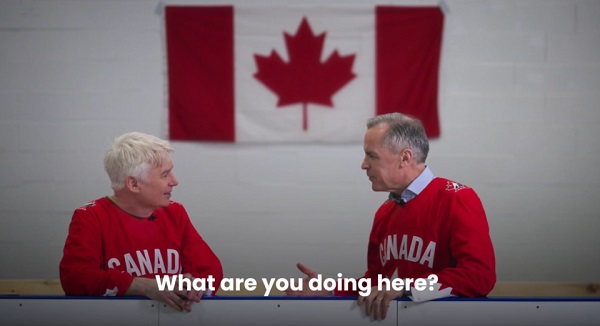

The cost of the bureaucracy increased by $6 billion last year, according to newly released numbers in Public Accounts disclosures. The Canadian Taxpayers Federation is calling on Prime Minister Mark Carney to immediately shrink the bureaucracy.
“The Public Accounts show the cost of the federal bureaucracy is out of control,” said Franco Terrazzano, CTF Federal Director. “Tinkering around the edges won’t cut it, Carney needs to take urgent action to shrink the bloated federal bureaucracy.”
The federal bureaucracy cost taxpayers $71.4 billion in 2024-25, according to the Public Accounts. The cost of the federal bureaucracy increased by $6 billion, or more than nine per cent, over the last year.
The federal bureaucracy cost taxpayers $39.6 billion in 2015-16, according to the Public Accounts. That means the cost of the federal bureaucracy increased 80 per cent over the last 10 years. The government added 99,000 extra bureaucrats between 2015-16 and 2024-25.
Half of Canadians say federal services have gotten worse since 2016, despite the massive increase in the federal bureaucracy, according to a Leger poll.
Not only has the size of the bureaucracy increased, the cost of consultants, contractors and outsourcing has increased as well. The government spent $23.1 billion on “professional and special services” last year, according to the Public Accounts. That’s an 11 per cent increase over the previous year. The government’s spending on professional and special services more than doubled since 2015-16.
“Taxpayers should not be paying way more for in-house government bureaucrats and way more for outside help,” Terrazzano said. “Mere promises to find minor savings in the federal bureaucracy won’t fix Canada’s finances.
“Taxpayers need Carney to take urgent action and significantly cut the number of bureaucrats now.”
Table: Cost of bureaucracy and professional and special services, Public Accounts
| Year | Bureaucracy | Professional and special services |
|
$71,369,677,000 |
$23,145,218,000 |
|
|
$65,326,643,000 |
$20,771,477,000 |
|
|
$56,467,851,000 |
$18,591,373,000 |
|
|
$60,676,243,000 |
$17,511,078,000 |
|
|
$52,984,272,000 |
$14,720,455,000 |
|
|
$46,349,166,000 |
$13,334,341,000 |
|
|
$46,131,628,000 |
$12,940,395,000 |
|
|
$45,262,821,000 |
$12,950,619,000 |
|
|
$38,909,594,000 |
$11,910,257,000 |
|
|
$39,616,656,000 |
$11,082,974,000 |

From the Daily Caller News Foundation
By Jason Hopkins
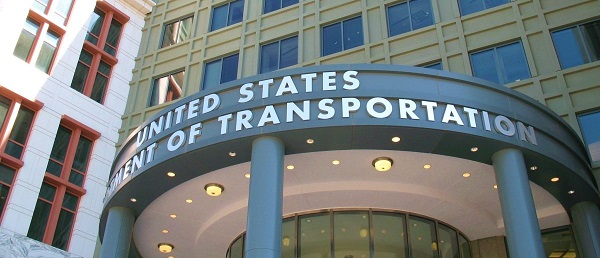
The Trump administration is creating a first-of-its-kind task force aimed at ushering in a new “Golden Age” of beautiful infrastructure across the U.S.
The Department of Transportation (DOT) will announce the establishment of the Beautifying Transportation Infrastructure Council (BTIC) on Thursday, the Daily Caller News Foundation exclusively learned. The BTIC seeks to advise Transportation Secretary Sean Duffy on design and policy ideas for key infrastructure projects, including highways, bridges and transit hubs.
“What happened to our country’s proud tradition of building great, big, beautiful things?” Duffy said in a statement shared with the DCNF. “It’s time the design for America’s latest infrastructure projects reflects our nation’s strength, pride, and promise.”
“We’re engaging the best and brightest minds in architectural design and engineering to make beautiful structures that move you and bring about a new Golden Age of Transportation,” Duffy continued.
Mini scoop – here is the DOT’s rollout of its Beautifying Transportation Infrastructure Council, which will be tasked with making our buildings beautiful again. pic.twitter.com/
9iV2xSxdJM — Jason Hopkins (@jasonhopkinsdc) October 23, 2025
The DOT is encouraging nominations of the country’s best architects, urban planners, artists and others to serve on the council, according to the department. While ensuring that efficiency and safety remain a top priority, the BTIC will provide guidance on projects that “enhance” public areas and develop aesthetic performance metrics.
The new council aligns with an executive order signed by President Donald Trump in August 2025 regarding infrastructure. The “Making Federal Architecture Beautiful Again” order calls for federal public buildings in the country to “respect regional architectural heritage” and aims to prevent federal construction projects from using modernist and brutalist architecture styles, instead returning to a classical style.
“The Founders, in line with great societies before them, attached great importance to Federal civic architecture,” Trump’s order stated. “They wanted America’s public buildings to inspire the American people and encourage civic virtue.”
“President George Washington and Secretary of State Thomas Jefferson consciously modeled the most important buildings in Washington, D.C., on the classical architecture of ancient Athens and Rome,” the order continued. “Because of their proven ability to meet these requirements, classical and traditional architecture are preferred modes of architectural design.”
The DOT invested millions in major infrastructure projects since Trump’s return to the White House. Duffy announced in August a $43 million transformation initiative of the New York Penn Station in New York City and in September unveiledmajor progress in the rehabilitation and modernization of Washington Union Station in Washington, D.C.
The BTIC will comprise up to 11 members who will serve two-year terms, with the chance to be reappointed, according to the DOT. The task force will meet biannually. The deadline for nominations will end Nov. 21.


From Underdog to Top Broodmare
Federal major projects list raises questions

Poilievre says West Coast Pipeline MOU is no guarantee
Alberta and Ottawa ink landmark energy agreement

Afghan Ex–CIA Partner Accused in D.C. National Guard Ambush

Man overboard as HMCS Carney lists to the right

Health Canada indefinitely pauses plan to sell unlabeled cloned meat after massive public backlash
-
 Business16 hours ago
Recent price declines don’t solve Toronto’s housing affordability crisis
-
 Bruce Dowbiggin2 days ago
Sometimes An Ingrate Nation Pt. 2: The Great One Makes His Choice
-
 armed forces1 day ago
Global Military Industrial Complex Has Never Had It So Good, New Report Finds
-
 National2 days ago
Media bound to pay the price for selling their freedom to (selectively) offend
-
 Daily Caller15 hours ago
Tech Mogul Gives $6 Billion To 25 Million Kids To Boost Trump Investment Accounts
-
 C2C Journal2 days ago
Learning the Truth about “Children’s Graves” and Residential Schools is More Important than Ever
-
 Business1 day ago
Why Isn’t There a Cure for Alzheimer’s Disease?
-
 Brownstone Institute1 day ago
The Unmasking of Vaccine Science