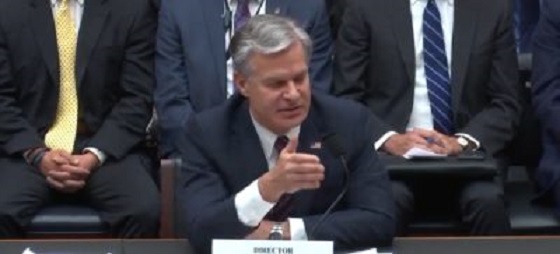
Republican Texas Rep. Lance Gooden is demanding the FBI answer questions about the alleged gaps in their recently released 2023 crime report that paints a misleading picture of crime, according to a letter provided to the Daily Caller News Foundation.
Gooden is joined by Republican Texas Rep. Randy Weber and Republican Wisconsin Rep. Tom Tiffany in the letter questioning the FBI crime data’s validity, pointing to the agency’s past of “inaccurate claims” on crime by omitting certain department’s data from their numbers, according to the letter. The FBI data showed a 3% reduction in violent crime in 2023, which Gooden says in the letter “couldn’t be further from the truth.”
“Underreporting or misreporting crime statistics significantly impacts public perception and policy decisions, leading to a misunderstanding of crime trends, which causes unwarranted fear or complacency,” Gooden said in the letter. “Cherry-picking statistical data to deliberately mislead the public into thinking their community is safer than before would be an abhorrent act of ‘misinformation,’ especially considering the source of the misguided claim is an elite federal law enforcement agency.”
The letter asks several questions to the FBI, such as if they omitted any data from various major cities, how many agencies provided incomplete data and if the data would be retroactively adjusted to reflect an increase in violent crime, like it had in 2022 according to the Crime Prevention Research Center. In 2022, over 6,000 agencies did not report data to the FBI, accounting for 32% of all police departments in the U.S., according to the letter.
President Joe Biden and Vice President Kamala Harris have been touting the newly released data, saying that violent crime is at a “50-year low” and crediting their American Rescue Plan bill for the alleged decrease, according to a September White House press release. Most recently, the FBI published a quarterly report that reported for the first six months of 2024 that violent crime was down 10.3% compared to the first six months of 2023, according to an FBI press release.
However, the data only counted reports from 72% of law enforcement agencies, according to the press release. It is also unclear which agencies are omitted in the quarterly report.
Another survey of crime in the nation is the National Crime Victimization Survey (NVCS) carried out by the Bureau of Justice Statistics (BJS), which showed from 2021 to 2023, the NVCS reported a 36% increase in the violent crime victimization rate, according to the report. The UCR and the NVCS differed substantially, differing by over 45% in 2022, according to the Marshall Project in 2023.
“If key data about the actual criminal activity in our cities is missing, it has not been reflected in either your claim or the accompanying press release,” Gooden said in the letter. “A selective and deliberate omission of relevant and necessary context amounts to an inexcusable case of spreading ‘misinformation’ by an agency of the Federal government.”
The FBI didn’t immediately respond to the DCNF’s request for comment.
Todayville is a digital media and technology company. We profile unique stories and events in our community. Register and promote your community event for free.
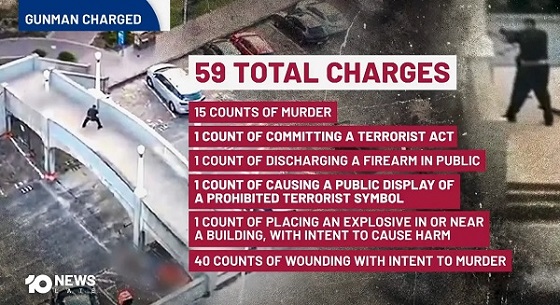
After attacks by Islamic extremists, a familiar pattern follows. Debate erupts. Commentary and interviews flood the media. Op-eds, narratives, talking points, and competing interpretations proliferate in the immediate aftermath of bloodshed. The brief interval since the Bondi beach attack is no exception.
Many of these responses condemn the violence and call for solidarity between Muslims and non-Muslims, as well as for broader societal unity. Their core message is commendable, and I support it: extremist violence is horrific, societies must stand united, and communities most commonly targeted by Islamic extremists—Jews, Christians, non-Muslim minorities, and moderate Muslims—deserve to live in safety and be protected.
Yet many of these info-space engagements miss the mark or cater to a narrow audience of wonks. A recurring concern is that, at some point, many of these engagements suggest, infer, or outright insinuate that non-Muslims, or predominantly non-Muslim societies, are somehow expected or obligated to interpret these attacks through an Islamic or Muslim-impact lens. This framing is frequently reinforced by a familiar “not a true Muslim” narrative regarding the perpetrators, alongside warnings about the risks of Islamophobia.
These misaligned expectations collide with a number of uncomfortable but unavoidable truths. Extremist groups such as ISIS, Al-Qaeda, Hamas, Hezbollah, and decentralized attackers with no formal affiliations have repeatedly and explicitly justified their violence through interpretations of Islamic texts and Islamic history. While most Muslims reject these interpretations, it remains equally true that large, dynamic groups of Muslims worldwide do not—and that these groups are well prepared to, and regularly do, use violence to advance their version of Islam.
Islamic extremist movements do not, and did not, emerge in a vacuum. They draw from the broader Islamic context. This fact is observable, persistent, and cannot be wished or washed away, no matter how hard some may try or many may wish otherwise.
Given this reality, it follows that for most non-Muslims—many of whom do not have detailed knowledge of Islam, its internal theological debates, historical divisions, or political evolution—and for a considerable number of Muslims as well, Islamic extremist violence is perceived as connected to Islam as it manifests globally. This perception persists regardless of nuance, disclaimers, or internal distinctions within the faith and among its followers.
THE COST OF DENIAL AND DEFLECTION
Denying or deflecting from these observable connections prevents society from addressing the central issues following an Islamic extremist attack in a Western country: the fatalities and injuries, how the violence is perceived and experienced by surviving victims, how it is experienced and understood by the majority non-Muslim population, how it is interpreted by non-Muslim governments responsible for public safety, and how it is received by allied nations. Worse, refusing to confront these difficult truths—or branding legitimate concerns as Islamophobia—creates a vacuum, one readily filled by extremist voices and adversarial actors eager to poison and pollute the discussion.
Following such attacks, in addition to thinking first of the direct victims, I sympathize with my Muslim family, friends, colleagues, moderate Muslims worldwide, and Muslim victims of Islamic extremism, particularly given that anti-Muslim bigotry is a real problem they face. For Muslim victims of Islamic extremism, that bigotry constitutes a second blow they must endure. Personal sympathy, however, does not translate into an obligation to center Muslim communal concerns when they were not the targets of the attack. Nor does it impose a public obligation or override how societies can, do, or should process and respond to violence directed at them by Islamic extremists.
As it applies to the general public in Western nations, the principle is simple: there should be no expectation that non-Muslims consider Islam, inter-Islamic identity conflicts, internal theological disputes, or the broader impact on the global Muslim community, when responding to attacks carried out by Islamic extremists. That is, unless Muslims were the victims, in which case some consideration is appropriate.
Quite bluntly, non-Muslims are not required to do so and are entitled to reject and push back against any suggestion that they must or should. Pointedly, they are not Muslims, a fact far too many now seem to overlook.
The arguments presented here will be uncomfortable for many and will likely provoke polarizing discussion. Nonetheless, they articulate an important, human-centered position regarding how Islamic extremist attacks in Western nations are commonly interpreted and understood by non-Muslim majority populations.
Non-Muslims are free to give no consideration to Muslim interests at any time, particularly following an Islamic extremist attack against non-Muslims in a non-Muslim country. The sole exception is that governments retain an obligation to ensure the safety and protection of their Muslim citizens, who face real and heightened threats during these periods. This does not suggest that non-Muslims cannot consider Muslim community members; it simply affirms that they are under no obligation to do so.
The impulse for Muslims to distance moderate Muslims and Islam from extremist attacks—such as the targeting of Jews in Australia or foiled Christmas market plots in Poland and Germany—is understandable.
Muslims do so to protect their own interests, the interests of fellow Muslims, and the reputation of Islam itself. Yet this impulse frequently collapses into the “No True Scotsman” fallacy, pointing to peaceful Muslims as the baseline while asserting that the attackers were not “true Muslims.”
Such claims oversimplify the reality of Islam as it manifests globally and fail to address the legitimate political and social consequences that follow Islamic extremist attacks in predominantly non-Muslim Western societies. These deflections frequently produce unintended effects, such as strengthening anti-Muslim extremist sentiments and movements and undermining efforts to diminish them.
The central issue for public discourse after an Islamic extremist attack is not debating whether the perpetrators were “true” or “false” Muslims, nor assessing downstream impacts on Muslim communities—unless they were the targets.
It is a societal effort to understand why radical ideologies continue to emerge from varying—yet often overlapping—interpretations of Islam, how political struggles within the Muslim world contribute to these ideologies, and how non-Muslim-majority Western countries can realistically and effectively confront and mitigate threats related to Islamic extremism before the next attack occurs and more non-Muslim and Muslim lives are lost.
Addressing these realities directly is the only path toward protecting communities, confronting extremism, and preventing further loss of life.
Ian Bradbury, a global security specialist with over 25 years experience, transitioned from Defence and NatSec roles to found Terra Nova Strategic Management (2009) and 1NAEF (2014). A TEDx, UN, NATO, and Parliament speaker, he focuses on terrorism, hybrid warfare, conflict aid, stability operations, and geo-strategy.
The Bureau is a reader-supported publication.
To receive new posts and support my work, consider becoming a free or paid subscriber.
Following an alarming rise in fentanyl deaths in recent years, President Donald Trump is taking another step in cracking down on the deadly drug seeping its way onto American streets by designating it a weapon of mass destruction.
The president signed the executive order Monday during an event in the Oval Office, saying the illicit drug “is closer to a chemical weapon than a narcotic.”
The designation comes on the heels of the administration’s increasing military presence in the Caribbean, targeting narco-terrorists and “successful” meetings with Chinese leaders, who have vowed to crack down on the production of precursors of the drug.
Critics of Trump’s move want to address the fentanyl crisis through a different way. For example, a 2024 bill from attorneys general asking former President Joe Biden to do the same thing expressed concerns about political optics and the language akin to military. Overreach and blurred lines in domestic actions, such as rounding up users.
The order would provide the secretaries of the Department of War and Department of Homeland Security to “update all directives regarding the armed forces’ response to chemical incidents in the homeland to include the threat of illicit fentanyl.”
Trump said the fentanyl drug trade “threatens” national security by fueling “lawlessness” in the Western Hemisphere. This is the area of North America and South America, and the islands near each.
“The production and sale of fentanyl by foreign terrorist organizations and cartels fund these entities’ operations – which include assassinations, terrorist acts, and insurgencies around the world – and allow these entities to erode our domestic security and the well-being of our nation,” the order says in part.
Trump said two cartels are predominantly responsible. The Sinaloa Cartel and the Jalisco New Generation Cartel, known also as CJNG, are based in Mexico.
The Drug Enforcement Agency said last December that in 2023, more than 107,000 people died from drug overdoses, with nearly 70% attributed to opioids, like fentanyl.
In late February, the U.S. Centers for Disease Control and Prevention via its National Vital Statistics System predicted a 24% decline in drug overdose deaths for the 12 months ending in September. The finding was based on 87,000 drug overdose deaths from October 2023 to September 2024, down from 114,000 the year prior.
Trump declared opioid overdose a public health emergency in 2017 during his first term.