
espionage
EXCLUSIVE: Alleged Chinese Spy in New York’s Cuomo and Hochul Administrations Barred From Using Seized Millions

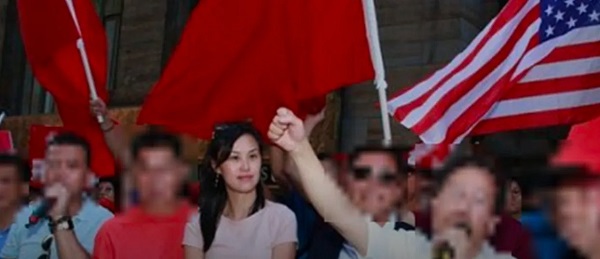




A U.S. judge has rejected Linda Sun’s bid to access millions in frozen assets for her defense, siding with prosecutors who say she may be hiding additional financial reserves
A federal judge has ruled that Linda Sun — the senior New York government official accused of laundering proceeds from tens of millions of dollars in corrupt pandemic-era supply deals from China, while orchestrating a covert foreign influence campaign targeting two Democratic governors — cannot access millions in seized assets to fund her legal defense.
The ruling marks a major setback for Sun and her co-accused husband, Chris Hu, in a landmark national security case that federal prosecutors say blends elite political manipulation with transnational bribery, Chinese underground banking, and state-backed espionage and interference operations tied to Beijing’s United Front Work Department.
In a decision issued July 22, U.S. District Judge Brian Cogan found that Sun and Hu failed to meet even the minimal evidentiary threshold for a Monsanto hearing — a legal mechanism that allows defendants to unlock frozen assets if they can demonstrate no access to alternative funds. Cogan sided with the Department of Justice, which argued that the couple may be actively concealing substantial unrestrained assets, including income and equity tied to a lattice of nine business entities owned by Hu.
At least one of those ventures, a commercial real estate holding, was partially liquidated to fund more than $400,000 in legal fees. Others, including Leivine Wine & Spirits — a high-end Flushing boutique that FBI agents concluded could not be generating the massive bulk cash revenue it reported — allegedly handled more than $77,000 in unexplained monthly cash deposits even before the store formally opened.
The broader criminal case, as The Bureau previously reported, alleges that Linda Sun covertly acted as an undeclared foreign agent for the People’s Republic of China, advancing the CCP’s foreign policy objectives while enriching herself through corrupt contracting and laundering networks. She allegedly leveraged her role in New York’s diversity and inclusion bureaucracy to influence Governor Andrew Cuomo’s public messaging, including helping script his April 2020 tweet thanking the Chinese government for a donation of ventilators during the pandemic. Under Governor Kathy Hochul, prosecutors say, Sun’s actions became more brazen: arranging unauthorized proclamations in honor of PRC diplomats, suppressing mention of the Uyghur detention camps in official remarks, and preventing Taiwan’s representatives from gaining access to state officials.
Sun and Hu allegedly funneled at least $8 million in kickbacks — derived from over $30 million in fraudulent pandemic-era PPE contracts — into a personal laundering architecture involving real estate, luxury goods, and business accounts in Queens.
Sun — also known as Wen Sun, Linda Hu, and Ling Da Sun — and Hu deny all charges and have mounted an aggressive legal campaign characterized by multiple suppression motions, challenges to search warrants, and attempts to have the case dismissed.
These efforts have accompanied a steady stream of damaging disclosures from prosecutors, including search warrant returns detailing a trove of luxury property allegedly acquired with laundered foreign capital. Among the seized or restrained assets are a $3.6 million mansion in Manhasset, a $1.9 million condo in Honolulu’s Ala Moana district, and a $1.5 million Forest Hills rental property. Government filings also list a 2024 Ferrari Roma, a Mercedes SUV, and a Range Rover as seized vehicles — in addition to more than $200,000 in liquid cash and bank deposits, none of which, the court noted, were properly accounted for in the couple’s asset declarations. A Jeep Gladiator, not initially disclosed by the defendants, was later identified by the government as an additional unrestrained asset.
As the couple’s legal maneuvers multiplied — most of them, in the court’s view, lacking the substance to alter the case — their defense costs ballooned. In their Monsanto application, Sun and Hu portrayed themselves as effectively destitute and victims of court delays.
“The collective value of everything the government seized exceeds $7 million — and that effectively cut off Mr. Hu and Ms. Sun’s access to nearly every financial resource, making it challenging to continue to care and provide for their child, let alone pay their legal fees,” their motion argued.
“Those legal fees have inevitably climbed. Moreover, as a result of the government’s repeated delays and missteps in this action, Mr. Hu and Ms. Sun have been forced to file multiple motions and endured protracted proceedings.”
The 24-page filing also added vivid new detail to the government’s sweeping seizure operations, including countering suggestions that Sun’s parents were used not only as proxies for home purchases to disguise her money laundering payoffs from China, but also to hold personal assets and cash.
“During a search of Ms. Sun’s parents’ home, the government seized their life savings of $265,209, along with watches, jewelry, and other personal items that it has yet to return,” Sun’s Monsanto motion complains. “The government also seized $130,000 from Ms. Sun’s mother’s safety deposit box at TD Bank. To date, the government has not filed any charges against Ms. Sun’s parents or in connection with these items, nor has it included these items in any forfeiture allegations, making its continued restraint of such third-party property deeply troubling.”
The motion continued: “The only consistent source of funds that the couple previously did have—$4,800 per month in rental income from the Forest Hills Property—no longer exists. In light of Mr. Hu and Ms. Sun’s ongoing active efforts to sell the property, they are unable to rent it out. In sum, the couple is financially hamstrung.” Legal costs to date exceed $2 million, with an additional $1 million projected for November’s trial.
But Judge Cogan wasn’t moved by their claims of poverty. The Brooklyn judge found the couple’s filings omitted obvious holdings, provided vague and conclusory statements, and failed to identify how the pair had continued paying legal bills and living expenses. The court determined that Sun and Hu’s failure to declare a comprehensive list of assets was not accidental.
“This Court still does not have sufficient information to evaluate the extent of defendants’ unrestrained funds,” Cogan wrote.
The judge’s conclusion aligns with the Department of Justice’s assertion that Sun and Hu may still control millions in unreported funds.
Prosecutors revealed that beyond Hu’s nine business entities, the couple had liquidated at least $44,000 in bonds, still held over $90,000 in stock holdings, and were receiving loan proceeds and other unexplained capital transfers. The government also challenged the couple’s claim that they had been denied access to property sale proceeds.
In their Monsanto filing, the couple’s attorneys wrote: “With nearly every avenue to resources effectively extinguished by the government, Mr. Hu and Ms. Sun are now left with insufficient funds to finance their family’s monthly expenses, let alone their rising legal bills.” Their monthly costs reportedly exceed $20,000, covering property taxes, insurance, food, and childcare.
But the couple’s own legal framing may have inadvertently amplified the very financial allegations they are attempting to defeat. Central to their argument, Sun and Hu claimed their ability to retain legal counsel was crippled by disruptions to the same high-end Flushing liquor business that Hu had previously described as a bulk-cash-generating enterprise — a characterization investigators alleged was a cover for laundering illicit cash into business accounts.
Now, however, Hu claims his business depends on credit transactions.
“American Express has imposed a block on any payments made by customers using an American Express credit card at his liquor store,” the defense motion stated. “Shopify — the point-of-sale system previously utilized by his business for credit card processing — no longer allows Mr. Hu’s store to process credit cards through its system, which for a time hobbled the store’s operations.” The defense further asserted that a visible law enforcement presence near the storefront “chilled customers from entering the store and interacting with Mr. Hu, which has adversely affected sales.”
The case filings detail how Hu’s money laundering network allegedly relied on unlicensed Chinese remitters in Flushing.
Such Chinese cash brokers are part of a transnational system used to ferry capital from the PRC through underground banking corridors into American storefronts and property and banks, broader ongoing U.S. government investigations into Chinese crime networks have found.
Sun’s unsuccessful Monsanto motion also highlighted that one of their expensive failed legal efforts aimed to suppress a public comment by former Trump official Kash Patel, who described her as a Chinese agent embedded in the U.S. government and profiting from corrupt PPE contracts while frontline Americans went without protection.
“While Americans were locked down and desperate for PPE, Linda Sun and Chris Hu cashed in — allegedly lining their pockets while serving CCP interests,” Patel posted to X. “This is corruption that endangered lives.”
Although prosecutors did not cite Patel’s remarks, the defense argued the statement had unfairly prejudiced the case.
As previously reported by The Bureau, in a separate ruling denying Sun’s motions to dismiss the case and suppress evidence, Judge Cogan found ample support for the government’s allegation that Sun knowingly acted as an undeclared agent of the People’s Republic of China — in violation of U.S. laws requiring foreign agents to register.
In one WeChat exchange cited by the FBI, Sun reportedly told her parents that a Chinese contact known as “Chairman Xia” had upgraded her airline tickets. Prosecutors say she was hosted in a Beijing hotel suite previously occupied by former First Lady Michelle Obama. In the same thread, Sun acknowledged she expected to be asked for increasing “favors” by her handlers in return for their generosity — a detail prosecutors highlight as evidence of her witting entanglement in a covert foreign influence campaign.
The court cited Sun’s alleged role in arranging fraudulent invitation letters to support illegal visa entries for officials from China’s Henan province. The visit, pitched as part of a proposed $1 billion university partnership in New York, appeared to be a United Front cover operation aimed at expanding Beijing’s political and economic influence on U.S. soil.
According to government filings, Sun used her access not only to open doors for Chinese officials, but to close them to Beijing’s geopolitical rivals — especially Taiwan.
The indictment further alleges that even after receiving a warning from the FBI, Sun continued to act on behalf of PRC officials, including repeated efforts to shape New York State policy toward Taiwan and providing Chinese consular officials with advance access to internal government communications.
In early 2021, prosecutors say, Sun gave the Chinese consulate a draft of Governor Hochul’s public remarks, enabling Beijing to sanitize the language — including stripping any reference to politically sensitive topics such as the detention of Uyghurs in Xinjiang. “Based on feedback from a PRC government official, [Hochul] did not publicly address the detention of Uyghurs in PRC state-run camps in Xinjiang,” Judge Cogan noted, citing FBI evidence.
“These actions, as alleged, demonstrate Sun using her authority and power to induce action or change the decisions or acts of another,” Cogan wrote, concluding that they were “sufficient to constitute the ‘influence’ element of a FARA offense, even as Sun defines it.”
Finally, Judge Cogan emphasized that the indictment clearly supports the conclusion that Sun understood her alleged United Front handlers — CC-1 and CC-2 — were themselves agents of the Chinese government and Communist Party. As the indictment states: “Sun understood that CC-1 and CC-2 were themselves acting as agents of the PRC government and the CCP when they made requests of Sun.”

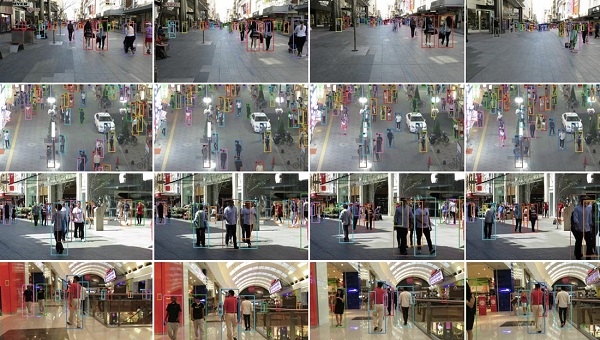
Shared Labs, Shared Harm names MIT, Oxford and McGill among universities working with Beijing-backed AI institutes linked to Uyghur repression and China’s security services.
Over the past five years, some of the world’s most technologically advanced campuses in the United States, Canada and the United Kingdom — including MIT, Oxford and McGill — have relied on taxpayer funding while collaborating with artificial-intelligence labs embedded in Beijing’s security state, including one tied to China’s mass detention of Uyghurs and to the Ministry of Public Security, which has been accused of targeting Chinese dissidents abroad.
That is the core finding of Shared Labs, Shared Harm, a new report from New York–based risk firm Strategy Risks and the Human Rights Foundation. After reviewing tens of thousands of scientific papers and grant records, the authors conclude that Western public funds have repeatedly underwritten joint work between elite universities and two Chinese “state-priority” laboratories whose technologies drive China’s domestic surveillance machinery — an apparatus that, a recent U.S. Congressional threat assessment warns, is increasingly being turned outward against critics in democratic states.
The key Chinese collaborators profiled in the study are closely intertwined with China’s security services. One of the two featured labs is led by a senior scientist from China Electronics Technology Group Corporation (CETC), the sanctioned conglomerate behind the platform used to flag and detain Uyghurs in Xinjiang; the other has hosted “AI + public security” exchanges with the Ministry of Public Security’s Third Research Institute, the bureau responsible for technical surveillance and digital forensics.
The report’s message is blunt: even as governments scramble to stop technology transfer on the hardware side, open academic science has quietly been supplying Chinese security organs with new tools to track bodies, faces and movements at scale.
It lands just as Washington and its allies move to tighten controls on advanced chips and AI exports to China. In the Netherlands’ Nexperia case, the Dutch government invoked a rarely used Cold War–era emergency law this fall to take temporary control of a Chinese-owned chipmaker and block key production from being shifted to China — prompting a furious response from Beijing, and supply shocks that rippled through European automakers.
“The Chinese Communist Party uses security and national security frameworks as tools for control, censorship, and suppressing dissenting views, transforming technical systems into instruments of repression,” the report says. “Western institutions lend credibility, knowledge, and resources to Chinese laboratories supporting the country’s surveillance and defense ecosystem. Without safeguards … publicly funded research will continue to support organizations that contribute to repression in China.”
Cameras and Drones
The Strategy Risks team focuses on two state-backed institutes: Zhejiang Lab, a vast AI and high-performance computing campus founded by the Zhejiang provincial government with Alibaba and Zhejiang University, and the Shanghai Artificial Intelligence Research Institute (SAIRI), now led by a senior CETC scientist. CETC designed the Integrated Joint Operations Platform, or IJOP — the data system that hoovered up phone records, biometric profiles and checkpoint scans to flag “suspicious” people in Xinjiang.
United Nations investigators and several Western governments have concluded that IJOP and related systems supported mass surveillance, detention and forced-labor campaigns against Uyghurs that amount to crimes against humanity.
Against that backdrop, the scale of Western collaboration is striking.
Since 2020, Zhejiang Lab and SAIRI have published more than 11,000 papers; roughly 3,000 of those had foreign co-authors, many from the United States, United Kingdom, and Canada. About 20 universities are identified as core collaborators, including MIT, Stanford, Harvard, Princeton, Carnegie Mellon, Johns Hopkins, UC Berkeley, Oxford, University College London — and Canadian institutions such as McGill University — along with a cluster of leading European technical universities.
Among the major U.S. public funders acknowledged in these joint papers are the National Science Foundation (NSF), the National Institutes of Health (NIH), the Office of Naval Research (ONR), the Defense Advanced Research Projects Agency (DARPA) and the Department of Transportation. For North America, the warning is twofold: U.S. and Canadian universities are far more entangled with China’s security-linked AI labs than most policymakers grasp — and existing “trusted research” frameworks, built around IP theft, are almost blind to the human-rights risk.
In one flagship example, Zhejiang Lab collaborated with MIT on advanced optical phase-shifting — a field central to high-resolution imaging systems used in satellite surveillance, remote sensing and biometric scanning. The paper cited support from a DARPA program, meaning U.S. defense research dollars effectively underwrote joint work with a Chinese lab that partners closely with military universities and the CETC conglomerate behind Xinjiang’s IJOP system.
Carnegie Mellon projects with Zhejiang Lab focused on multi-object tracking and acknowledged funding from the National Science Foundation and the U.S. Office of Naval Research. Multi-object tracking is a backbone technology for modern surveillance — allowing cameras and drones to follow multiple people or vehicles across crowds and city blocks. “In the Chinese context,” the report notes, such capabilities map naturally onto “public security applications such as protest monitoring,” even when the academic papers present them as neutral advances in computer vision.
The report also highlights Zhejiang Lab’s role as an international partner in CAMERA 2.0, a £13-million U.K. initiative on motion capture, gait recognition and “smart cities” anchored at the University of Bath, and its leadership in BioBit, a synthetic-biology and imaging program whose advisory board includes University College London, McGill University, the University of Glasgow and other Western campuses.
Meanwhile, SAIRI has quietly become a hub for AI that blurs public-security, military and commercial lines.
Established in 2018 and run since 2020 by CETC academician Lu Jun — a designer of China’s KJ-2000 airborne early-warning aircraft and a veteran of command-and-control systems — SAIRI specializes in pose estimation, tracking and large-scale imaging.
Under Lu, the institute has deepened ties with firms already sanctioned by Washington for their roles in Xinjiang surveillance. In 2024 it signed cooperation agreements with voice-recognition giant iFlytek and facial-recognition champion SenseTime, as well as CloudWalk and Intellifusion, which market “smart city” policing platforms.
SAIRI also hosted an “AI + public security” exchange with the Ministry of Public Security’s Third Research Institute — the bureau responsible for technical surveillance and digital forensics — and co-developed what Chinese media billed as the country’s first AI-assisted shooting training system. That platform, nominally built for sports, was overseen by a Shanghai government commission that steers AI into defense and public-security applications, raising the prospect of its use in paramilitary or police training.
Outside the lab, MPS officers have been charged in the United States with running online harassment and intimidation schemes targeting Chinese dissidents, and MPS-linked “overseas police service stations” in North America and Europe have been investigated for pressuring exiles and critics to return to China.
Meanwhile, Radio-Canada, drawing on digital records first disclosed to Australian media in 2024 by an alleged Chinese spy, has reported new evidence suggesting that a Chinese dissident who died in a mysterious kayaking accident near Vancouver was being targeted for elimination by MPS officers and agents embedded in a Chinese conglomerate that the U.S. Treasury accuses of running a money-laundering and modern-slavery empire out of Cambodia.
The new reporting focuses on a former undercover agent for Office No. 1 of China’s Ministry of Public Security — the police ministry at the core of so-called “CCP police stations” in global and Canadian cities, and reportedly tasked with hunting dissidents abroad.
Taken together, cases of alleged Chinese “police station” networks operating globally, new U.S. Congressional reports on worldwide threats from the Chinese Communist Party, and the warnings in Shared Labs, Shared Harm suggest that Western universities are not only helping to build China’s domestic repression apparatus with U.S. taxpayer funds, but may also be contributing to global surveillance tools that can be paired with Beijing’s operatives abroad.
To counter this trend, the paper urges a reset in research governance: broaden due diligence to weigh human-rights risk, mandate transparency over all international co-authorships and joint labs, condition partnerships with security-linked institutions on strict safeguards and narrow scopes of work, and strengthen university ethics bodies so they take responsibility for cross-border collaborations.
The Bureau is a reader-supported publication.
To receive new posts and support my work, consider becoming a free or paid subscriber.
espionage
Digital messages reportedly allege Chinese police targeted dissident who died suspiciously near Vancouver

 Sam Cooper
‘Our superiors … want to get rid of him’
Radio-Canada, drawing on digital records first disclosed to Australian media in 2024 by an alleged Chinese spy, has reported new evidence suggesting that a Chinese dissident who died in a mysterious kayaking accident near Vancouver was being targeted for elimination by Chinese secret police and agents embedded in a Chinese conglomerate that the U.S. Treasury now accuses of running a multibillion-dollar organized-crime, money-laundering and modern-slavery empire out of Cambodia.
The new reporting focuses on a man identified only as “Eric,” a former undercover agent for Office No. 1 of China’s Ministry of Public Security — the police ministry at the core of so-called “CCP police stations” in global and Canadian cities, and reportedly tasked with hunting dissidents abroad.
Australia’s Four Corners revealed Eric’s story in May 2024, reporting that he had fled China in 2023 and walked into the headquarters of Australia’s domestic intelligence agency, ASIO, carrying a phone loaded with years of internal messages and records.
It also reported that Eric had been invited to testify in Canada’s Foreign Interference Commission, known as the Hogue Commission, about Beijing’s operations on Canadian soil.
“In an August 2024 report, ABC Investigations wrote: ‘Eric told ABC Investigations he had been invited to testify as a witness in the next round of hearings, scheduled to start in September.’”
But there is no public sign that his evidence was ever examined in open hearings or mentioned in the Commission’s final reports, suggesting that any material he supplied was handled entirely behind closed doors, if at all.
According to Radio-Canada’s Enquête program, reporters travelled to Australia to interview Eric and forensically review the contents of his phone: thousands of text and voice messages between 2016 and 2023, as well as financial records and internal documents that he says came from Office No. 1 and its corporate covers.
The archives reportedly include detailed exchanges with his superiors, evidence of clandestine money transfers and the names of individuals allegedly involved in overseas espionage and repression.
One sequence, labelled “The target,” captures the moment Eric is ordered to focus on a dissident painter named Hua Yong, who had already become notorious in China for blood-marked Tiananmen commemorations and for documenting mass evictions in Beijing.
Citing the exchange, which has not been independently reviewed by The Bureau, Radio-Canada quotes:
Office No. 1: Our future communications must be encrypted.
Eric: What are the orders?
Office No. 1: Listen carefully to my request. It concerns Hua Yong. Our superiors find him troublesome and want to get rid of him.
Those messages set the tone for what follows: a multi-year manhunt that begins in Thailand and ends with Hua dead off Canada’s Sunshine Coast. Eric says Hua was formally designated a high-value target, and the same phone records, as summarized by Enquête and earlier Four Corners reporting, show that a bounty was placed on Hua’s head — roughly the equivalent of US$20,000 if he were captured and repatriated.
To win Hua’s trust, Eric reportedly constructed an elaborate false persona. On social media and encrypted apps, he posed as a radical anti-Communist militant, proposing the creation of a jungle “armed camp” and a band of revolutionaries. He then invented “Brigade V,” a fake guerrilla group he promoted online while appearing in videos in camouflage and a balaclava. Hua, in exile and under pressure, was impressed. “This is brilliant,” he reportedly wrote privately, according to the message logs, and the two men soon met in person in Bangkok, drinking wine and plotting what Hua believed was resistance — all while Eric quietly fed reports back to the political-security police.
The Bureau is a reader-supported publication.
To receive new posts and support my work, consider becoming a free or paid subscriber.
It is this kind of mix of covert state targeting and deniable intermediaries that is now worrying Western security officials.
In November, ASIO director-general Mike Burgess used a major speech to warn that some authoritarian regimes are showing a “growing willingness” to mount “high-harm operations” abroad. Without naming specific countries, and not referring to Eric’s alleged evidence, he said his service believes “at least three nations” are willing and capable of carrying out lethal attacks in Australia, and may try to hide their involvement by contracting criminal “cut-outs.”
Canada’s own oversight bodies have been tracking a similar threat pattern.
In a 2024 report, the National Security and Intelligence Committee of Parliamentarians (NSICOP) described a fully redacted 12-paragraph case study of what it called the “most egregious” People’s Republic of China proxy identified by Canadian intelligence. The public summary says CSIS assessed that one aspect of the proxy’s behaviour posed a “high-risk, high-harm” threat to some Canadians and permanent residents, and that CSIS shared information on the proxy with the RCMP.
The same report notes that intelligence from CSIS and the Communications Security Establishment showed foreign states covertly attempting to buy influence with candidates and elected officials — a backdrop that makes the Hua Yong file, and the allegations of lethal targeting orders and corporate covers around Eric, especially sensitive.
Eric’s phone records, as described by Enquête, show that companies tied to his work gave him the freedom and cover to travel across Southeast Asia, build false identities and infiltrate exile networks, while maintaining his status as an MPS officer. One cover in particular stands out: a vast conglomerate in Cambodia that, on paper, dealt in real estate and finance and handled billions of dollars. Enquête identifies it as Prince Group and says Eric worked under its umbrella in 2016–2017 — a claim the company reportedly did not answer when approached by Radio-Canada.
That corporate name now has much wider resonance, and alleged connectivity to China’s United Front Work Department.
In October, the U.S. Justice Department unsealed an indictment charging Prince Group chairman Chen Zhi with orchestrating a forced-labour “pig-butchering” scam empire from compounds in Cambodia, while the U.S. Treasury and its U.K. counterpart simultaneously designated the “Prince Group Transnational Criminal Organization,” sanctioning Chen and 146 linked individuals and entities. Officials allege the network ran industrial-scale cyber-fraud centres staffed by trafficked workers, laundered billions in criminal proceeds and used shell companies and high-end real estate — including London properties — to wash illicit funds.
U.S. material also ties Prince Group into the orbit of Chinese state-aligned figures. Sanctions filings link Chen Zhi to Wan Kuok-koi, the Macau Triad boss known as “Broken Tooth,” whose modern Hongmen association has been described by U.S. officials as directly connected to the Chinese Communist Party’s United Front Work Department. They further allege that Prince Group worked with Palau-based businesswoman Rose Wang, a former vice-president of Palau’s Overseas Chinese Federation, who helped broker access and casino licences while acting as a facilitator for the scam network — a role analysts say dovetails with informal diplomacy and influence work on Beijing’s behalf.
Against that background, Eric’s description of Prince Group as one of his covers fits with The Bureau’s source material tying alleged Chinese police-station networks in Canada to underground casino and Chinese mafia structures entangled with United Front-aligned political figures.
In Eric’s interview with Radio-Canada, he portrays the Prince Group conglomerate as part of a broader ecosystem of ostensibly legitimate companies that quietly cooperate with Chinese security services — providing salaries, visas, office space and a glossy façade for officers like him to operate overseas. The digital trail Enquête reconstructed links that ecosystem to the micro-level surveillance of Hua Yong: reports on his movements, photographs of his residence in Canada, and continual updates to superiors who had bluntly said they wanted to “get rid of him.”
By April 2021, Hua had slipped out of Southeast Asia and arrived in Halifax on a humanitarian protection visa. From there, he moved west, eventually settling in the coastal community of Gibsons, British Columbia. Enquête reports that Eric continued to track him remotely, sending situation reports back to Office No. 1 even after Hua appeared to have found a measure of safety in Canada.
In November 2022, Hua reportedly set out alone in a bright yellow kayak and never returned. His body was later found on an island off the Sunshine Coast. The RCMP concluded that he had drowned and said they found no evidence of foul play; officers were not aware, at the time, that he was the subject of a Chinese police operation. According to Radio-Canada, three years later the case is still not fully closed: the British Columbia coroner has yet to issue a final report — an unusually long delay in a province where such inquests typically take around 16 months. In an email cited by Enquête, the Coroners Service said factors such as the complexity of a file and “investigations conducted by other agencies” can prolong a case.
According to Radio-Canada, Eric himself is ambivalent about what happened on the water that day. He told Enquête he had wondered whether Hua was murdered and recalled Hua’s own suspicion, during a severe illness in Canada, that he might have been poisoned. But he also pointed to later online information suggesting the death might have been an accident, and emphasized that he has no definitive proof either way. What he does insist on is that Hua was a live target of a Chinese operation at the time he died — and that, based on standard MPS tradecraft, there were “certainly other teams” beyond him monitoring the dissident in Canada.
Eric also reportedly says he has never been contacted by RCMP about Hua’s death. Instead, he told Enquête that he has provided documents from his phone archive to Canada’s Commission of Inquiry into Foreign Interference in confidential channels. From his vantage point — as the officer who received the “get rid of him” order, posed as Hua’s ally and then watched him restart his life in Canada — he argues there are “strange aspects” to the case that demand further scrutiny.
The Bureau is a reader-supported publication.
To receive new posts and support my work, consider becoming a free or paid subscriber.

Tech Mogul Gives $6 Billion To 25 Million Kids To Boost Trump Investment Accounts
Carney’s Toronto cabinet meetings cost $530,000

Recent price declines don’t solve Toronto’s housing affordability crisis

Health Canada report finds euthanasia now accounts for over 5% of deaths nationwide
Alberta Sports Hall of Fame Announces Class of 2026 Inductees
While Trump has southern border secure, hundreds of thousands of illegal immigrants still flooding in from Canada

Integration Or Indignation: Whose Strategy Worked Best Against Trump?
-
 Business1 day ago
Why Does Canada “Lead” the World in Funding Racist Indoctrination?
-
 Automotive2 days ago
Trump Deals Biden’s EV Dreams A Death Blow
-
 Automotive2 days ago
Canada’s EV Mandate Is Running On Empty
-
 Media1 day ago
They know they are lying, we know they are lying and they know we know but the lies continue
-
 Focal Points1 day ago
The West Needs Bogeymen (Especially Russia)
-
 Censorship Industrial Complex24 hours ago
US Condemns EU Censorship Pressure, Defends X
-
 Banks1 day ago
To increase competition in Canadian banking, mandate and mindset of bank regulators must change
-
 Opinion17 hours ago
The day the ‘King of rock ‘n’ roll saved the Arizona memorial