
Agriculture
End Supply Management—For the Sake of Canadian Consumers


This is a special preview article from the:

U.S. President Donald Trump’s trade policy is often chaotic and punitive. But on one point, he is right: Canada’s agricultural supply management system has to go. Not because it is unfair to the United States, though it clearly is, but because it punishes Canadians. Supply management is a government-enforced price-fixing scheme that limits consumer choice, inflates grocery bills, wastes food, and shields a small, politically powerful group of producers from competition—at the direct expense of millions of households.
And yet Ottawa continues to support this socialist shakedown. Last week, Prime Minister Mark Carney told reporters supply management was “not on the table” in negotiations for a renewed United States-Mexico-Canada Trade Agreement, despite U.S. negotiators citing it as a roadblock to a new deal.
Supply management relies on a web of production quotas, fixed farmgate prices, strict import limits, and punitive tariffs that can approach 300 percent. Bureaucrats decide how much milk, chicken, eggs, and poultry Canadians farmers produce and which farmers can produce how much. When officials misjudge demand—as they recently did with chicken and eggs—farmers are legally barred from responding. The result is predictable: shortages, soaring prices, and frustrated consumers staring at emptier shelves and higher bills.
This is not a theoretical problem. Canada’s most recent chicken production cycle, ending in May 2025, produced one of the worst supply shortfalls in decades. Demand rose unexpectedly, but quotas froze supply in place. Canadian farmers could not increase production. Instead, consumers paid more for scarce domestic poultry while last-minute imports filled the gap at premium prices. Eggs followed a similar pattern, with shortages triggering a convoluted “allocation” system that opened the door to massive foreign imports rather than empowering Canadian farmers to respond.
Over a century of global experience has shown that central economic planning fails. Governments are simply not good at “matching” supply with demand. There is no reason to believe Ottawa’s attempts to manage a handful of food categories should fare any better. And yet supply management persists, even as its costs mount.
Those costs fall squarely on consumers. According to a Fraser Institute estimate, supply management adds roughly $375 a year to the average Canadian household’s grocery bill. Because lower-income families spend a much higher proportion of their income on food, the burden falls most heavily on them.
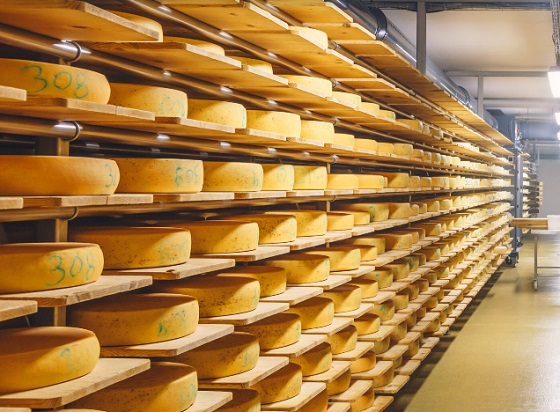
The system also strangles consumer choice. European countries produce thousands of varieties of high-quality cheeses at prices far below what Canadians pay for largely industrial domestic products. But our import quotas are tiny, and anything above them is hit with tariffs exceeding 245 percent. As a result, imported cheeses can cost $60 per kilogram or more in Canadian grocery stores. In Switzerland, one of the world’s most eye-poppingly expensive countries, where a thimble-sized coffee will set you back $9, premium cheeses are barely half the price you’ll find at Loblaw or Safeway.
Canada’s supply-managed farmers defend their monopoly by insisting it provides a “fair return” for famers, guarantees Canadians have access to “homegrown food” and assures the “right amount of food is produced to meet Canadian needs.” Is there a shred of evidence Canadians are being denied the “right amount” of bread, tuna, asparagus or applesauce? Of course not; the market readily supplies all these and many thousands of other non-supply-managed foods.
Like all price-fixing systems, Canada’s supply management provides only the illusion of stability and security. We’ve seen above what happens when production falls short. But perversely, if a farmer manages to get more milk out of his cows than his quota, there’s no reward: the excess must be
dumped. Last year alone, enough milk was discarded to feed 4.2 million people.
Over time, supply management has become less about farming and more about quota ownership. Artificial scarcity has turned quotas into highly valuable assets, locking out young farmers and rewarding incumbents.
Why does such a dysfunctional system persist? The answer is politics. Supply management is of outsized importance in Quebec, where producers hold a disproportionate share of quotas and are numerous enough to swing election results in key ridings. Federal parties of all stripes have learned the cost of crossing this lobby. That political cowardice now collides with reality. The USMCA is heading toward mandatory renegotiation, and supply management is squarely in Washington’s sights. Canada depends on tariff-free access to the U.S. market for hundreds of billions of dollars in exports. Trading away a deeply-flawed system to secure that access would make economic sense.
Instead, Ottawa has doubled down. Not just with Carney’s remarks last week but with Bill C-202, which makes it illegal for Canadian ministers to reduce tariffs or expand quotas on supply-managed goods in future trade talks. Formally signalling that Canada’s negotiating position is hostage to a tiny domestic lobby group is reckless, and weakens Canada’s hand before talks even begin.
Food prices continue to rise faster than inflation. Forecasts suggest the average family will spend $1,000 more on groceries next year alone. Supply management is not the only cause, but it remains a major one. Ending it would lower prices, expand choice, reduce waste, and reward entrepreneurial farmers willing to compete.
If Donald Trump can succeed in forcing supply management onto the negotiating table, he will be doing Canadian consumers—and Canadian agriculture—a favour our own political class has long refused to deliver.
The original, full-length version of this article was recently published in C2C Journal. Gwyn Morgan is a retired business leader who was a director of five global corporations.


From the Frontier Centre for Public Policy
By Conrad Eder
The food may be festive, but the price tag isn’t, and supply management is to blame
With Christmas around the corner, Canadians will be heading to the grocery store to pick up the essentials for a tasty Christmas feast. Milk and eggs to make dinner rolls, butter for creamy mashed potatoes, an assortment of cheeses as an appetizer, and, of course, the Christmas turkey.
All delicious. All essential. And all more expensive than they need to be because of a longstanding government policy. It’s called supply management.
Consider what a family might purchase when hosting Christmas dinner. Two cartons of eggs, two cartons of milk, a couple of blocks of cheese, a few sticks of butter, and an eight-kilogram turkey. According to Agriculture and Agri-Food Canada and Statistics Canada, that basket of goods costs a little less than $80.
Using price premiums calculated in a 2015 University of Manitoba study, Canada’s supply management system is responsible for $16.69 to $20.48 of the cost of that Christmas dinner. That’s a 21 to 26 per cent premium Canadian consumers pay on those five staples alone. Planning on making a yogurt dip or serving ice cream with dessert? Those extra costs continue to climb.
Canadians pay these premiums for poultry, dairy and eggs because of how Canada’s supply management system works. Farmers must obtain government-issued production quotas that dictate how much they’re allowed to produce. Prices are set by government bodies rather than in an open market. High tariffs block imports and restrict competition from international producers.
The costs of supply management are significant, amounting to billions of dollars every year, yet they are largely hidden, spread across millions of households’ grocery bills. Meanwhile, the benefits flow to a small number of quota-holding farmers. Their quotas are worth millions of dollars and help ensure profitable returns.
These farmers have every incentive to lobby, organize and defend the current system. Wanting special protection is one thing. Actually being given it is another. It is the responsibility of elected officials to resist such demands. Elected to represent all Canadians, politicians should unapologetically prioritize the public interest over any special interests.
Yet in June 2025, Parliament did the opposite. Rather than solve a problem that costs Canadians billions each year, members of Parliament from every party, Liberal, Conservative, Bloc, NDP and Green, unanimously approved Bill C-202, further entrenching the system that makes grocery bills more expensive at a time when families can least afford it. Bill C-202 prohibits Canada from offering any further market access concessions on supply-managed sectors in future trade negotiations.
This decision is even more disappointing when we consider what other nations have already accomplished. Australia and New Zealand demonstrate that removing supply management is not only possible but beneficial.
Australia operated a dairy quota system for decades before abolishing it in 2000. New Zealand began dismantling its dairy supply management regime in 1984 and completed the process in 2001. Both countries found that competitive markets provided their citizens with the access to goods they needed without the hidden costs. If these countries could eliminate supply management, so can Canada.
As the government scrambles to combat the rising cost of living, one of the simplest and most effective solutions continues to be ignored. Eliminating supply management. Removing the quotas, the price controls and the tariffs would allow market competition to do what it does across every other product category. It delivers choice, quality and affordability.
As Canadians gather for Christmas dinner, the feast may be delicious, but it will once again be more expensive than it needs to be. That is the cost of supply management, and Canadians should no longer have to bear it.
Conrad Eder is a policy analyst at the Frontier Centre for Public Policy.
This article supplied by Troy Media.

Canadians are told dairy farmers need protection. The newest numbers tell a different story
Every once in a while, someone inside a tightly protected system decides to say the quiet part out loud. That is what Joel Fox, a dairy farmer from the Trenton, Ont., area, did recently in the Ontario Farmer newspaper.
In a candid open letter, Fox questioned why established dairy farmers like himself continue to receive increasingly large government payouts, even though the sector is not shrinking but expanding. For readers less familiar with the system, supply management is the federal framework that controls dairy production through quotas and sets minimum prices to stabilize farmer income.
His piece, titled “We continue to privatize gains, socialize losses,” did not come from an economist or a critic of supply management. It came from someone who benefits from it. Yet his message was unmistakable: the numbers no longer add up.
Fox’s letter marks something we have not seen in years, a rare moment of internal dissent from a system that usually speaks with one voice. It is the first meaningful crack since the viral milk-dumping video by Ontario dairy farmer Jerry Huigen, who filmed himself being forced to dump thousands of litres of perfectly good milk because of quota rules. Huigen’s video exposed contradictions inside supply management, but the system quickly closed ranks until now. Fox has reopened a conversation that has been dormant for far too long.
In his letter, Fox admitted he would cash his latest $14,000 Dairy Direct Payment Program cheque, despite believing the program wastes taxpayer money. The Dairy Direct Payment Program was created to offset supposed losses from trade agreements like the Comprehensive Economic and Trade Agreement (CETA), the Comprehensive and Progressive Agreement for Trans-Pacific Partnership (CPTPP) and the Canada–United States–Mexico Agreement (CUSMA).
During those negotiations, Ottawa promised compensation because the agreements opened a small share of Canada’s dairy market, roughly three to five per cent, to additional foreign imports. The expectation was that this would shrink the domestic market. But those “losses” were only projections based on modelling and assumptions about future erosion in market share. They were predictions, not actual declines in production or demand. In reality, domestic dairy demand has strengthened.
Which raises the obvious question: why are we compensating dairy farmers for producing less when they are, in fact, producing more?
This month, dairy farmers received another one per cent quota increase, on top of several increases totalling four to five per cent in recent years. Quota only goes up when more milk is needed.
If trade deals had actually harmed the sector, quota would be going down, not up. Instead, Canada’s population has grown by nearly six million since 2015, processors have expanded and consumption has held steady. The market is clearly expanding.
Understanding what quota is makes the contradiction clearer. Quota is a government-created financial asset worth $24,000 to $27,000 per kilogram of butterfat. A mid-sized dairy farm may hold about $2.5 million in quota. Over the past few years, cumulative quota increases of five per cent or more have automatically added $120,000 to $135,000 to the value of a typical farm’s quota, entirely free.
Larger farms see even greater windfalls. Across the entire dairy system, these increases represent hundreds of millions of dollars in newly created quota value, likely exceeding $500 million in added wealth, generated not through innovation or productivity but by a regulatory decision.
That wealth is not just theoretical. Farm Credit Canada, a federal Crown corporation, accepts quota as collateral. When quota increases, so does a farmer’s borrowing power. Taxpayers indirectly backstop the loans tied to this government-manufactured asset. The upside flows privately; the risk sits with the public.
Yet despite rising production, rising quota values, rising equity and rising borrowing capacity, Ottawa continues issuing billions in compensation. Between 2019 and 2028, nearly $3 billion will flow to dairy farmers through the Dairy Direct Payment Program. Payments are based on quota holdings, meaning the largest farms receive the largest cheques. New farmers, young farmers and those without quota receive nothing. Established farms collect compensation while their asset values grow.
The rationale for these payments has collapsed. The domestic market did not shrink. Quota did not contract. Production did not fall. The compensation continues only because political promises are easier to maintain than to revisit.
What makes Fox’s letter important is that it comes from someone who gains from the system. When insiders publicly admit the compensation makes no economic sense, policymakers can no longer hide behind familiar scripts. Fox ends his letter with blunt honesty: “These privatized gains and socialized losses may not be good for Canadian taxpayers … but they sure are good for me.”
Canada is not being asked to abandon its dairy sector. It is being asked to face reality. If farmers are producing more, taxpayers should not be compensating them for imaginary declines. If quota values keep rising, Ottawa should not be writing billion-dollar cheques for hypothetical losses.
Fox’s letter is not a complaint; it is an opportunity. If insiders are calling for honesty, policymakers should finally be willing to do the same.
Dr. Sylvain Charlebois is a Canadian professor and researcher in food distribution and policy. He is senior director of the Agri-Food Analytics Lab at Dalhousie University and co-host of The Food Professor Podcast. He is frequently cited in the media for his insights on food prices, agricultural trends, and the global food supply chain.
Troy Media empowers Canadian community news outlets by providing independent, insightful analysis and commentary. Our mission is to support local media in helping Canadians stay informed and engaged by delivering reliable content that strengthens community connections and deepens understanding across the country.


Chinese Billionaire Tried To Build US-Born Baby Empire As Overseas Elites Turn To American Surrogates

Canadian gov’t considers sharing census data on gender-confused children

Residential school burials controversy continues to fuel wave of church arsons, new data suggests
Canada’s sudden rediscovery of energy ambition has been greeted with a familiar charge: hypocrisy

Brown University shooter dead of apparent self-inflicted gunshot wound

Paris Climate Deal Now Decade-Old Disaster

Canada Hits the Brakes on Population
-
 Business2 days ago
Taxing food is like slapping a surcharge on hunger. It needs to end
-
 Health2 days ago
FDA warns ‘breast binder’ manufacturers to stop marketing to gender-confused girls
-
 Daily Caller1 day ago
Trump Reportedly Escalates Pressure On Venezuela With Another Oil Tanker Seizure
-
 International1 day ago
2025: The Year The Narrative Changed
-
 Business1 day ago
There’s No Bias at CBC News, You Say? Well, OK…
-
 Uncategorized16 hours ago
Mortgaging Canada’s energy future — the hidden costs of the Carney-Smith pipeline deal
-
 Health2 days ago
All 12 Vaccinated vs. Unvaccinated Studies Found the Same Thing: Unvaccinated Children Are Far Healthier
-
Agriculture2 days ago
Supply Management Is Making Your Christmas Dinner More Expensive