
COVID-19
Employer Vaccination Mandates Under Scrutiny Post COVID-19



From Heartland Daily News
By 

From presidential candidate Donald Trump’s promise to reinstate military members who were fired for not getting COVID-19 shots to a federal court decision favoring employee vaccination preferences, vaccine mandates at work appear to be coming to an end.
The Seventh Circuit Court of Appeals in Chicago, Illinois ruled employees at Wisconsin health care system Aspirus, Inc. can go forward with their claim that they were unlawfully denied a religious exemption from having to accept a COVID-19 shot. Aspirus claimed the employees’ real reason for not wanting the shots was secular, not religious.
Public Employees Protected
In 2023, Texas updated Section 81B.003 of the state’s health and safety code prohibiting vaccination mandates for state and local government employees. Before the change, employees had to prove a health risk or religious convictions to be granted an exemption.
Texas has taken the lead in prohibiting government agencies from issuing mandates for people to get vaccinated. Similar laws have passed in Florida and 11 other states: Arizona, Arkansas, Georgia, Idaho, Indiana, Kansas, Montana, New Hampshire, North Dakota, Tennessee, and Utah.
Private Employees’ Rights Unclear
Private employers are a different matter says Javier Perez, a board-certified labor and employment law attorney with Crain Brogdon LLP in Dallas
“Despite the new protective laws for [government] employees, unless there is a specific law prohibiting employer vaccine mandates, employers can still, generally speaking, impose workplace vaccine mandates so long as they do not discriminate,” said Perez, a board-certified labor and employment law attorney with Crain Brogdon LLP in Dallas. “The employer has wide discretion to decide what the rules of the road are in their workplace.”
The dynamics in the workplace have changed, says Perez.
“My sense of the job market is that employers can replace people who won’t comply,” said Perez. “But with a lot of jobs pivoting to remote work—more than we thought possible—it’s kind of an easy way, on a temporary basis, to work around those risks.”
Mandates ‘Have Backfired’
Despite the lack of clarity in employer-employee relations, the tide is turning against vaccine mandates and other COVID-related work rules, in particular failures to accommodate religious exemptions, says Douglas P. Seaton, J.D, Ph.D., president of Upper Midwest Law Center.
“These mandates, based on shoddy or no science, have backfired because they have resulted in serious levels of suspicion of the bona fides of all new government regulation, especially when ‘science’ is claimed to be the rationale,” said Seaton.
‘Simply Shut Up’
In 1905, the U.S. Supreme Court ruled Massachusetts could not pass a vaccination mandate to protect the individual but could do so “to protect the public from a dangerous communicable disease.”
Historically, the public health bureaucracy had been relatively circumspect in exercising that enormous power to control individual behavior, says Linda Gorman, director of the Independence Institute’s Health Care Policy Center. Things began to change in the 1990s when public health researchers and government health bureaucracies were captured by the notion that the British, Canadian, and European health care systems were better than the U.S. system because they were government-controlled.
“They apparently believed that health would improve, and costs would fall, if patients, doctors, and suppliers would simply shut up and do as they were told,” said Gorman.
‘Power Is Attractive’
The COVID-19 pandemic tested that power. Instead of systematically providing the best available information to individuals about the new COVID vaccine and allowing informed consent, the bureaucrats resorted to brute force to make people do as they were told, says Gorman.
“Power is attractive, and I see no sign that the health bureaucracy will give up its vast powers without a fight,” said Gorman. “The tragedy is the backfire has made people suspicious about all vaccine recommendations, and unknown numbers of people will die and suffer severe health consequences as a result.”
The COVID overreach made credentialed experts’ ethical failings evident, says Gorman.
“It is now obvious that government health bureaucracies see no harm in lying about efficacy, disease risk, and data quality in order to achieve their own end,” said Gorman.
“The first question is, ‘What do we do about it?’” said Gorman. “The second is, “Who should people trust for the accurate information they need to make informed decisions about their medical care?”
Kenneth Artz ([email protected]) writes from Tyler, Texas.

From LifeSiteNews
A judge ruled that the Ontario Court of Justice is already ‘satisfied’ with Chris Barber’s sentence and taking away his very livelihood would be ‘disproportionate.’
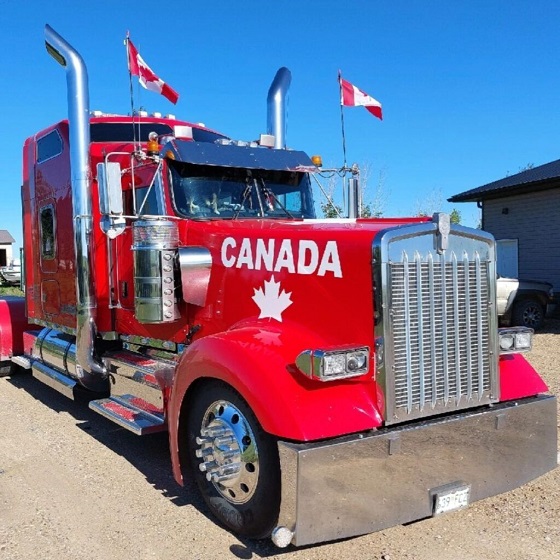
A Canadian judge has dismissed a demand from Canadian government lawyers to seize Freedom Convoy leader Chris Barber’s “Big Red” semi-truck.
On Friday, Ontario Court of Justice Judge Heather Perkins-McVey denied the Crown’s application seeking to forfeit Barber’s truck.
She ruled that the court is already “satisfied” with Barber’s sentence and taking away his very livelihood would be “disproportionate.”
“This truck is my livelihood,” said Barber in a press release sent to LifeSiteNews.
“Trying to permanently seize it for peacefully protesting was wrong, and I’m relieved the court refused to allow that to happen,” he added.
Criminal defense lawyer Marwa Racha Younes was welcoming of the ruling as well, stating, “We find it was the right decision in the circumstances and are happy with the outcome.”
John Carpay, president of the Justice Centre for Constitutional Freedoms (JCCF), said the decision is “good news for all Canadians who cherish their Charter freedom to assemble peacefully.”
READ: Freedom Convoy protester appeals after judge dismissed challenge to frozen bank accounts
“Asset forfeiture is an extraordinary power, and it must not be used to punish Canadians for participating in peaceful protest,” he added in the press release.
As reported recently by LifeSiteNews, the Canadian government claimed that Barber’s truck is an “offence-related property” relating to his involvement in the 2022 protests against Canada’s COVID mandates.
At this time, the court ruling ends any forfeiture proceedings for the time being, however Barber will continue to try and appeal his criminal conviction and house arrest sentence.
Barber’s truck, a 2004 Kenworth long-haul he uses for business, was a focal point in the 2022 protests. He drove it to Ottawa, where it was parked for an extended period of time, but he complied when officials asked him to move it.
On October 7, 2025, after a long trial, Ontario Court Justice Perkins-McVey sentenced Barber and Tamara Lich, the other Freedom Convoy leader, to 18 months’ house arrest. They had been declared guilty of mischief for their roles as leaders of the 2022 protest against COVID mandates, and as social media influencers.
Lich and Barber have filed appeals of their own against their house arrest sentences, arguing that the trial judge did not correctly apply the law on their mischief charges.
Government lawyers for the Crown have filed an appeal of the acquittals of Lich and Barber on intimidation charges.
The pair’s convictions came after a nearly two-year trial despite the nonviolent nature of the popular movement.

From LifeSiteNews
Protestor Evan Blackman’s legal team argues Trudeau’s Emergencies Act-based bank account freezes were punitive state action tied directly to protest participation.
A Freedom Convoy protester whose bank accounts were frozen by the Canadian government says a judge erred after his ruling did not consider the fact that the funds were frozen under the Emergencies Act, as grounds for a stay of proceedings.
In a press release sent out earlier this week, the Justice Centre for Constitutional Freedoms (JCCF) said that Freedom Convoy protestor Evan Blackman will challenge a court ruling in his criminal case via an appeal with the Ontario Superior Court of Justice.
“This case raises serious questions about how peaceful protest is treated in Canada and about the lasting consequences of the federal government’s unlawful use of the Emergencies Act,” noted constitutional lawyer Chris Fleury. “The freezing of protestors’ bank accounts was part of a coordinated effort to suppress dissent, and courts ought to be willing to scrutinize that conduct.”
Blackman was arrested on February 18, 2022, during the police crackdown on Freedom Convoy protests against COVID restrictions, which was authorized by the Emergencies Act (EA). The EA was put in place by former Prime Minister Justin Trudeau’s Liberal government, which claimed the protests were violent, despite no evidence that this was the case.
Blackman’s three bank accounts with TD Bank were frozen due to his participation in the Freedom Convoy, following a directive ordered by Trudeau.
As reported by LifeSiteNews, in November of this year, Blackman was convicted at his retrial even though he had been acquitted at his original trial. In 2023, Blackman’s “mischief” and “obstructing police” charges were dismissed by a judge due to lack of evidence and the “poor memory of a cop regarding key details of the alleged criminal offences.”
His retrial resulted in Blackman getting a conditional discharge along with 12 months’ probation and 122 hours of community service, along with a $200 victim fine surcharge.
After this, Blackman’s application for a stay of proceedings was dismissed by the court. He had hoped to have his stay of proceedings, under section 24(1) of the Charter of Rights and Freedoms, allowed. However, the judge ruled that the freezing of his bank accounts was legally not related to his arrest, and because of this, the stay of proceedings lacked standing.
The JCCF disagreed with this ruling, noting, it “stands in contrast to a Federal Court decision finding that the government’s invocation of the Emergencies Act was unreasonable and violated Canadians’ Charter rights, including those targeted by the financial measures used against Freedom Convoy protestors.”
As of press time, a hearing date has not been scheduled.
In 2024, Federal Court Justice Richard Mosley ruled that Trudeau was “not justified” in invoking the Emergencies Act.
In early 2022, the Freedom Convoy saw thousands of Canadians from coast to coast come to Ottawa to demand an end to COVID mandates in all forms. Despite the peaceful nature of the protest, Trudeau’s federal government enacted the EA in mid-February.
After the protesters were cleared out, which was achieved through the freezing of bank accounts of those involved without a court order as well as the physical removal and arrest of demonstrators, Trudeau revoked the EA on February 23, 2022.


There’s No Bias at CBC News, You Say? Well, OK…
2025: The Year The Narrative Changed
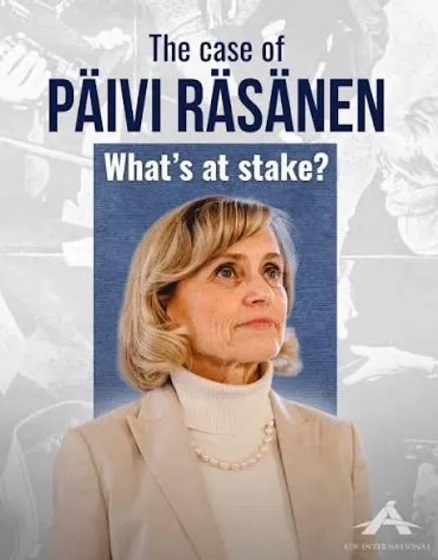
Religion on trial: what could happen if Canada passes its new hate speech legislation

Australian PM booed at Bondi vigil as crowd screams “shame!”
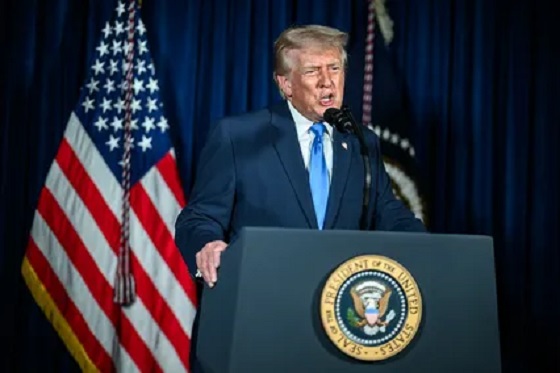
Trump Reportedly Escalates Pressure On Venezuela With Another Oil Tanker Seizure
The “Disruptor-in-Chief” places Canada in the crosshairs

Mortgaging Canada’s energy future — the hidden costs of the Carney-Smith pipeline deal
-
 Censorship Industrial Complex13 hours ago
US Under Secretary of State Slams UK and EU Over Online Speech Regulation, Announces Release of Files on Past Censorship Efforts
-
 Alberta2 days ago
Alberta project would be “the biggest carbon capture and storage project in the world”
-
 Energy2 days ago
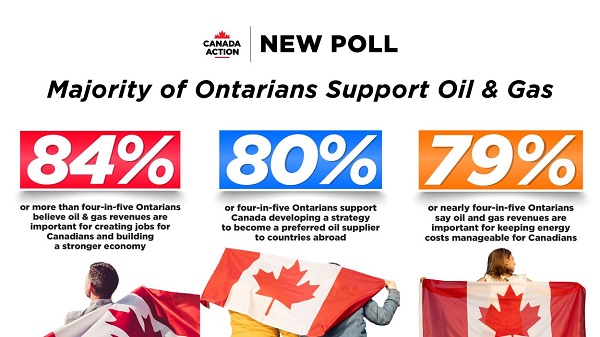
New Poll Shows Ontarians See Oil & Gas as Key to Jobs, Economy, and Trade
-
 Business16 hours ago
“Magnitude cannot be overstated”: Minnesota aid scam may reach $9 billion
-
 Daily Caller2 days ago
US Halts Construction of Five Offshore Wind Projects Due To National Security
-
 Business2 days ago
Residents in economically free states reap the rewards
-
 Bruce Dowbiggin2 days ago
Be Careful What You Wish For In 2026: Mark Carney With A Majority
-
 Business1 day ago
Socialism vs. Capitalism