
Business
Emission regulations harm Canadians in exchange for no environmental benefit


From the Fraser Institute
By Julio Mejía and Elmira Aliakbari

The PBO estimates that the CFR will decrease Canada’s economic output by up to 0.3 per cent—or approximately $9.0 billion—in 2030. For context, that’s more than the entire output of Prince Edward Island in 2024, so the effects are roughly equivalent to wiping out the economy of a whole province.
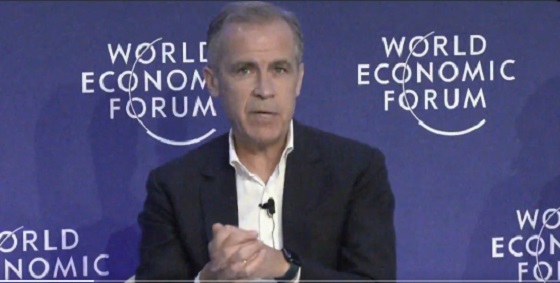
The Carney government recently announced changes to the Clean Fuel Regulations (CFR), signalling stricter carbon content rules for gasoline and diesel—though few details were provided. While the prime minister expressed confidence that the changes will strengthen the Canadian economy, in reality, the CFR is designed to increase fuel prices in exchange for negligible environmental benefits. If the government is serious about prioritizing the wellbeing of Canadians, it shouldn’t tinker with the CFR—it should eliminate it.
The CFR, which came into effect in July 2023, aims to reduce greenhouse gas (GHG) emissions by requiring a gradual reduction in the carbon content of gasoline and diesel. By 2030, fuels must contain 15 per cent fewer GHG per unit of energy than in 2016. Those who don’t meet the target must buy compliance credits, which raises their costs. Ultimately, these costs are all passed on to Canadians at the pump.
According to a recent study by the Parliamentary Budget Officer (PBO), the CFR is expected to increase fuel prices by up to 17 cents per litre for gasoline and 16 cents for diesel by 2030. These costs will be added on top of already high, policy-driven fuel costs. In 2023, for example, the average price of gasoline in Canada was 157.3 Canadian cents per litre, compared to just 129.4 cents per litre in the United States—a 21 per cent difference, mainly the result of fuel taxes in Canada.
As fuel prices rise due to the CFR, the costs of running tractors, powering machinery, and producing and transporting goods and services will all increase, setting off ripple effects across our economy. The PBO estimates that the CFR will decrease Canada’s economic output by up to 0.3 per cent—or approximately $9.0 billion—in 2030. For context, that’s more than the entire output of Prince Edward Island in 2024, so the effects are roughly equivalent to wiping out the economy of a whole province.
Of course, increases in fuel prices also mean more pressure to household budgets. The PBO estimates that in 2030, the average Canadian household will incur $573 in additional costs because of the changes to the CFR, and lower-income households will bear a disproportionately larger burden because they spend more of their budget on energy.
The policy’s uneven impact across provinces is particularly significant for lower-income regions. For example, households in Nova Scotia and P.E.I.—two of the provinces with the lowest median household incomes—are expected to bear average annual costs of $635 and $569, respectively. In contrast, families in Ontario and British Columbia—two of the provinces with higher median household incomes—will pay less, $495 and $384 per year, respectively. Simply put, the CFR imposes more costs on those who make less.
To make matters worse, the expected environmental benefits of the CFR are negligible. Even if it delivers its full projected reduction of 26 million tonnes of GHG emissions by 2030, that represents only “two weeks of greenhouse gas emissions from the Canadian economy,” according to the federal government.
Given that GHG emissions cross all borders regardless of where they originate, in a broader perspective, that reduction represents just 0.04 per cent of projected global emissions by 2030. So, Canadians are being asked to pay a material price for a measure that will have virtually no environmental impact.
Toughening regulations on carbon content for gas and diesel won’t benefit Canadians, in fact, it will do the opposite. The CFR places a real financial burden on Canadian households while delivering no meaningful environmental benefit. When a policy’s costs vastly outweigh its benefits, the answer isn’t to adjust it, it’s to scrap it.

Julio Mejía

Elmira Aliakbari
Director, Natural Resource Studies, Fr


The Canadian Taxpayers Federation released its annual New Year’s Tax Changes report today to highlight the major tax changes in 2026.
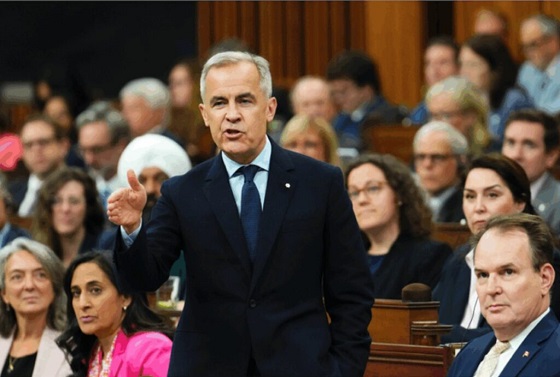
“There’s some good news and bad news for taxpayers in 2026,” said Franco Terrazzano, CTF Federal Director. “The federal government cut income taxes, but it’s hiking payroll taxes. The government cancelled the consumer carbon tax, but it’s hammering Canadian businesses with a higher industrial carbon tax.”
Payroll taxes: The federal government is raising the maximum mandatory Canada Pension Plan and Employment Insurance contributions in 2026. These payroll tax increases will cost a worker up to an additional $262 next year.
For workers making $85,000 or more, federal payroll taxes (CPP and EI tax) will cost $5,770 in 2026. Their employers will also be forced to pay $6,219.
Income tax: The federal government cut the lowest income tax rate from 15 to 14 per cent. This will save the average taxpayer $190 in 2026, according to the Parliamentary Budget Officer.
Carbon taxes: The government cancelled its consumer carbon tax effective April 1, 2025. However, the government still charges carbon taxes through its industrial carbon tax and a hidden carbon tax embedded in fuel regulations.
The industrial carbon tax will increase to $110 per tonne in 2026. While the government hasn’t provided further details on how much the industrial carbon tax will cost Canadians, 70 per cent of Canadians believe businesses pass on most or some of the cost of the tax to consumers, according to a Leger poll.
Alcohol taxes: Federal alcohol taxes are expected to increase by two per cent on April 1, 2026. This alcohol tax hike will cost taxpayers about $41 million in 2026-27, according to industry estimates.
First passed in the 2017 federal budget, the alcohol escalator tax automatically increases excise taxes on beer, wine and spirits every year without a vote in Parliament. Since being imposed, the alcohol escalator tax has cost taxpayers about $1.6 billion, according to industry estimates.
“Canadians pay too much tax because the government wastes too much money,” Terrazzano said. “Canadians are overtaxed and need serious tax cuts to help make life more affordable and our economy more competitive.
“Prime Minister Mark Carney needs to significantly cut spending, provide major tax relief and scrap all carbon taxes.”
You can read the CTF’s New Year’s Tax Changes report here.

From the Daily Caller News Foundation
By Greg Blackie
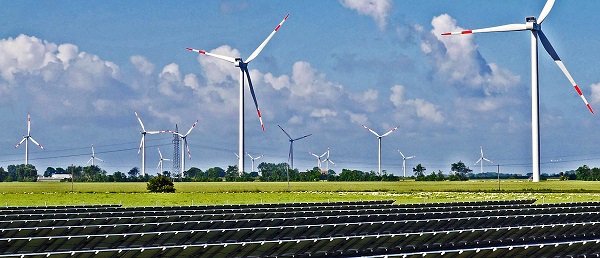
Our country is facing an energy crisis. No, not because of new demand from data centers or AI. Instead, it’s because utilities in nearly every state, due to government imposed “renewable” mandates, self-imposed mandates, and the supercharging of the Green New Scam under the so-called “Inflation Reduction Act,” have been shutting down vital coal resources and building out almost exclusively intermittent and costly resources like solar, wind, and battery storage.
President Donald Trump understands this, and that is why on day one of his administration he declared an Energy Emergency. Then, a few months later, the President signed a trio of Executive Orders designed to keep our “beautiful, clean coal” burning and providing the reliable, baseload, and affordable electricity Americans have benefitted from for generations.
Those orders have been used to keep coal generation online that was slated to shut down in Michigan and will potentially keep two units operating that were scheduled to shut down in Colorado this December. In Arizona, however, the Cholla Power Plant in Navajo County was shuttered by the utility just weeks after Trump explicitly called out the plant for saving in a press conference.
Dear Readers:
As a nonprofit, we are dependent on the generosity of our readers.
Please consider making a small donation of any amount here.
Thank you!
Unlike states with green mandates, Arizona essentially has none. Instead, our utilities, like many around the country, have self-imposed commitments to go “Net Zero” by 2050. To meet that target, they have planned to shut down all coal generation in the state by 2032 and plan to build out almost exclusively solar, wind, and battery storage to meet an expected explosive growth in demand, at a cost of tens of billions of dollars. So it is no surprise that like much of the rest of the country, Arizona is facing an energy crisis.
Taking a look at our largest regulated utilities (APS, TEP, and UNS) and the largest nonprofit utility, SRP, future plans paint an alarming picture. Combined, over the next 15 years, these utilities expect to see demand increase from 19,200 MW to 28,000 MW. For reference, 1,000 MW of electricity is enough to power roughly 250,000 homes. To meet that growth in demand, however, Arizonans will only get a net increase of 989 MW of reliable generation (coal, natural gas, and nuclear) compared to 22,543 MW (or nearly 23 times as much) of intermittent solar, wind, and battery storage.
But what about all of the new natural gas coming into the state? The vast majority of it will be eaten up just to replace existing coal resources, not to bring additional affordable energy to the grid. For example, the SRP board recently voted to approve the conversion of their Springerville coal plant to natural gas by 2030, which follows an earlier vote to convert another of their coal plants, Coronado, to natural gas by 2029. This coal conversion trap leaves ratepayers with the same amount of energy as before, eating up new natural gas capacity, without the benefit of more electricity.
So, while the Arizona utilities plan to collectively build an additional 4,538 MW of natural gas capacity over the next 15 years, at the same time they will be removing -3,549 MW (all of what is left on the grid today) of coal. And there are no plans for more nuclear capacity anytime soon. Instead, to meet their voluntary climate commitments, utilities plan to saddle ratepayers with the cost and resultant blackouts of the green new scam.
It’s no surprise then that Arizona’s largest regulated utilities, APS and TEP, are seeking double digit rate hikes next year. It’s not just Arizona. Excel customers in Colorado (with a 100% clean energy commitment) and in Minnesota (also with a 100% clean energy commitment) are facing nearly double-digit rate hikes. The day before Thanksgiving, PPL customers in Rhode Island (with a state mandate of 100% renewable by 2033) found out they may see rate hikes next year. Dominion (who has a Net Zero by 2050 commitment) wanted to raise rates for customers in Virginia by 15%. Just last month, regulators approved a 9% increase. Importantly, these rate increases are to recover costs for expenses incurred years ago, meaning they are clearly to cover the costs of the energy “transition” supercharged under the Biden administration, not from increased demand from data centers and AI.
It’s the same story around the country. Electricity rates are rising. Reliability is crumbling. We know the cause. For generations, we’ve been able to provide reliable energy at an affordable cost. The only variable that has changed has been what we are choosing to build. Then, it was reliable, dispatchable power. Now, it is intermittent sources that we know cost more, and that we know cause blackouts, all to meet absurd goals of going 100% renewable – something that no utility, state, or country has been able to achieve. And we know the result when they try.
This crisis can be avoided. Trump has laid out the plan to unleash American Energy. Now, it’s time for utilities to drop their costly green new scam commitments and go back to building reliable and affordable power that generations to come will benefit from.
Greg Blackie, Deputy Director of Policy at the Arizona Free Enterprise Club. Greg graduated summa cum laude from Arizona State University with a B.S. in Political Science in 2019. He served as a policy intern with the Republican caucus at the Arizona House of Representatives and covered Arizona political campaigns for America Rising during the 2020 election cycle.


Inside the Fortified Sinaloa-Linked Compound Canada Still Can’t Seize After 12 Years of Legal War
The Recall Trap: 21 Alberta MLA’s face recall petitions

They never wanted a pipeline! – Deputy Conservative Leader Melissa Lantsman
The $50 Billion Question: EVs Never Delivered What Ottawa Promised

Liberal bill “targets Christians” by removing religious exemption in hate-speech law

Canada’s free speech record is cracking under pressure

Liberals gain support for ‘hate speech’ bill targeting Bible passages against homosexuality
-
 Digital ID7 hours ago
Canada releases new digital ID app for personal documents despite privacy concerns
-
 Media2 days ago
Reporters determined to drive their industry and its reputation into the abyss one Tweet at a time
-
Business17 hours ago
Major tax changes in 2026: Report
-
 Censorship Industrial Complex16 hours ago
Death by a thousand clicks – government censorship of Canada’s internet
-
 Crime2 days ago
Terror in Australia: 12 killed after gunmen open fire on Hanukkah celebration
-
 Energy6 hours ago
Canada’s sudden rediscovery of energy ambition has been greeted with a familiar charge: hypocrisy
-
 Alberta18 hours ago
Schools should go back to basics to mitigate effects of AI
-
 Daily Caller17 hours ago
Chinese Billionaire Tried To Build US-Born Baby Empire As Overseas Elites Turn To American Surrogates