
Business
Economic progress stalling for Canada and other G7 countries



From the Fraser Institute
By Jake Fuss

For decades, Canada and other countries in the G7 have been known as the economic powerhouses of the world. They generally have had the biggest economies and the most prosperous countries. But in recent years, poor government policy across the G7 has contributed to slowing economic growth and near-stagnant living standards.
Simply put, the Group of Seven countries—Canada, France, Germany, Italy, Japan, the United Kingdom and the United States—have become complacent. Rather than build off past economic success by employing small governments that are limited and efficient, these countries have largely pursued policies that increase or maintain high taxes on families and businesses, increase regulation and grow government spending.
Canada is a prime example. As multiple levels of government have turned on the spending taps to expand programs or implement new ones, the size of total government has surged ever higher. Unsurprisingly, Canada’s general government spending as a share of GDP has risen from 39.3 per cent in 2007 to 42.2 per cent in 2022.
At the same time, federal and provincial governments have increased taxes on professionals, businessowners and entrepreneurs to the point where the country’s top combined marginal tax rate is now the fifth-highest among OECD countries. New regulations such as Bill C-69, which instituted a complex and burdensome assessment process for major infrastructure projects and Bill C-48, which prohibits producers from shipping oil or natural gas from British Columbia’s northern coast, have also made it difficult to conduct business.
The results of poor government policy in Canada and other G7 countries have not been pretty.
Productivity, which is typically defined as economic output per hour of work, is a crucial determinant of overall economic growth and living standards in a country. Over the most recent 10-year period of available data (2013 to 2022), productivity growth has been meagre at best. Annual productivity growth equaled 0.9 per cent for the G7 on average over this period, which means the average rate of growth during the two previous decades (1.6 per cent) has essentially been chopped in half. For some countries such as Canada, productivity has grown even slower than the paltry G7 average.
Since productivity has grown at a snail’s pace, citizens are now experiencing stalled improvement in living standards. Gross domestic product (GDP) per person, a common indicator of living standards, grew annually (inflation-adjusted) by an anemic 0.7 per cent in Canada from 2013 to 2022 and only slightly better across the G7 at 1.3 per cent. This should raise alarm bells for policymakers.
A skeptic might suggest this is merely a global phenomenon. But other countries have fared much better. Two European countries, Ireland and Estonia, have seen a far more significant improvement than G7 countries in both productivity and per-person GDP.
From 2013 to 2022, Estonia’s annual productivity has grown more than twice as fast (1.9 per cent) as the G7 countries (0.9 per cent). Productivity in Ireland has grown at a rapid annual pace of 5.9 per cent, more than six times faster than the G7.
A similar story occurs when examining improvements in living standards. Estonians enjoyed average per-person GDP growth of 2.8 per cent from 2013 to 2022—more than double the G7. Meanwhile, Ireland’s per-person GDP has surged by 7.9 per cent annually over the 10-year period. To put this in perspective, living standards for the Irish grew 10 times faster than for Canadians.
But this should come as no surprise. Governments in Ireland and Estonia are smaller than the G7 average and impose lower taxes on individuals and businesses. In 2019, general government spending as a percentage of GDP averaged 44.0 per cent for G7 countries. Spending for governments in both Estonia and Ireland were well below this benchmark.
Moreover, the business tax rate averaged 27.2 per cent for G7 countries in 2023 compared to lower rates in Ireland (12.5 per cent) and Estonia (20.0 per cent). For personal income taxes, Estonia’s top marginal tax rate (20.0 per cent) is significantly below the G7 average of 49.7 per cent. Ireland’s top marginal tax rate is below the G7 average as well.
Economic progress has largely stalled for Canada and other G7 countries. The status quo of government policy is simply untenable.
Author:

Business
Federal funds FROZEN after massive fraud uncovered: Trump cuts off Minnesota child care money


The Trump administration has cut off all federal child care payments to Minnesota, ordering a sweeping audit of the state’s day care system as investigators dig into what officials describe as one of the largest fraud schemes ever tied to social service programs.
“We have frozen all child care payments to the state of Minnesota,” Deputy Health and Human Services Secretary Jim O’Neill wrote Tuesday afternoon, saying the move comes after mounting evidence that taxpayer dollars were being siphoned to sham or non-operational day care centers. The freeze follows a viral investigative video that put a national spotlight on facilities across Minneapolis that were receiving large sums of public money despite appearing closed or barely functioning.
According to Alex Adams, assistant secretary at HHS’s Administration for Children and Families, Minnesota has already received roughly $185 million in federal child care funding this year alone. Those funds, the administration says, will remain locked down until the state can demonstrate that payments are being used lawfully. “Funds will be released only when states prove they are being spent legitimately,” Adams said.
We have frozen all child care payments to the state of Minnesota.
You have probably read the serious allegations that the state of Minnesota has funneled millions of taxpayer dollars to fraudulent daycares across Minnesota over the past decade.
Today we have taken three actions… pic.twitter.com/VYbyf3WGop
— Deputy Secretary Jim O'Neill (@HHS_Jim) December 30, 2025
O’Neill accused Minnesota officials of allowing abuse to fester for years, alleging the state has “funneled millions of taxpayer dollars to fraudulent daycares across Minnesota over the past decade.” To halt further losses, HHS outlined a series of immediate enforcement steps. Going forward, states seeking reimbursement through the Administration for Children and Families will be required to provide receipts or photographic proof documenting how funds are spent.
The department has also formally demanded that Gov. Tim Walz order a “comprehensive audit” of the day care centers flagged by investigators. O’Neill said the review must include attendance records, licensing documents, complaints, investigative files, and inspection reports. He pointed directly to a video published Friday by YouTuber Nick Shirley, who visited multiple Minneapolis-area centers listed as receiving millions in public funds but found locations that appeared closed or inactive.
In addition, HHS has launched a dedicated fraud hotline and email address at childcare.gov to encourage tips from parents, providers, and the public. “We have turned off the money spigot and we are finding the fraud,” O’Neill said, urging anyone with information to come forward.
Federal prosecutors say the scope of the alleged abuse is staggering. Authorities have already confirmed at least $1 billion in fraud tied to Minnesota child care programs, with 92 people charged so far. The U.S. Attorney’s Office has warned the total could ultimately reach as high as $9 billion as investigators continue combing through records.
The funding freeze marks one of the most aggressive crackdowns yet by the Trump administration on state-run social programs accused of lax oversight, sending a clear message that federal dollars will not flow until Minnesota can account for where the money went — and who was cashing in.

From the Frontier Centre for Public Policy
By Conrad Eder
Conrad Eder supports universal health care, but not Canada’s broken version. Despite massive spending, Canadians face brutal wait times. He argues it’s time to allow private options, as other countries do, without abandoning universality.
It’s not about money. It’s about the rules shaping how Canada’s health care system works
Canada’s health care system isn’t failing because it lacks funding or public support. It’s failing because governments have tied it to restrictive rules that block private medical options used in other developed countries to deliver timely care.
Canada spends close to $400 billion a year on health care, placing it among the highest-spending countries in the Organization for Economic Co-operation and Development (OECD). Yet the system continues to struggle with some of the longest waits for care, the fewest doctors per capita and among the lowest numbers of hospital beds in the OECD. This is despite decades of spending increases, including growth of 4.5 per cent in 2023 and 5.7 per cent in 2024, according to estimates from the Canadian Institute for Health Information.
Canadians are losing confidence that government spending is the solution. In fact, many don’t even think it’s making a difference.
And who could blame them? Median health care wait times reached 30 weeks in 2024, up from 27.7 weeks in 2023, which was up from 27.4 weeks in 2022, according to annual surveys by the Fraser Institute.
Nevertheless, politicians continue to tout our universal health care system as a source of national pride and, according to national surveys, 74 per cent of Canadians agree. Yet only 56 per cent are satisfied with it. This gap reveals that while Canadians value universal health care in principle, they are frustrated with it in practice.
But it isn’t universal health care that’s the problem; it’s Canada’s uniquely restrictive version of it. In most provinces, laws restrict physicians from working simultaneously in public and private systems and prohibit private insurance for medically necessary services covered by medicare, constraints that do not exist in most other universal health care systems.
The United Kingdom, France, Germany and the Netherlands all maintain universal health care systems. Like Canada, they guarantee comprehensive insurance coverage for essential health care services. Yet they achieve better access to care than Canada, with patients seeing doctors sooner and benefiting from shorter surgical wait times.
In Germany, there are both public and private hospitals. In France, universal insurance covers procedures whether patients receive them in public hospitals or private clinics. In the Netherlands, all health insurance is private, with companies competing for customers while coverage remains guaranteed. In the United Kingdom, doctors working in public hospitals are allowed to maintain private practices.
All of these countries preserved their commitment to universal health care while allowing private alternatives to expand choice, absorb demand and deliver better access to care for everyone.
Only 26 per cent of Canadians can get same-day or next-day appointments with their family doctor, compared to 54 per cent of Dutch and 47 per cent of English patients. When specialist care is needed, 61 per cent of Canadians wait more than a month, compared to 25 per cent of Germans. For elective surgery, 90 per cent of French patients undergo procedures within four months, compared to 62 per cent of Canadians.
If other nations can deliver timely access to care while preserving universal coverage, so can Canada. Two changes, inspired by our peers, would preserve universal coverage and improve access for all.
First, allow physicians to provide services to patients in both public and private settings. This flexibility incentivizes doctors to maximize the time they spend providing patient care, expanding service capacity and reducing wait times for all patients. Those in the public system benefit from increased physician availability, as private options absorb demand that would otherwise strain public resources.
Second, permit private insurance for medically necessary services. This would allow Canadians to obtain coverage for private medical services, giving patients an affordable way to access health care options that best suit their needs. Private insurance would enable Canadians to customize their health coverage, empowering patients and supporting a more responsive health care system.
These proposals may seem radical to Canadians. They are not. They are standard practice everywhere else. And across the OECD, they coexist with universal health care. They can do the same in Canada.
Alberta has taken an important first step by allowing some physicians to work simultaneously in public and private settings through its new dual-practice model. More Canadian provinces should follow Alberta’s lead and go one step further by removing legislative barriers that prohibit private health insurance for medically necessary services. Private insurance is the natural complement to dual practice, transforming private health care from an exclusive luxury into a viable option for Canadian families.
Canadians take pride in their health care system. That pride should inspire reform, not prevent it. Canada’s health care crisis is real. It’s a crisis of self-imposed constraints preventing our universal system from functioning at the level Canadians deserve.
Policymakers can, and should, preserve universal health care in this country. But maintaining it will require a willingness to learn from those who have built systems that deliver universality and timely access to care, something Canada’s current system does not.
Conrad Eder is a policy analyst at the Frontier Centre for Public Policy.


Remembering Afghanistan and the sacrifices of our military families

How to talk about housing at the holiday dinner table

Alberta Next Panel calls for less Ottawa—and it could pay off

“Magnitude cannot be overstated”: Minnesota aid scam may reach $9 billion

Largest fraud in US history? Independent Journalist visits numerous daycare centres with no children, revealing massive scam

US Under Secretary of State Slams UK and EU Over Online Speech Regulation, Announces Release of Files on Past Censorship Efforts
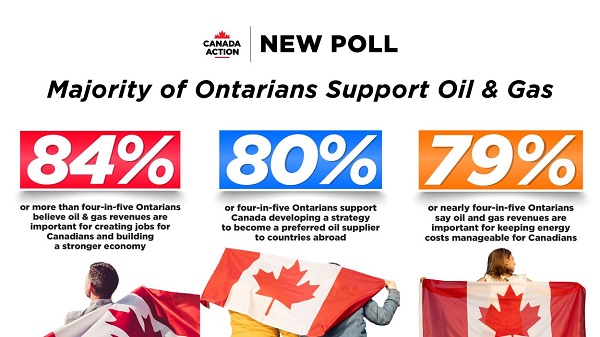
New Poll Shows Ontarians See Oil & Gas as Key to Jobs, Economy, and Trade
-
 Alberta1 day ago
The Canadian Energy Centre’s biggest stories of 2025
-
 Business1 day ago
Resurfaced Video Shows How Somali Scammers Used Day Care Centers To Scam State
-
 Business16 hours ago
Dark clouds loom over Canada’s economy in 2026
-
 Addictions12 hours ago
Coffee, Nicotine, and the Politics of Acceptable Addiction
-
 Business2 days ago
Canada needs serious tax cuts in 2026
-
 Business2 days ago
Ottawa Is Still Dodging The China Interference Threat
-
Business2 days ago
Minneapolis day care filmed empty suddenly fills with kids
-
 Business1 day ago
Disclosures reveal Minnesota politician’s husband’s companies surged thousands-fold amid Somali fraud crisis