
Uncategorized
Gunman kills 3 on Dutch tram; mayor says terror likely


UTRECHT, Netherlands — A gunman killed three people and wounded nine on a streetcar in the Dutch city of Utrecht on Monday morning in what the mayor said appeared to be a terror attack, touching off a manhunt that saw heavily armed officers with dogs zero in on an apartment building nearby.

Authorities immediately raised the terror alert for the area to the highest level, and Dutch military police tightened security at airports and key buildings in the country.
A few hours after the shooting, Utrecht police released a photo of a 37-year-old Turkish-born man they identified as Gokmen Tanis and said he was “associated with the incident.” The photo showed a bearded man aboard a tram in a blue hooded top.
The attack came three days after 50 people were killed when an immigrant-hating white supremacist opened fire at two mosques in Christchurch, New Zealand, during Friday prayers. There was no immediate indication of any link between the two events.
Utrecht Mayor Jan van Zanen said three people were killed and nine wounded, three of them seriously.
“We cannot exclude, even stronger, we assume a terror motive. Likely there is one attacker, but there could be more,” van Zanen said.
Dutch Prime Minister Mark Rutte said that “a terror motive is not excluded” and that the attack was met throughout the country with “a mix of disbelief and disgust.”
“If it is a terror attack, then we have only one answer: Our nation, democracy, must be stronger that fanaticism and violence,” he added.
The shooting took place at a busy intersection in a residential
Anti-terror officers gathered in front of an apartment building close to the scene. A dog wearing a vest with a camera mounted on it was also seen outside the building.
Police spokesman Bernhard Jens said one person might have fled by car, and he did not rule out the possibility that more than one shooter was involved.
The Netherlands’ anti-terror
Political parties halted campaigning ahead of provincial elections scheduled for Wednesday that will also determine the makeup of Parliament’s upper house.
In
German authorities said they were initially told to look out for a red Renault Clio compact car but were later informed it had been found abandoned in Utrecht.
___
Mike Corder reported from The Hague. Raf Casert in Brussels and Geir Moulson and David Rising in Berlin contributed.
Aleksandar Furtula And Mike Corder, The Associated Press



The cost of the bureaucracy increased by $6 billion last year, according to newly released numbers in Public Accounts disclosures. The Canadian Taxpayers Federation is calling on Prime Minister Mark Carney to immediately shrink the bureaucracy.
“The Public Accounts show the cost of the federal bureaucracy is out of control,” said Franco Terrazzano, CTF Federal Director. “Tinkering around the edges won’t cut it, Carney needs to take urgent action to shrink the bloated federal bureaucracy.”
The federal bureaucracy cost taxpayers $71.4 billion in 2024-25, according to the Public Accounts. The cost of the federal bureaucracy increased by $6 billion, or more than nine per cent, over the last year.
The federal bureaucracy cost taxpayers $39.6 billion in 2015-16, according to the Public Accounts. That means the cost of the federal bureaucracy increased 80 per cent over the last 10 years. The government added 99,000 extra bureaucrats between 2015-16 and 2024-25.
Half of Canadians say federal services have gotten worse since 2016, despite the massive increase in the federal bureaucracy, according to a Leger poll.
Not only has the size of the bureaucracy increased, the cost of consultants, contractors and outsourcing has increased as well. The government spent $23.1 billion on “professional and special services” last year, according to the Public Accounts. That’s an 11 per cent increase over the previous year. The government’s spending on professional and special services more than doubled since 2015-16.
“Taxpayers should not be paying way more for in-house government bureaucrats and way more for outside help,” Terrazzano said. “Mere promises to find minor savings in the federal bureaucracy won’t fix Canada’s finances.
“Taxpayers need Carney to take urgent action and significantly cut the number of bureaucrats now.”
Table: Cost of bureaucracy and professional and special services, Public Accounts
| Year | Bureaucracy | Professional and special services |
|
$71,369,677,000 |
$23,145,218,000 |
|
|
$65,326,643,000 |
$20,771,477,000 |
|
|
$56,467,851,000 |
$18,591,373,000 |
|
|
$60,676,243,000 |
$17,511,078,000 |
|
|
$52,984,272,000 |
$14,720,455,000 |
|
|
$46,349,166,000 |
$13,334,341,000 |
|
|
$46,131,628,000 |
$12,940,395,000 |
|
|
$45,262,821,000 |
$12,950,619,000 |
|
|
$38,909,594,000 |
$11,910,257,000 |
|
|
$39,616,656,000 |
$11,082,974,000 |

From the Daily Caller News Foundation
By Jason Hopkins
The Trump administration is creating a first-of-its-kind task force aimed at ushering in a new “Golden Age” of beautiful infrastructure across the U.S.
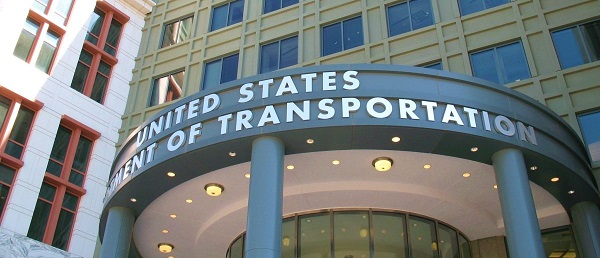
The Department of Transportation (DOT) will announce the establishment of the Beautifying Transportation Infrastructure Council (BTIC) on Thursday, the Daily Caller News Foundation exclusively learned. The BTIC seeks to advise Transportation Secretary Sean Duffy on design and policy ideas for key infrastructure projects, including highways, bridges and transit hubs.
“What happened to our country’s proud tradition of building great, big, beautiful things?” Duffy said in a statement shared with the DCNF. “It’s time the design for America’s latest infrastructure projects reflects our nation’s strength, pride, and promise.”
“We’re engaging the best and brightest minds in architectural design and engineering to make beautiful structures that move you and bring about a new Golden Age of Transportation,” Duffy continued.
Mini scoop – here is the DOT’s rollout of its Beautifying Transportation Infrastructure Council, which will be tasked with making our buildings beautiful again. pic.twitter.com/
9iV2xSxdJM — Jason Hopkins (@jasonhopkinsdc) October 23, 2025
The DOT is encouraging nominations of the country’s best architects, urban planners, artists and others to serve on the council, according to the department. While ensuring that efficiency and safety remain a top priority, the BTIC will provide guidance on projects that “enhance” public areas and develop aesthetic performance metrics.
The new council aligns with an executive order signed by President Donald Trump in August 2025 regarding infrastructure. The “Making Federal Architecture Beautiful Again” order calls for federal public buildings in the country to “respect regional architectural heritage” and aims to prevent federal construction projects from using modernist and brutalist architecture styles, instead returning to a classical style.
“The Founders, in line with great societies before them, attached great importance to Federal civic architecture,” Trump’s order stated. “They wanted America’s public buildings to inspire the American people and encourage civic virtue.”
“President George Washington and Secretary of State Thomas Jefferson consciously modeled the most important buildings in Washington, D.C., on the classical architecture of ancient Athens and Rome,” the order continued. “Because of their proven ability to meet these requirements, classical and traditional architecture are preferred modes of architectural design.”
The DOT invested millions in major infrastructure projects since Trump’s return to the White House. Duffy announced in August a $43 million transformation initiative of the New York Penn Station in New York City and in September unveiledmajor progress in the rehabilitation and modernization of Washington Union Station in Washington, D.C.
The BTIC will comprise up to 11 members who will serve two-year terms, with the chance to be reappointed, according to the DOT. The task force will meet biannually. The deadline for nominations will end Nov. 21.


From Underdog to Top Broodmare

Man overboard as HMCS Carney lists to the right

Poilievre says West Coast Pipeline MOU is no guarantee
Higher carbon taxes in pipeline MOU are a bad deal for taxpayers
Canadian government seeking to destroy Freedom Convoy leader, taking Big Red from Chris Barber
West Coast Pipeline MOU: A good first step, but project dead on arrival without Eby’s assent
READ IT HERE – Canada-Alberta Memorandum of Understanding – From the Prime Minister’s Office
-
 Censorship Industrial Complex2 days ago
A Democracy That Can’t Take A Joke Won’t Tolerate Dissent
-
 MAiD1 day ago
From Exception to Routine. Why Canada’s State-Assisted Suicide Regime Demands a Human-Rights Review
-
 Alberta2 days ago
Alberta will defend law-abiding gun owners who defend themselves
-
 Great Reset2 days ago
Canada’s MAiD (State Sanctioned Murder) Report Just Dropped
-
 Business1 day ago
New Chevy ad celebrates marriage, raising children
-
 Alberta1 day ago
This new Canada–Alberta pipeline agreement will cost you more than you think
-
 Automotive1 day ago
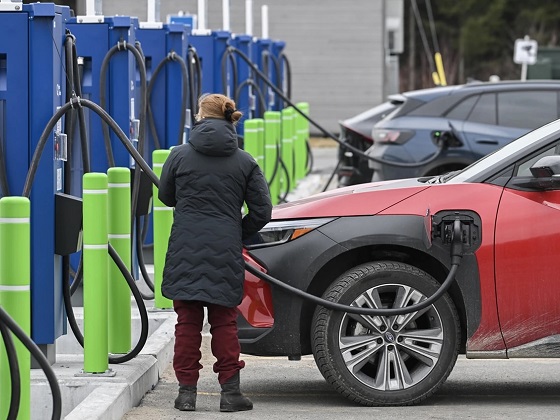
Power Struggle: Governments start quietly backing away from EV mandates
-
 National2 days ago
Canada Needs an Alternative to Carney’s One Man Show